A winter Arctic adventure is one of those once-in-a-lifetime trips. If you’re thinking of planning a visit to the snowy Arctic, but not sure where to start, then this guide is for you. Or if you’re visiting on a cruise, this overview should be really helpful to decide what to do in Alta, Norway from a cruise ship.
Of course, there are several Arctic destinations from which to pick, but Alta, Norway is an excellent choice. Not only does Alta offer great snowy conditions for almost half the year, but it is one of the northernmost locations in the entire world. Despite this, Alta is actually really accessible. It also fairly straightforward to plan a DIY trip, rather than booking an expensive organised tour. Alta also provides a wonderful opportunity to experience the local culture of the indigenous Sámi people.
This guide aims to explain exactly how to get to Alta, where to stay, what to do and how to maximise your time there. So read on to find out more!

Alta, Norway Travel Guide: Useful information
History and background of Alta, Norway
Alta, situated in Finnmark county in the very North of Norway, was formed into a town in 2000. However, its history is estimated to date back to the Neolithic period. In fact, there are UNESCO World Heritage rock carvings believed to be 7000+ years old!
Alta is also a great location in Scandinavia to learn about the indigenous Sámi people. They’ve long inhabited this area, mostly surviving in the brutal conditions by hunting and fishing.
Today, around 21,000 people call Alta home, including a large Sámi community.

How to get to Alta?
Although its location is one of the northernmost towns in the world, deep within the Arctic circle, Alta is surprisingly easy to get to. It was even quite affordable on our recent visit back in March 2025.
For most travellers from the UK, Europe and the US, the best way to arrive is by flying via Oslo, the capital of Norway.
From Oslo, it is a relaxed 2 hour flight, landing into one of the most scenic airports imaginable. On one side of the runway is the majestic fjord with the charming town of Alta on the other.
Flying from London, the journey time was a total of 5 hours. Which to get to such a northernly location was pretty incredible! We flew on Scandinavian Airlines (SAS) from London Heathrow to Oslo (2 hours), with a short layover and then another 2 hour flight to Alta.
The return flight was just under £300. This included baggage but an alternative and potentially more affordable option is via Oslo or the nearby town of Tromsø on Norwegian Airlines.
It’s worth noting that there is a risk of delays or cancellations with flights into Alta, so it’s best to factor in extra time into your overall itinerary in case this happens. As you can imagine, this northernmost region can experience extreme weather, which impacts flight schedules.

Norway visas and entry requirements
Norway is in the Schengen area, so UK travellers can enter Norway without a visa as a tourist, for up to 90 days. This also applies for US travellers.
When is the best time to go to Alta?
We visited in the month of March – the perfect timing for a winter Arctic adventure. However, it’s worth noting that you can have two completely different experiences in Alta. You can travel for a snowy trip like we did, or alternatively, visit during the summer and experience the phenomenon of the midnight sun where you have daylight for 24 hours!
So a winter Arctic adventure trip will feature activities that are all based on the snowy conditions, such as dog sledding and snowshoeing. A summer visit to Alta means activities such as hiking, kayaking, cycling and fishing.
However, if the Northern Lights are high on your bucket list, then it definitely needs to be a winter trip. Sightings are most frequent from October to March. Alta, when it was declared a city, was also called Nordlys-byen, which means Northern Lights city! Alta is renowned for its stable climate which makes it increasingly more likely to see the incredible Aurora Borealis.
Something to factor in with a winter visit is that the amount of daylight can be quite short from the middle of November until the end of January. This makes packing in lots of activities a little more challenging. We found March to be a great time to travel. We experienced perfect snowy weather, saw the magical Northern Lights and enjoyed 12 hours of daylight each day for activities!
Temperature-wise, a winter trip to Alta does mean you need to be well-equipped to handle the conditions. It is vital to wear several layers each day, from a thermal base to a warm fleece and a proper ski jacket. You will also need thick woolly hats, gloves and scarves.
In March, we experienced daily lows of around -7/8°C and highs of 0°C. This changes drastically in the summer, with temperatures peaking at 10-16°C (min-max) in July.

Currency and language
The currency used in Alta is the Norwegian Krona (NOK) – not the Euro.
You’ll find that nearly everywhere in Alta accepts bank card or Apple Pay, including public transport and shopping at the market.
Norwegian is the main language as you’d expect, but English is widely spoken in Alta.
Getting around Alta
Alta is a great city to walk around, with lots of pedestrian friendly paths.
Upon arriving at the airport, you can take the airport bus, a taxi or hire a car. The airport bus was a great option on arrival. It had frequent departures and was spacious and warm inside. It cost just 70 NOK (£5).
The main local taxi company is Alta taxi and a taxi from the airport to the centre or nearby areas can be anywhere from NOK 500-900 (£33 – £66).
What to Bring for a Winter Arctic Adventure
If visiting in the winter months, prepare for low temperatures and snowy conditions. It’s better to come over prepared in terms of layers, rather than be caught short. It would be miserable to embark on a bucket list trip but be too cold to enjoy it!
As mentioned above, you will need thermal underlayers for both top and bottom, long thick wool socks and a pair of winter hiking boots. With this, you’ll need thick fleece sweaters, a warm winter jacket, and all the scarves, gloves and hats.
I’d also recommend bringing sunglasses for activities such as fatbiking, snowmobiling or dog sledding with a setting sun. And don’t forget swimming stuff for the sauna.
One thing you will find is that many of the activity centres in Alta provide additional kit where necessary. So for example, for snowmobiling, we were given insulated thermal winter suits and footbags that go over your own hiking boots for added warmth.

Best Things to do in Alta and surrounds
Alta itself is a beautiful town, and well worth exploring. But the real reason to come to the Arctic is for all the incredible winter activities on offer. We tried to pack in as many as possible, so here’s our overview of the best things to do in and around Alta, Norway.
Snowmobiling
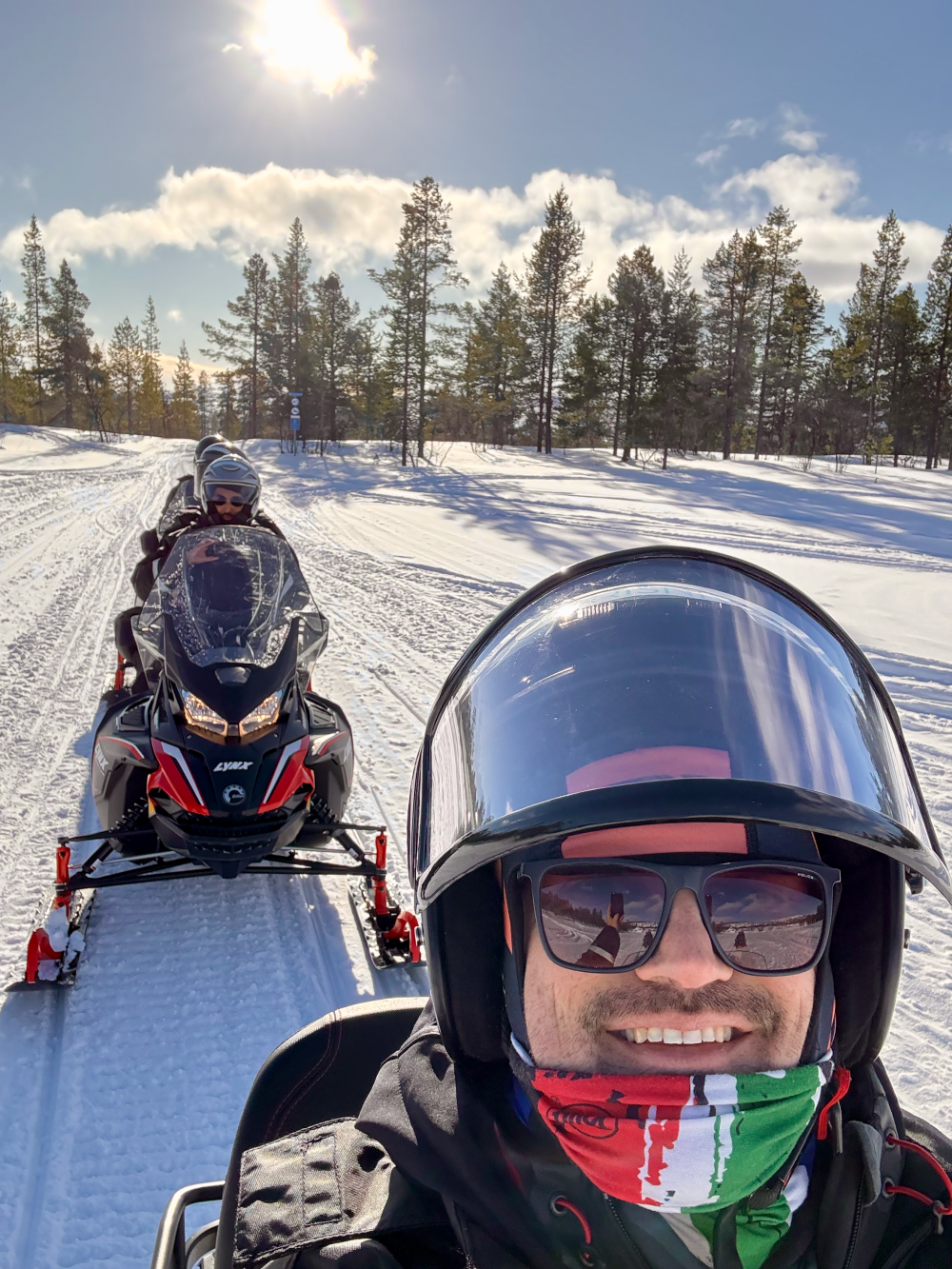
One of the most thrilling adventure activities to do in the area surrounding Alta is to hop on board your own snowmobile, and tear across the incredible terrain. Although we had no prior snowmobiling experience, it was fairly easy to pick up.
We organised our 3 hour snowmobiling excursion at Sorrisniva. After donning a thermal suit, boots, extra thick thermal gloves and a helmet, we were given a demonstration from the guides and headed out to hop on our snowmobile. We went in pairs, so each of us had the opportunity to enjoy driving the snowmobile, but also appreciate the surroundings as a passenger.
The route was incredible. We traversed through the pine forest, along the Alta River valley and up to the inland plateau. We made a couple of pit stops to take in the incredible views, including the Alta Canyon in the distance. This is a must-do activity in Alta, and perfect for really taking in the beautiful Arctic scenery.
Book your snowmobiling adventure here!
Fatbiking
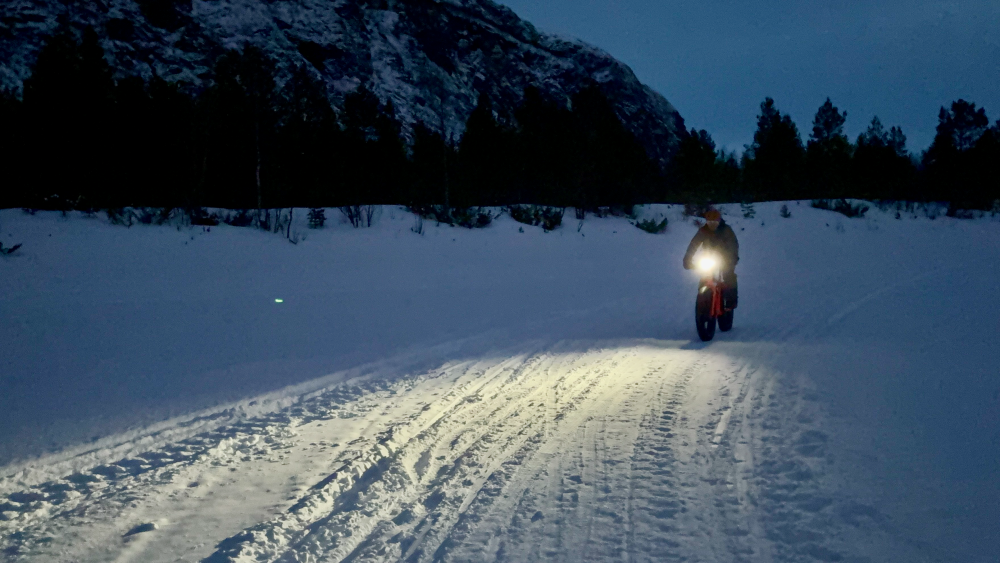
If you thought it wasn’t possible to cycle across the snow, think again! A fatbike is essentially an ordinary mountain bike with oversized tyres (up to 5 inches wide!). These allow visitors to head out on all kinds of terrain throughout the year.
The fatbiking trails along the Alta River and in the area are so beautiful, and this was such a fun activity. We also stopped at a gapahuk in the Alta Valley. This is traditional Norwegian lean-to (a small wooden structure), where we warmed up by the fire enjoying traditional snacks and warm drinks.
Like the snowmobiling, local tours will give you helmet, goggles, headlight etc for the activity.
Snowshoeing & Ice-Fishing
Another incredible and immersive thing to do in Alta is both snowshoeing and ice-fishing, which conveniently are often offered as a joint excursion. Shoeshoeing is such a peaceful activity and a wonderful way to connect with the local nature. Our guide described lots about the local geology, plant life, as well as the animals that call the area home, including foxes, hares, moose and eagles.
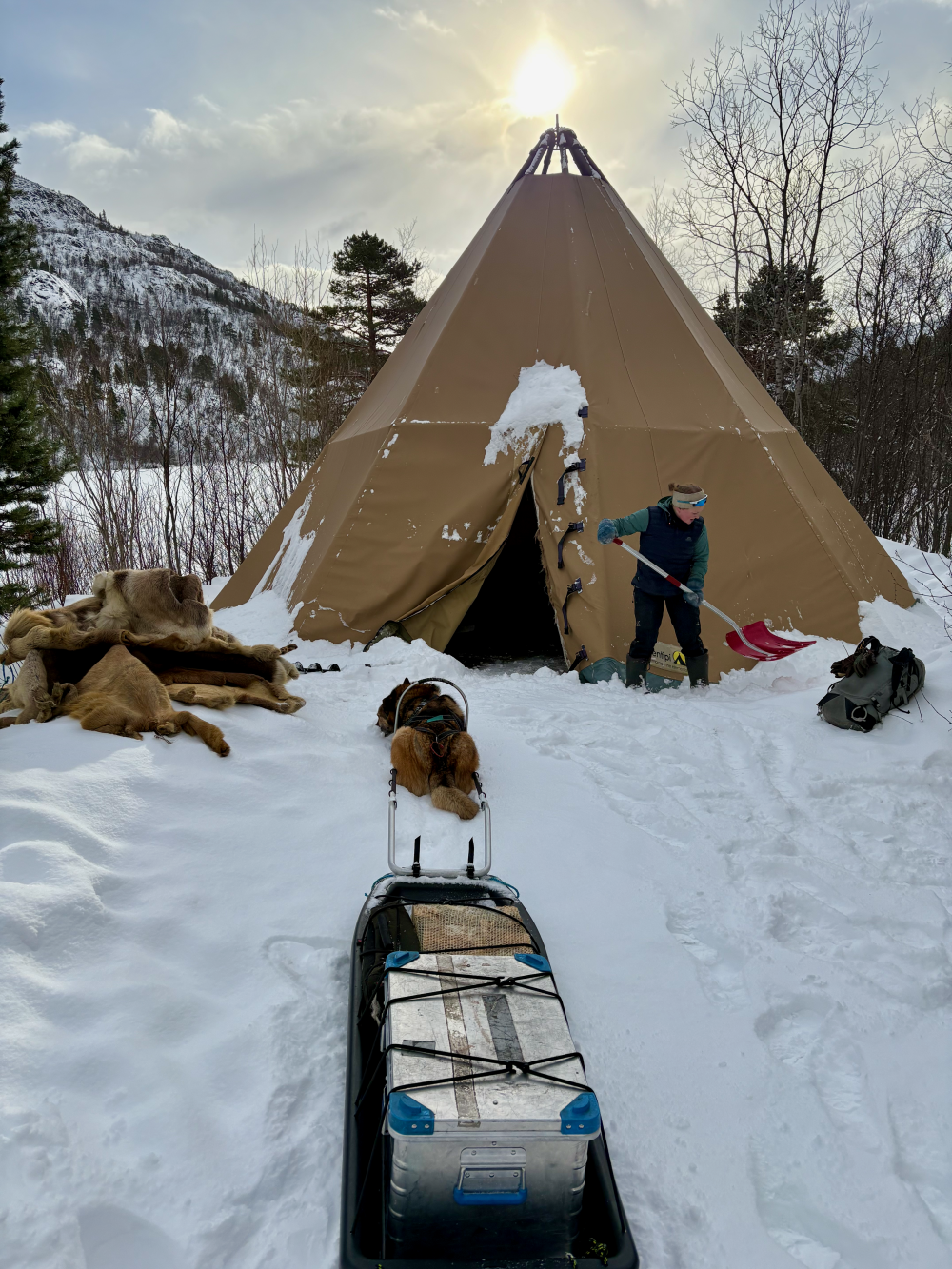
We embarked on a guided snowshoe trek through beautiful pine forests to a wilderness camp beside a small frozen lake. Again for this activity, we were provided with a warm thermal suit and overshoes for the hike. Snowshoeing is surprisingly do-able for all ages and fitness levels. The specific route we did was relatively flat and it was around 2.5km each way to the lake and back (approx 30 mins in each direction).
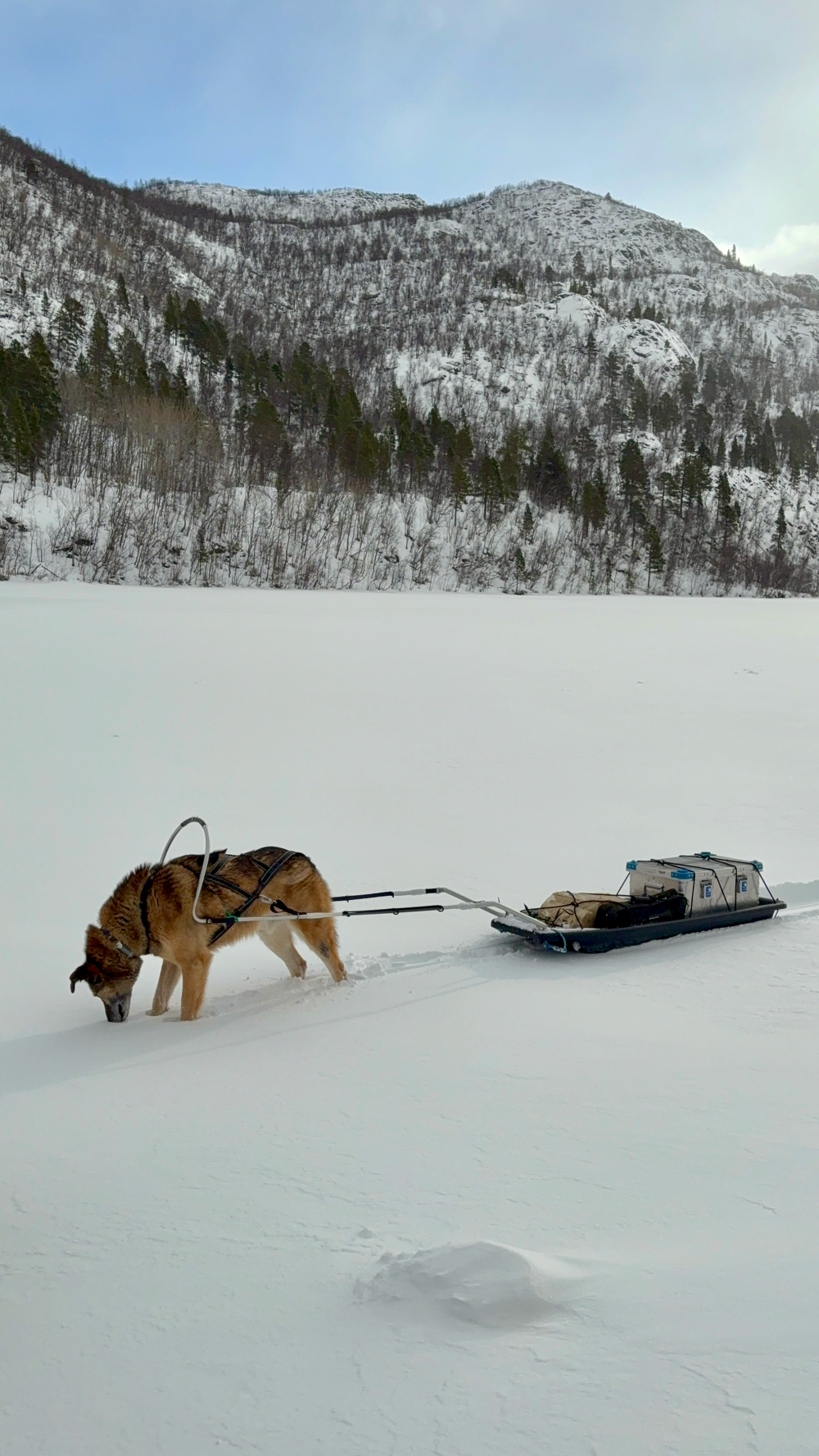
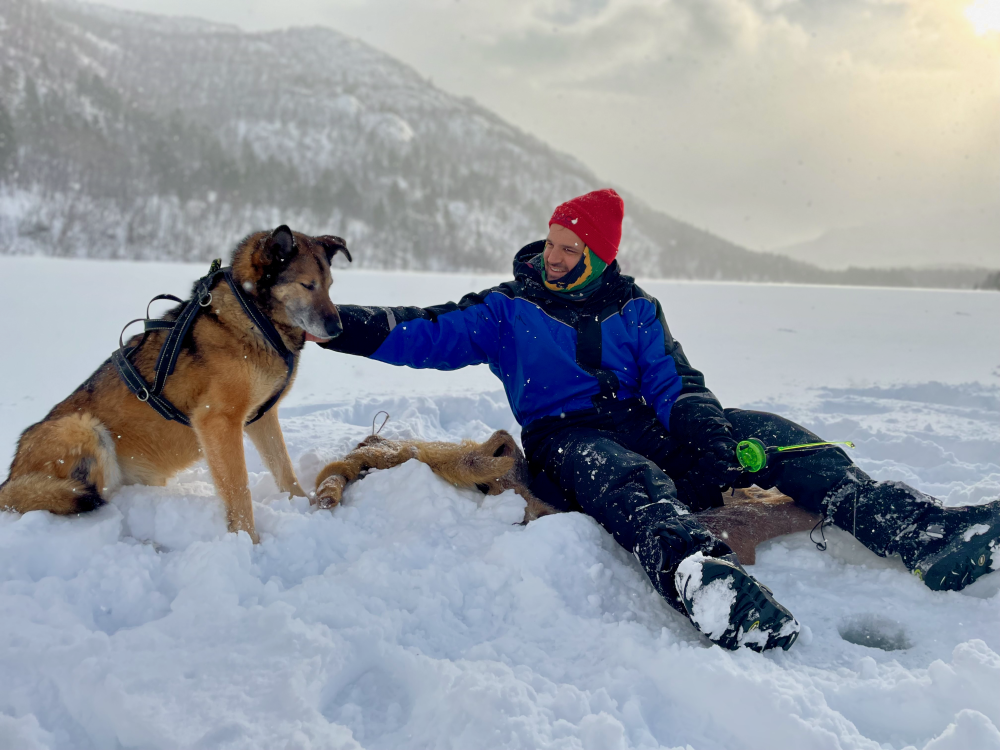
A gorgeous Alaskan husky accompanied us for the journey, and pulled a sled of fishing equipment to the camp where we set up for ice fishing. We were each given a reindeer skin to sit on, and sat in a large circle on the frozen lake.
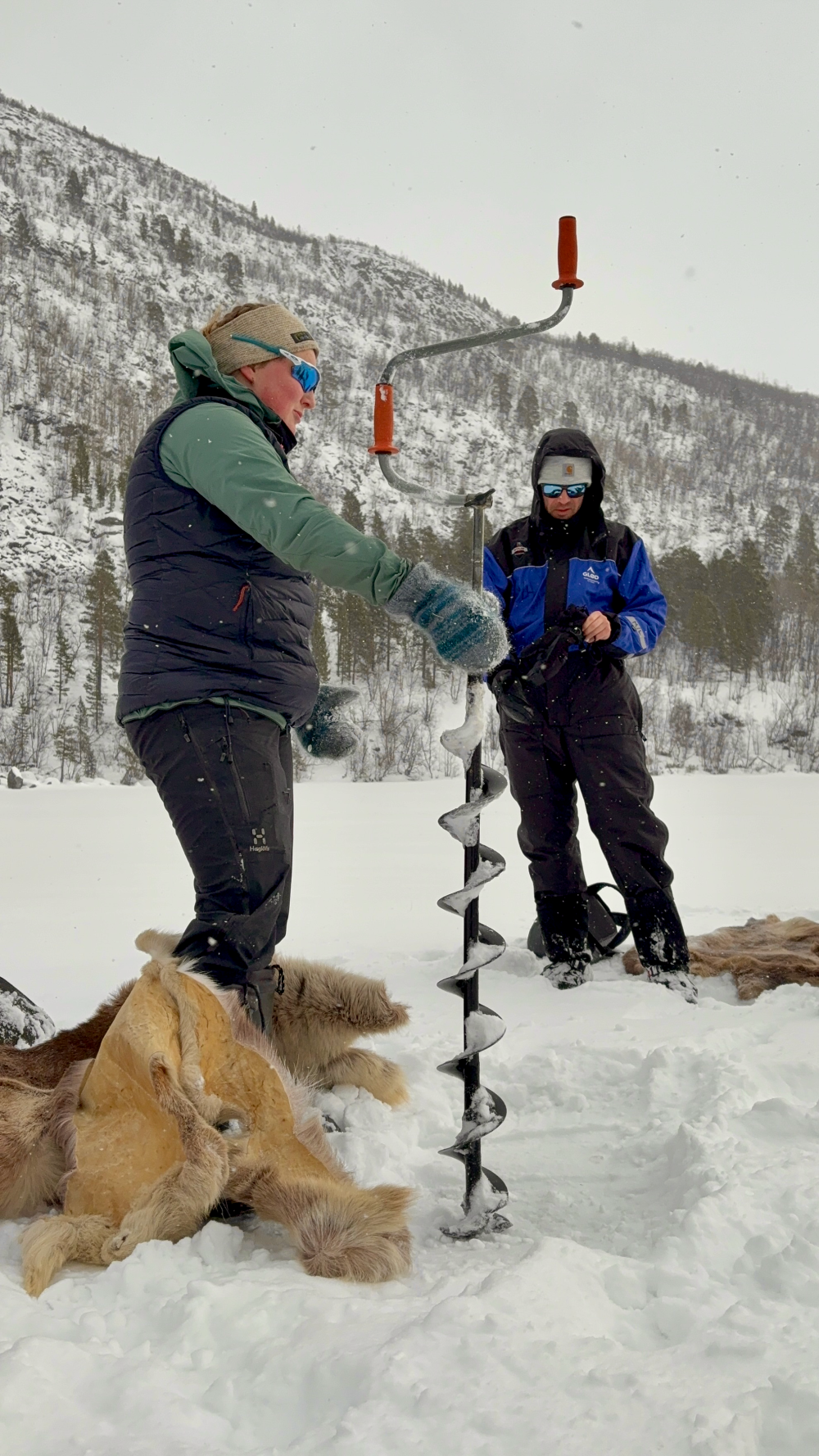
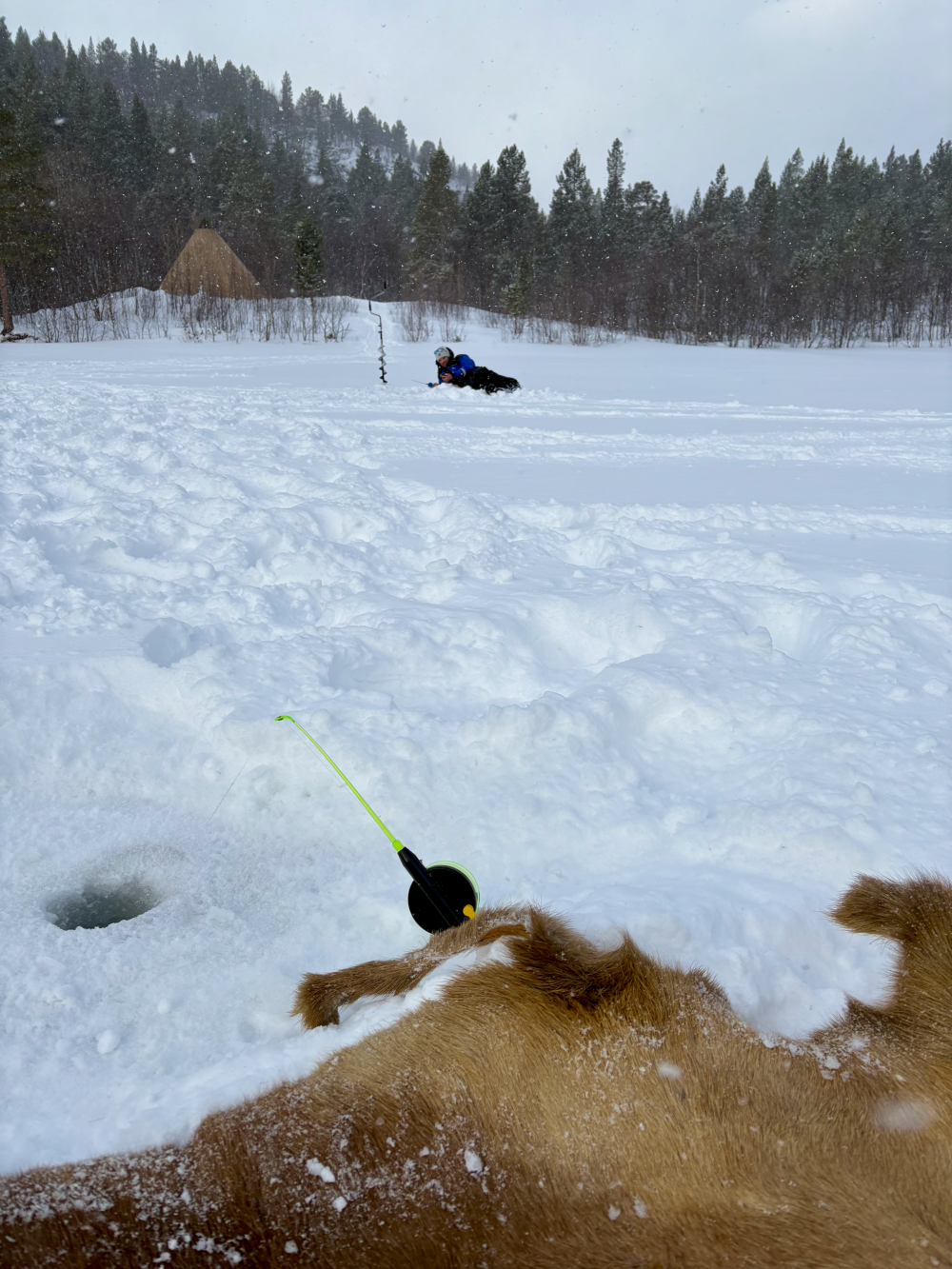
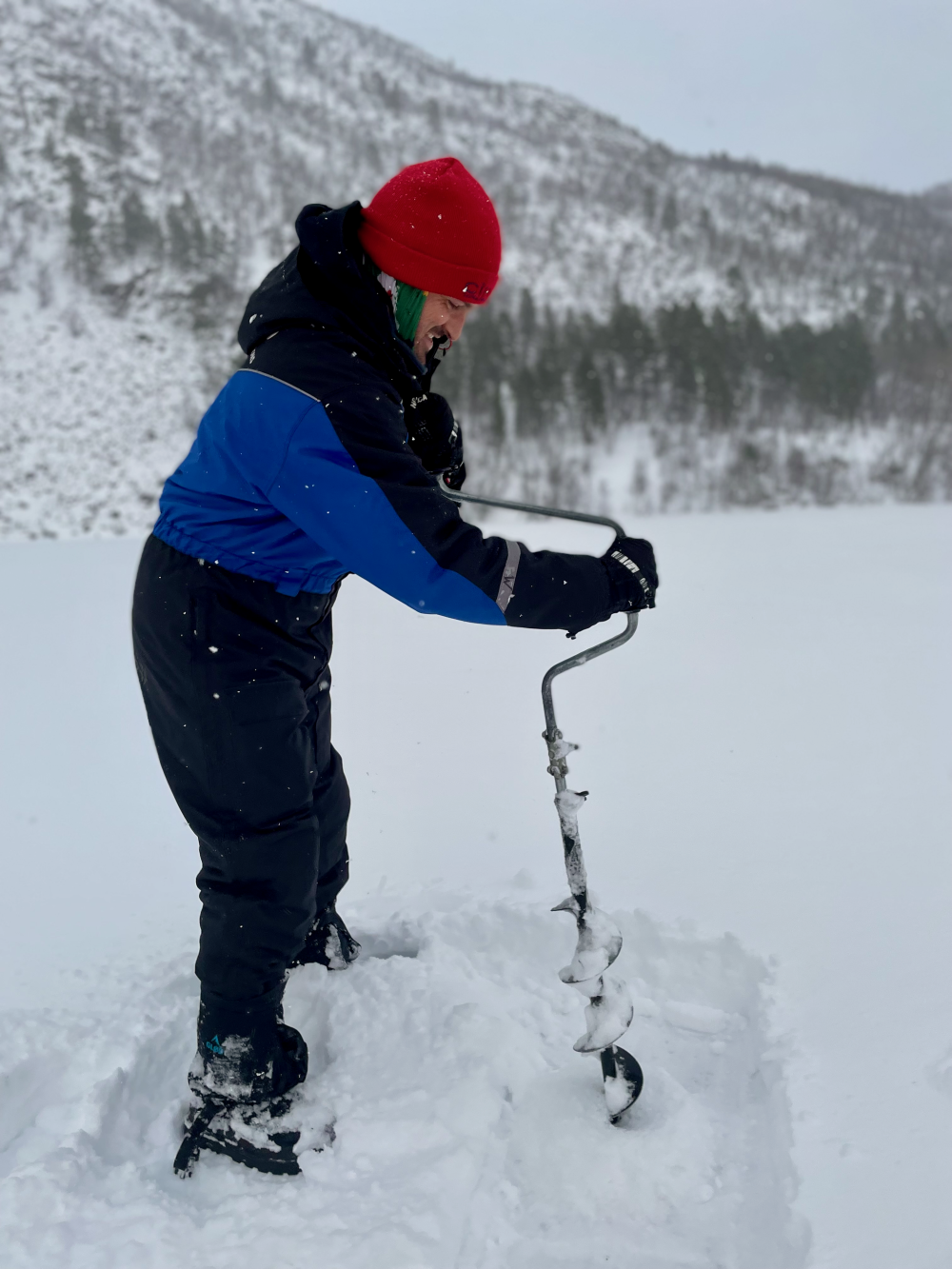
After a short tutorial on ice fishing, we found our own preferred fishing spots and even had to drill a hole in the ice with a tool that looked like a human-sized can opener! The fishing rod could have easily been confused with a kid’s toy, but I have researched to ensure that this wasn’t one big elaborate joke by our guide!
We used maggots as bait and dropped the line to the bottom of the lake. It was a surreal experience sitting on a reindeer skin, patiently waiting for an arctic char fish to nibble on the bait, taking in the incredible mountainous and tranquil surroundings. We realised the air we were inhaling was probably some of the freshest air we’ve ever breathed in!
Our friendly team husky also kept coming over to check in with each of us. He was very curious and sociable, often checking up on whether we had any bites. Can’t blame him!
Afterwards, we got to warm up in a cosy tent next to the lake. It was a traditional Sámi herdsman tent, called a lavvu, and inside our guide had lit a fire and surprised us with a scrumptious lunch and a warming drink. Magical afternoon, and an experience we highly recommend!
Book your snowshoeing and ice fishing adventure here!

Dogsledding
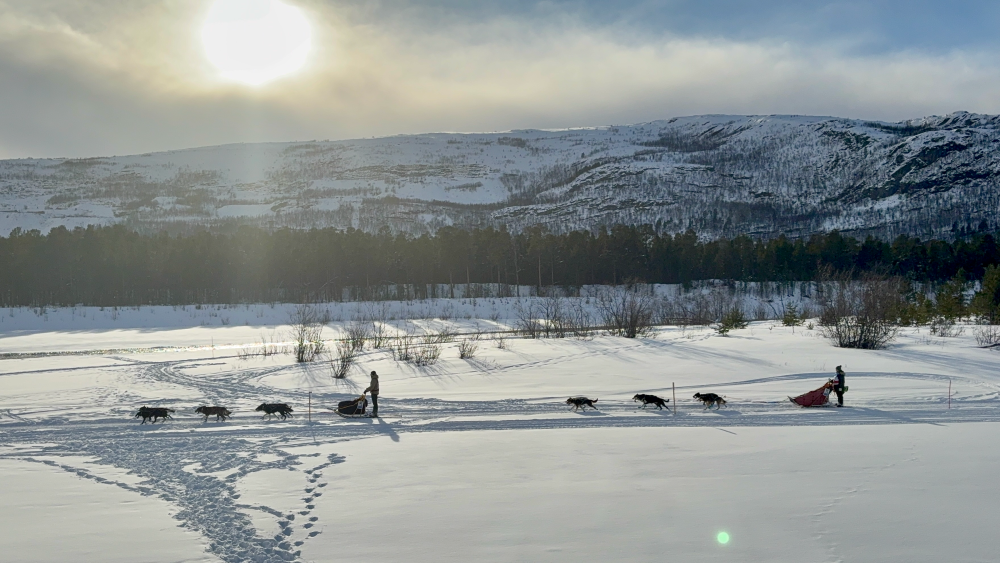
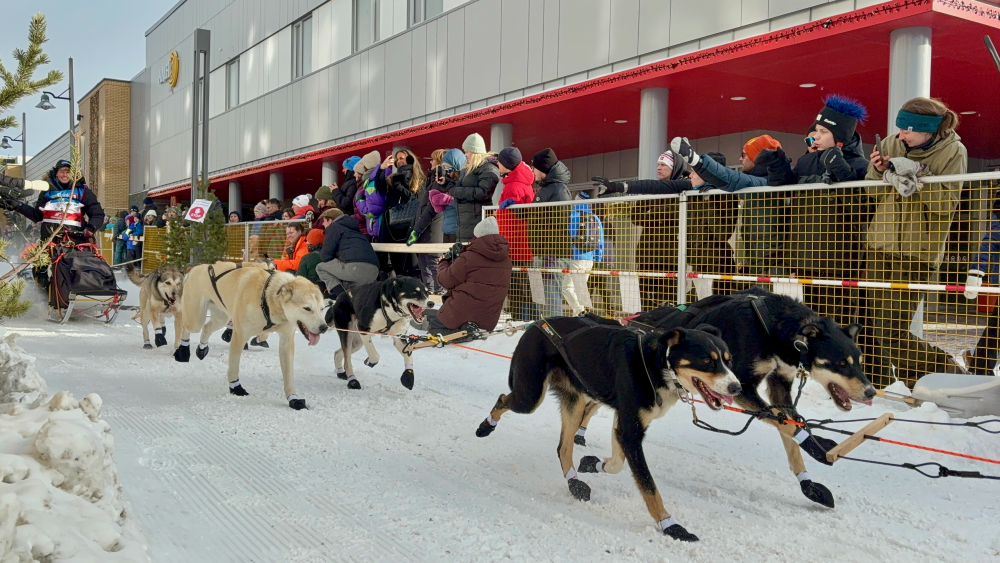
Dog sledding is a large feature of the community and local life in northern parts of Norway. Our trip happened to coincide with the Finnmarkslopet 2025 Dog-Sledding race which takes place each year in March. It’s Europe’s longest (and the world’s second longest) dog sled race at 1,100km, although there are two shorter events.
We were fortunate to watch the start of the main event, lining the main street in Alta alongside hundreds of locals and other tourists, cheering on the mushers (dog handlers) and their teams of 14 dogs. The race typically takes around a week, and they have to be fully self sufficient during this time for both themselves and their husky dogs. We learnt they do have a support vehicle should any of the huskies experience exhaustion or an injury.

Having had the fortune to witness this unique annual event, we were very excited to have booked our own dog-sledding experience with Trasti & Trine. This is a locally owned hotel, with a beautiful onsite restaurant and dog kennels based just outside of town.
We hadn’t really anticipated that the dog-sledding would be such an immersive experience from start to finish, and it was a highlight of the trip.
The activity first started with finding our 4-dog team. We were taken to the dog yard, where 60 or so huskies were excited and keen to head out. The guides gave us four harnesses in different sizes as well as the names of the dogs we were to find. Next was a bit of a wild goose chase as we looked for our team and got them harnesssed up and ready to go!
Our 2 hour dog sled adventure departed Alta, and then weaved through the beautiful pine forest and across the frozen river. We were travelling in pairs, with one person steering the sled, and the other sitting in the sled keeping an eye on our furry friends and the track ahead.
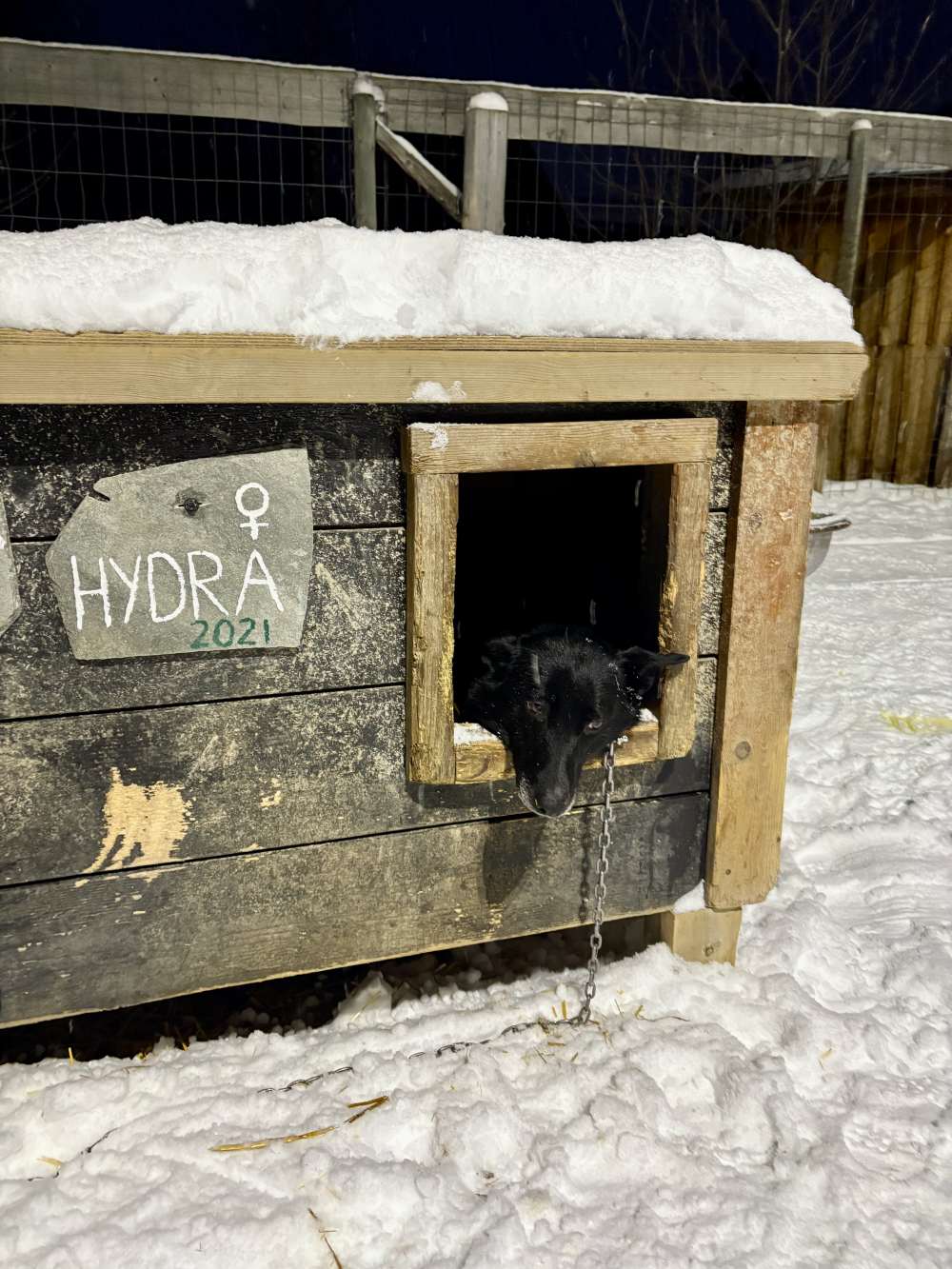
As a dog-lover, it was so special to connect and bond with our dogteam before starting the dogsled adventure. We loved the variety in size and personalities, with the larger (and older), energetic ‘Bacon’ (XL harness), a stark contrast to the smaller (and younger), obedient ‘Hydra’ (S harness). They teamed up so well, although Bacon needed a few pit-stops to cool off in the snow!
It is worth noting that Trasti & Trine is also an active running kennel and therefore the dogs actually regularly compete in dog races, including the Finnmarkslopet. In fact, Hydra had participated in the 2024 edition of the event.
Dogsledding in Alta was such an enjoyable experience. We’d also like to highlight that the dogs are incredibly friendly, healthy and clearly love their time on the sled. Furthermore, it is truly an activity for people of all ages and shapes and sizes, whether you are a ‘S’ like Hydra or an ‘XL’ like Bacon!
Book your dogsledding tour here with Trasti & Trine, or here with another local company Aventyr, which offers dogsledding under the Northern Lights!
Hunting for the Aurora Borealis
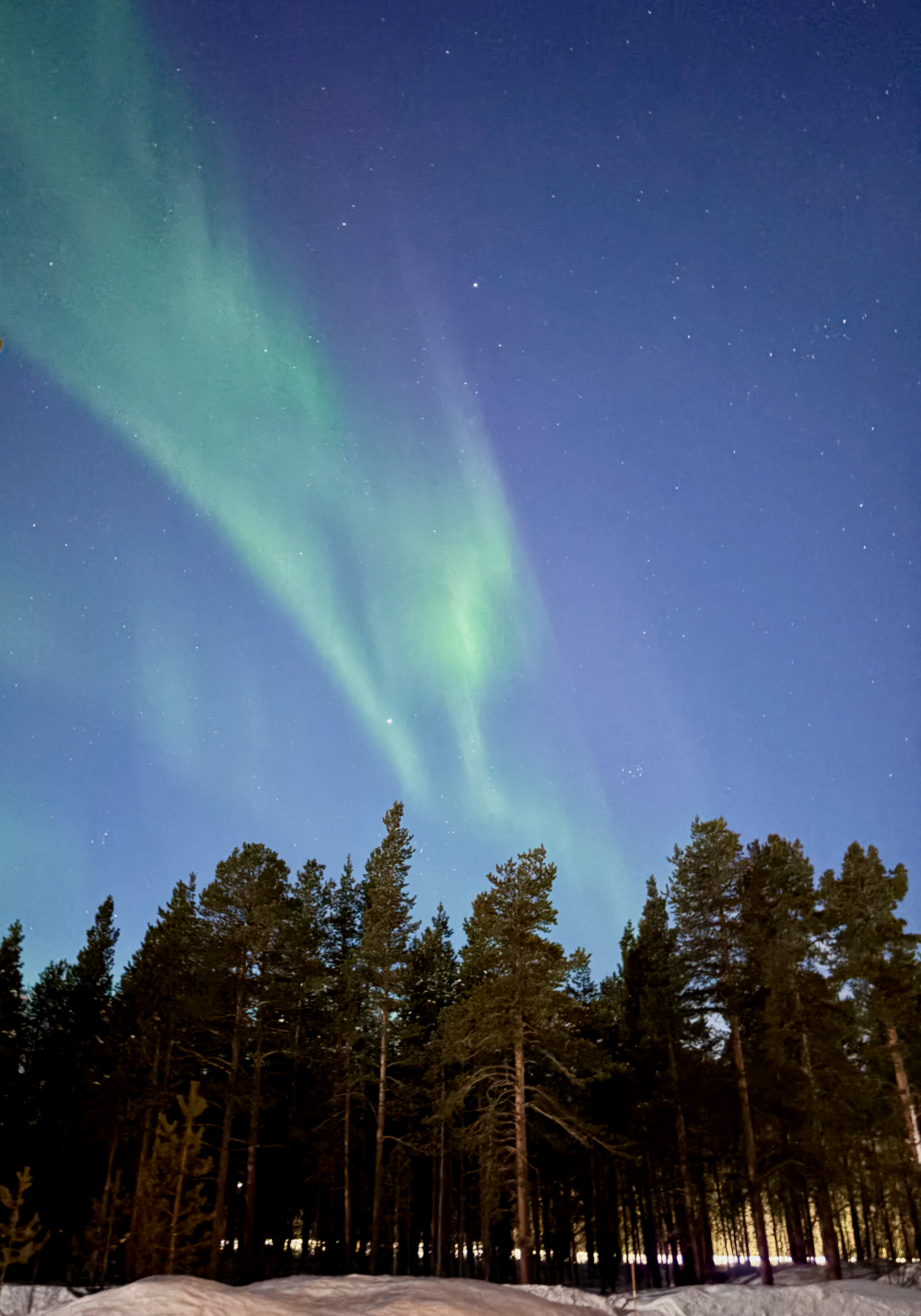
Hunting is actually not an apt description of our search for the Northern Lights. In fact, they appeared on our second night in Alta and during our first night staying at GLØD Domes, 10 minutes from the city centre. The Northern Lights did their magical dance for us a couple of times in the evening. It was just incredible to be able to step away from the dinner table and admire the night sky.
So, if the conditions align, there is a high likelihood of a chance sighting of the Northern Lights from your accommodation. But there are also a number of tours you can take which gives you the full experience.
We joined an Aurora Borealis tour to maximise our Northern Lights sighting opportunities. I highly recommend joining a tour that keeps the group size quite small, rather than joining a coach load of tourists.
Our tour started with a meal and warming drink, before being introduced to the guides. They gave a quick introduction on the history and science behind the Northern Lights. The guides also outlined the travel route, aiming to go in the direction of the clearest sky and least cloud cover.
Turns out, you can spend a fair bit of time travelling to search for prime locations for the lights. But fear not, it is a comfortable drive and you might also be fortunate to see some wandering elk or reindeer on the sides of the roads.
They also kept us warm and cosy with hot chocolate and snacks en route. GLØD suggests a 90% success rate on tours, however, there is naturally a risk that you won’t have a sighting due to the cloud cover. But as mentioned, the dancing lights could surprise you on any night of your trip. Just make sure you spend a few nights in Alta to allow for this to happen!
We also learnt that given Alta’s geographic location, the area is one of the best destinations to see the Northern Lights in the world. For comparison, our guide suggested Alta has twice as many clear sky evenings compared to Tromsø. So it is no surprise that a Cathedral of the Northern Lights was built in Alta!
Book your Northern Lights tour here!
Sampling local cuisine
We were so pleasantly surprised by the local food in Alta. In fact, the range of dishes we sampled during our time in Alta was awesome. Due to Alta’s location by sea and the river, naturally there were a number of tasty seafood dishes including salmon, trout and arctic char. I could probably devour arctic char for every meal for the rest of my life. It was melt-in-your-mouth delicious!
We also got to enjoy a wide range of other local foods, including lamb, elk, reindeer and warming soups.
A place we’d highly recommend for eating in Alta, was the 5-course fine dining experience at Trasti & Trine. This feast came highly recommended by a couple of friends, and had rave reviews online. And it most definitely lived up to the recommendations. Each course came paired with a different wine, with courses ranging from hare croquette, elk tartare, monkfish and reindeer. Johnny Trasti, head chef and co-owner alongside his partner Trine Lyrek, was incredibly welcoming and hospitable, alongside his team. A must-do experience in Alta!

Exploring the town of Alta
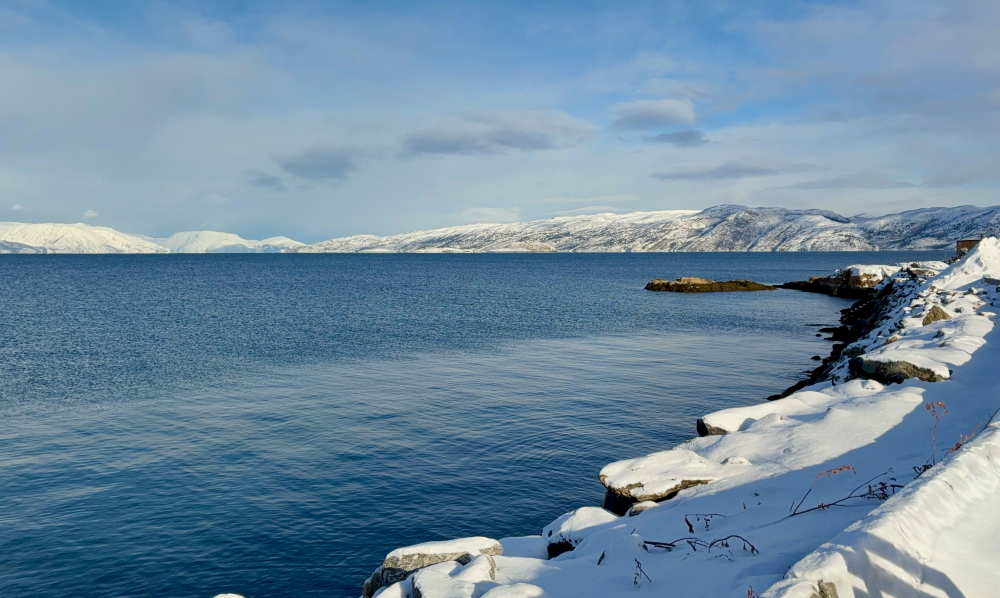
Alta is a really pleasant town to explore by foot, in fact, it is pedestrian friendly. There are marked pedestrian and bike routes throughout the town, which makes it really straightforward and safe. One of the best things to do in Alta is walk from the heart of town to the head of the Alta Fjord and the port. The air was so fresh and crisp, a real joy to inhale when you’ve come from London, like us!
Within the heart of Alta, there was a great range of restaurant options, as well as a central shopping centre. We also really enjoyed the pop-up market selling a range of food and clothing items. This is a great place to shop for traditional Sámi clothing and a wide range of fur hats to keep you warm.
Alta and its surrounding area has a rich history, with a number of interesting historic landmarks or museums that are well worth visiting.
A must-see attraction we really enjoyed visiting was the aforementioned Cathedral of the Northern Lights. It’s a surprisingly new cathedral, as they go, consecrated in 2013. The structure has an external cladding made from titanium sheets, and inside, the altar wall is treated with a blue glaze to accentuate the figure of Christ. It’s definitely worth paying a visit. If not just to see its incredible organ, which has 29 stops and approximately 1800 pipes! There is also a museum, which shows a 10 minute documentary on history of the Northern Lights, which is well worth watching.
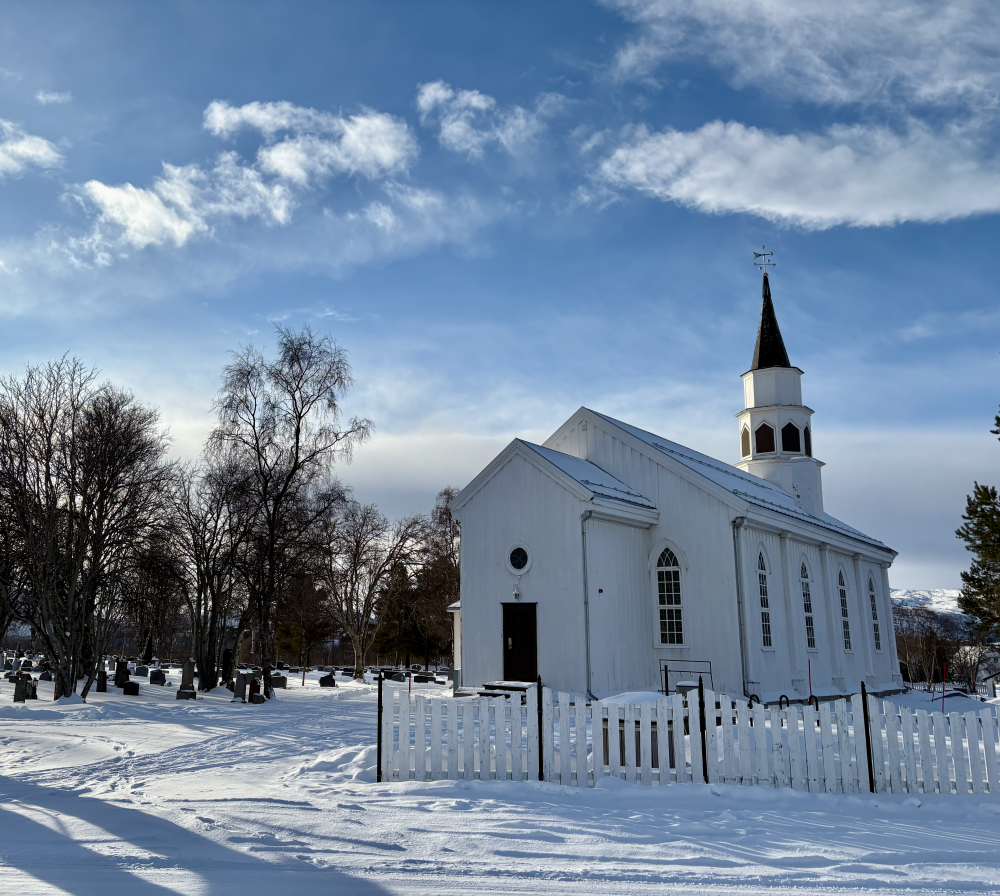
We also visited the Alta Church, which was about 5 minutes into our walk down to the fjord. The church must be one of the most scenic, with a magnificent backdrop of mountains surrounding Alta. It was interesting (and sobering) to learn that Alta was a key strategic location for German forces during WW2. Unfortunately, the majority of Alta burned down in 1944 during a Nazi retreat – but the only building not to be burned down was the Alta church.

Other things to do in and around Alta
Although we prioritised our trip around dog sledding and snow adventure activities, there are still plenty more things to do in Alta! Here’s my pick of the best:
- Altafjord 2-hour adventure boat cruise with a guide
- Fjords and scenic landscapes tour from Alta
- Horse riding under the Northern Lights
- Sleigh ride and dining experience
- Reindeer and Sámi Culture Experience
Where to stay in Alta, Norway
GLØD Aurora Canvas Dome
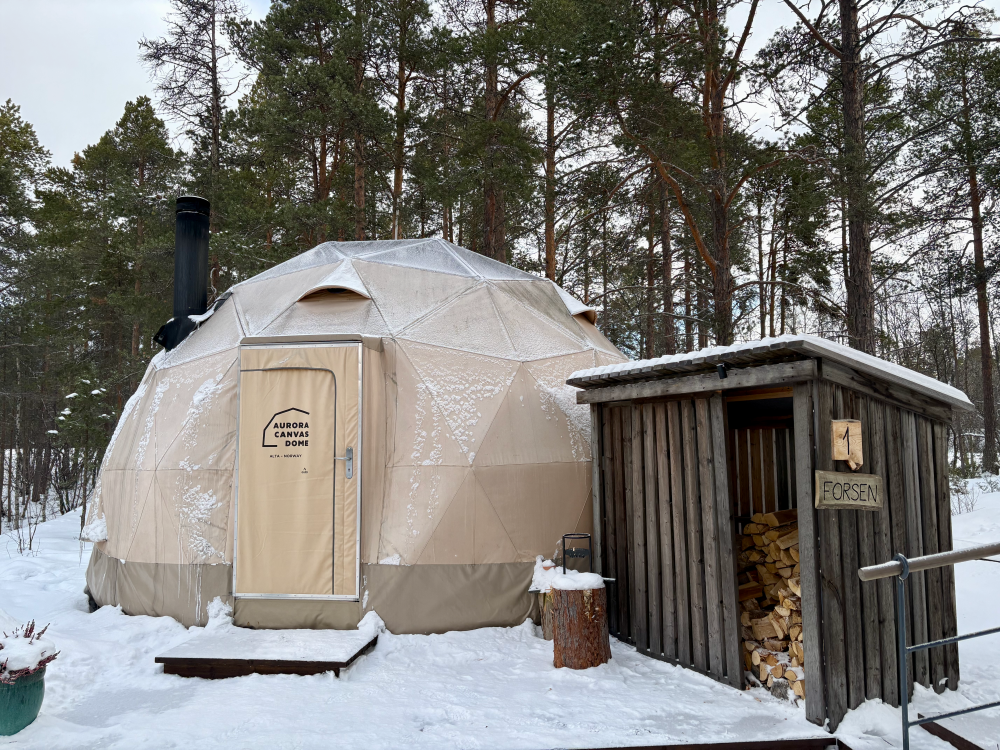
These domes provide the ultimate base for a winter Arctic adventure! This unique accommodation was nestled in the pine forest, and was a perfect escape into nature!
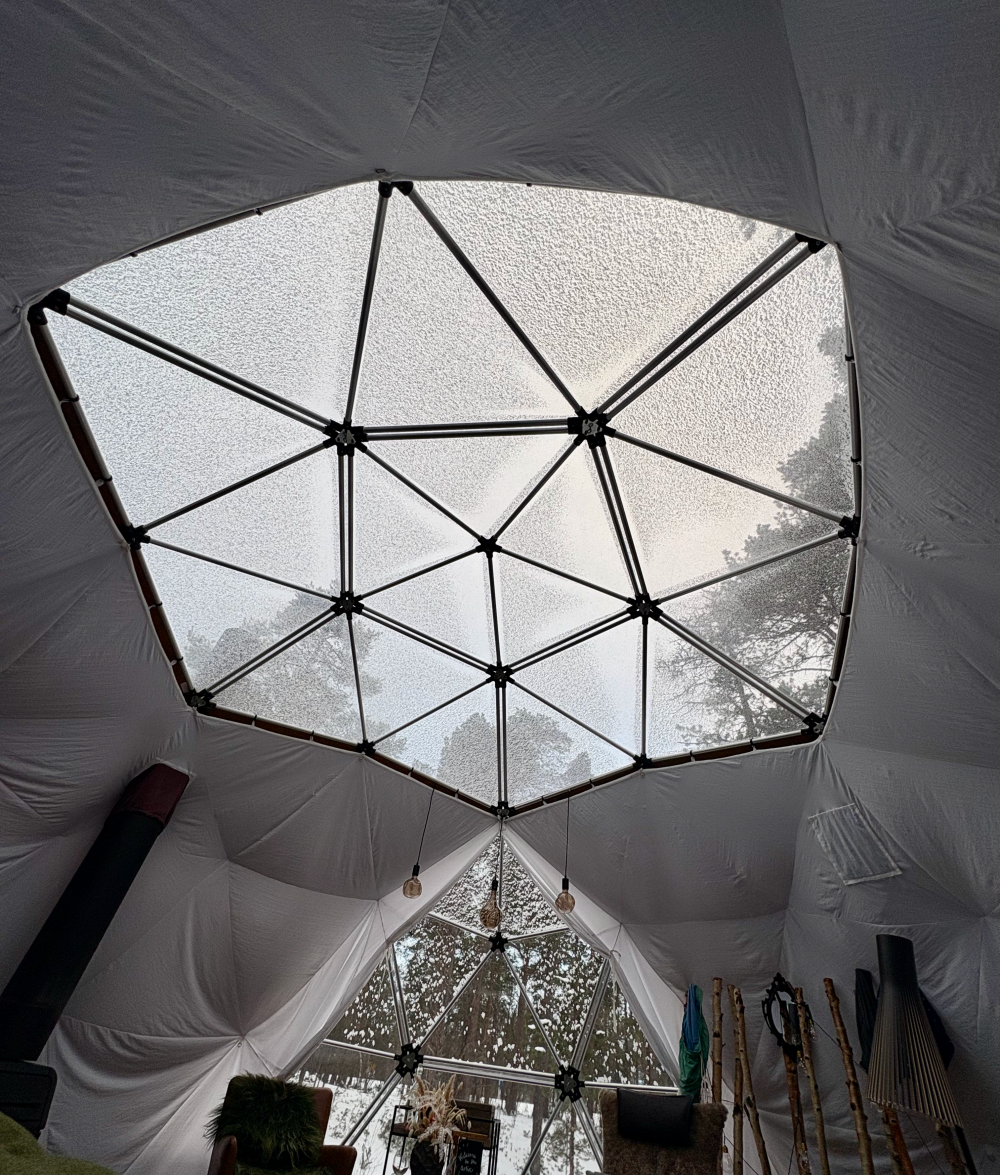
We hadn’t stayed in dome lodging before but the experience was exceptional! The GLØD Aurora Canvas Dome was really well equipped to keep you cosy and warm, and included a heater, wood fire and an electric blanket on the bed(s). The ceiling is transparent, so by day, you can peep squirrels scurrying about the tree tops, but by night, going to sleep looking up at the stars is truly a unique experience. And of course, if luck is on your side, you might even see the dancing northern lights.
There was also a bathroom attached, so you didn’t need to walk out in the snow in the middle of the night. The domes had excellent Wi-Fi and electricity generated from renewable energy. Outside the dome was a table and chairs too, for an early morning coffee!
We could have easily spent hours and hours relaxing here, reading or perhaps writing blog articles!
The wider facilities at the Aurora Canvas Domes included a sauna. The perfect way to relax after a day of adventure.
A stay in one of the domes, which sleeps two people starts from about £300 per night. Although they are less expensive in the summer months. Book your stay in the dome here.

Trasti & Trine
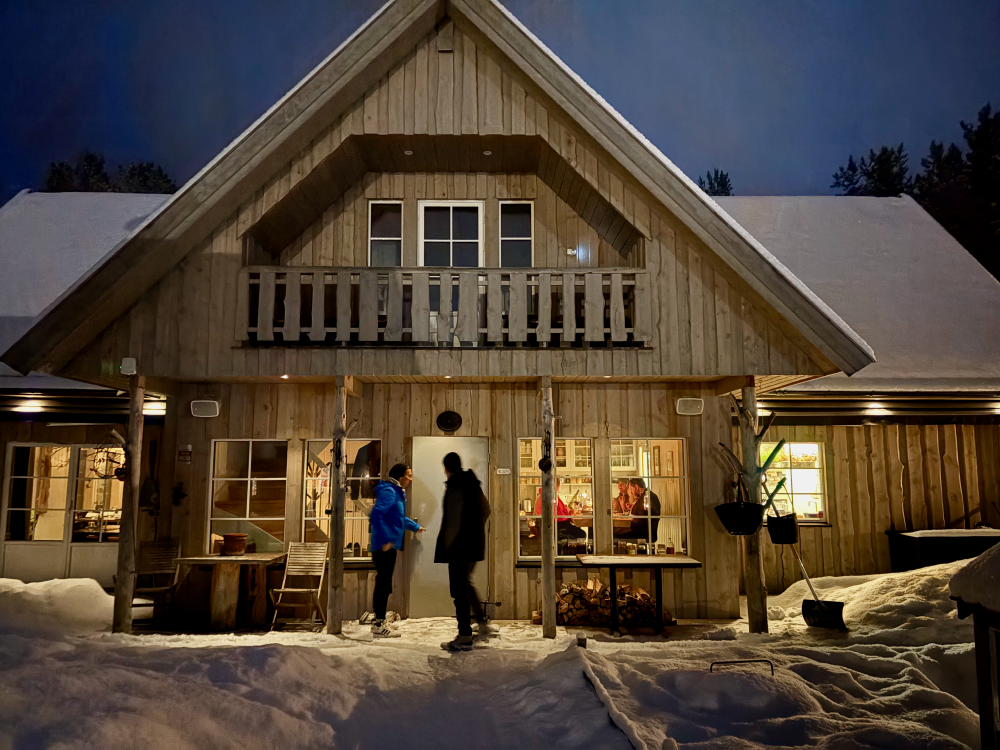
Trasti & Trine is a special experience, where your stay goes beyond a place to sleep. As detailed above, the site encompasses an incredible restaurant, a boutique hotel, farm and husky dog yard. It is based in the forest, around 10km from the heart of Alta, and 500m from the Alta River.
The boutique guesthouse includes unique rooms, each one with a different design and feel. Hytta, their cosy cabin is right by the farmyard beside the dog yard, and can sleep up to 6 people. Everything at Trasti & Trine is so charming and rustic, we absolutely loved it!
The different room categories at Trasti & Trine range from around £160 per night to £300 per night.

Sorrisniva
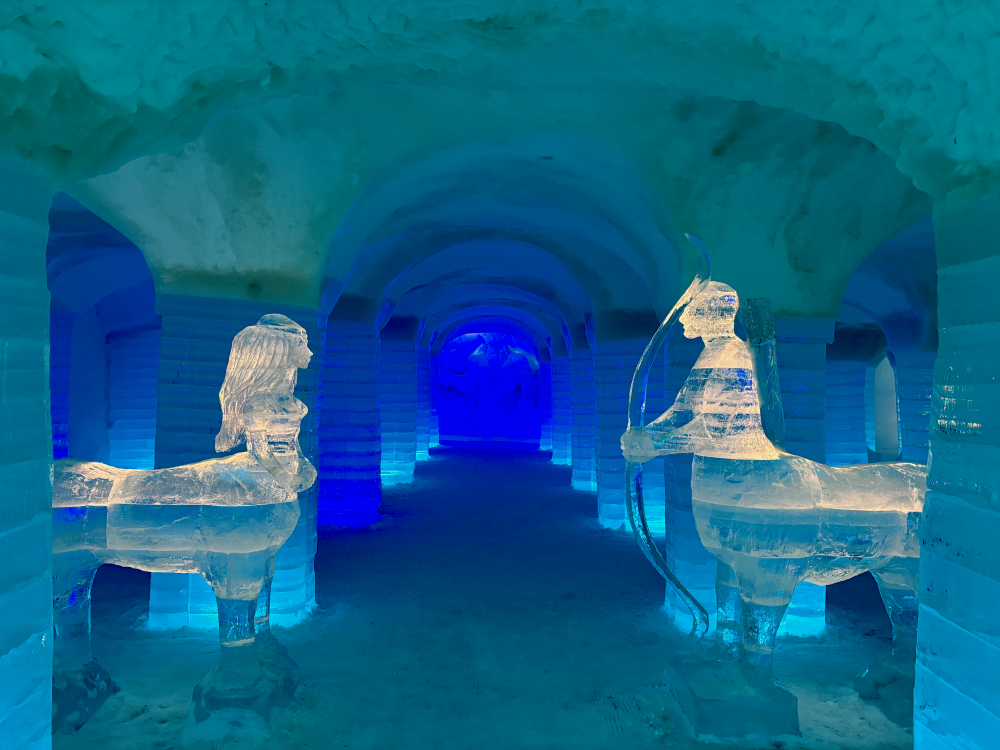
Sorrisniva is a year-round resort. It offers luxury accommodation within its new Arctic Wilderness Lodge, as well as in the World’s Northernmost Igloo Hotel!
From the surrounding mountains and roaming reindeer, to the incredible Sorrisniva Igloo Hotel, it’s a one-of-kind experience.
The Igloo Hotel/icehotel is the second of its kind in the world, and each year, it is rebuilt, with a team of artists and builders coming together to curate a new and unique hotel. Can you believe it takes over 250 tonnes of ice and 7,000m3 of snow to build?
The Igloo Hotel is open from December 20th to April 7th for overnight stays, but you can also visit during the day from 12pm to 8pm. For day visits, the entrance fee is 395 NOK (£29) per adult, and 180 NOK (£13) per child. This gives you the opportunity to enjoy a guided tour, as well as enjoy a drink in its Ice Bar.
Each suite is themed, and a true one-of-a-kind creation, handcrafted by their skilled ice sculptors.
A stay in the incredible Sorrisniva Igloo Hotel is around £400 a night for this epic bucket list experience. Book your stay here.
You could enjoy one night in the Igloo room, and then enjoy a more conventional stay at Sorrisniva’s stunning Arctic Wilderness Lodge. Located on the banks of the Alta River, they offer stylish, comfortable rooms and a stunning panoramic lounge.
A Deluxe Double room here, with a balcony, starts from around £284 per night. Book your stay here.
There are also two restaurants on site. The fine dining Maku restaurant offers some of the best dishes in the area, including reindeer and moose from the tundra, seafood from the Norwegian Sea and the Alta River, as well as vegetables and berries picked from the local wilderness. You definitely need to book ahead for a meal at Maku and it is only open for dinner, from 5pm.
Lavvu is the main restaurant for daily breakfast and lunch, and is themed to be a Sami tent experience. It is also open for dinner and guests can pick from an a la carte menu.
To get to Sorrisniva, you can either use your own hire car, or make use of their transfer services. They offer daily transport from Alta centre, as well as Alta airport, for both overnight guests and day visitors. The transfer is 450-500 NOK (£33-£37) per person, each way.
If you want to visit just for the day, you can book this great tour here, which includes transport, access to the Igloo Hotel and a hike to a frozen waterfall!
Central accommodation options in Alta (covering all price ranges)
As all the above options are just outside of Alta town centre, we wanted to provide a few other suggestions.
After landing from the airport, we spent 2 nights at the Canyon Hotell (rooms from around £125 per night) which was perfectly located and a very comfortable stay. Other options covering all price ranges include:
- Scandic Alta (Rooms from around £100 per night)
- Thon Hotel Alta (Rooms from around £125 per night)
Or Airbnb could be a good shout – there are dozens of great local properties to book.
Winter Arctic Adventure: An Alta Travel Guide
So that rounds out my travel guide to this beautiful region, at the northernmost tip of Norway. This guide covered all the key things you need to know for visiting Alta in Norway, as well as all the must-do activities to curate a winter arctic adventure.
I really hope this is useful for you if you’re planning a trip to Alta, Norway. If there’s anything else I can share or answer for you, please do let me know in the comments below. And if you’re keen to read about another adventure in Norway, then make sure to check out my guide to hiking Trolltunga, near Bergen.
If you enjoyed my Alta, Norway travel guide, then please do consider sharing through one of the below links. That would be amazing!
Wanna see more? Check my Instagram here or my Twitter here!
Disclaimer: This guide to the best things to do in Alta, Norway is based on a personal trip. There was no gifting or hosted involvement from any local companies or the tourist board.
