
Oahu is one of those destinations that can feel a little tricky to plan. It’s so well-known, so photographed, and so talked about that you sort of feel that you know what it’s going to be like before you arrive. And then you get to Oahu, and it completely re-writes everything you thought about Oahu.
Known as “The Gathering Place,” Oahu is the most populous of the Hawaiian Islands and home to the state capital, Honolulu. It packs an incredible amount into a relatively small island. From world-class surf beaches, lush, dense rainforest valleys, historic landmarks, great hiking, and one of the most vibrant food scenes in the Pacific, there’s plenty of things to see and do in Oahu. Or, you can simply soak up the sun with a mai tai.
Here’s everything you need to know to plan the perfect trip to this paradise island.
History and Background of Oahu, Hawaii
Hawaii’s story is one of the most fascinating, and at times heartbreaking, in the world, and understanding a little of it makes your visit so much richer.
The Hawaiian Islands were first settled by Polynesian voyagers, believed to have arrived from the Marquesas Islands and later Tahiti, sometime between 300 and 800 AD. These were extraordinary navigators who crossed thousands of miles of open ocean using only the stars, ocean currents, and the flight patterns of birds to guide them. The society they built was sophisticated and deeply connected to the natural world. It was a culture of skilled farmers, fishermen, and warriors governed by a complex system of laws known as the kapu system.
For centuries, the islands existed as separate chiefdoms, frequently at war with one another. That changed at the end of the 18th century when a chief from the Big Island named Kamehameha I, a formidable military and political leader, embarked on a campaign to unite the islands under his rule. By 1810, he had succeeded, becoming the first King of a unified Hawaiian Kingdom. Oahu, with its natural harbour at what would later become Honolulu, quickly grew into the kingdom’s political and commercial centre.
The arrival of European explorers in the late 1700s changed everything. British Captain James Cook made first contact with the islands in 1778, and within decades, Hawaii had become a crucial stop on Pacific trade routes. Western missionaries, merchants, and sugar plantation owners followed, bringing with them disease that devastated the native Hawaiian population. Sadly, it is estimated to have declined by as much as 90% over the course of the 19th century. They also caused significant cultural and political disruption.
The sugar industry transformed the islands profoundly. Plantation owners, mostly of American descent, imported tens of thousands of workers from Japan, China, Portugal, Korea, and the Philippines to work the fields. This wave of immigration is the reason Hawaii has such an extraordinarily diverse culture today. From the food, the music, the language, the traditions all reflect this remarkable blending of cultures.
In 1893, a group of American businessmen, with the backing of US Marines, overthrew Queen Liliuokalani, who was Hawaii’s last reigning monarch. This coup remains a deeply painful part of Hawaiian history. Queen Liliuokalani famously appealed to the United States government to restore her throne, but in 1898 Hawaii was formally annexed as a US territory. You can visit Iolani Palace in Honolulu, where the Queen was imprisoned for eight months following the overthrow.
Hawaii became the 50th US state on August 21st 1959.
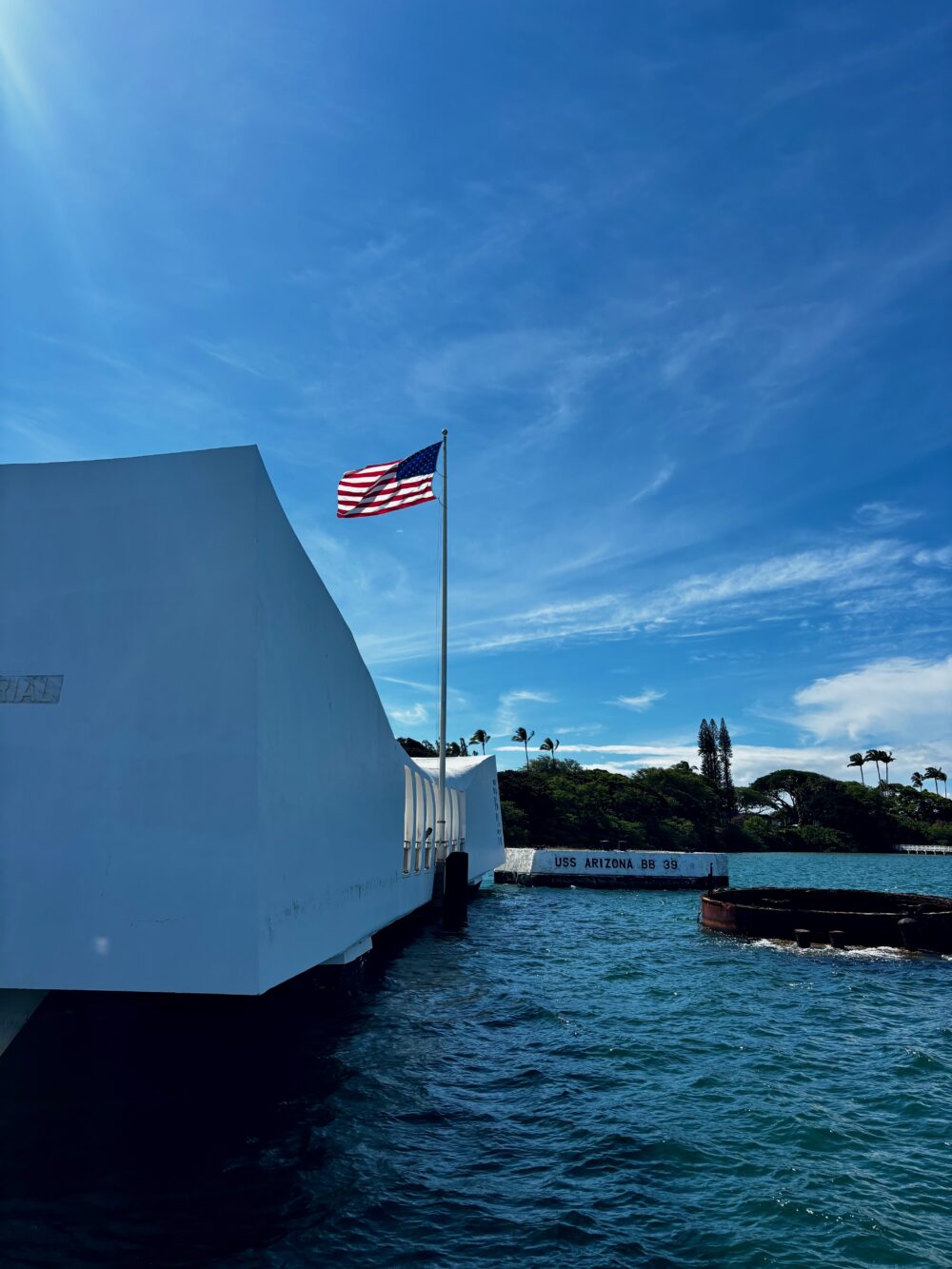
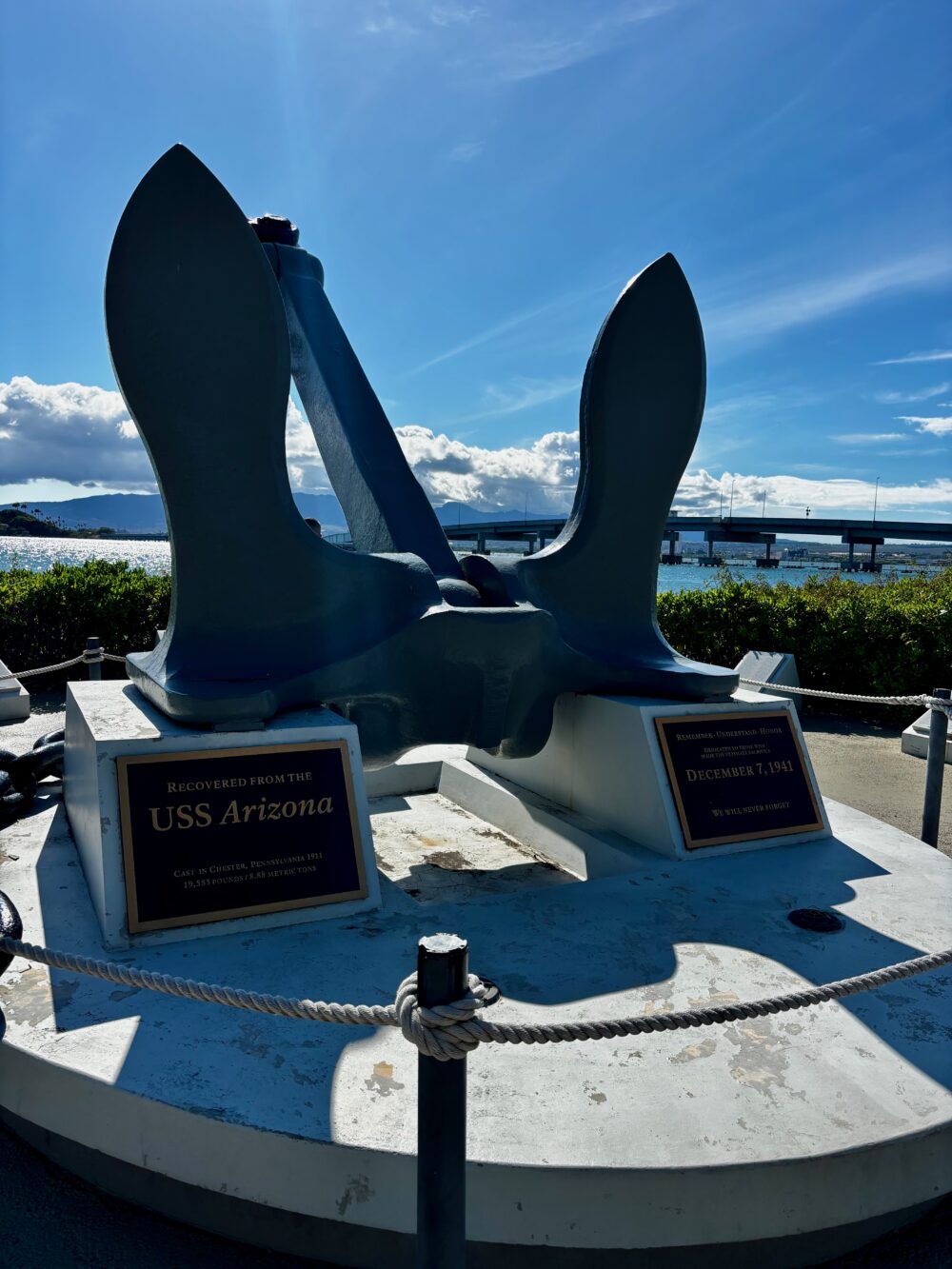
During WWII, Honolulu was attacked by the Japanese at the US Naval base at Pearl Harbor. Over 2,400 Americans were killed and nearly 1,200 more were wounded. Pearl Harbor remains one of the most significant and sobering historic sites in the country, and a visit there is an essential part of any Oahu trip.
Today, Oahu is home to around one million people, which is nearly three quarters of Hawaii’s entire population. For a small island, it welcomes millions of visitors every year.
Native Hawaiian culture is experiencing a powerful revival, with the Hawaiian language, traditional navigation, hula, and other cultural practices being actively preserved and celebrated. As a visitor, taking the time to engage with and respect that culture can really enhance your experience, and you’ll find plenty of opportunities to do so around Oahu.
Oahu Travel Guide: Practical information
Oahu visas and entry information
As Oahu is part of the United States, standard US entry requirements apply.
UK visitors
British citizens can visit Hawaii under the Visa Waiver Program (VWP). This allows stays of up to 90 days for tourism or business without needing a full visa. However, you must apply for an ESTA before you travel. This is mandatory and must be done in advance of your flight.
ESTA applications are made online at the official US government website (esta.cbp.dhs.gov) and cost $21 per person. Most applications are approved within minutes, though it’s recommended to apply at least 72 hours before departure. Once approved, your ESTA is valid for two years or until your passport expires, whichever comes first. So if you’ve been to the US recently you may already have one in place.
EU and other nationalities
Most EU citizens and nationals of other Visa Waiver Program countries (there are 42 in total, including Australia, New Zealand, Japan, and South Korea) can also visit under the VWP with an approved ESTA. Check the full list of eligible countries at travel.state.gov.
If your country is not part of the Visa Waiver Program, you will need to apply for a B-2 tourist visa through the US Embassy in your country before travelling.
On arrival
All visitors to the US will go through US Customs and Border Protection on arrival at Honolulu International Airport (HNL). You’ll need to:
- Complete a customs declaration form (which is done digitally via the CBP One app or APC kiosks at the airport)
- Have your passport and ESTA confirmation ready
- Provide biometric data (fingerprints and photo) if it’s your first time entering the US
A few things to note:
- Your passport must be valid for the duration of your stay. The US does not require six months’ validity beyond your travel dates, unlike some other countries
- The 90-day VWP limit cannot be extended. If you plan to stay longer, you’ll need a visa
- Always book a return or onward ticket before travelling, as entry under the VWP requires proof of departure
Entry requirements can change, so always check the latest guidance from the US Embassy in your country and the official US Customs and Border Protection website before you travel.
How to get to Oahu?
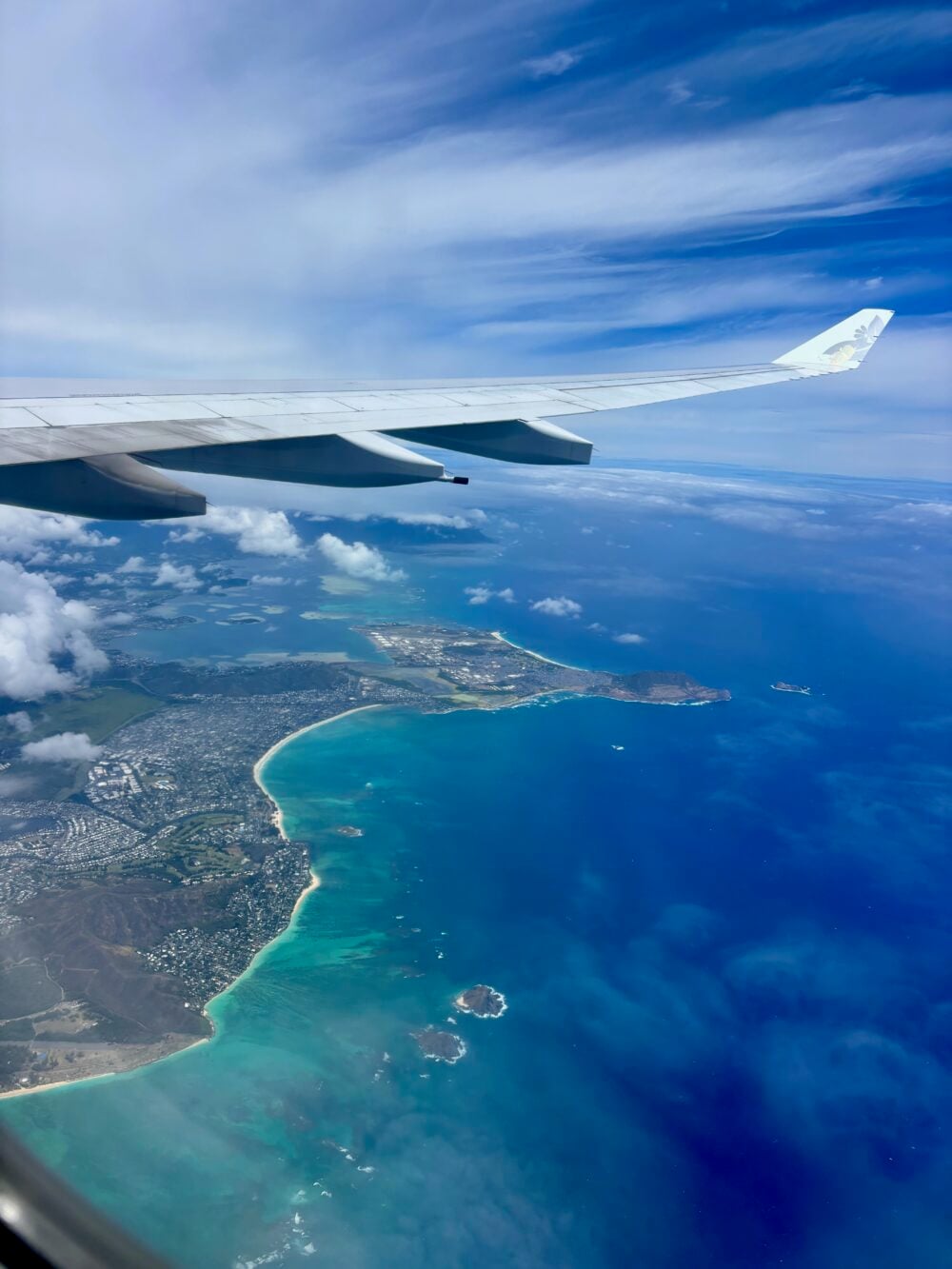
Honolulu International Airport (HNL) is well-connected with direct flights from the US mainland and many international cities. From the UK, you’ll typically connect via Los Angeles, San Francisco or Vancouver.
How to get around Oahu?
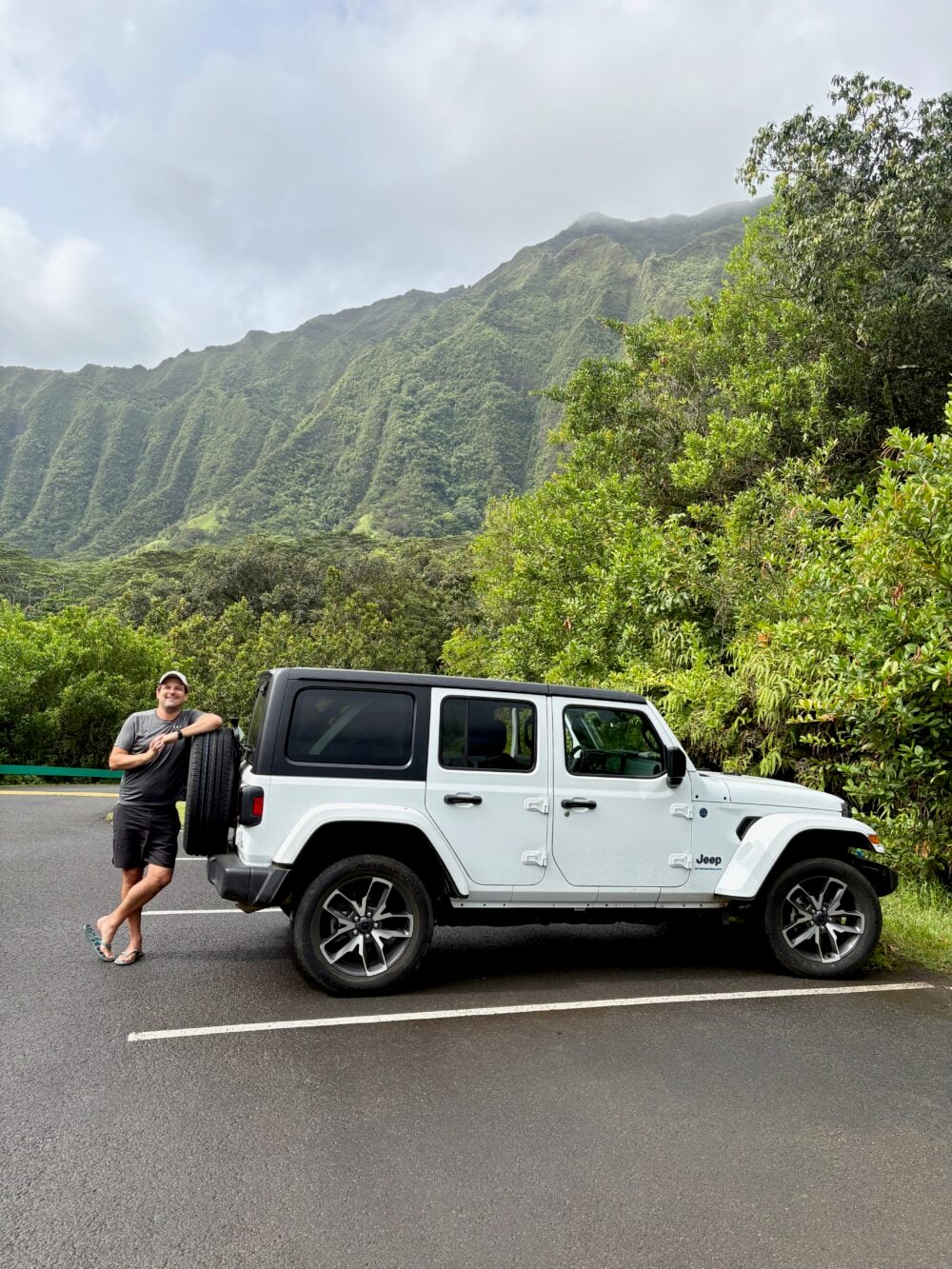
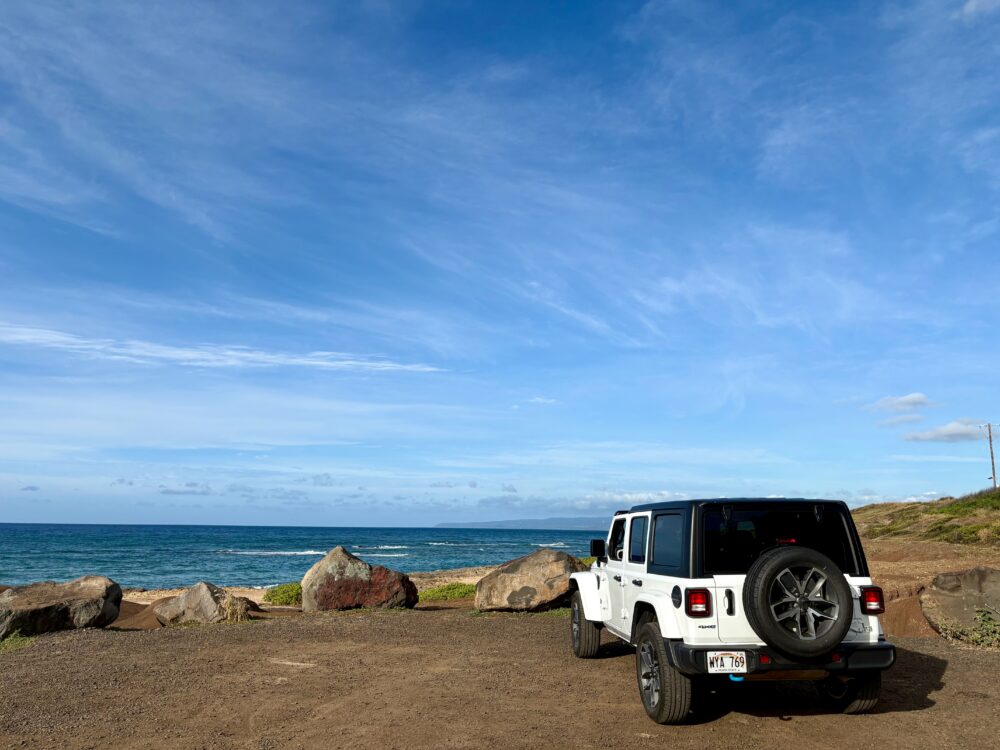
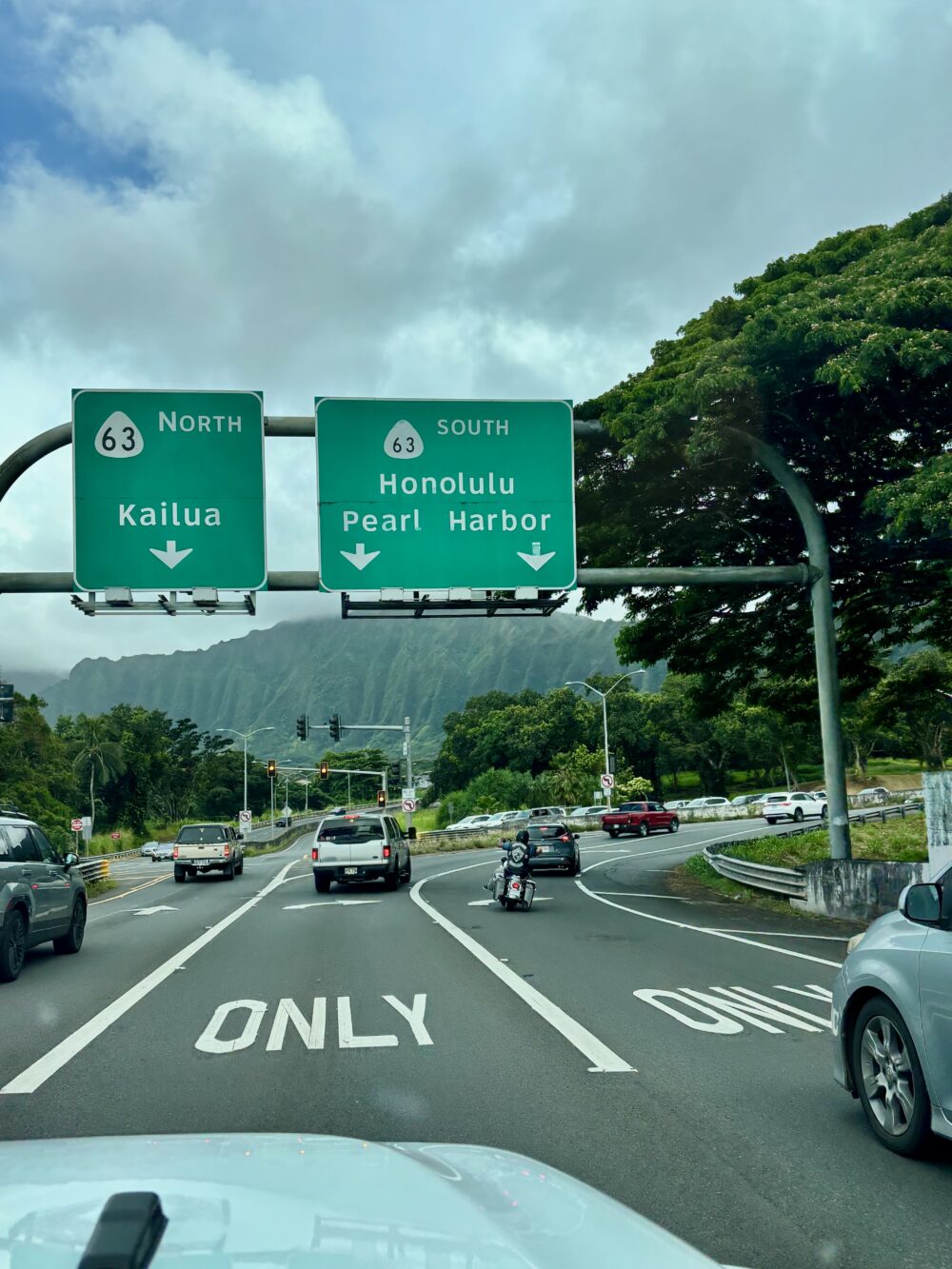
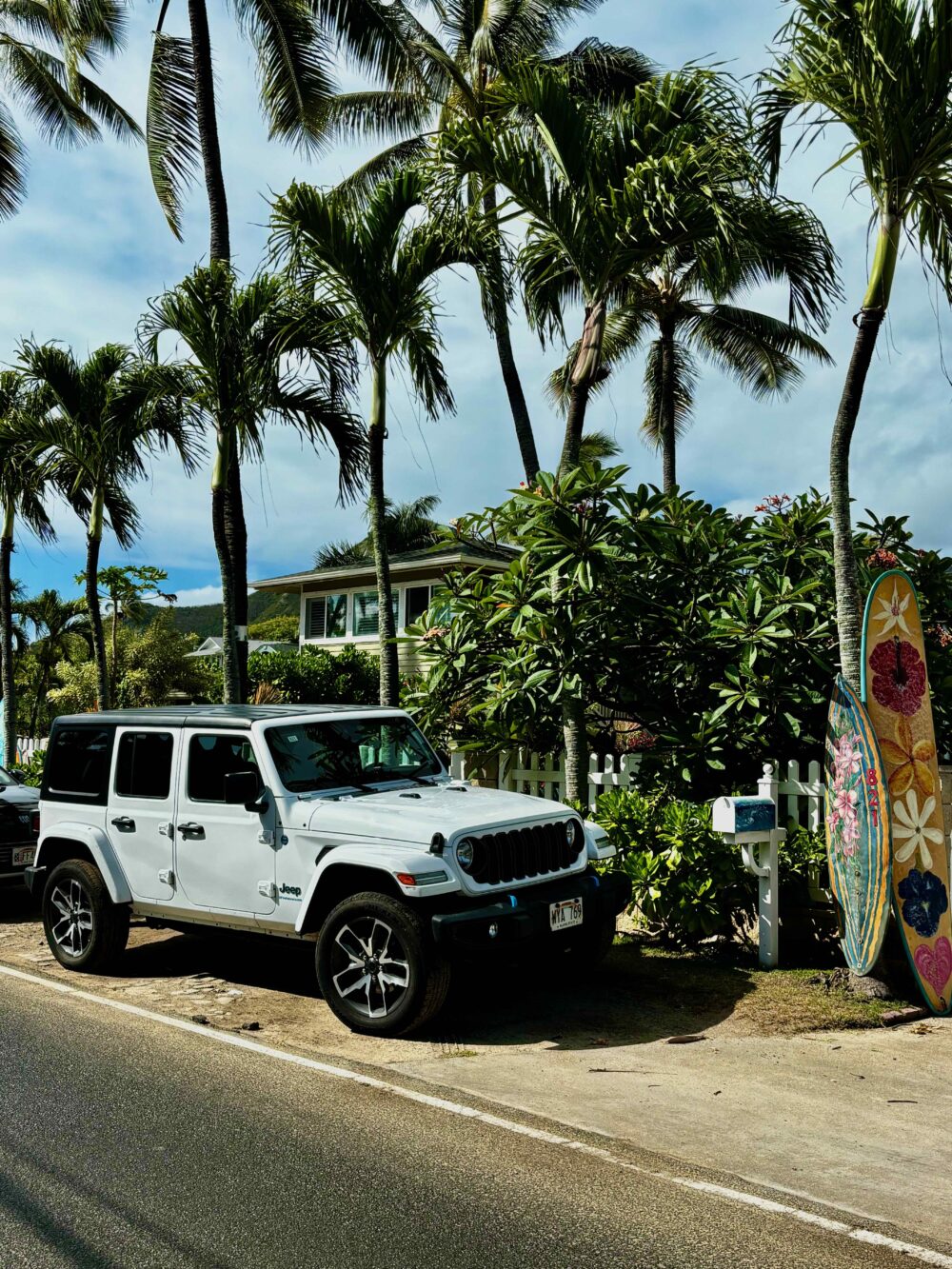
You will almost certainly need a car to get the most out of Oahu. There is a public bus system (TheBus — $3 per ride or $7.50 for a day pass) which covers a lot of ground, and Uber and Lyft are available in Honolulu and Waikiki, but if you want to explore the North Shore, the Windward Coast, and beyond, a rental car is definitely the way to go, unless you join organised tours.
A few things to know:
- Book your rental car early — Oahu has notoriously high demand and cars sell out fast, especially in peak season
- Traffic can be bad — Honolulu rush hour (6:30–9:30am and 3:30–6:30pm) on the H-1 freeway can add a lot of time to your journeys. Plan your sightseeing accordingly and head out early
- Scenic drives worth doing: The H-3 Highway through the Ko’olau Mountains is jaw-dropping, and Kamehameha Highway along the North Shore is one of the most beautiful coastal drives you’ll ever do
- If you’re sticking to Waikiki, you can manage without a car using the Biki bike share scheme and walking as it’s a compact area.
- There is also the Waikiki Trolley which is a great fun way to explore the Honolulu area. There are 5 lines, including one to Diamond Head Crater, an Ocean View line and a brilliant fascinating Historic Honolulu Line. You can buy all day passes for just one line, or an all day pass covering all lines! This one is £46 for the day but can offer excellent value if you use it to do all your Honolulu exploring in a day. Buy your Waikiki Trolley pass in advance here!
When is the best time to go to Oahu?
Oahu is a year-round destination, but the sweet spots are mid-April to June and September to mid-December. During these shoulder seasons the weather is warm and settled, the crowds are noticeably thinner than in peak summer, and prices for flights and hotels tend to be more reasonable.
Summer (July and August) is peak season. This means it’s busy, hot, and expensive, but great if that’s when you can go. Winter brings bigger surf to the North Shore (which is actually a spectacle worth seeing in itself) and slightly more rain, but it’s also when humpback whales are in Hawaiian waters, typically December through April, making it a brilliant time for whale watching.
One thing worth knowing: Oahu’s weather varies significantly by side of the island. The Windward Side (Kailua, Kaneohe) receives much more rain than the Leeward Side (Waikiki, Ko Olina), which stays largely dry and sunny. If you want guaranteed sunshine, stay on the Leeward Side.
How long to spend on Oahu?
A minimum of five to seven days gives you enough time to explore different parts of the island properly without feeling rushed. Ten days to two weeks is ideal.
Currency and language
US dollars. Card is widely accepted but some local food trucks and smaller eateries prefer cash — worth carrying some just in case.
Customs and Etiquette
- Tipping: Standard US tipping culture applies — 18-20% at restaurants, tip your tour guides and hotel housekeeping.
- Booking ahead: For popular attractions like Hanauma Bay, Diamond Head, and Pearl Harbor, book online in advance. They sell out regularly.
- Aloha is more than a greeting: it’s a philosophy of respect, care, and community. Embrace it
- Ask before photographing people or sacred sites
- Stay on marked trails — going off-path damages fragile ecosystems and can disturb sacred sites
- Stay at least 10 feet from sea turtles and Hawaiian monk seals — it’s the law, and they’re endangered
- Take your rubbish with you — Hawaii’s natural environment is precious and under real pressure from tourism
What Things Cost in Oahu
Oahu is expensive. In fact, it’s really expensive. It’s one of the priciest destinations in the United States, and of the most expensive places I’ve ever been to. Everything from groceries to hotel rooms costs more than you’d expect. This is partly because so much has to be shipped over to the islands, and partly because demand is consistently high. That said, with a little planning and a few smart choices, you can manage costs without missing out on the best experiences.
All prices are in US dollars. At the time of writing, the exchange rate is approximately $1.27 to £1.
Accommodation
Budget options on Oahu are limited but do exist. Hostels and basic hotels start from around $60–$100 per night, though these tend to be older properties away from the beach.
For a comfortable mid-range hotel in a good location, particularly in Waikiki, expect to pay $200–$350 per night. In peak season (July, August, Christmas) prices can jump significantly higher.
Luxury resorts such as the Royal Hawaiian, Halekulani or the Four Seasons Ko Olina start from around $500–$700 per night and can easily exceed $1,000 for premium rooms and suites.
One important thing to factor in is that many Waikiki hotels add a daily resort fee of $30–$60 on top of the room rate, which covers facilities like pool access and WiFi. Parking is still another additional daily charge on top, sometimes as much as $40 a day.
Always check the total price including fees before booking.
Food
Food costs vary enormously depending on how and where you eat.
At the budget end, a plate lunch from a local food truck or casual diner will set you back around $15–$25 including a drink — and these are generous, satisfying meals. Shave ice and snacks from roadside stalls cost $5–$10, as do poke bowls and sushi from local supermarkets like Foodland Farms.
A sit-down meal at a mid-range restaurant costs around $30–$60 per person including a drink, and tipping 18–20% is expected and non-negotiable at restaurants. At higher-end restaurants, the kind you’d find at the Four Seasons or Halekulani, budget $80–$150 or more per person for dinner.
Transport
A rental car is the most practical way to explore Oahu, and the most cost-effective if you plan to cover multiple parts of the island. Expect to pay $60–$120 per day for a standard car in shoulder season, rising to $150+ in peak season. Book well in advance though as Oahu has a notoriously tight car rental market and prices spike when availability is low.
Petrol (gas) is more expensive in Hawaii than on the US mainland, budget around $4.50–$5.50 per gallon.
If you’re sticking to Waikiki, TheBus public transport network covers a lot of ground at $3 per ride or $7.50 for a day pass. Uber and Lyft are available in Honolulu and Waikiki, with most rides within the area costing $15–$30. There’s also the Waikiki Trolley (more on that below)
Parking in Waikiki can add up. As mentioned, hotel parking typically costs $30–$50 per night, and street and lot parking around the main sights can cost $10–$25 for a few hours. It’s typically free elsewhere on the island.
Activities and Attractions
Many of Oahu’s best experiences are completely free or low cost. For example, hiking Diamond Head (reservation required, $5 per person), snorkelling at Hanauma Bay ($25 per person), wandering Haleiwa town, watching the surf on the North Shore, and exploring Ho’omaluhia Botanical Garden (free) all cost very little or nothing at all.
Paid attractions vary considerably:
- Pearl Harbor (USS Arizona Memorial): free, but timed entry passes book out fast — reserve online in advance
- Kualoa Ranch tours: $50–$130 per person depending on the experience
- Luau: $120–$200 per person
- Whale watching tour (December–April): $50–$80 per person
- Surfing lesson: $75–$120 per person
Overall Daily Budget Guide
- Budget traveller: $130–$180 per day (hostel, food trucks, free activities, TheBus)
- Mid-range traveller: $350–$500 per day (comfortable hotel, mix of restaurants, some paid attractions, rental car)
- Luxury traveller: $1,000+ per day (resort hotel, fine dining, private tours)
Oahu rewards those who plan ahead. So booking accommodation, rental cars and popular attractions early almost always results in better prices and availability. We did find our Hawaii trip very expensive in terms of food and accommodation, but so rewarding, as so many of the natural wonders are free to visit and explore!
Oahu’s Five Regions
The island is carved into five regions, each distinctly different. I’ve included a quick overview of these below.
Honolulu
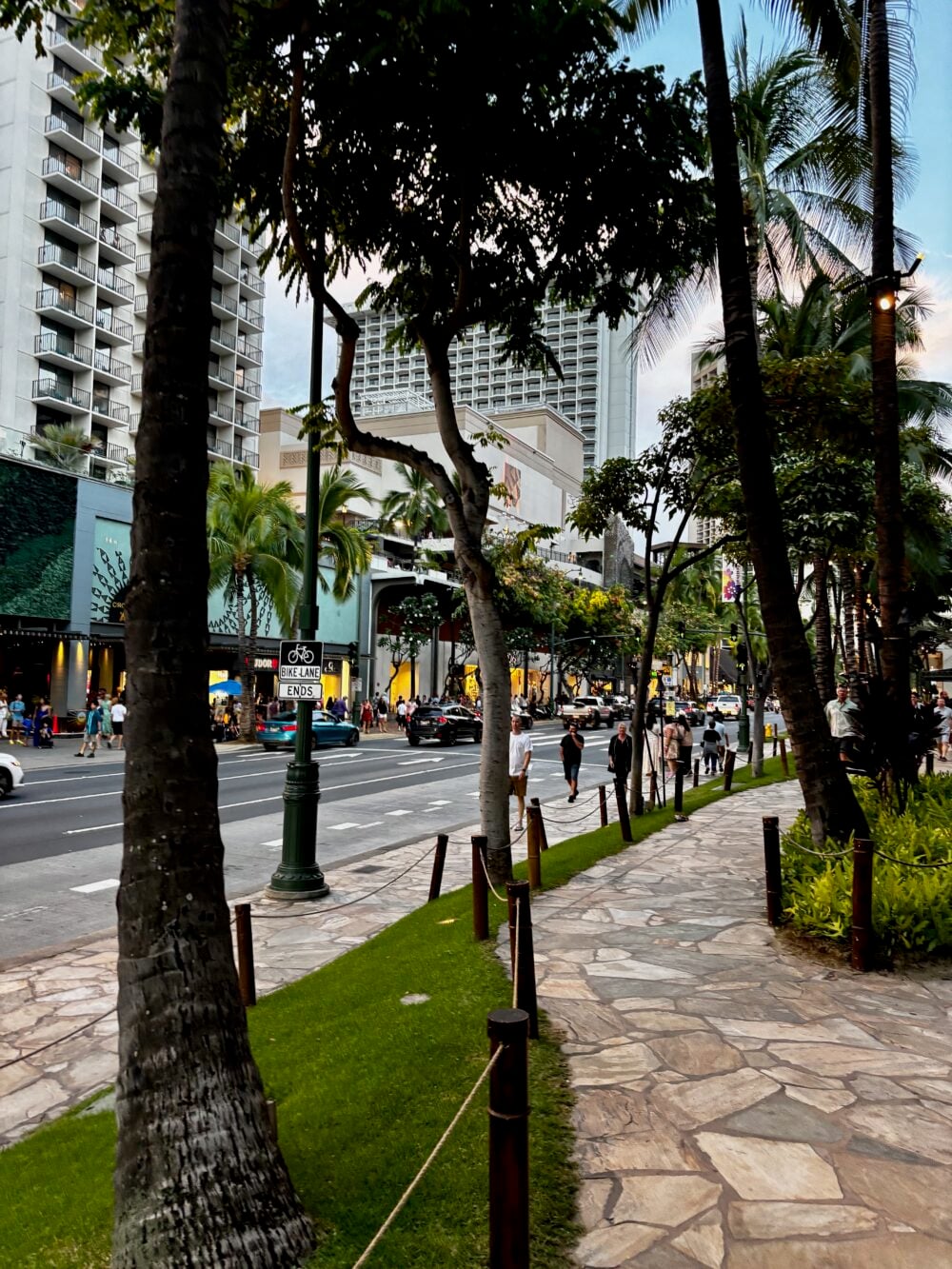
Honolulu is the beating heart of Oahu and the state capital of Hawaii. It’s a vibrant, sprawling city that manages to be both cosmopolitan and deeply rooted in Hawaiian culture. Honolulu is home to nearly a million people, and offer a level of energy and diversity that surprises many first-time visitors who arrive expecting a beach resort.
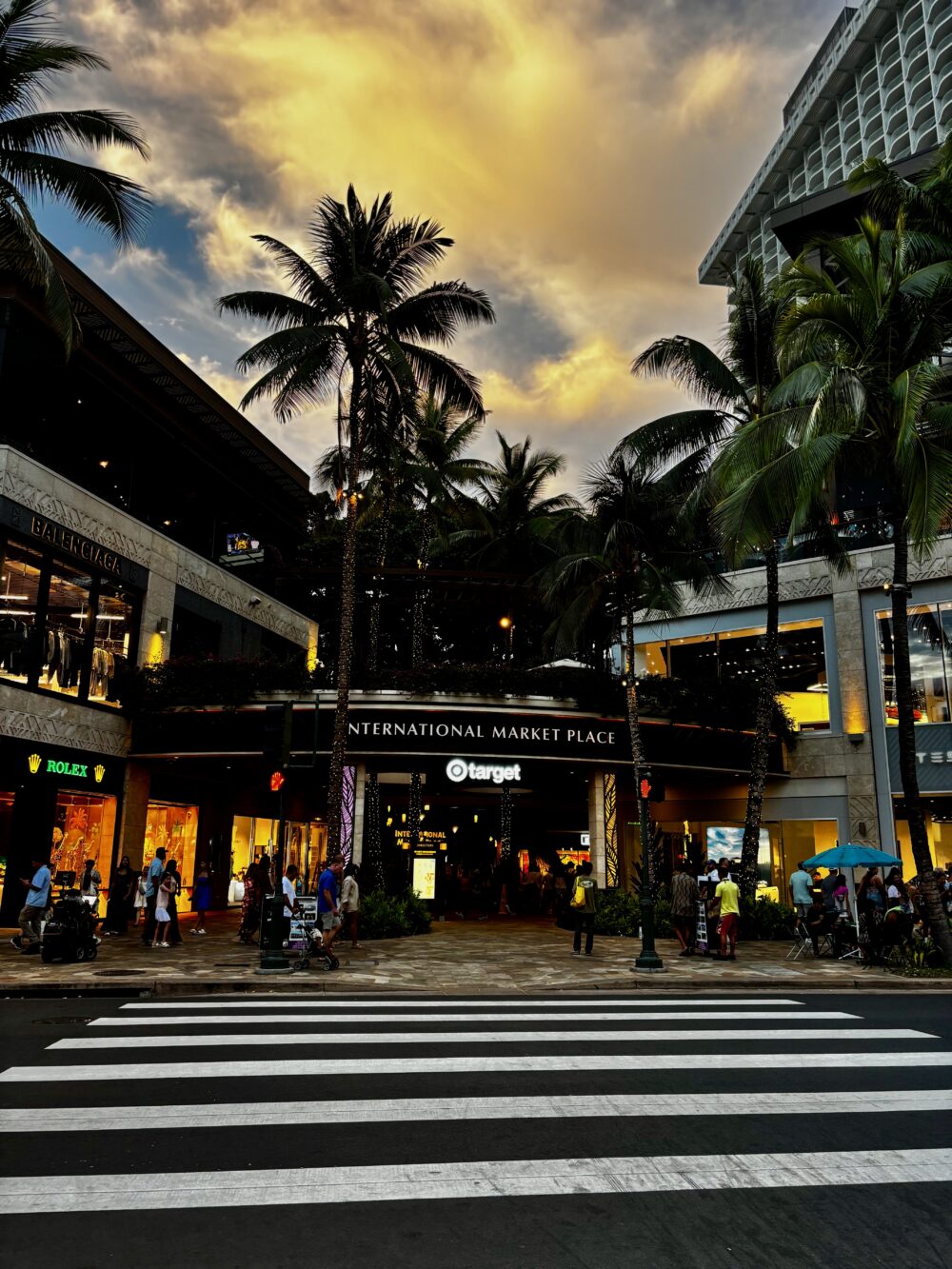
Waikiki is the tourist centre of Honolulu. It has a famous strip of hotels and beaches that sits within Honolulu, and is typically, most visitors base themselves. Not only is Waikiki beach beautiful, the location is central for visiting the rest of the island, but the sheer range and concentration of restaurants, bars and shops is unmatched anywhere else on the island. It it rather touristy but scratch the surface and you’ll find world-class dining, fascinating history and a neighbourhood culture that goes far beyond initial impressions.
Beyond Waikiki, it’s worth exploring Honolulu’s historic downtown area which is home to Iolani Palace and the Hawaii State Capitol. Chinatown is one of the most characterful neighbourhoods in the city. It’s packed full of independent restaurants, art galleries and markets. And the neighbourhood of Kakaako, just west of Waikiki, has emerged as Honolulu’s coolest creative quarter, with excellent street art, brilliant coffee shops and some of the island’s most exciting restaurants.
The Leeward Coast (Ko Olina)
Ko Olina sits on the sunny western tip of Oahu, about 25 miles from Waikiki, and feels like a completely different world. Whilst Waikiki is buzzy, urban and iconic, Ko Olina is calm, manicured and resort-focused. It’s essentially a purpose-built paradise that’s particularly well suited to families and those wanting a more relaxed pace.
The star attraction is the four Ko Olina Lagoons. These are man-made but beautiful, with calm, sheltered turquoise water that’s perfect for swimming year-round. Unlike many of Oahu’s beaches, there’s no strong surf or current here, making them ideal for young children and less confident swimmers. The lagoons are open to the public (not just hotel guests), though parking fills up fast so arrive early if you’re making a day trip from elsewhere on the island.
Beyond the lagoons, Ko Olina is home to some of Oahu’s finest resorts.
The Four Seasons Resort Oahu at Ko Olina is widely considered one of the best hotels on the island, with exceptional service, beautiful pools and direct beach access.
Aulani, a Disney Resort & Spa is also here and is a brilliant choice for families. It has epic water parks, character breakfasts and a Disney-themed luau. Even if you’re not staying at either, the area is worth a visit for a sunset dinner or a lazy afternoon by the lagoons.
The Leeward Coast stretching beyond Ko Olina towards Kapolei and Waianae is less visited but rewards those who venture further. Here you’ll find far fewer tourists, more local beaches, and dramatic views of the Waianae Mountains inland and makes a beautiful route towards the North Shore.
The North Shore
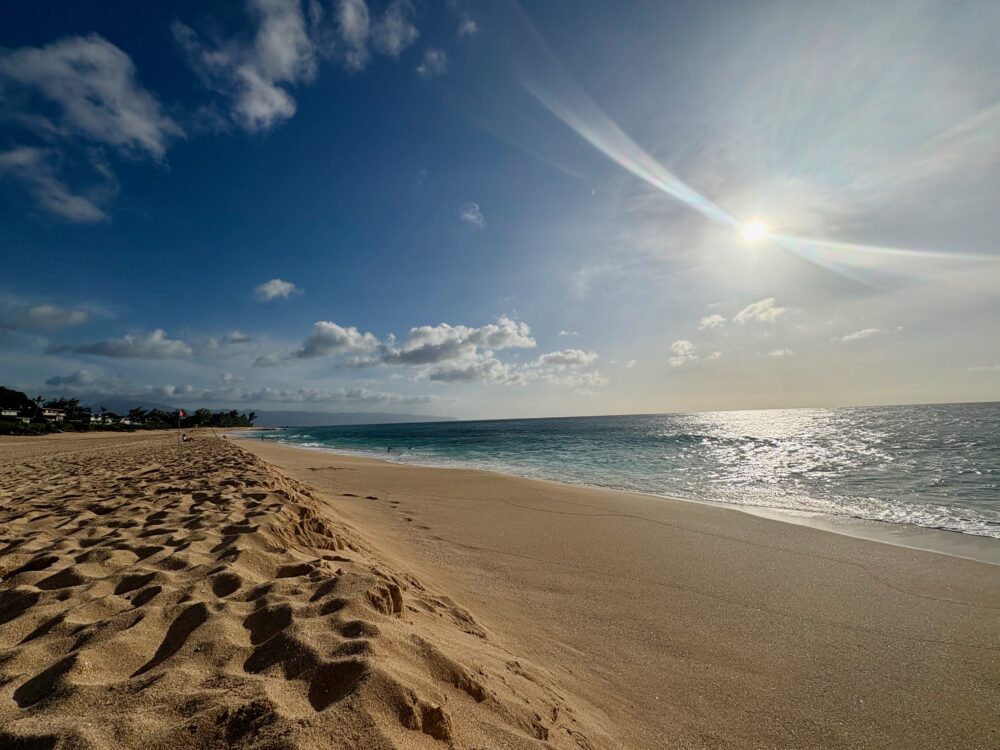
The North Shore is surfing’s spiritual home. This legendary stretch of coastline is less polished, more rustic and more wild. And it’s just an hour or so’s drive from Honolulu.
The main surf season runs from November to February when the waves here on the North Shore regularly reach heights of twenty feet or more. The most famous beaches are the Banzai Pipeline, Sunset Beach and Waimea Bay, each drawing the world’s best surfers and thousands of spectators for the prestigious Vans Triple Crown of Surfing.
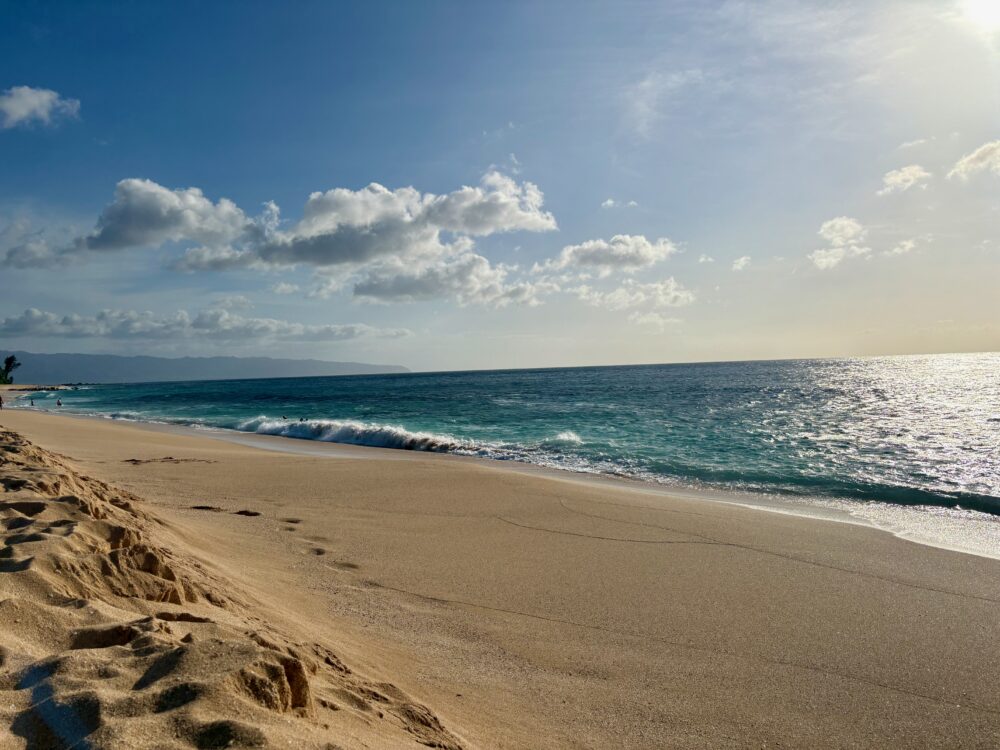
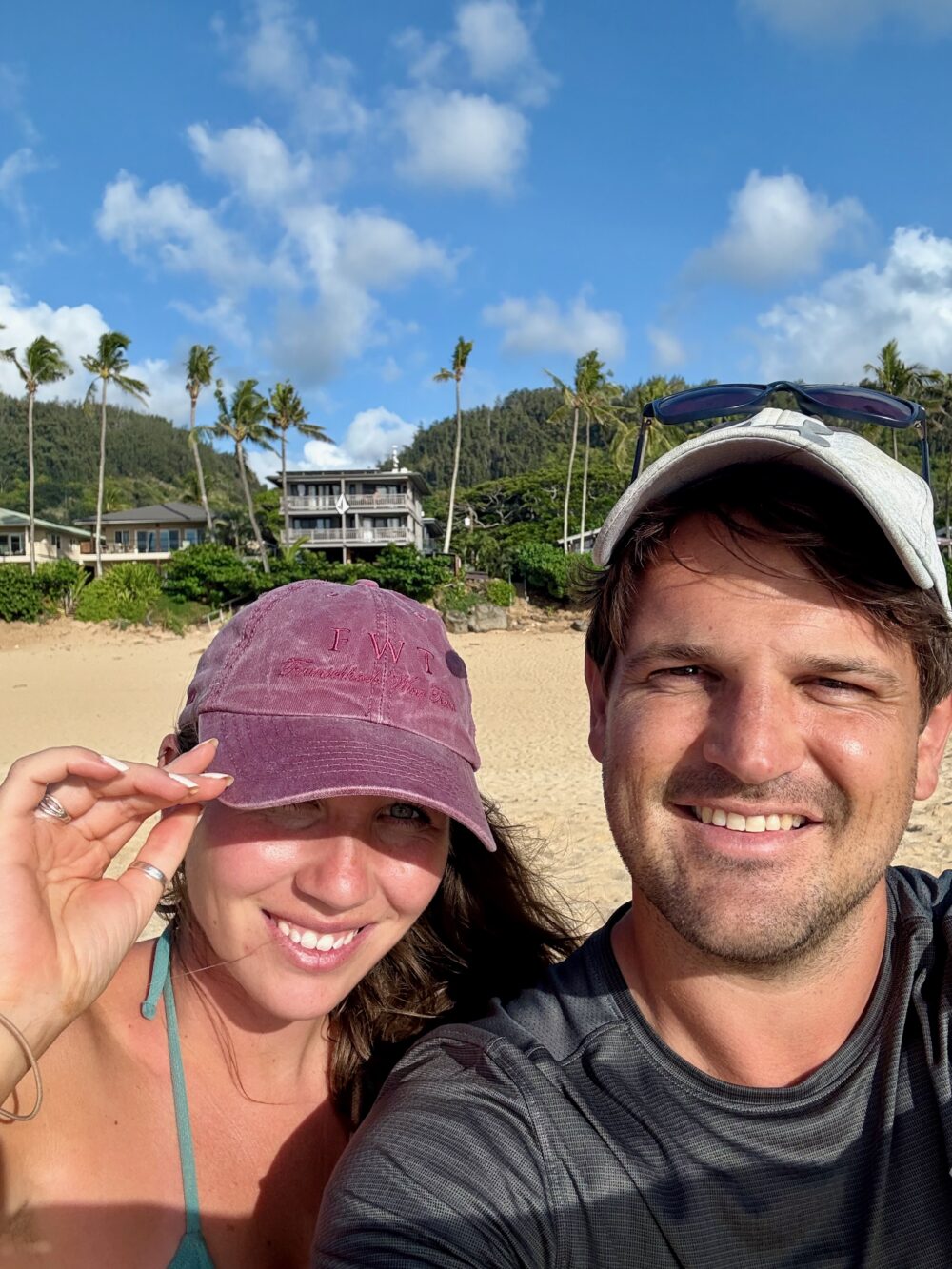
Even in summer, when the ocean calms down and the beaches become swimmable, the North Shore atmosphere is unmistakably cool and local. We visited in June and just loved how relaxed and low key the North Shore was.
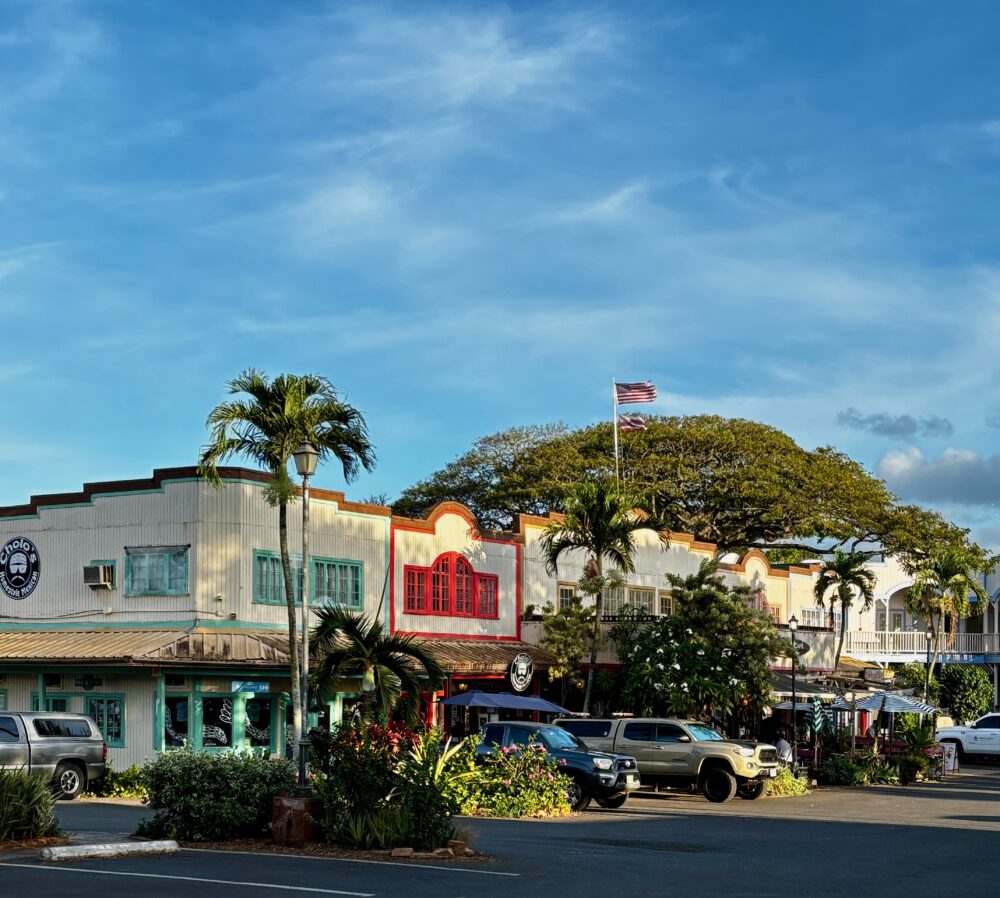
The town of Haleiwa is the North Shore’s social hub. This is a small a charming, laid-back surf town with great independent shops, excellent food trucks and the famous Matsumoto’s shave ice.
The surrounding countryside is lush and beautiful, punctuated by pineapple fields, banana farms and breathtaking scenery.
The Windward Coast
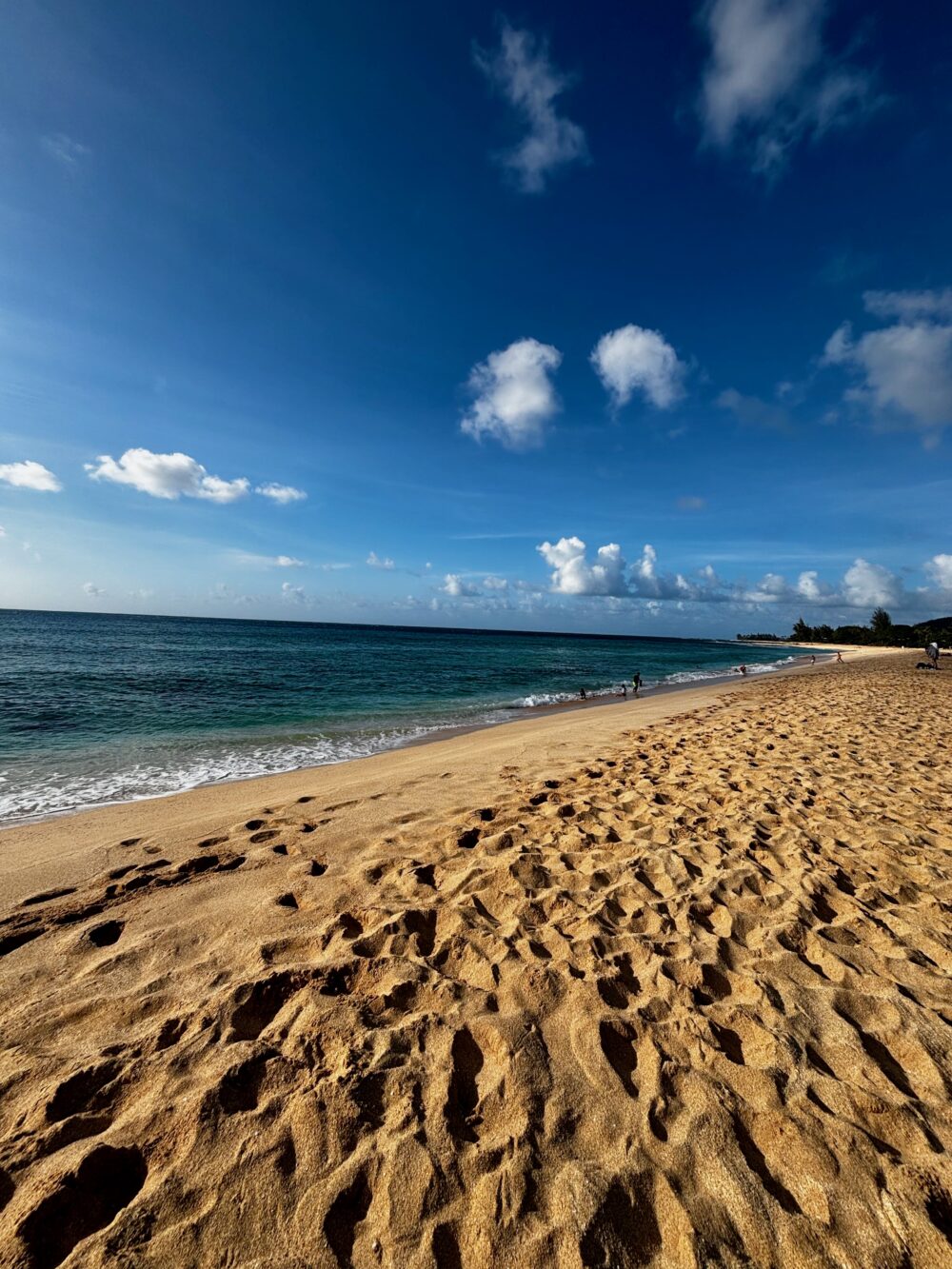
The Windward Coast runs along the eastern side of Oahu, sheltered by the dramatic Ko’olau Mountain Range that forms the island’s dramatic green spine. It’s lusher and rainier than the Leeward Side. The mountains catch the trade winds and this brings heavy rainfall, giving this part of the island a tropical beauty that feels quite different to the drier, sunnier west.
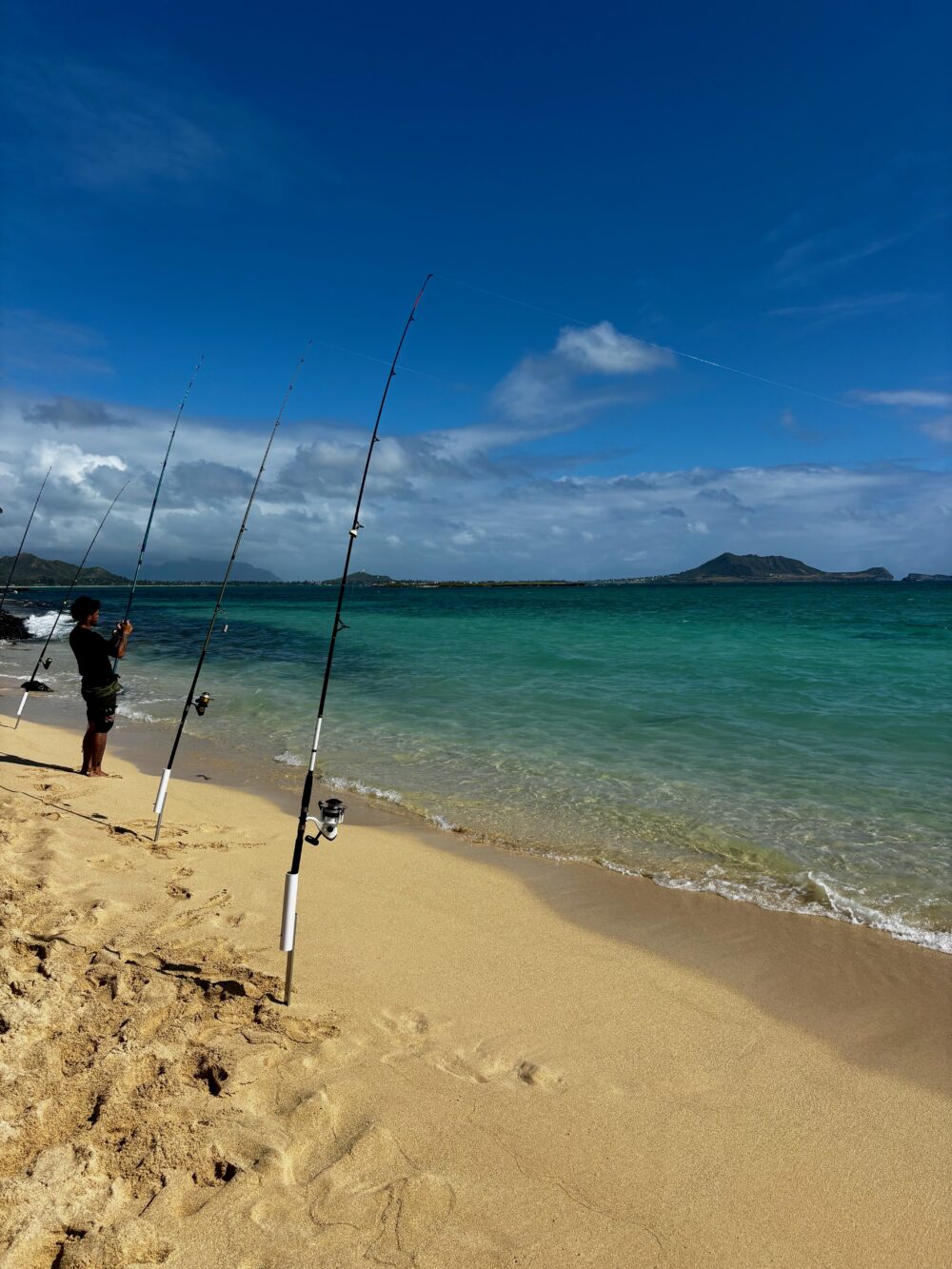
This is where you’ll find some of Oahu’s most beautiful and least crowded beaches.
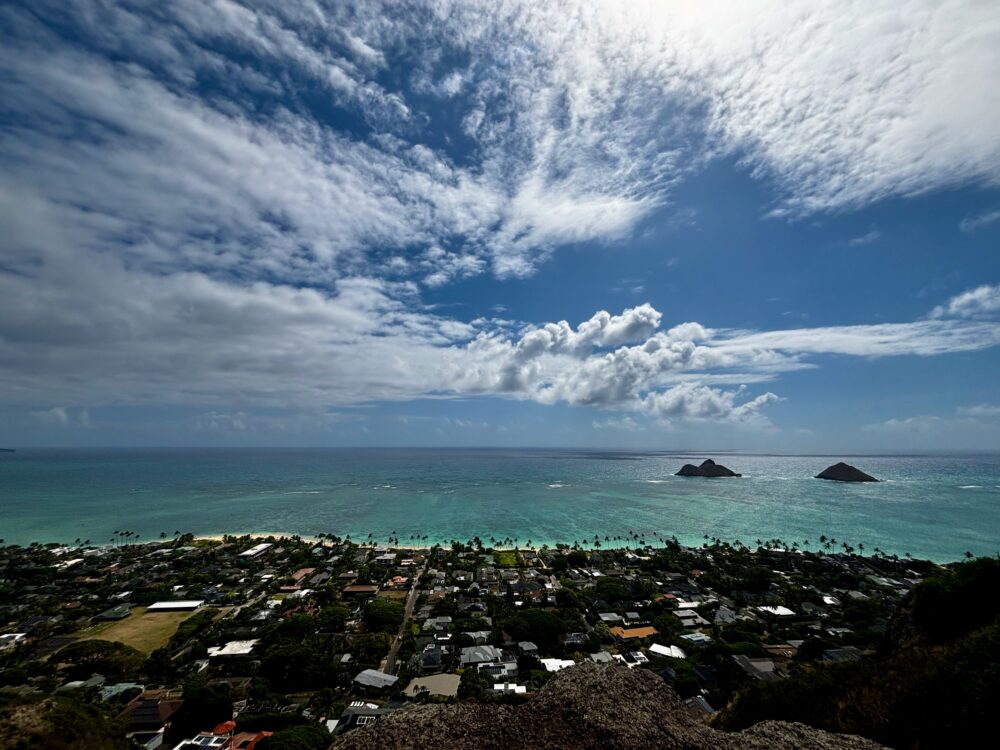
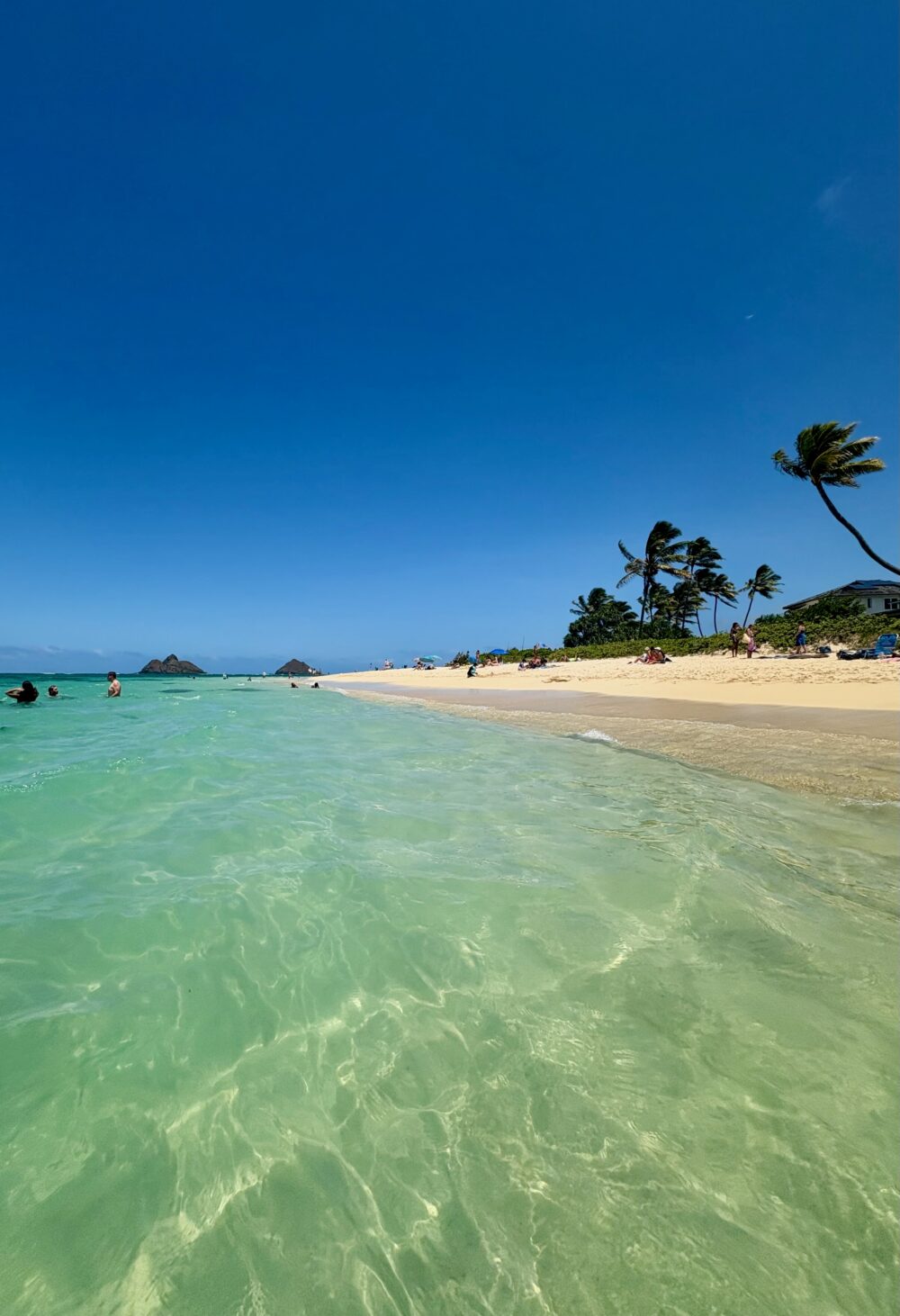
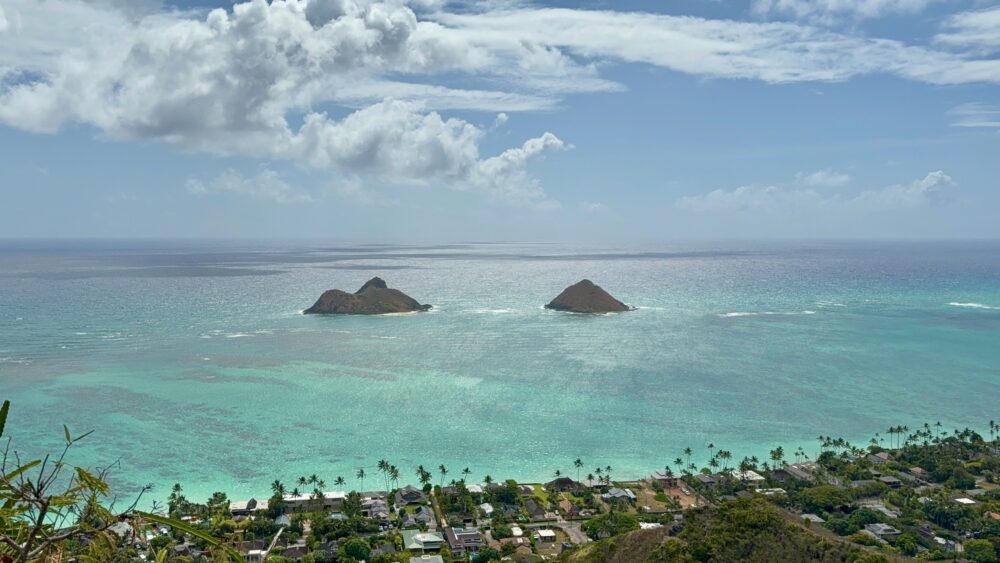
Kailua Beach is frequently rated one of the finest in the United States. It’s a long, sweeping arc of white sand with calm, crystal-clear water that’s perfect for kayaking, stand-up paddleboarding and swimming. Just along the coast, Lanikai Beach is even more intimate and idyllic, with the two small Mokulua Islands sitting just offshore like something out of a dream.
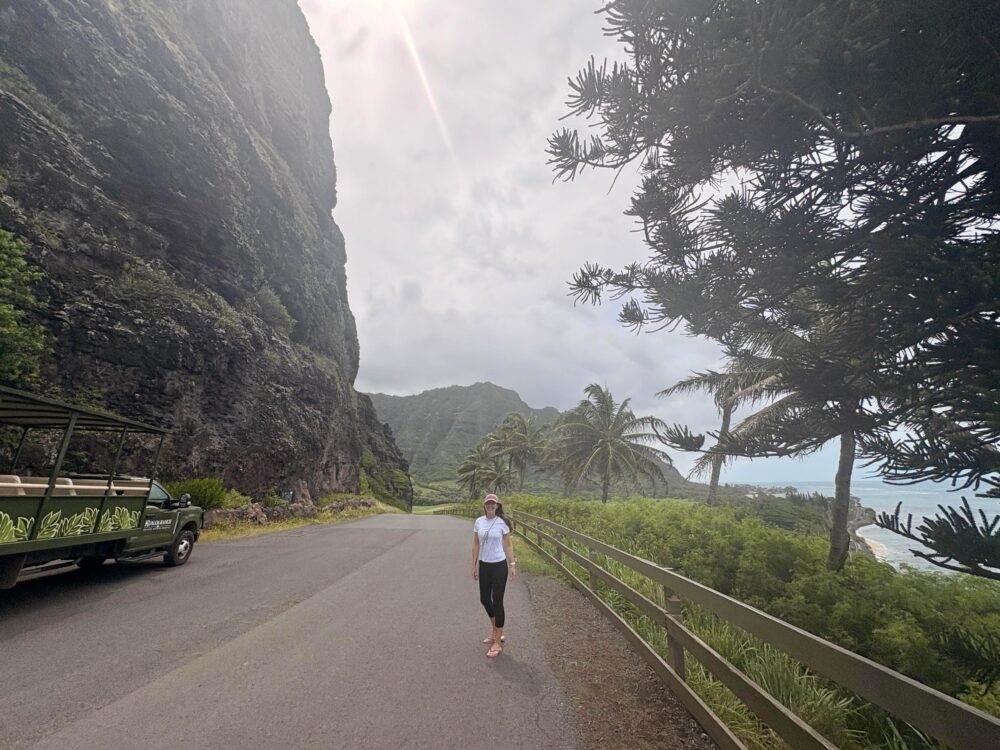
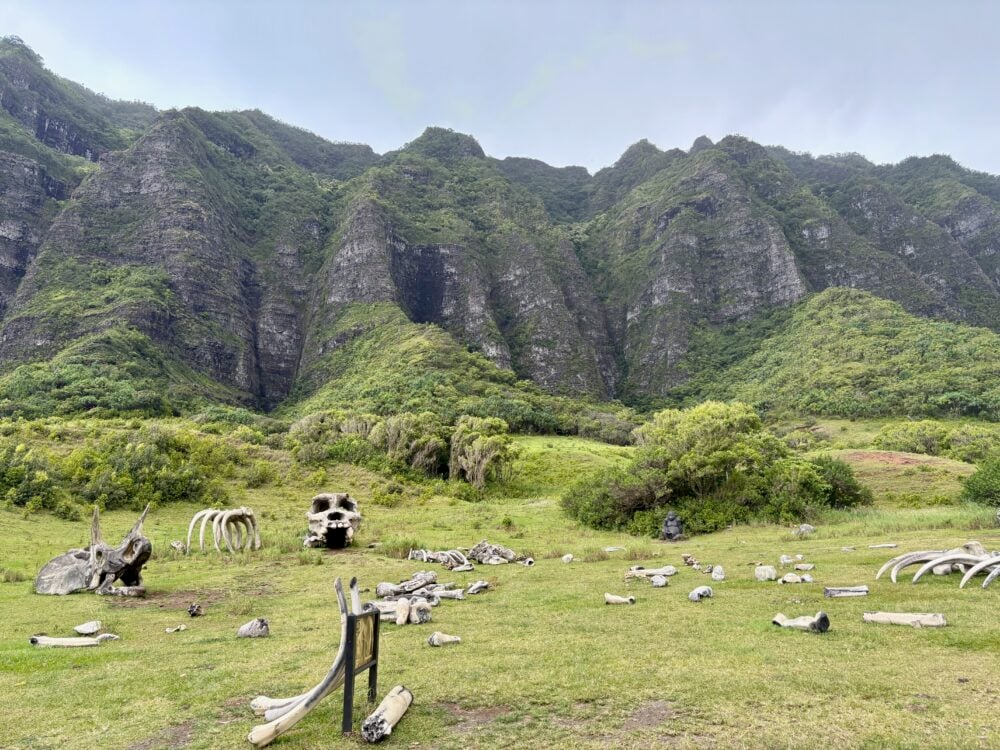
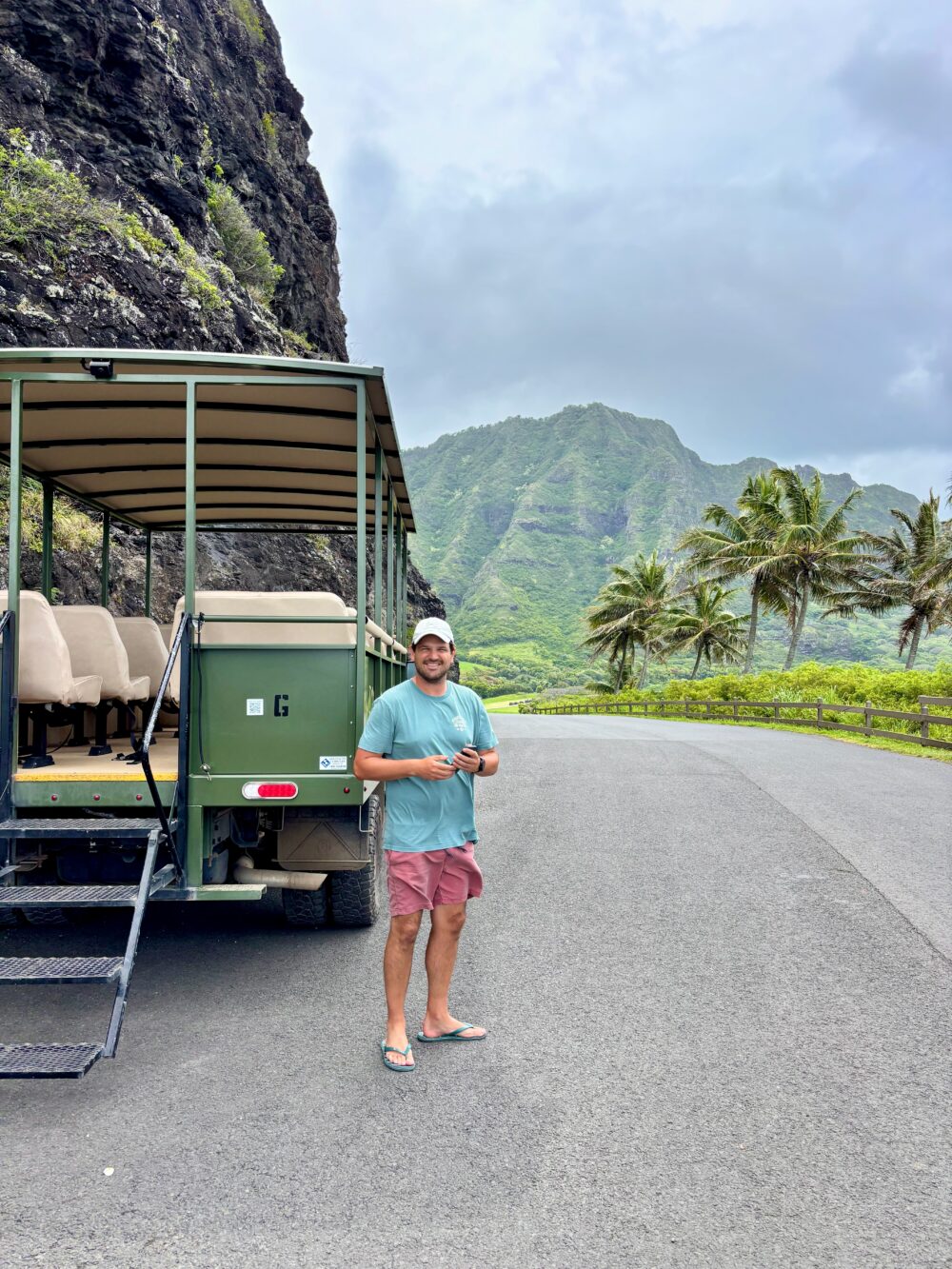
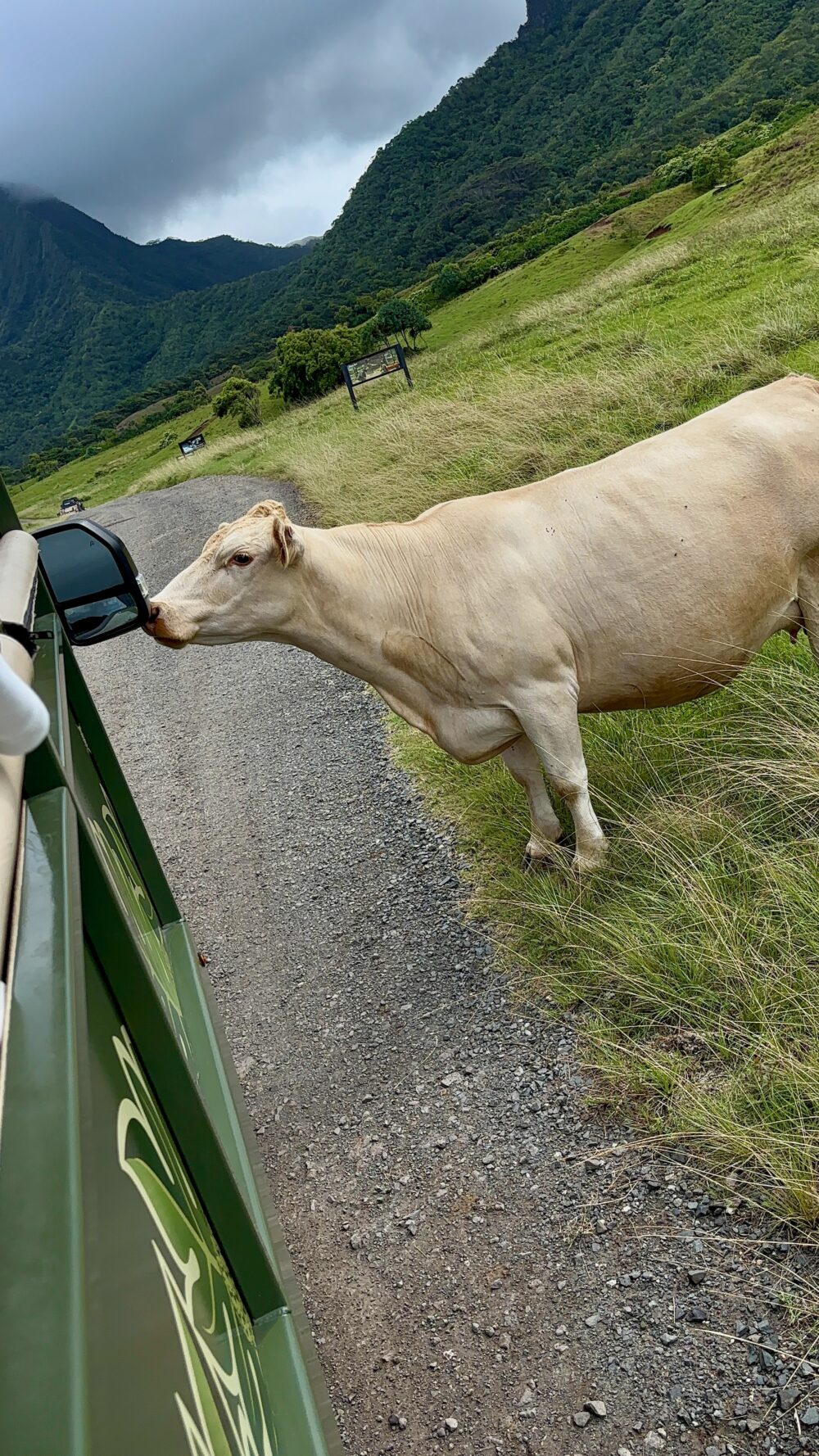
The Windward Coast is also home to some brilliant cultural and natural attractions including the stunning Byodo-In Temple, the magical Kaneohe Sandbar, and the lush Kualoa Ranch, where Hollywood has been filming blockbusters for decades. It’s my favourite part of the island.

Central Oahu
Central Oahu is the part of the island that most visitors drive straight through without stopping. Essentially, it’s a fertile valley between the Ko’olau and Waianae mountain ranges that’s worth exploring.
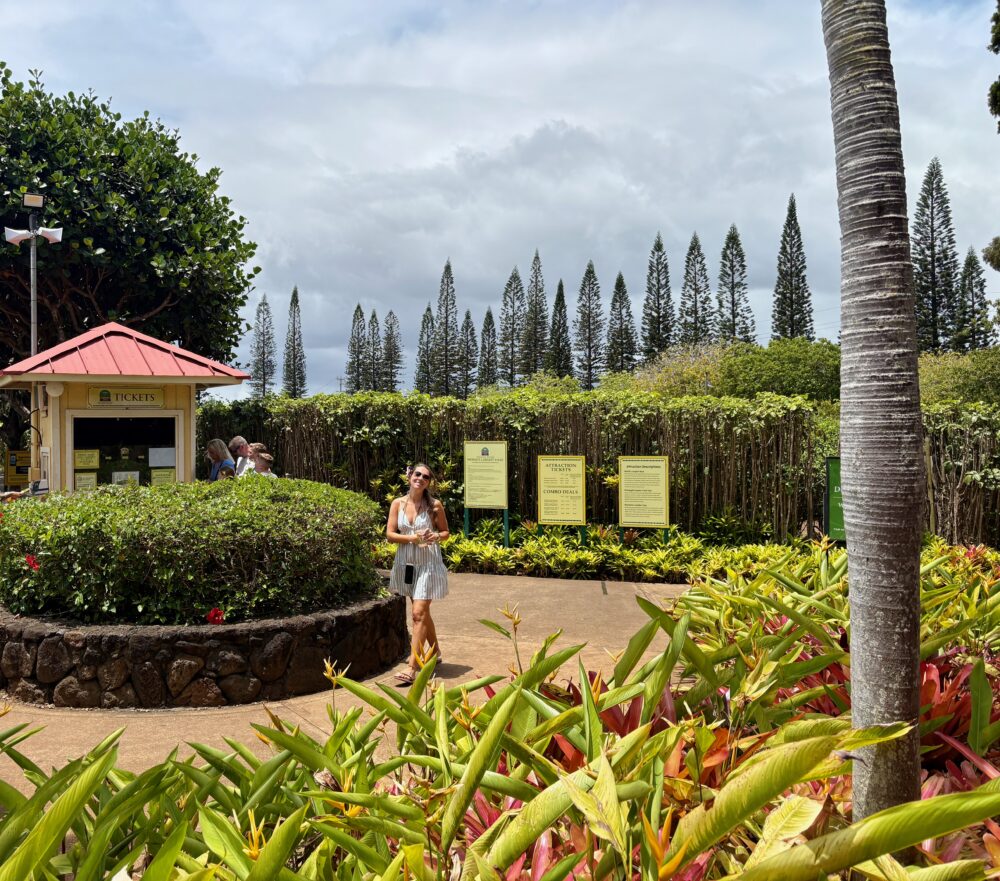
This is the agricultural heart of the island and is the region where pineapple and sugar cane plantations once dominated the landscape. Importantly, this was where many immigrant workers came to tend these plantations, and left an indelible mark on Hawaiian culture. The Dole Plantation, Green World Coffee Farm and the Tropical Farms Macadamia Nut Farm all sit in this part of the island and make for a brilliant foodie trail on the way to or from the North Shore.
Central Oahu also provides important historical context for understanding modern Hawaii. Pearl Harbor, technically on the southern edge of the region, is one of the most significant historic sites in the United States. And Hawaii’s Plantation Village in Waipahu offers a moving and often overlooked insight into the lives of the plantation workers whose descendants make up so much of Hawaii’s diverse population today.
Where to Stay on Oahu
Waikiki (Honolulu)
For first-time visitors, Waikiki is the obvious base and it earns its iconic status. You’re right on the beach, walking distance from great restaurants, and centrally placed for day trips across the island. It can feel touristy — because it is. But that’s not necessarily a bad thing, and the beach itself is genuinely beautiful.
Luxury:
- The Royal Hawaiian (known as the “Pink Palace of the Pacific”) is the most iconic hotel on the Waikiki strip. It’s also historic, elegant, and right on the best stretch of beach. Entry level rooms typically start from around £406 per night. Check latest rates and availability for the Royal Hawaiian here!
- The Halekulani is another exceptional choice for those wanting quiet, understated luxury with outstanding service. Double rooms start from around £770 per night. Check latest rates and availability here!
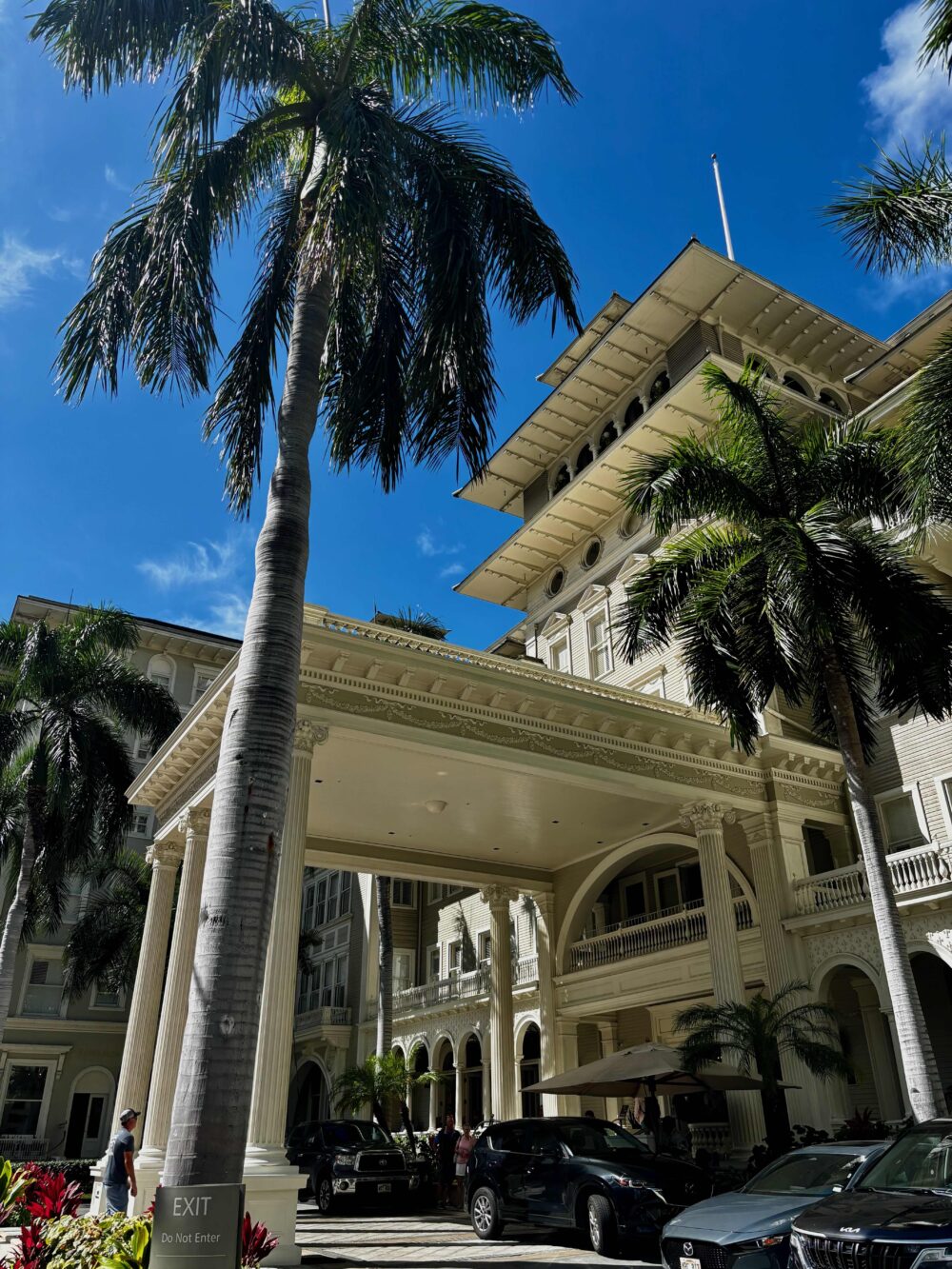
- Moana Surfrider, A Westin Resort & Spa is a stunning option on the beach, and one of the most iconic buildings in Waikiki. Double rooms from £380.
- Hilton Hawaiian Village Waikiki Beach Resort is home to a beautiful lagoon, making it a popular family-friendly stay in the heart of the action. Double rooms from £368 per night.
Mid-range:
- The ‘Alohilani Resort Waikiki Beach is a solid choice with a stunning infinity pool and great location. Double rooms from £281 per night.
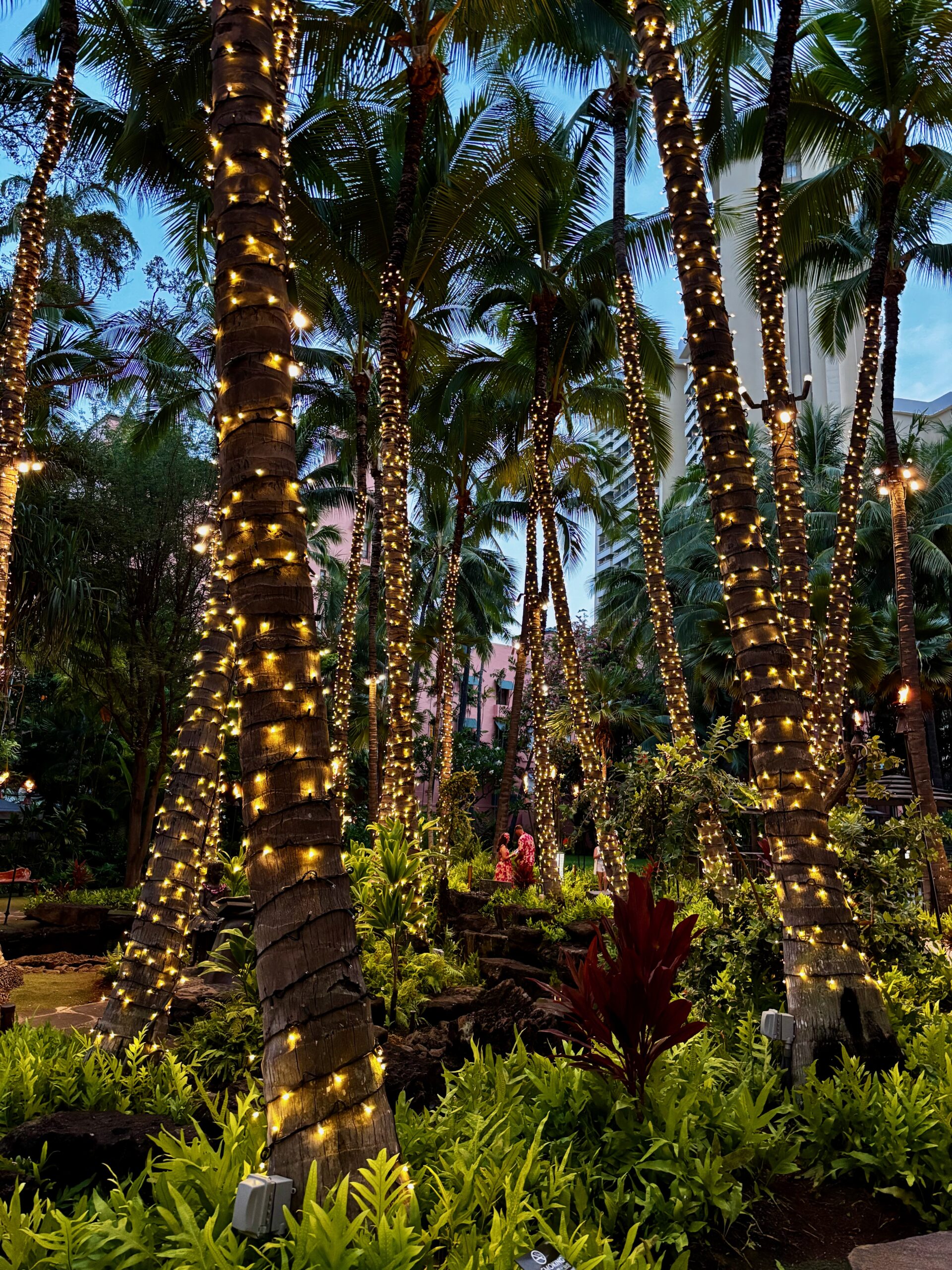
- White Sands Hotel is set back from the beach, but offers a lovely, twinkly pool area with a retro Tiki vibe. We loved staying here, but definitely recommend asking for a pool-facing room! Double rooms from £270 per night.
- The Laylow Waikiki is a chic mid-century boutique option a block from the beach, great for those who want character. Double rooms from £260 per night.
- The Surfjack Hotel is set a little further back from the beach (5 mins drive) but a great hotel with rooms sleeping 4 people starting from £218 per night.
- The Ambassador Hotel of Waikiki, Tapestry Collection by Hilton is one of the more affordable options, with rooms from £213 per night.
Ko Olina (the Leeward Coast)
As just mentioned, Ko Olina is a quieter, more resort-style alternative to Waikiki on the Leeward Coast. The lagoons here are calm and swimmable, and therefore great for families. The Four Seasons Resort Oahu at Ko Olina (King room from £700 per night) is one of the best hotels on the island, full stop. Aulani, a Disney Resort & Spa (rooms from £625 per night) is also here and ideal for families with young children.
North Shore
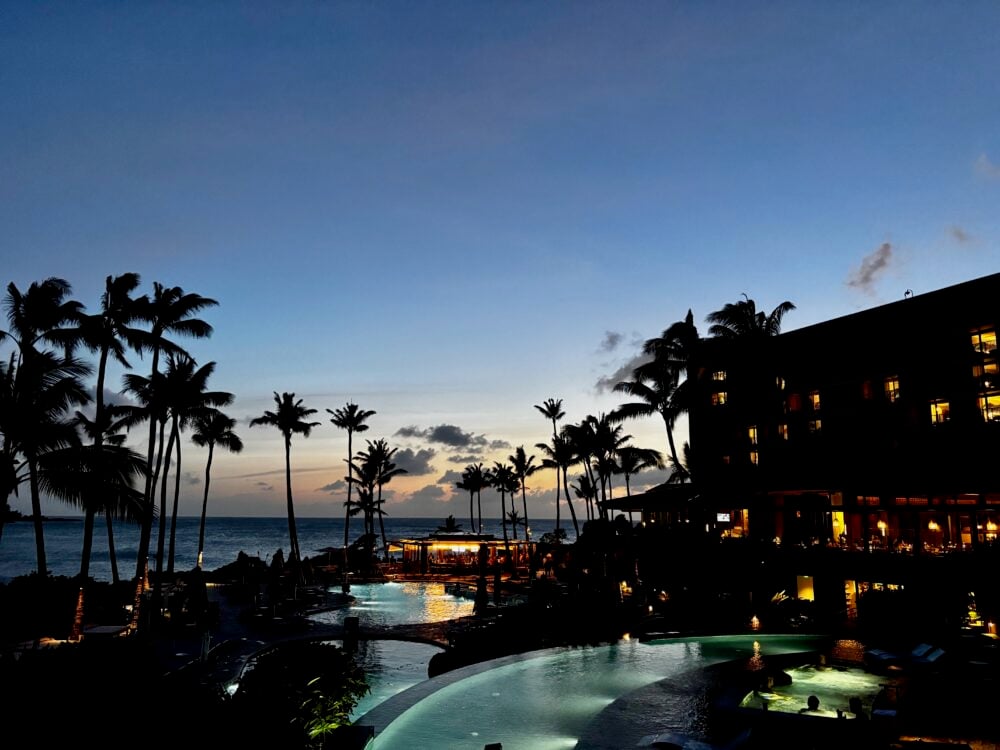
The famed Ritz-Carlton Oahu, Turtle Bay sits on a stunning stretch of coastline with over 1,300 acres of beach. It’s secluded but easy to reach the North Shore’s famous surf towns and food trucks from here. King rooms are from £757 per night.
The Windward Coast
The Windward Coast is unusual as although it has some of the most beautiful beaches on the island, it has no traditional hotel options. The area is largely residential, and that’s actually a big part of its charm.
Most visitors who want to base themselves here opt for vacation rentals through Airbnb or VRBO, with a good selection of private homes, cottages and apartments in Kailua and Lanikai — some right on the beach. It’s a brilliant option if you want a more local, lived-in experience of Oahu away from the resort bubble.
Central Oahu
There are few accomodation options in Central Oahu, it is really is very local and residential. Most travellers, including ourselves, pass through on the way to the North Shore. It’s easy to drive here from Waikiki, so I’d recommend staying there.
Where to Eat in Oahu
Oahu’s food scene is one of its greatest pleasures. It’s a blend of Native Hawaiian, Japanese, Filipino, Korean, Chinese, and Portuguese influences that together make for a unique food experience. And what’s more, one of their main supermarket chains – Foodland Farms, is also well worth stopping by for less expensive meals or bites to eat. They have poké counters with some of the most delicious, fresh fish ever!
Honolulu
Helena’s Hawaiian Food (Honolulu) Since 1946, Helena’s has been the gold standard for traditional Hawaiian cuisine. This is the real deal. You’ll find kalua pig, lomi salmon, haupia and short ribs pipikaula style on the menu. It fills up fast and sells out of popular items, so arrive early.
Mama Guava (Chinatown, Honolulu) A brilliant smash burger spot in Honolulu’s Chinatown, with house-made longanisa and excellent garlic fries.
House Without a Key (Halekulani Hotel, Waikiki) If you want a sundowner with serious atmosphere, head to the open-air bar at the Halekulani Hotel. There’s Hawaiian music, hula dancing, and views over the beach at sunset. It’s a bit touristy but utterly gorgeous.
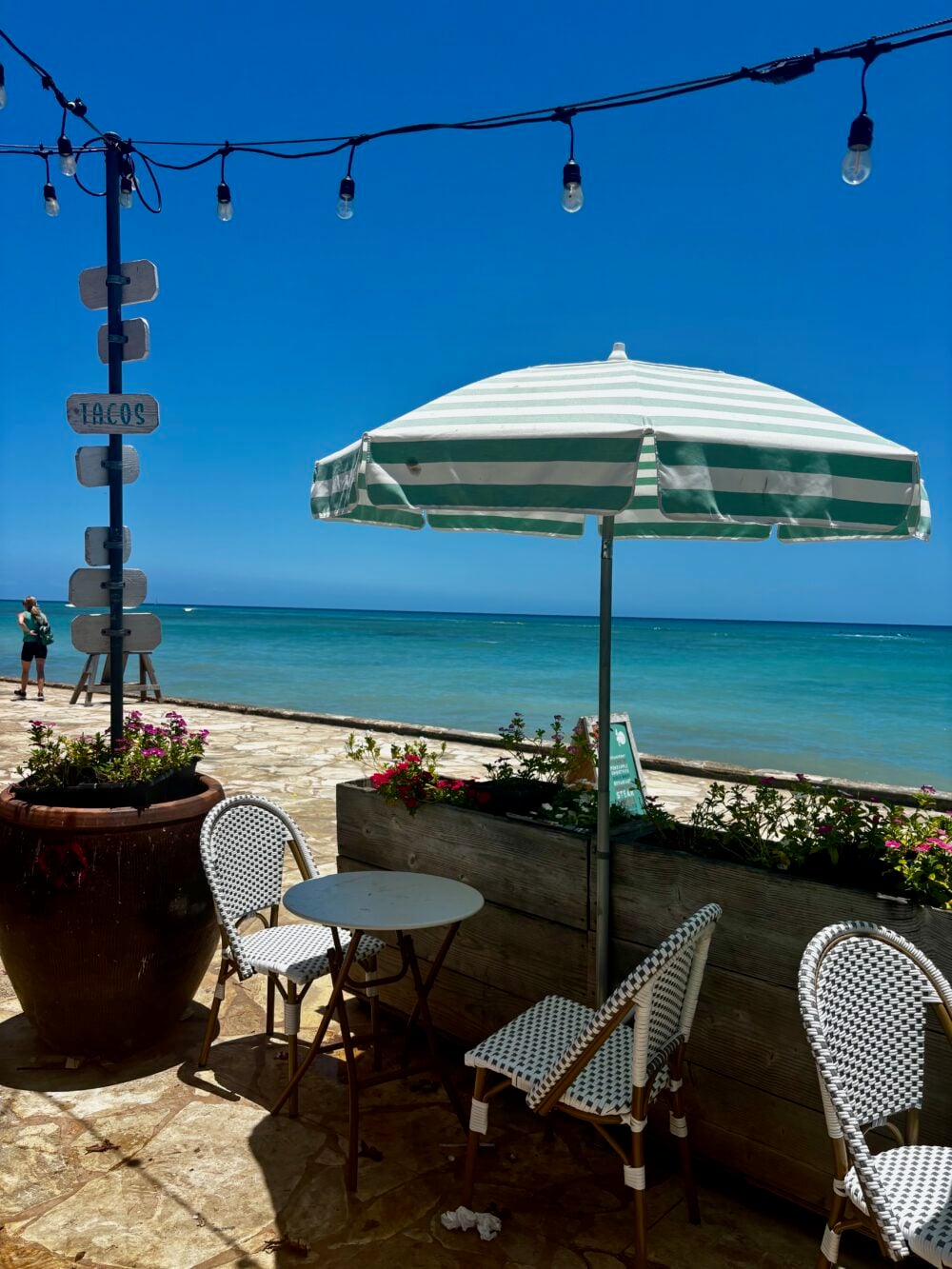
Barefoot Beach Cafe (Queen’s Beach) We discovered here after a morning of hiking at Diamond Head Crater. As we walked back towards Waikiki, we came across this delightful cafe with its stunning ocean views.
Island Brew Coffeehouse (Hawaii Kai) We stopped here for cold smoothies and coffees after a morning snorkelling. It was just locals, and yet the views were outstanding.
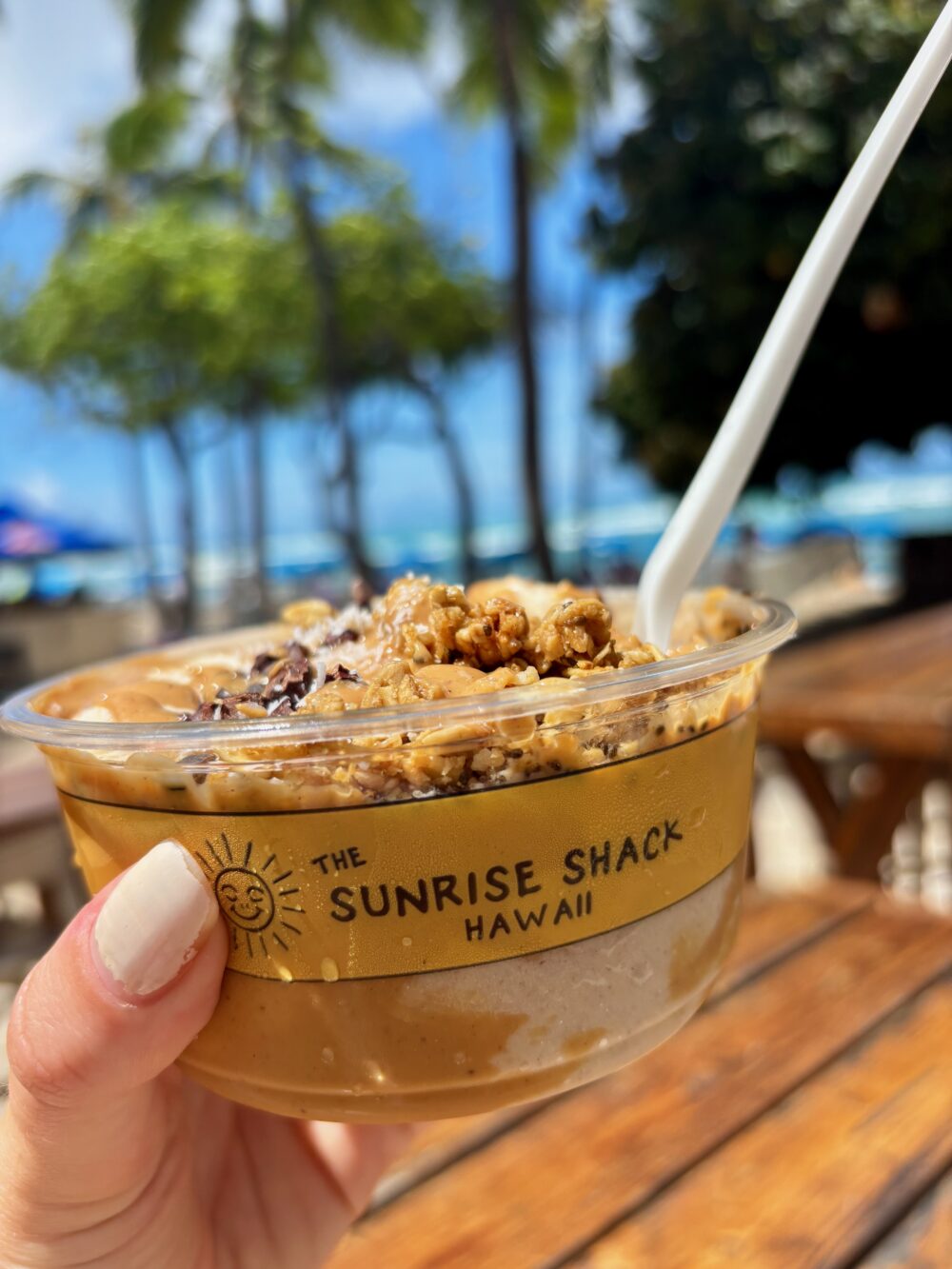
Sunrise Shack (Ala Moana Center, Twin Fin Waikiki, Outrigger Waikiki, as well as 4 other spots on the island) Whilst it’s found at 7 shacks now across Oahu, I ended up visiting the Outrigger shop the most as it made for a great breakfast before a day of adventure. Great breakfast bowls and coffee!
Kona Coffee Purveyors (Waikiki) The fact that this place always has a really long line was what made me have to try it. I went really early one day, and to be fair the coffee is excellent. Its 100% Kona coffee beans and roasted on site.
Honolulu Coffee at Moana Surfrider (Waikiki) Great coffee and also great merchandise set within this beautiful hotel.
Ko Olina (the Leeward Coast)
Ko Olina’s dining scene is better than you might expect from a resort area, with options ranging from casual happy hour spots to genuine fine dining. Most restaurants are either in the resorts themselves, and Ko Olina Station, a small shopping centre across from Aulani and the Four Seasons.
Roy’s Ko Olina (Ko Olina Golf Club) is chef Roy Yamaguchi’s Hawaiian fusion restaurant overlooking the golf course, and a Ko Olina institution. It’s on the pricier side for dinner, but the Aloha Hour (daily 2–5pm) offers a brilliant way to experience the food at a fraction of the cost.
Longboards Bar & Grill (Marriott’s Ko Olina Beach Club) is a tiki-bar style spot right on the water and the most atmospheric sunset-watching spot in Ko Olina. The dinner menu is fairly simple but the views and the vibe more than make up for it.
For fine dining, the Four Seasons is your best bet. Mina’s Fish House, led by James Beard Award-winning chef Michael Mina, is an outstanding oceanfront seafood restaurant, with the Hawaiian Seafood Tower and Lobster Pot Pie are the dishes to order. Noe Italian at the same resort takes a Southern Italian approach with beautiful handmade pastas and local seafood.
For a morning coffee, Hokulea Café inside the Four Seasons is a lovely spot for pastries and excellent coffee to start the day.
North Shore
The North Shore’s food scene perfectly mirrors its personality — casual, local, unpretentious, and absolutely brilliant. Don’t come expecting fine dining; do come expecting some of the most memorable eating on the island.
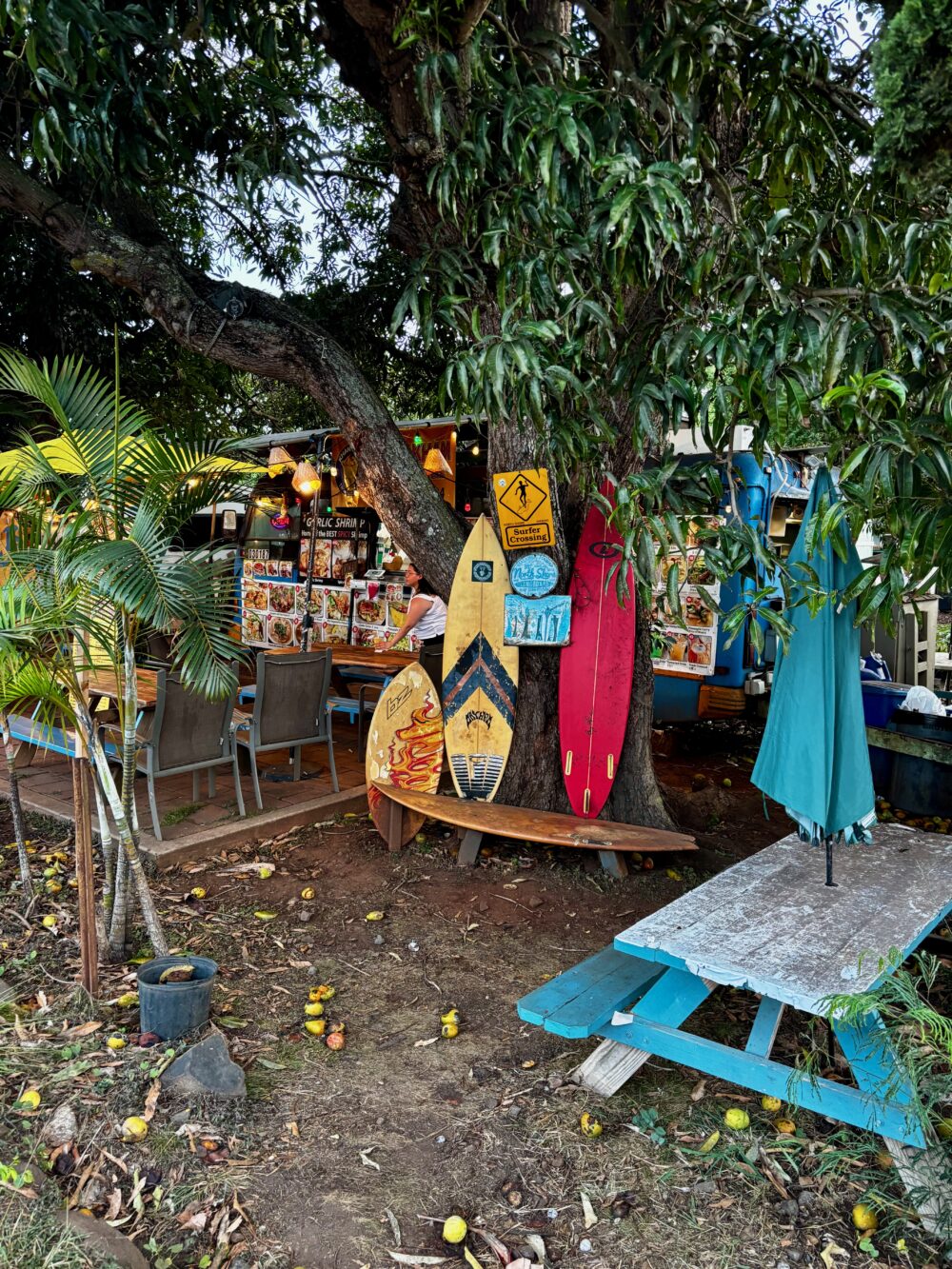
Giovanni’s Shrimp Truck (Kahuku) is the undisputed star of the North Shore food scene and already mentioned in the things to do section — but it bears repeating here. The garlic butter shrimp plate is one of the great simple pleasures of any Oahu trip. Go for lunch on the way up or down the coast.
Matsumoto’s Shave Ice (Haleiwa) is the North Shore’s other essential food stop. This Haleiwa institution has been serving proper Hawaiian shave ice since 1951 and the queue outside is almost always long — and always worth it. Order with azuki beans and ice cream at the bottom for the full experience.
Haleiwa Beach House is the North Shore’s best option for a proper sit-down meal with a view. The open-air terrace overlooks the beach and the menu leans into fresh local seafood and Hawaiian comfort food. The mai tais upstairs at sunset are particularly spectacular.
Haleiwa Joe’s is another Haleiwa stalwart — a popular, relaxed restaurant near the harbour with a diverse menu of locally sourced seafood and Hawaiian favourites. Great for a leisurely dinner after a day on the beach.
Seven Brothers (Kahuku, Haleiwa and near Shark’s Cove)is the North Shore’s most beloved burger spot. It’s a family-run institution serving epic, never-frozen burgers with fresh toppings and hand-cut fries. Make sure to try the Teri-Samoa burger and coconut macadamia nut shrimp are both outstanding. Enjoy your meal over relaxed picnic tables, with free-roaming chickens, and a completely laid-back atmosphere make it a quintessential North Shore experience.
Banzai Sushi Bar (Haleiwa) is a brilliant and slightly unexpected find on the North Shore — a hip, family-friendly sushi house serving authentic Japanese dishes made with Hawaiian seafood and mostly organic local produce. The rolls featuring macadamia nuts and island spices are outstanding, and the sake selection is impressive.
Cholo’s Homestyle Mexican (Haleiwa) is a North Shore institution — a festive, colourful spot that locals and visitors alike have been piling into for years. The life-size nachos with a mango margarita are a North Shore rite of passage.
Wicked Hi Café is a lovely, bright café a short drive south of Haleiwa, known for its sourdough waffles, house-made pizzas and extraordinary fruit slushies made with local honey and fresh tropical fruit. A perfect breakfast or lunch stop.
Kahuku Farms further up the coast near Kahuku is worth a detour for farm-fresh smoothies, açaí bowls and snacks made almost entirely from their own produce. A lovely, relaxed stop that gives you a real taste of North Shore agricultural life.
The Windward Coast
Kailua is the Windward Coast’s foodie hub, and its dining scene here is local, independent and characterful.
Kalapawai Café & Deli is a Kailua institution and the perfect spot to start or end a beach day. From morning coffee and pastries through to deli sandwiches, pizzas and a proper dinner menu featuring locally caught seafood and fresh salads, it does everything well and has a wonderfully relaxed neighbourhood atmosphere.
Buzz’s Steakhouse is one of the most beloved restaurants on the Windward Coast — a Kailua landmark that’s been serving exceptional steaks right by Kailua Beach since 1963. It’s casual, characterful and consistently excellent. Book ahead as it fills up fast.
Boots & Kimo’s is the place to go for breakfast, and specifically for their legendary macadamia nut pancakes — fluffy pancakes topped with a rich, creamy mac nut sauce that people travel across the island specifically to try. Expect a queue, but it moves quickly and it’s absolutely worth it.
Faria is a newer addition to the Kailua dining scene and already generating real buzz — Oahu’s first Portuguese restaurant, led by chef Kawehi Haug and inspired by her family recipes. The bacalhau a bras and the local take on Portuguese sweet bread are both outstanding. A lovely, unusual option that reflects Hawaii’s rich immigrant food culture.
Waiahole Poi Factory is worth a stop further up the coast near Kaneohe — a wonderfully weathered roadside spot that has been serving traditional Hawaiian plate lunches since 1905. Kalua pig, laulau, lomi salmon and poi on the side. The signature dessert — warm taro pudding with haupia ice cream — is not to be missed.
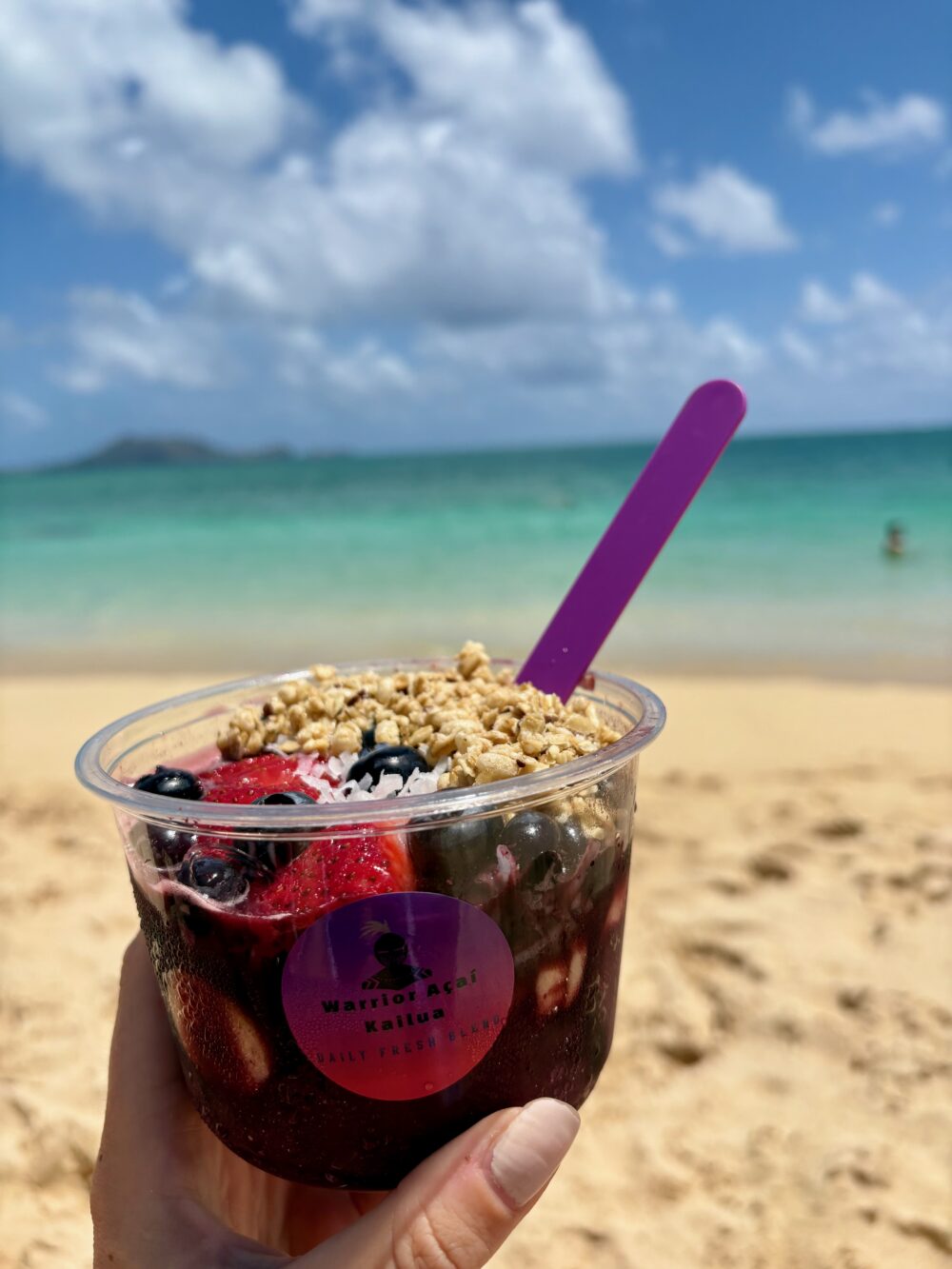
Warrior Acai Kailua delivered on Uber Eats and we enjoyed a delicious breakfast on the beach!
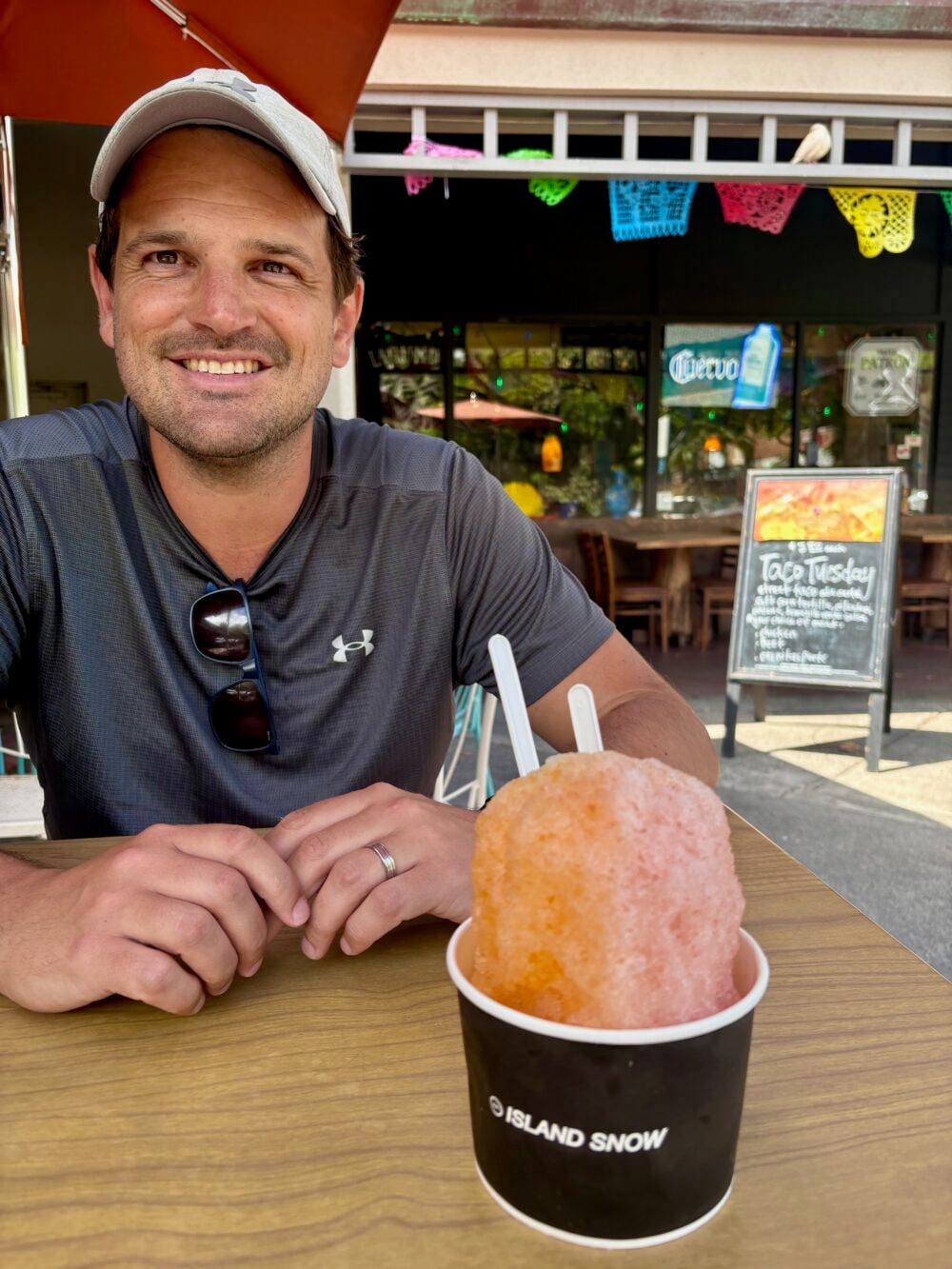
Island Snow was a delicious shave ice stop for us. Highly recommend!
Central Oahu
To be honest, there aren’t that many places to eat in Central Oahu, but we really enjoyed the food truck and farm experiences along the central Oahu route. So stopping for coffee at Green World Coffee Farm and pineapple whip at the Dole Plantation. I’d save your appetite for the North Shore shrimp trucks and shave ice when you get there.
Local food to try:
- Plate lunch — a Hawaiian institution: two scoops of rice, mac salad, and your choice of protein (kalua pig, mahi mahi, chicken katsu). Available everywhere and brilliant value
- Shave ice — not a snow cone. Proper Hawaiian shave ice is a different thing entirely — fine, fluffy ice flavoured with tropical syrups. Matsumoto’s on the North Shore is the most famous
- Poke — fresh raw fish marinated in soy, sesame, and spring onions. You’ll find it in supermarkets and specialist poke shops all over the island
- Malasadas — Portuguese doughnuts brought to Hawaii by plantation workers and now a local obsession. Leonard’s Bakery in Honolulu is the place to go
Best Things to Do in Oahu
Waikiki (Honolulu)
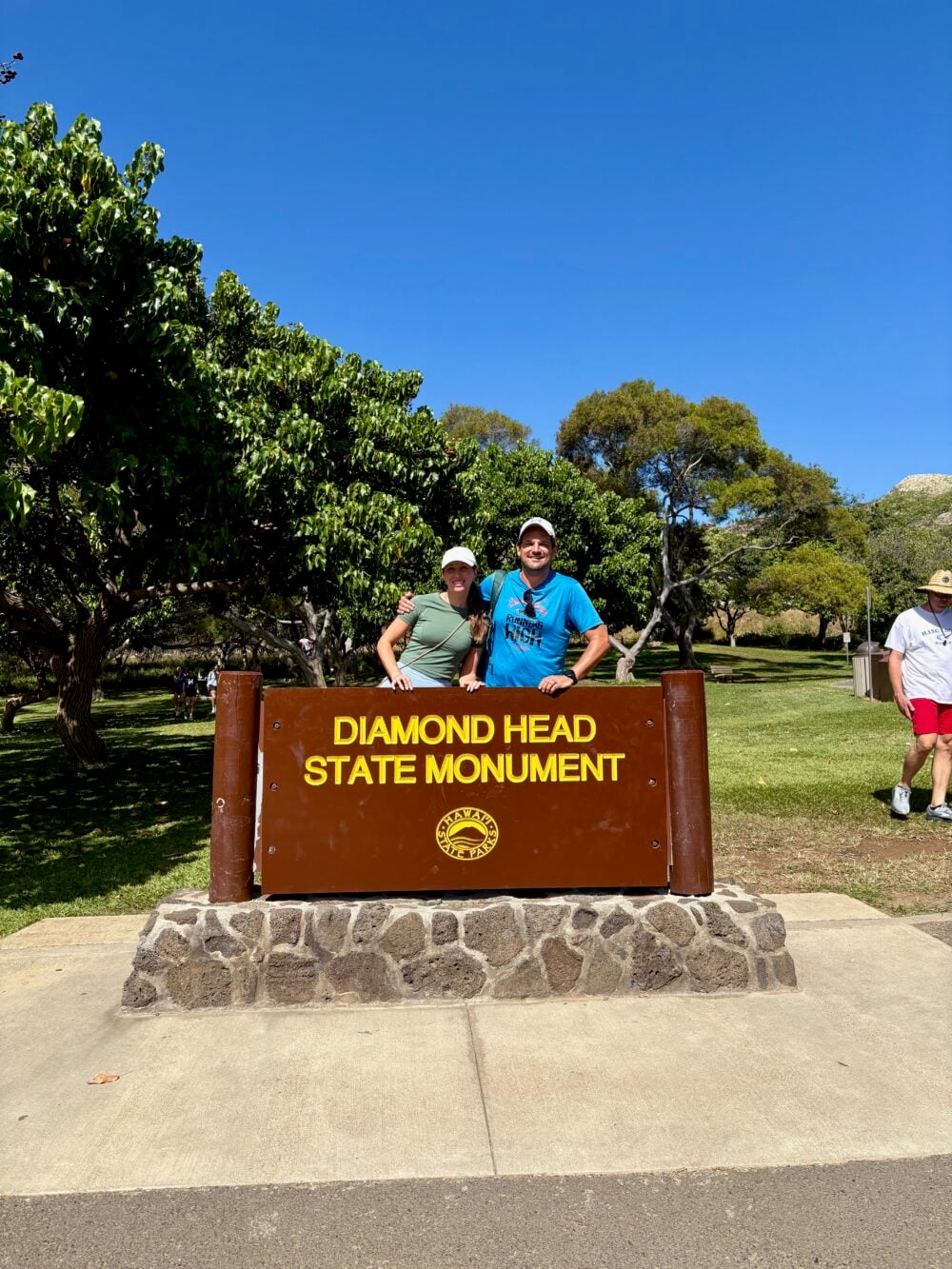
Diamond Head Hike
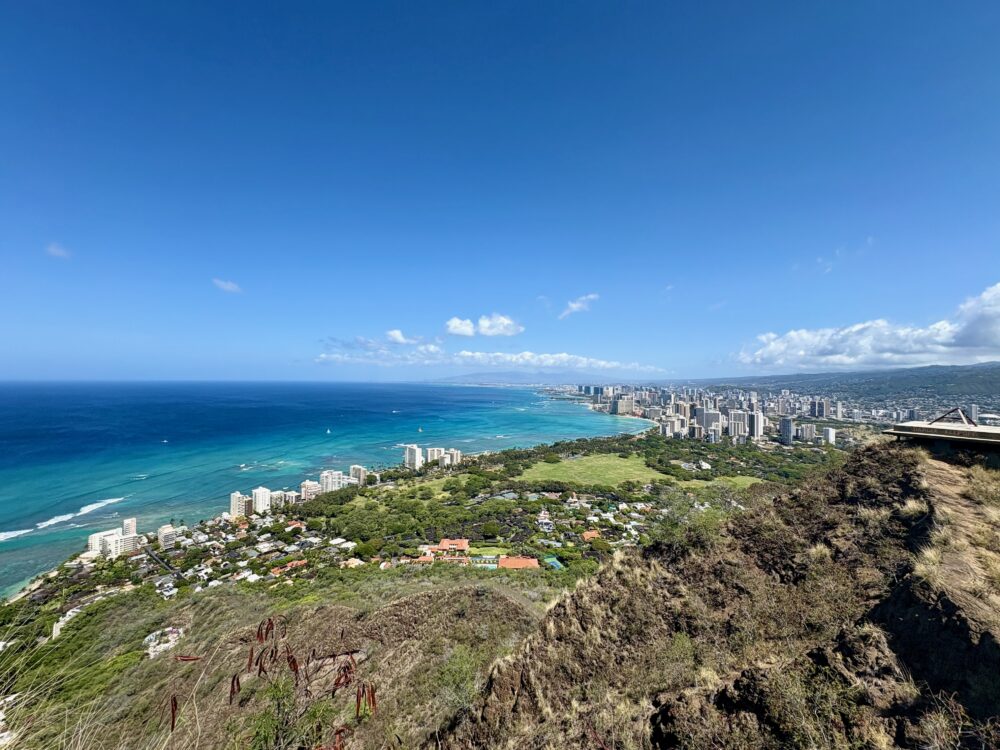
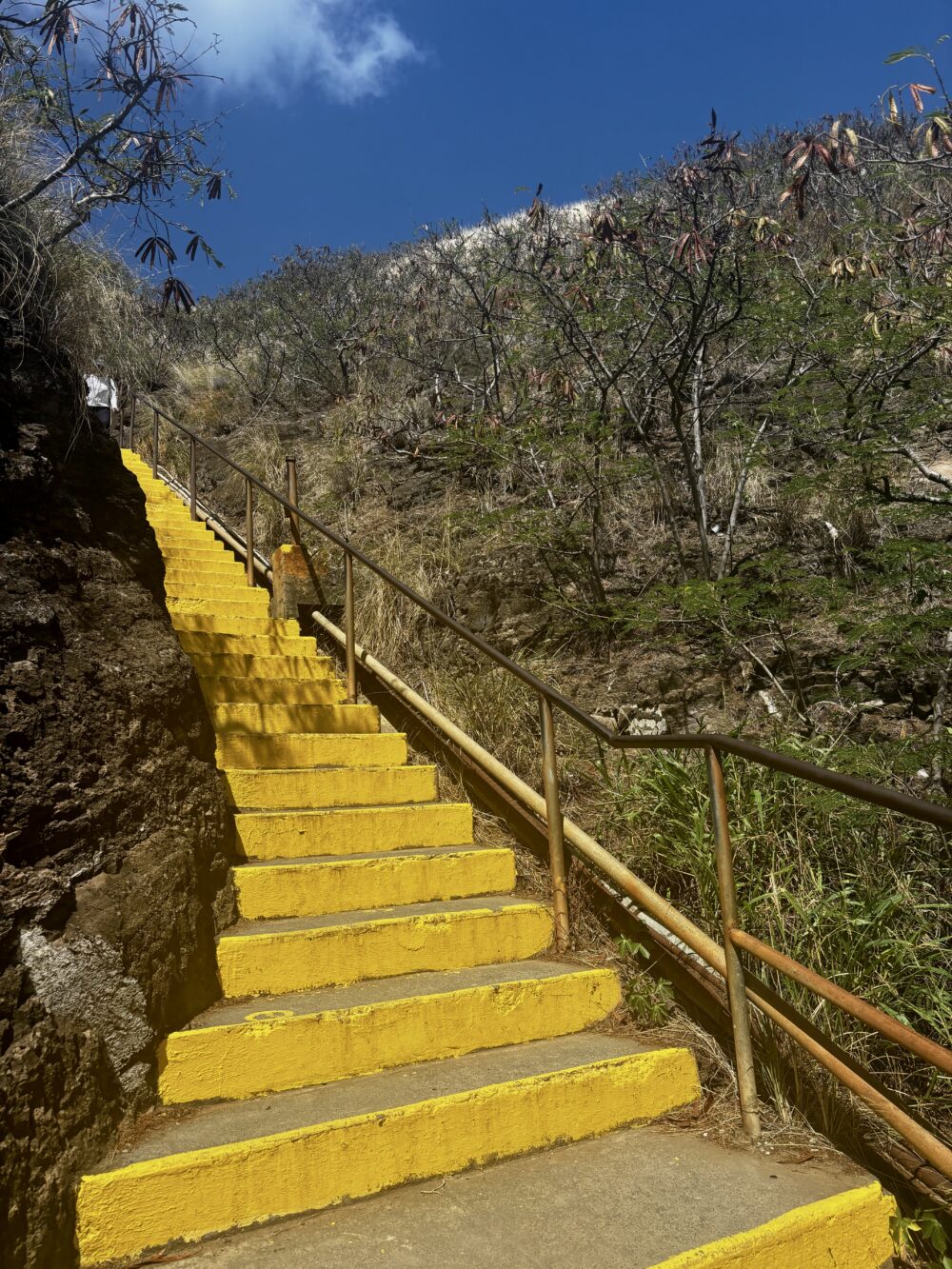
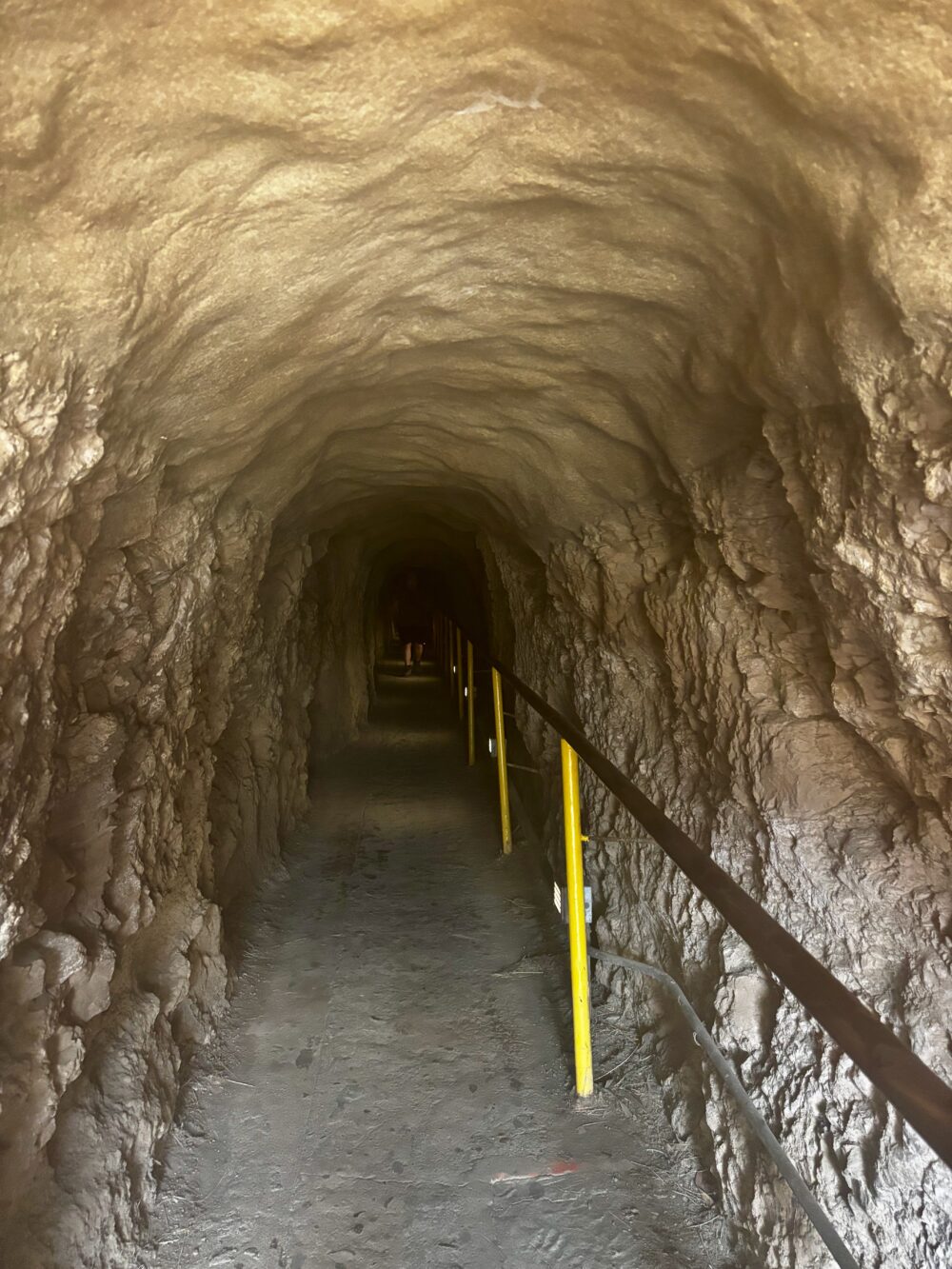
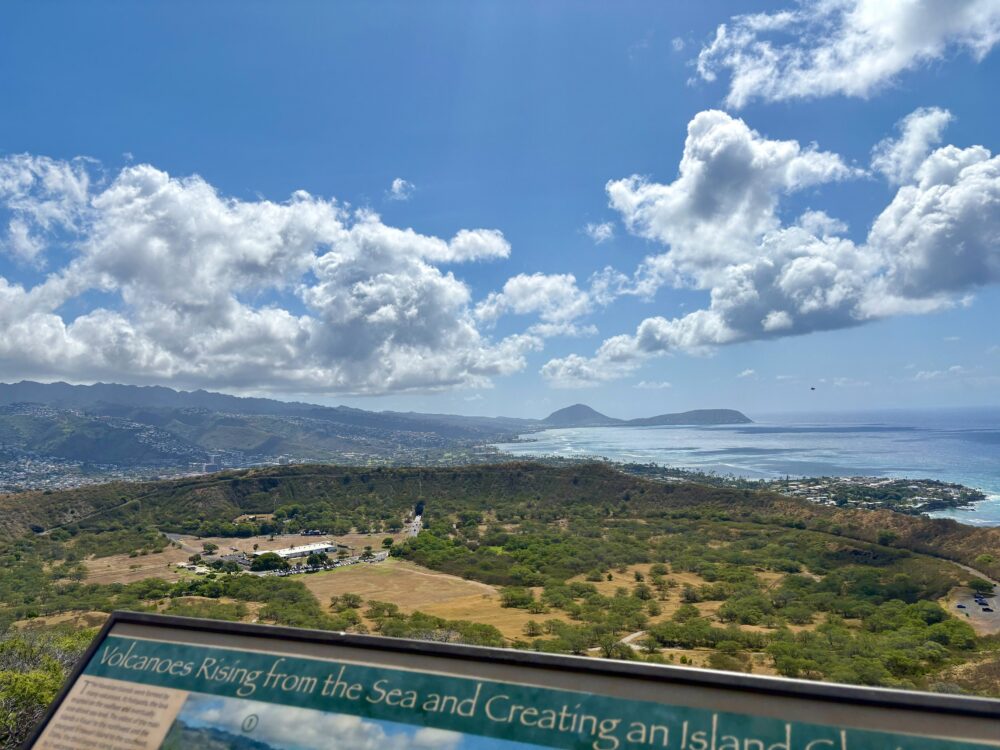
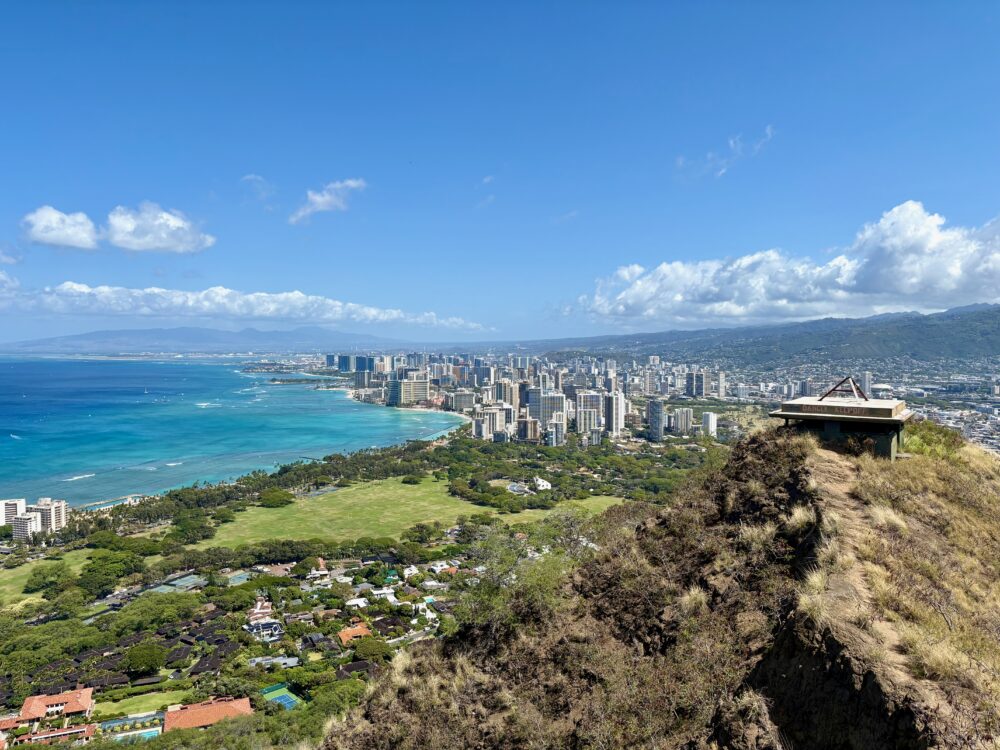
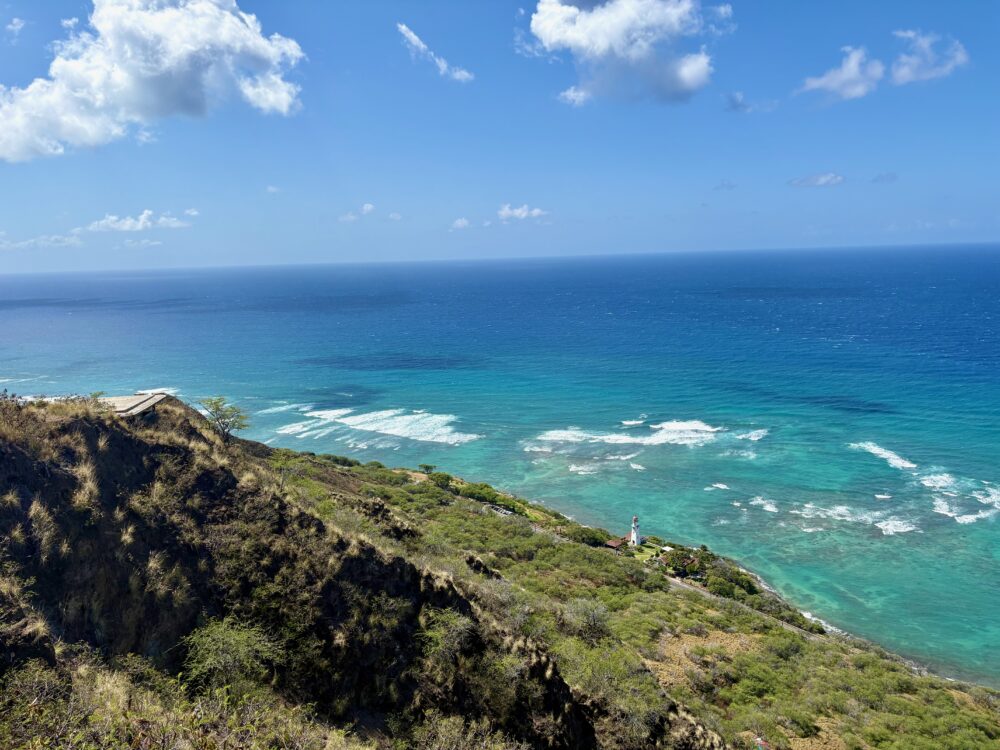
No Oahu trip is complete without hiking Diamond Head (Le’ahi). It’s a 1.6-mile round trip from the entrance to the summit of this volcanic crater, with incredible panoramic views over Waikiki and the coastline below. If you can, go early to beat the crowds and the heat. Reservations are now required and can be booked in advance online here. Reservations may be made up to 30 days in advance.
If you’re feeling particularly energetic, then it’s a lovely walk out of the Diamond Head area, and all the way along the coastline back to Waikiki. You pass through gorgeous residential areas, before arriving at the lovely Queen’s Beach and then eventually Waikiki. We had such a nice day stopping for swims and bites to eat en route!
Otherwise, why not organise your Diamond Head hike with roundtrip transportation here? (from £47 per person).
Queen’s Beach (Queen’s Surf Beach)
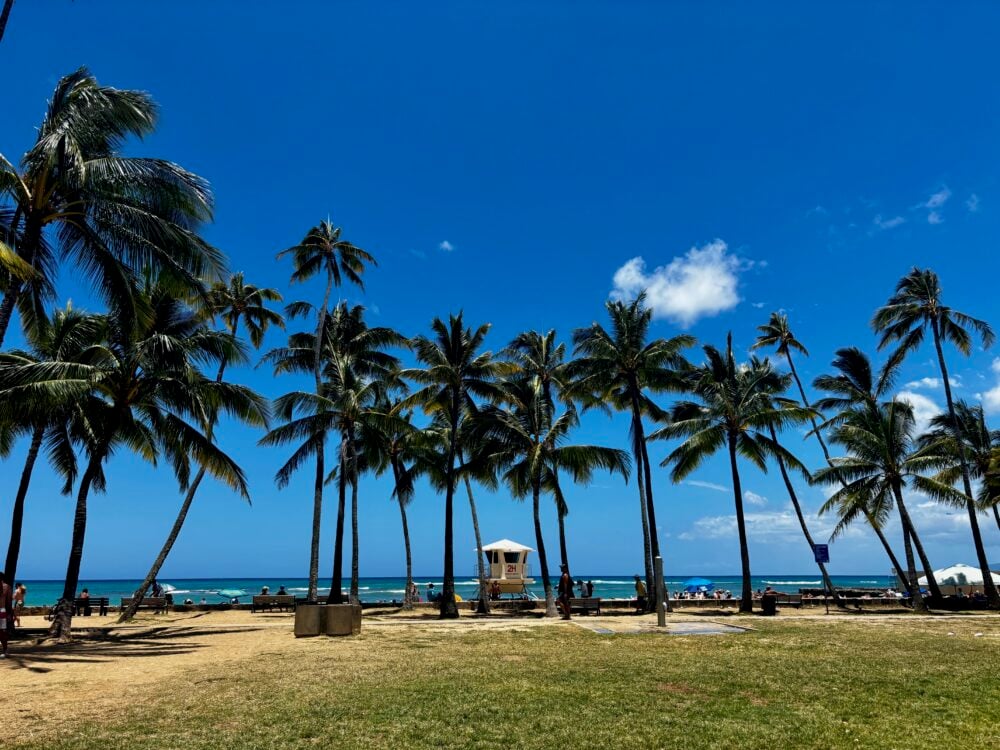
Tucked at the quieter, Diamond Head end of Waikiki, we stumbled upon Queen’s Beach after our Diamon Head hike, and instantly decided we loved it! The beach is named after Queen Liliuokalani, whose beach house and pier once stood here.
It’s wider, less crowded and more relaxed than the main Waikiki stretch, and the setting, with Diamond Head in the background, and the lush Kapiolani Park behind you, is hard to beat. The water is designated as a Marine Life Conservation District, which means the snorkelling here is surprisingly good for such a central location. You could see sea turtles, parrotfish and all manner of tropical fish are regular sightings. And whilst the surfing is less so here, bodyboarding is very popular!
If you’re visiting from May to September, then one idea is to stop by for their outdoor movie nights. A giant screen is set up on the beach for sunset screenings, which is about as magical a cinema experience as you can imagine. It’s free, fun and very popular with locals.
It’s also a well-known and welcoming spot for Honolulu’s LGBTQ+ community, giving it a particularly warm and inclusive atmosphere that adds to its appeal.
Facilities are good here. There is parking nearby, bathrooms, lifeguards, volleyball nets and the Barefoot Beach Café for food and drinks. It made for a lovely alternative to the main Waikiki beach scene, which definitely feels very busy in comparison.
Pearl Harbor
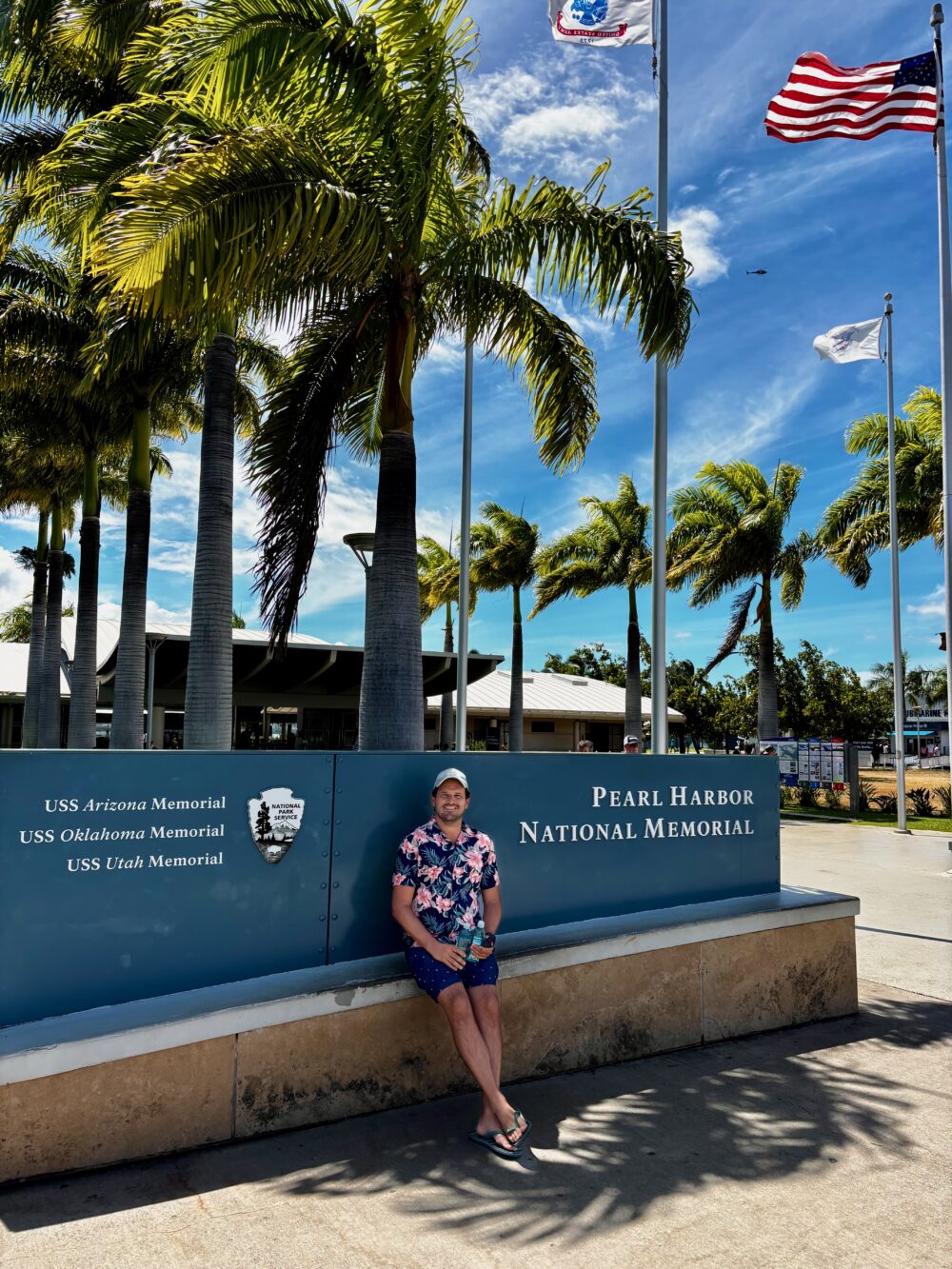
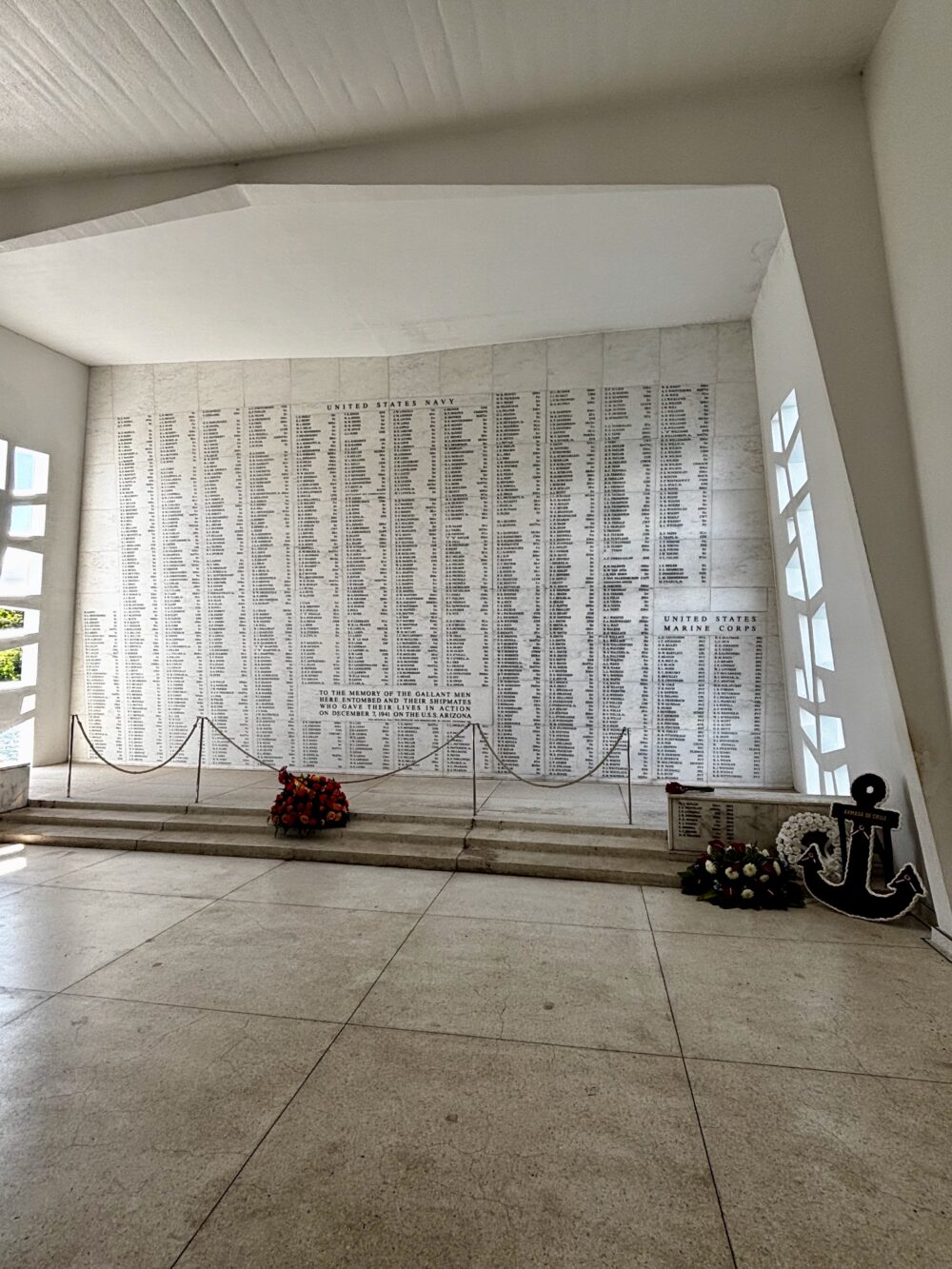
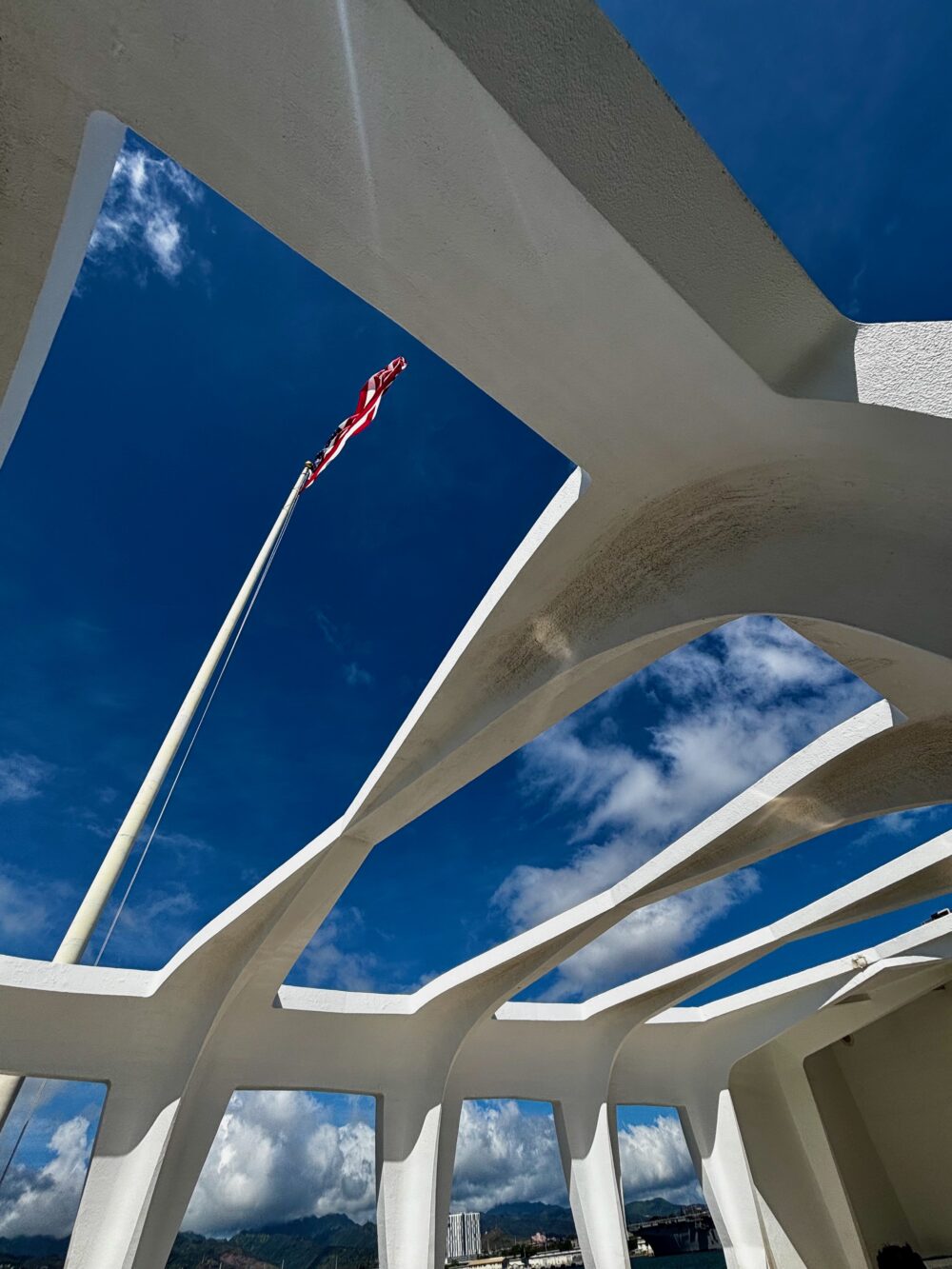
One of the most significant historic sites in the United States, Pearl Harbor is a deeply moving and important visit. The USS Arizona Memorial, the Battleship Missouri, and the Pacific Aviation Museum all tell the story of the 1941 attack that brought America into the Second World War. Allow a full half-day at minimum.
It’s around a 45 minute drive from Waikiki Beach, so can be more efficient and better value to join a tour, such as this one, which includes a transfer and entry (from £43 per person).
There’s also this great tour which takes in Pearl Harbor, but also a full island circle tour (from £108 per person).
Iolani Palace
Hawaii’s only royal palace and the former home of the Hawaiian monarchy. It’s a fascinating and often overlooked stop in downtown Honolulu that gives real context to Hawaii’s complex history and the overthrow of the kingdom in 1893.
There are plenty of city tours that take in the Palace, as well as other key sites and sometimes Pearl Harbour too. This one here comes highly recommended and is great value at £43 per person.
Ala Moana Center and Kakaako
This is one of the largest open-air shopping centres in the world and worth a wander. Depending on where you’re staying in Waikiki, it may well be walkable too. It’s worth heading to neighbouring Kakaako too for Honolulu’s coolest neighbourhood. This area is home to great street art, independent coffee shops, and some of the city’s best restaurants.
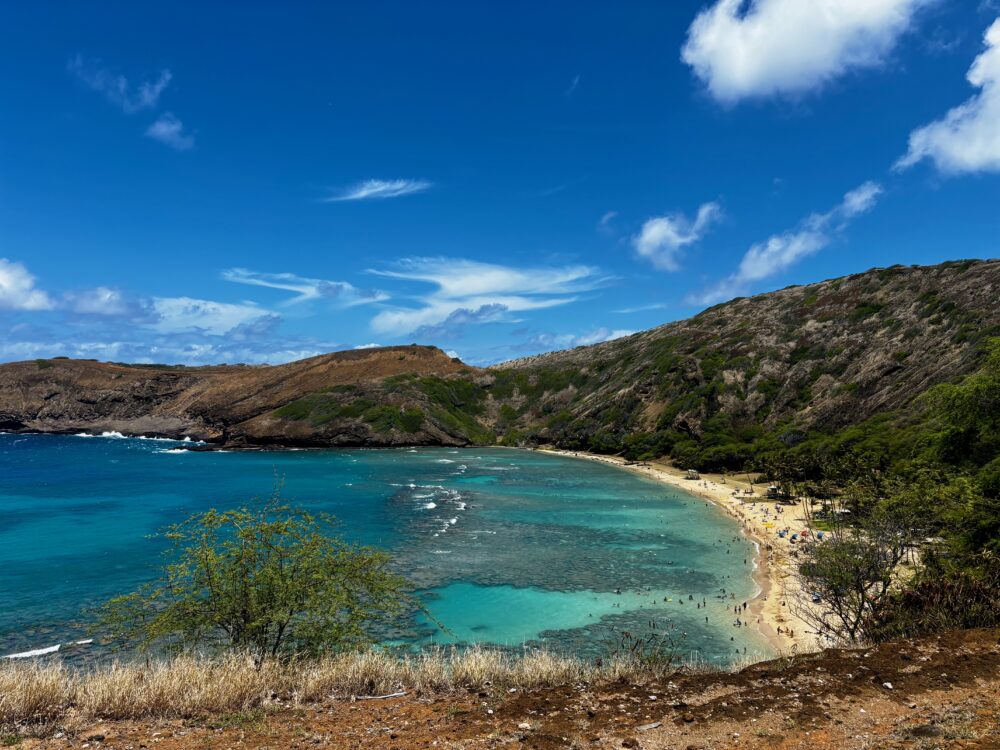
Hanauma Bay This beautiful bay is widely considered the best snorkelling spot on Oahu. It’s a protected marine bay that sits within a volcanic crater on the South Shore and is home to an extraordinary array of marine life — sea turtles, hundreds of species of tropical fish, and vibrant coral.
I’m going to be honest and say it was a lot busier on my latest visits than when I first went in 2011. They’ve tried to handle this by making reservations mandatory and limiting numbers, but it still felt really packed on the beach.
Reservations must be made in advance online here, with admission only entry opening just 2 days before the reservation date. For planning purposes, it’s worth noting that it’s only open Wednesday to Sunday (closed Monday and Tuesday), and last entry is at 1.30pm.
On arrival, make sure you bring ID that matches up with the name on your booking and once in, you’ll also need to watch a short conservation video before entering the water. Go early if you can — the bay gets busy and the car park fills up fast. Non-residents pay an entry fee of $25 per person.
Hawaii Kai and Koko Marina
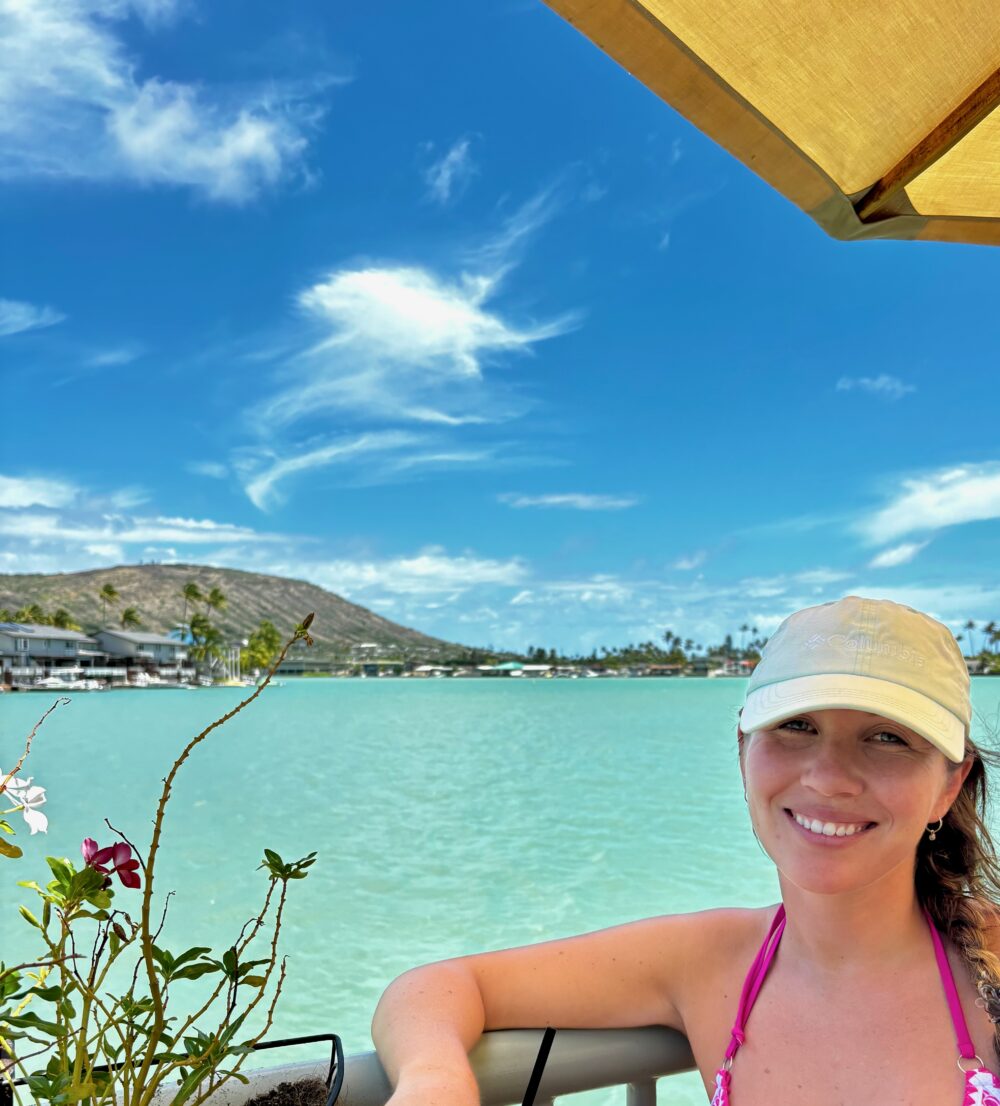
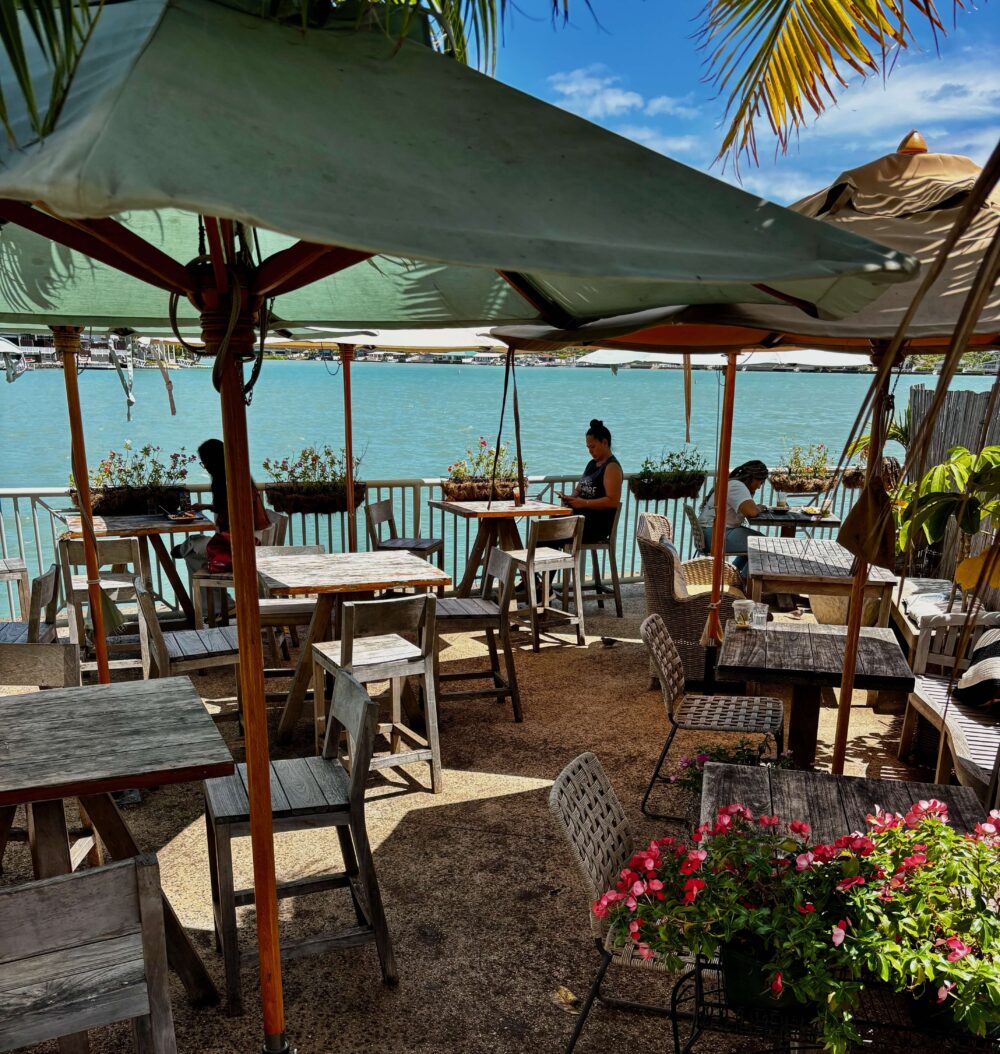
Sitting about 20 minutes east of Waikiki along the Kalanianaole Highway, Hawaii Kai is one of Honolulu’s most pleasant and well-planned neighbourhoods. We stopped here by chance after a morning at Hanauma Bay and we discovered a leafy, affluent community built around a beautiful marina.
Koko Marina is the neighbourhood’s social hub focused around a relaxed, open-air shopping centre right on the waterfront with a lovely marina backdrop. It’s a great place to stop for breakfast or lunch, stock up on snacks before a beach day, or grab a shave ice after visiting Hanauma Bay nearby. The outdoor seating overlooking the boats is quietly lovely.
Waikiki Friday Night Fireworks
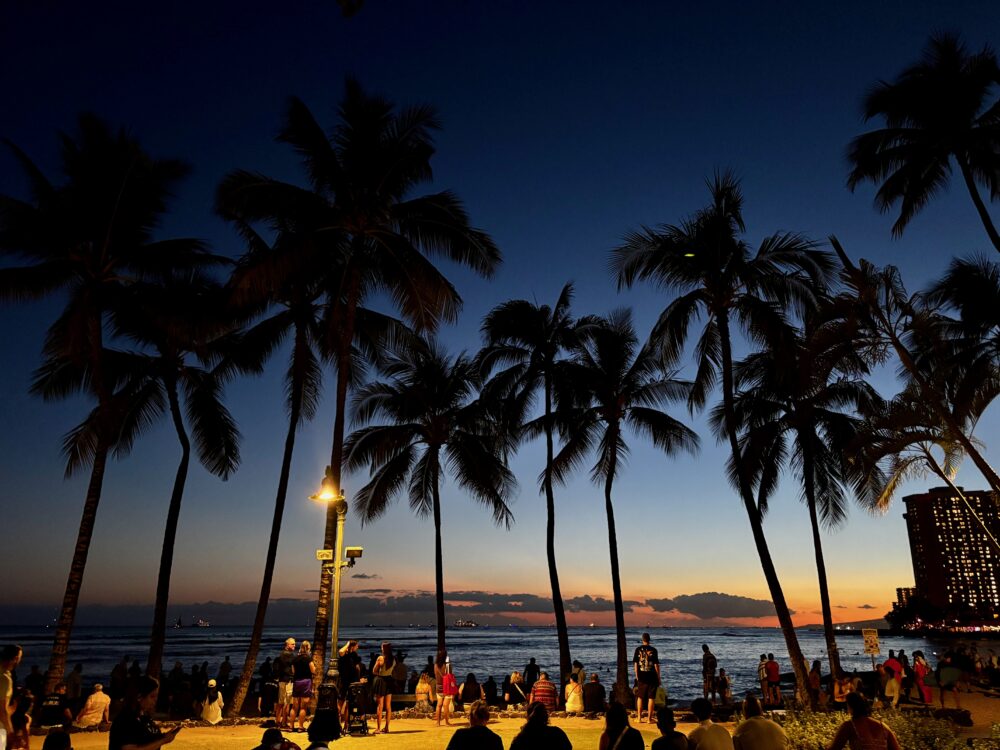
Every Friday night since 1988, the Hilton Hawaiian Village has put on a free fireworks show over Waikiki Beach. The best vantage point is on Waikiki Beach between the Hilton Hawaiian Village and the Outrigger Reef but arrive at least 30 minutes early to secure a good spot. The show takes place at 7:45pm and is visible across a wide area. It’s only around ten minutes but the combination of fireworks over the ocean with Diamond Head glowing in the background is genuinely magical.
If you want to splash out, a Friday Fireworks Cruise departs from the Hilton Pier at 6pm and puts you on the water for two hours, with dinner and drinks included and a front-row seat to the show from the ocean. Book this cruise here! (from £48 per person)
Ko Olina (the Leeward Coast)
Ko Olina sits on the sunny western tip of Oahu, about 25 miles from Waikiki, and feels like a completely different world. Where Waikiki is buzzy, urban and iconic, Ko Olina is calm, manicured and resort-focused. It’s a purpose-built paradise that’s particularly well suited to families and those wanting a more relaxed pace.
The star attraction is the four Ko Olina Lagoons. These are man-made but beautiful, with calm, sheltered turquoise water that’s perfect for swimming year-round. Unlike many of Oahu’s beaches, there’s no strong surf or current here, making them ideal for young children and less confident swimmers. The lagoons are open to the public (not just hotel guests), though parking fills up fast.
Beyond the lagoons, Ko Olina is home to some of Oahu’s finest resorts. The Four Seasons Resort Oahu at Ko Olina is widely considered one of the best hotels on the island, with exceptional service, beautiful pools and direct beach access. Aulani, a Disney Resort & Spa is also here and is a brilliant choice for families. It’s home to exciting water parks, character breakfasts and a Disney-themed luau. Even if you’re not staying at either, the area is worth a visit for a sunset dinner or a lazy afternoon by the lagoons.
The Leeward Coast stretching beyond Ko Olina towards Kapolei and Waianae is less visited but rewards those who venture further. You’ll find far fewer tourists, more local beaches, and dramatic views of the Waianae Mountains inland.
Quite a few beautiful boat trips also start from the marina at Waianae here, I’ve picked out some of the best:
- Ko Olina Resort Polynesian Star Voyage (from £36 per person)
- Eco-Friendly Whale Watching Cruise (from £66 per person)
- Turtles, Dolphins, and Snorkeling Tour with Lunch (from £103 per person)
- Ko Olina Catamaran Snorkel Sail and Luau Experience (from £110 per person)
- Dolphin Watching & Turtle Snorkeling with Waterslide (from £141 per person)
North Shore
The North Shore is the stuff of surfing legend, and even if you’re not a surfer, it’s absolutely worth the drive from Waikiki (around an hour). There are some great guided tours here that’ll really help you get to know the North Shore:
- North Shore Experience and Dole Plantation (from £73 per person)
- North Shore Circle Island Small-Group Tour (from £103 per person)
- Guided Tour of North Shore and Waimea Botanical Garden (from £108 per person)
- Waimea Falls, Waimea Valley & North Shore Day Tour (from £111 per person)
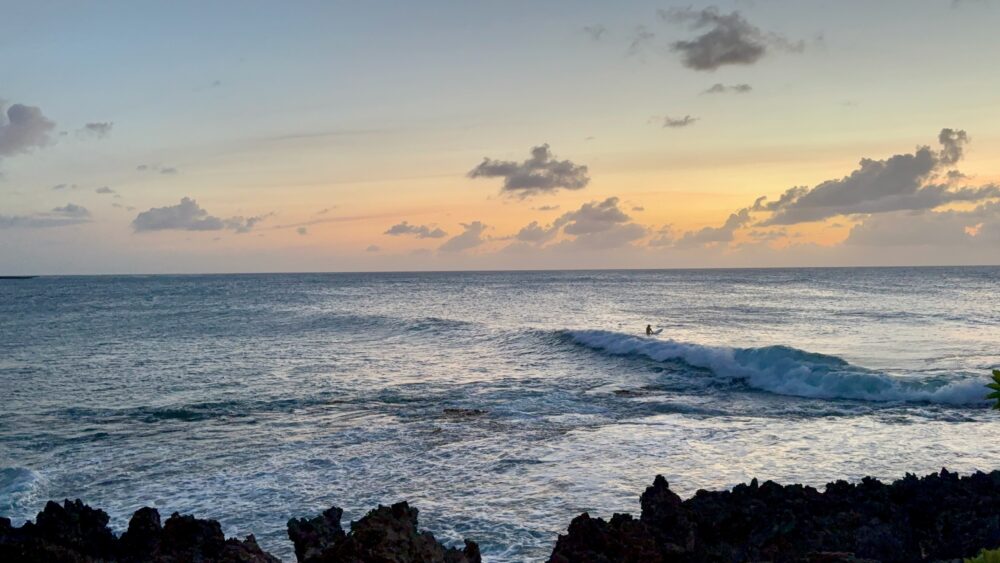
Waimea Valley
A beautiful botanical garden and nature park with a stunning waterfall at its heart. You can swim in the pool beneath the falls, and the walk through the gardens is genuinely lovely. A quieter alternative to the beaches.
Toa Luau at Waimea Valley
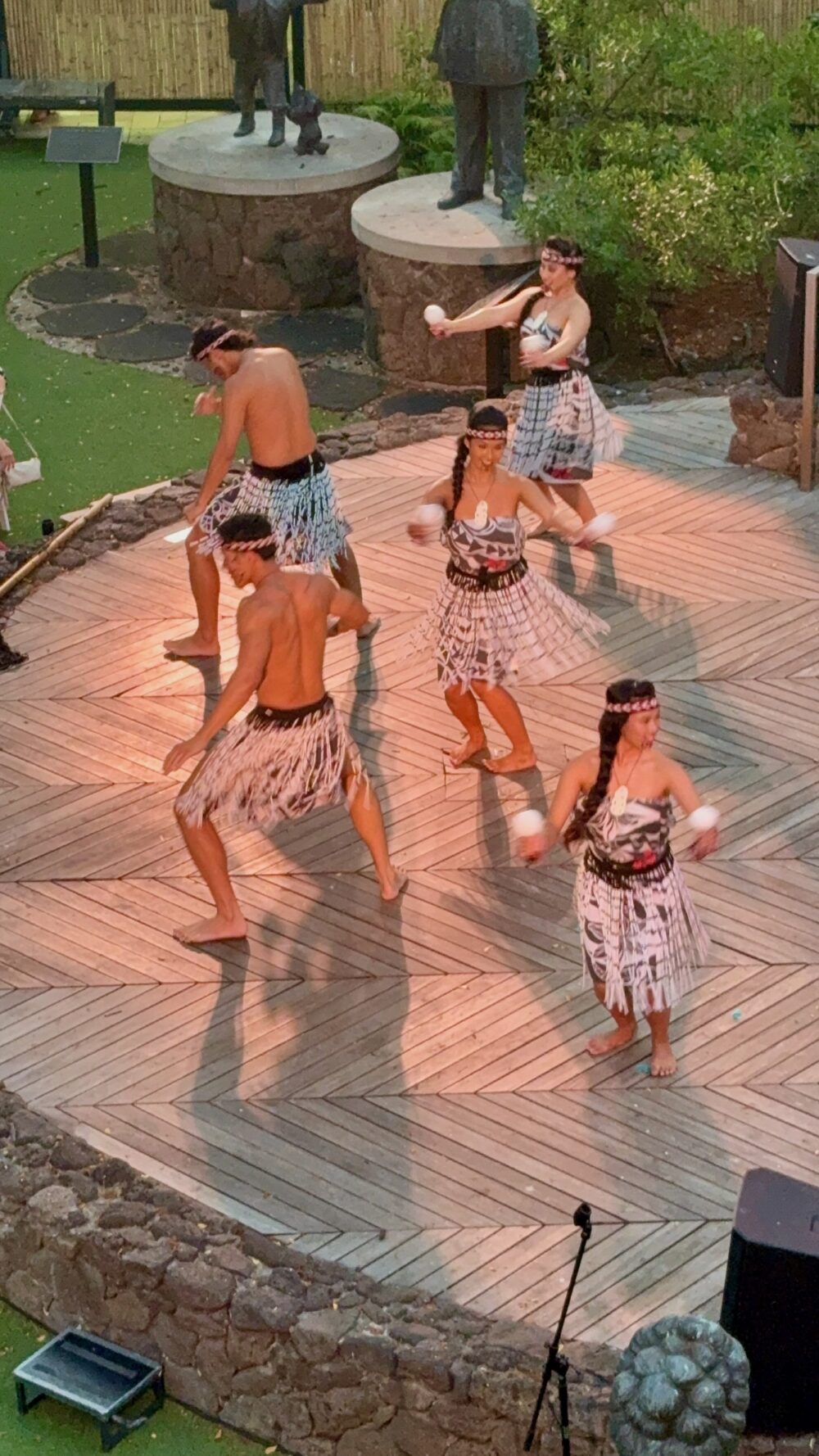
If you’re going to do one luau on Oahu, make it the Toa Luau at Waimea Valley. It’s consistently rated as the best luau on the island, and it stands apart from the big hotel productions in almost every way. It’s intimate, family-run, culturally authentic, and set in one of the most beautiful natural settings on Oahu.
The dramatic Ko’olau Mountains serve as a backdrop and the organisers keeps numbers small, at around 200 guests. It’s run by a local family, and that comes through in every detail. You’re greeted with a flower lei and a welcome drink on arrival, and the evening flows through cultural demonstrations, a kava ceremony, cooking demonstrations, and interactive lawn activities before the main show begins.
One of the great perks is that your ticket includes free access to Waimea Valley itself, including the sprawling botanical gardens and the famous waterfall. So it’s worth arriving early, hiking the easy paved trail to the falls, having a swim in the pool at the bottom, and then settle in for the evening.
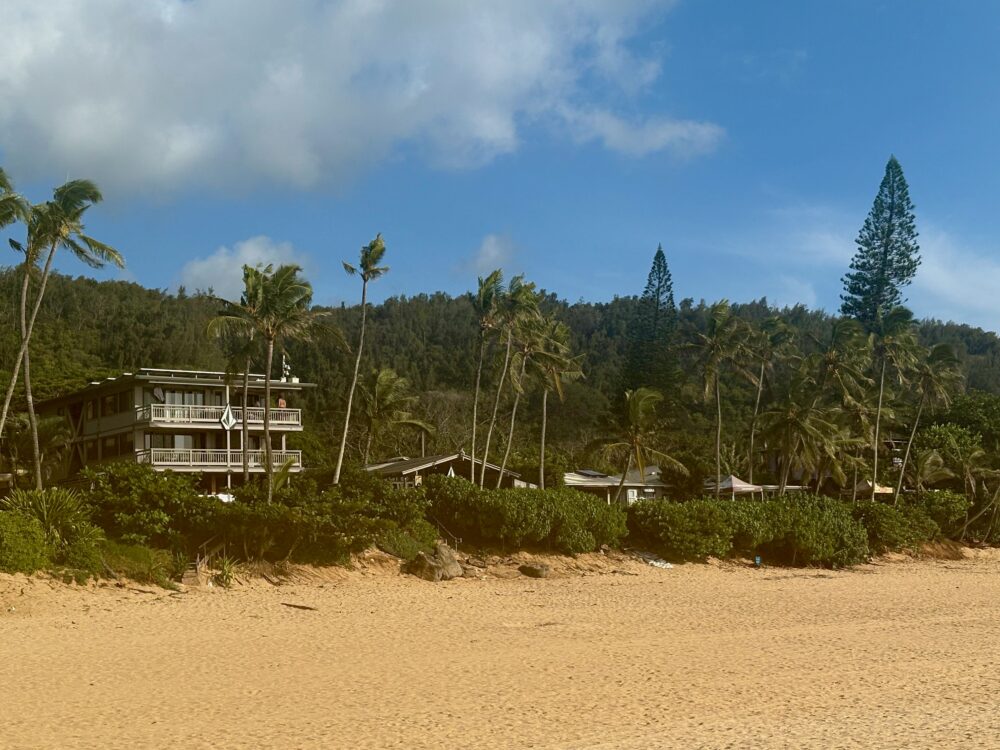
Banzai Pipeline and Sunset Beach
From November to February, these beaches host some of the biggest, most powerful waves in the world and the famous Vans Triple Crown of Surfing competition. Even in summer, the atmosphere is unmistakably cool and local. You can join surf lessons, which is a pretty bucket list experience if visiting the North Shore!
Arrange your surf lesson in advance here!
Laniakea Beach (Turtle Beach)
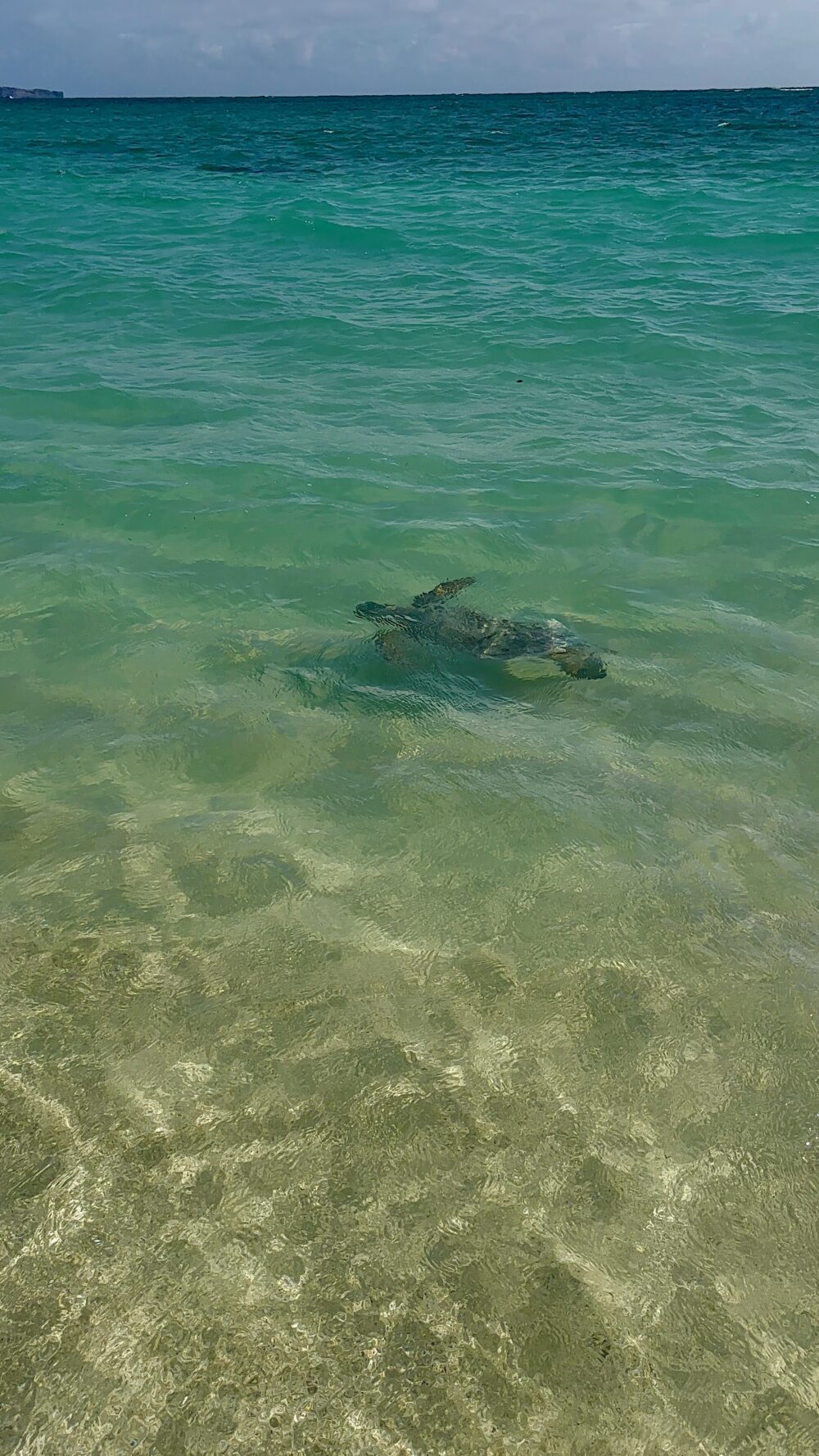
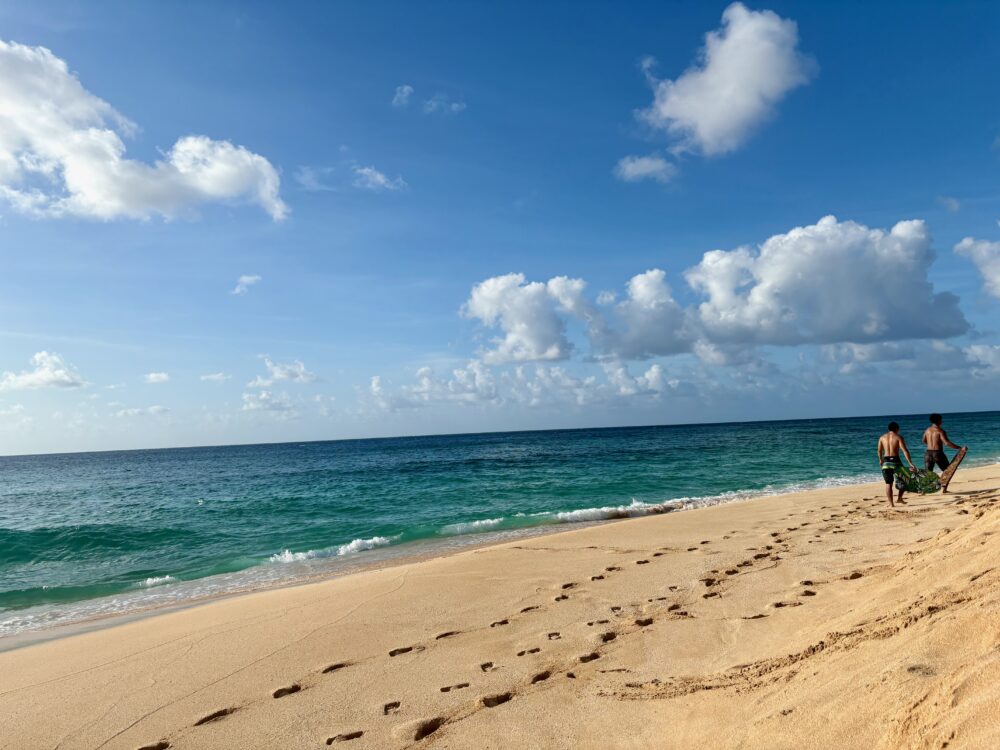
One of the most popular stops on the North Shore, and for good reason. Hawaiian green sea turtles regularly come ashore here to rest, and it’s one of the most reliable spots on the island to see them up close (but still from a respectful distance). It sits right on Kamehameha Highway and is an easy and magical stop on a road trip.
Shark’s Cove
Arguably the best snorkelling spot on the North Shore, especially in summer when the water is calm. Despite the name it’s perfectly safe – the name comes from the shape of the cove rather!
The Windward Coast
Makapu’u Lighthouse Trail
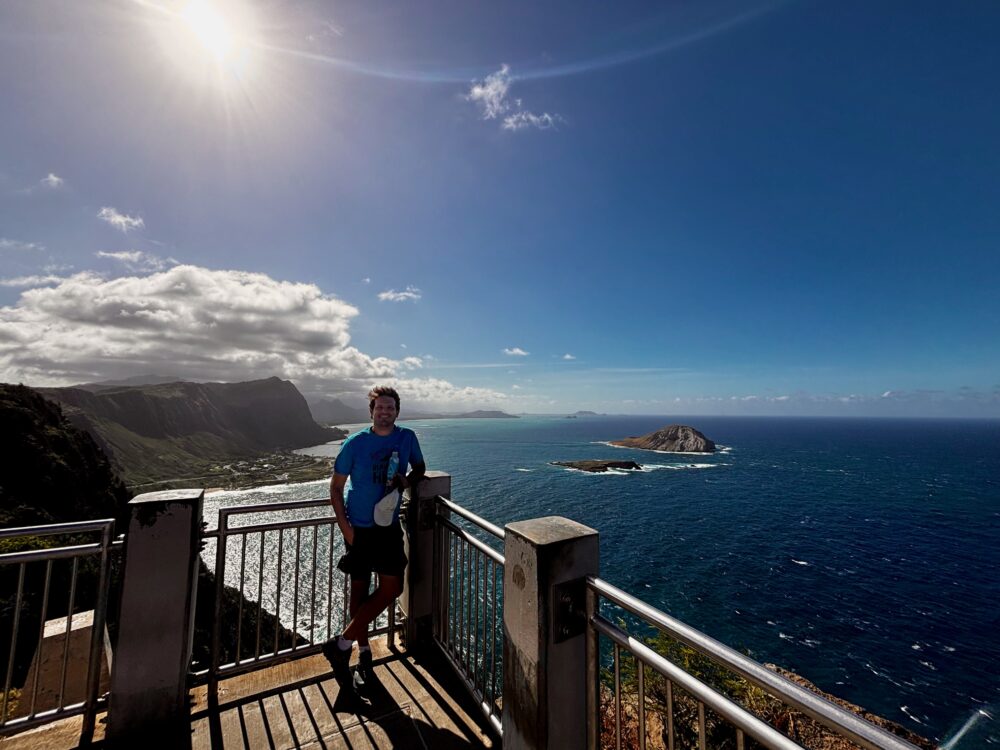
Located on the eastern tip of Oahu just beyond Hawaii Kai is one of the most accessible and rewarding hikes on the island. It’s well paved and a relatively easy 2-mile round trip to a lighthouse lookout with stunning views up and down the coast. From December to April it’s also one of the best spots on Oahu to watch for humpback whales offshore. Highly recommend!
Kailua Beach
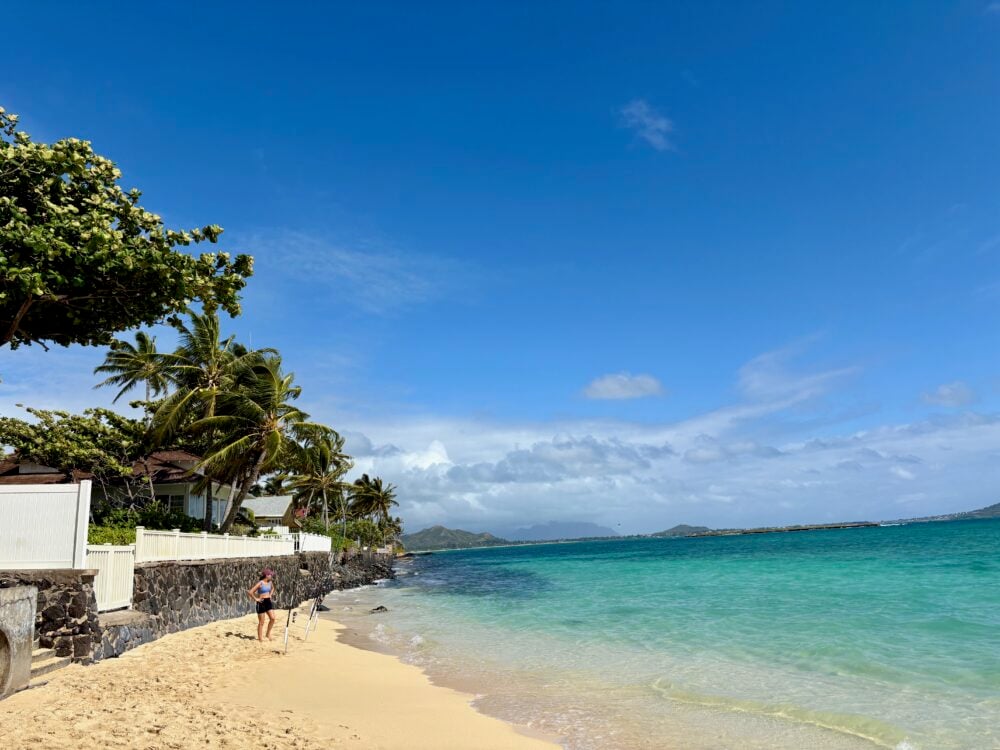
Often rated one of the best beaches in the United States, Kailua is a long stretch of white sand with calm, turquoise water. It’s perfect for swimming, kayaking, and stand-up paddleboarding. It has a lovely local town behind it with great cafes and independent shops. We love it here!
Lanikai Beach and the Pillbox Hike
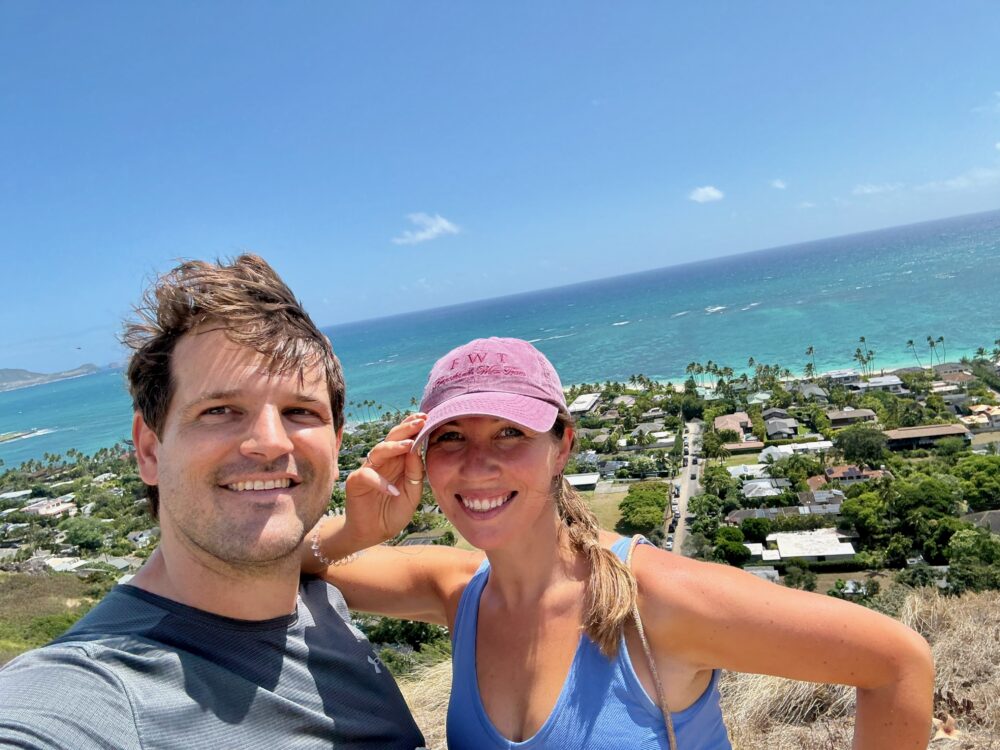
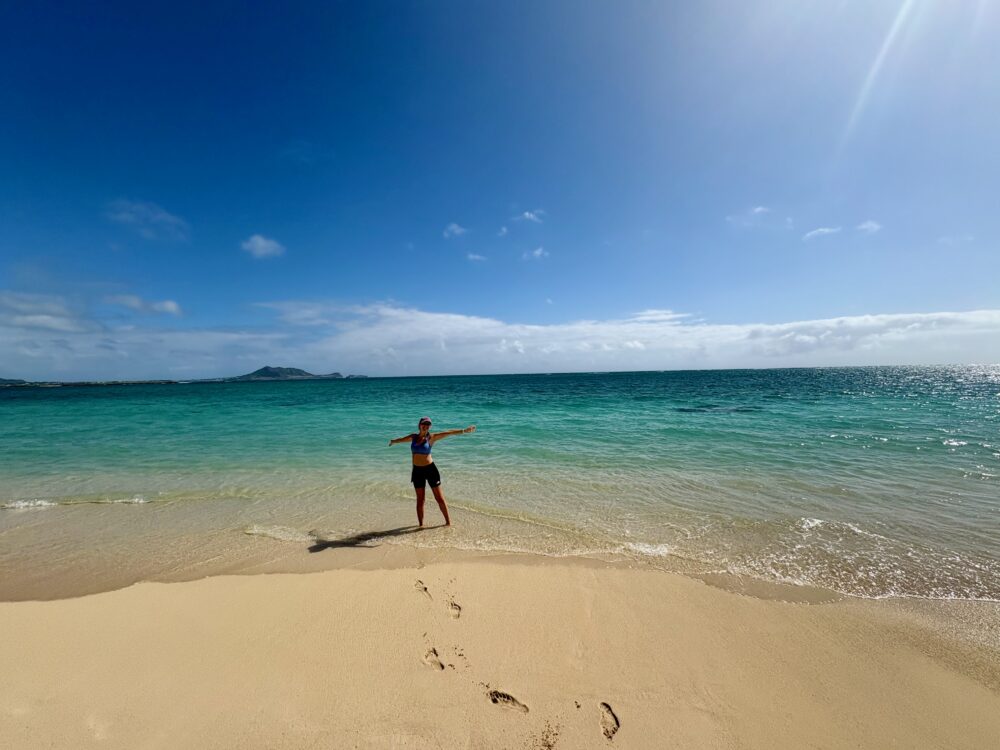
Just along from Kailua, Lanikai Beach is postcard-perfect with powder white sand and bright turquoise water. I couldn’t believe how pristine it was, having had a 15 year gap between visits. I think this is one of the best beaches I have ever been to, and it’s common to spot turtles swimming in the shallow waters.
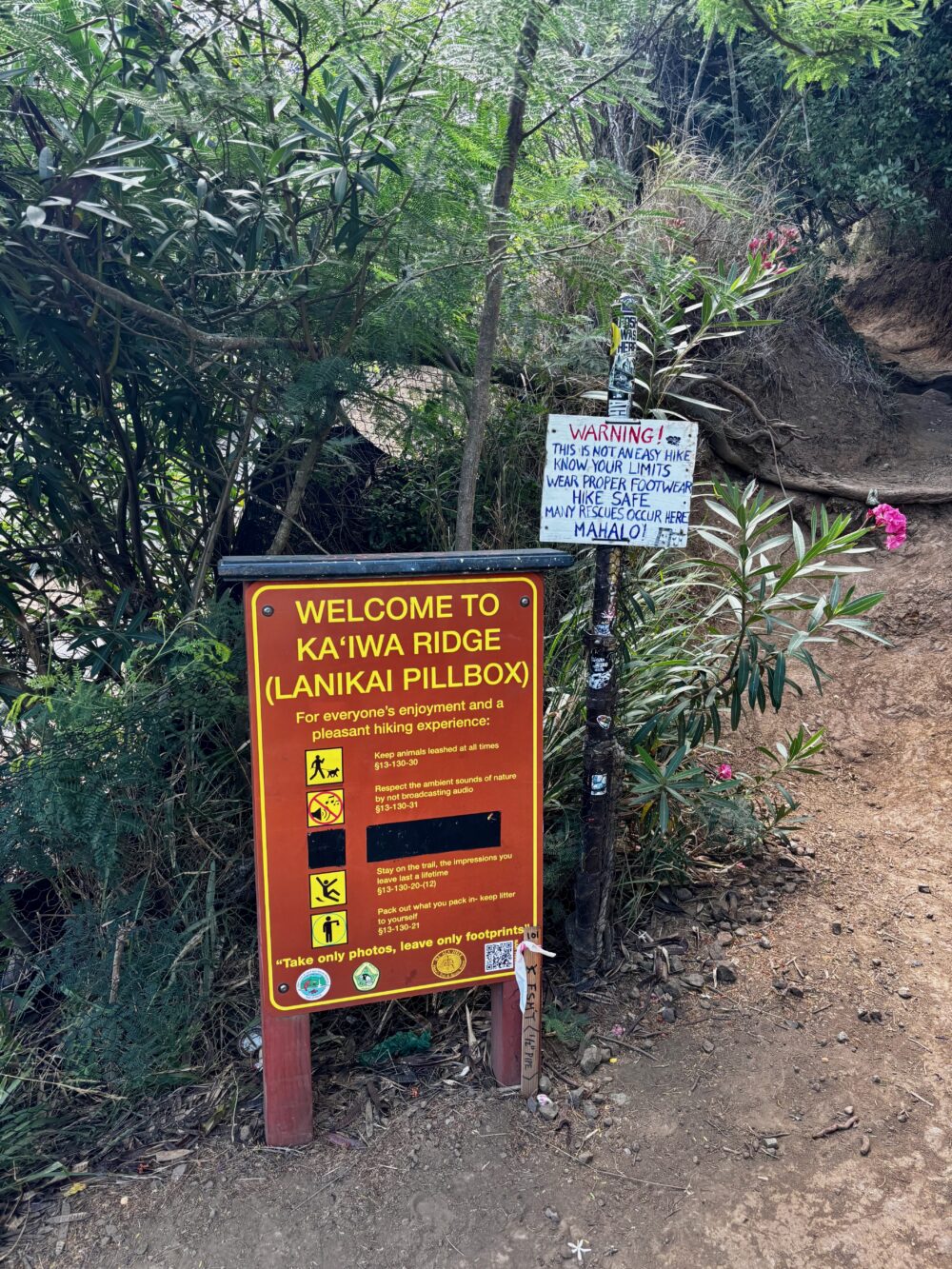
There is the famous Pillbox Hike starting near the golf course behid the beach. It’s a short but steep trail that rewards you with stunning views over the coast. You can stop at the first pillbox, or keep climbing further for even more magnificent views.
As we turned back on the hike, we ordered in some breakfast via Uber Eats, asking the driver to meet us at hike’s starting point. It worked perfectly, and we had icy cold drinks and delicious acai bowls to devour on the beach after the sweaty hike!
Kaneohe Sandbar
This sandbar emerges in the middle of Kaneohe Bay at low tide, and you can then stand in the middle of the ocean. Why not rent a kayak or join a boat tour to get out there?
Byodo-In Temple
This temple is a stunning replica of a 900-year-old Japanese temple set against the dramatic Ko’olau Mountains in the Valley of the Temples. Peacocks roam the grounds and the setting is completely otherworldly. A peaceful, beautiful stop on a road trip up the coastline.
Kualoa Ranch
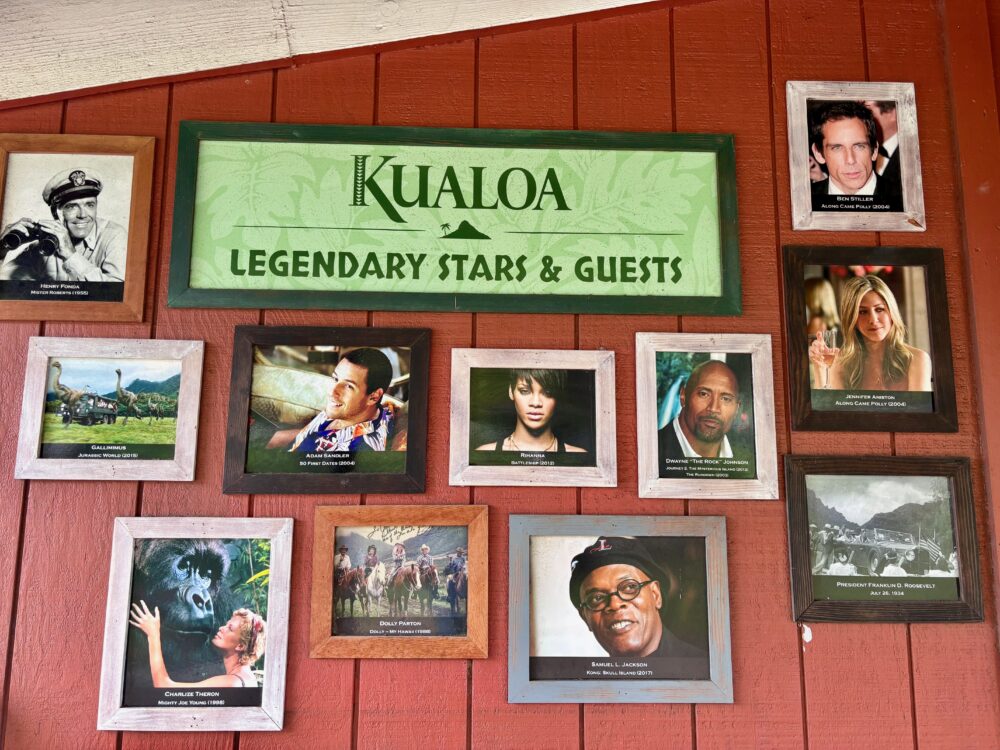
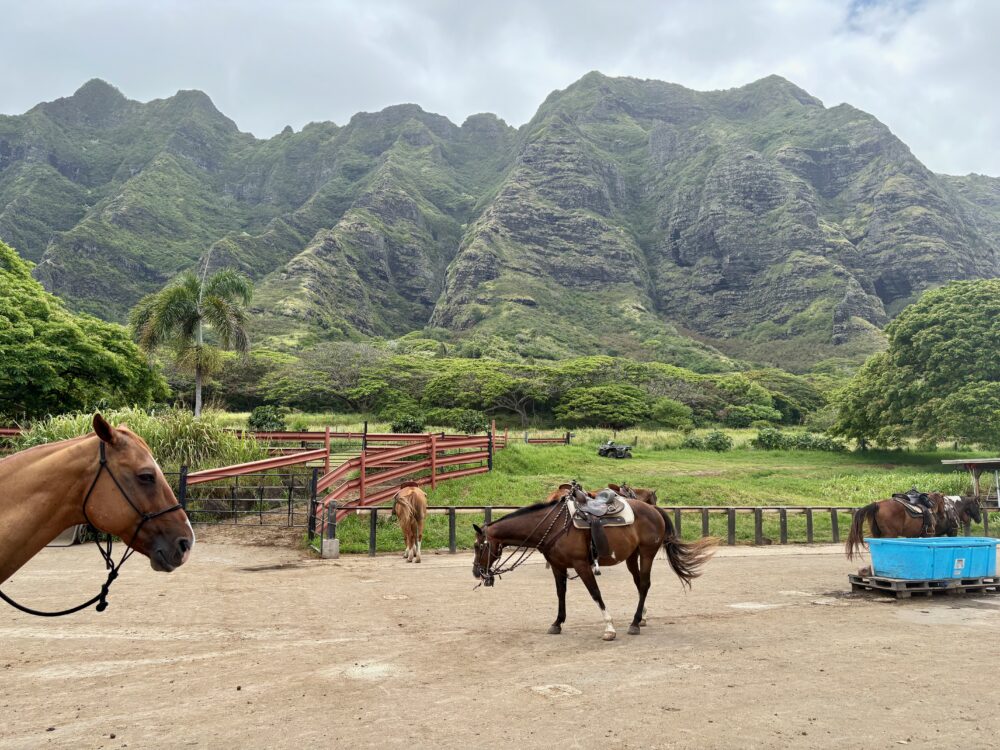
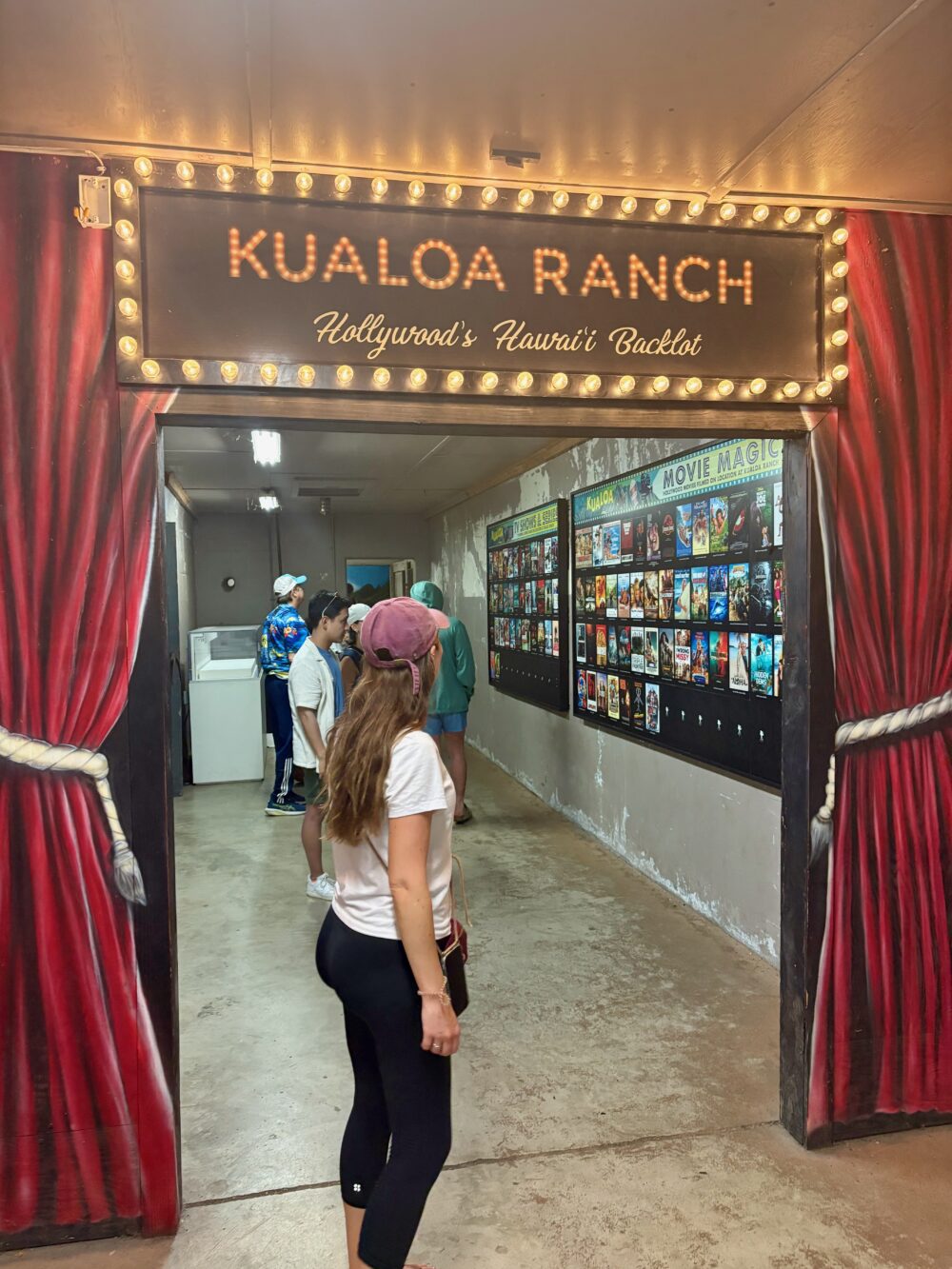
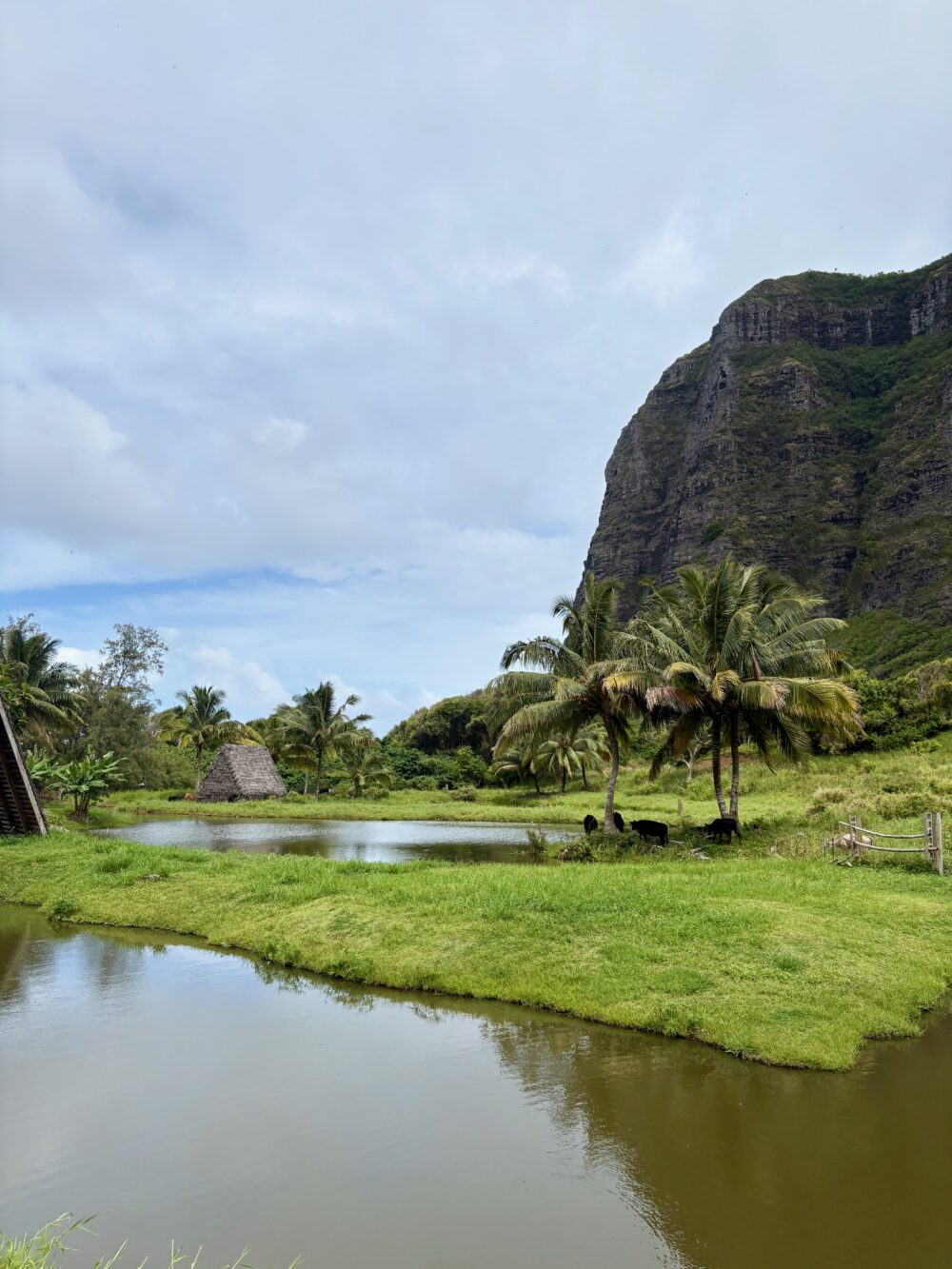
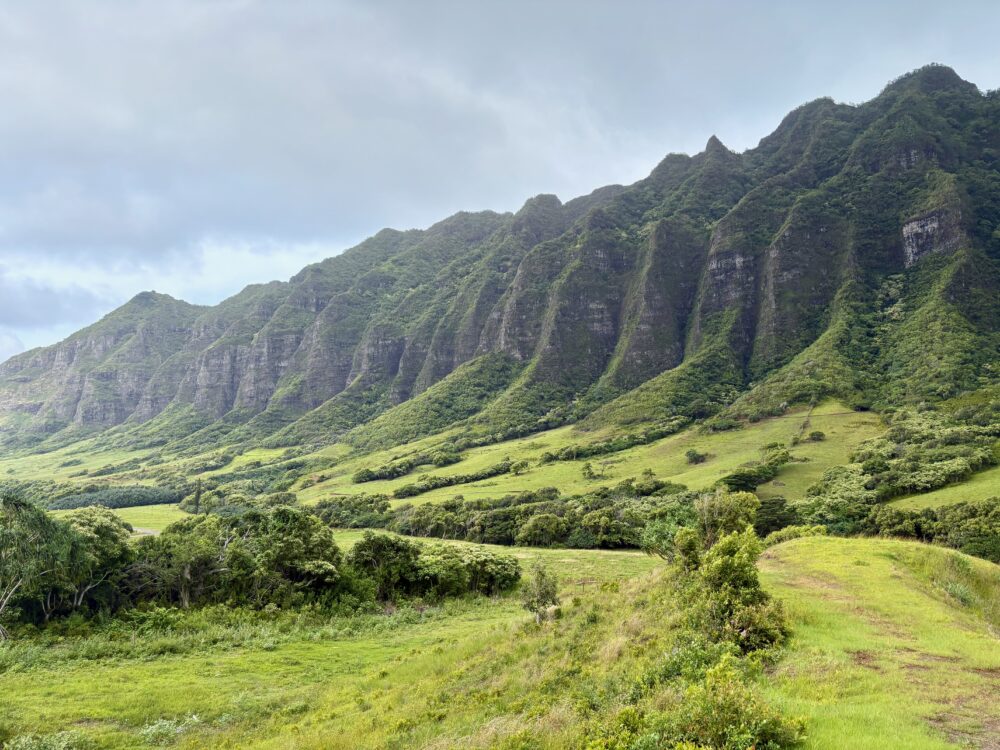
If Kualoa Ranch looks familiar, it’s because you’ve almost certainly seen it on screen. This 4,000-acre private nature reserve on the Windward Coast has been the filming location dozens of movies, such as Jurassic Park, Lost, 50 First Dates and Godzilla. The ranch is home to the most incredible and dramatic valley backdrop, making it instantly clear why filmmakers keep coming back.
But Kualoa is much more than a film location tour. There’s a surprising number of activities on offer, including ATV adventures through the jungle, horseback riding, zip-lining, e-bike tours, and ocean kayaking out to the Mokulua Islands. You can pick individual experiences or combine several into a full day package.
We absolutely loved our day here, and even though I’m no movie expert, I thought it was a brilliant experience.
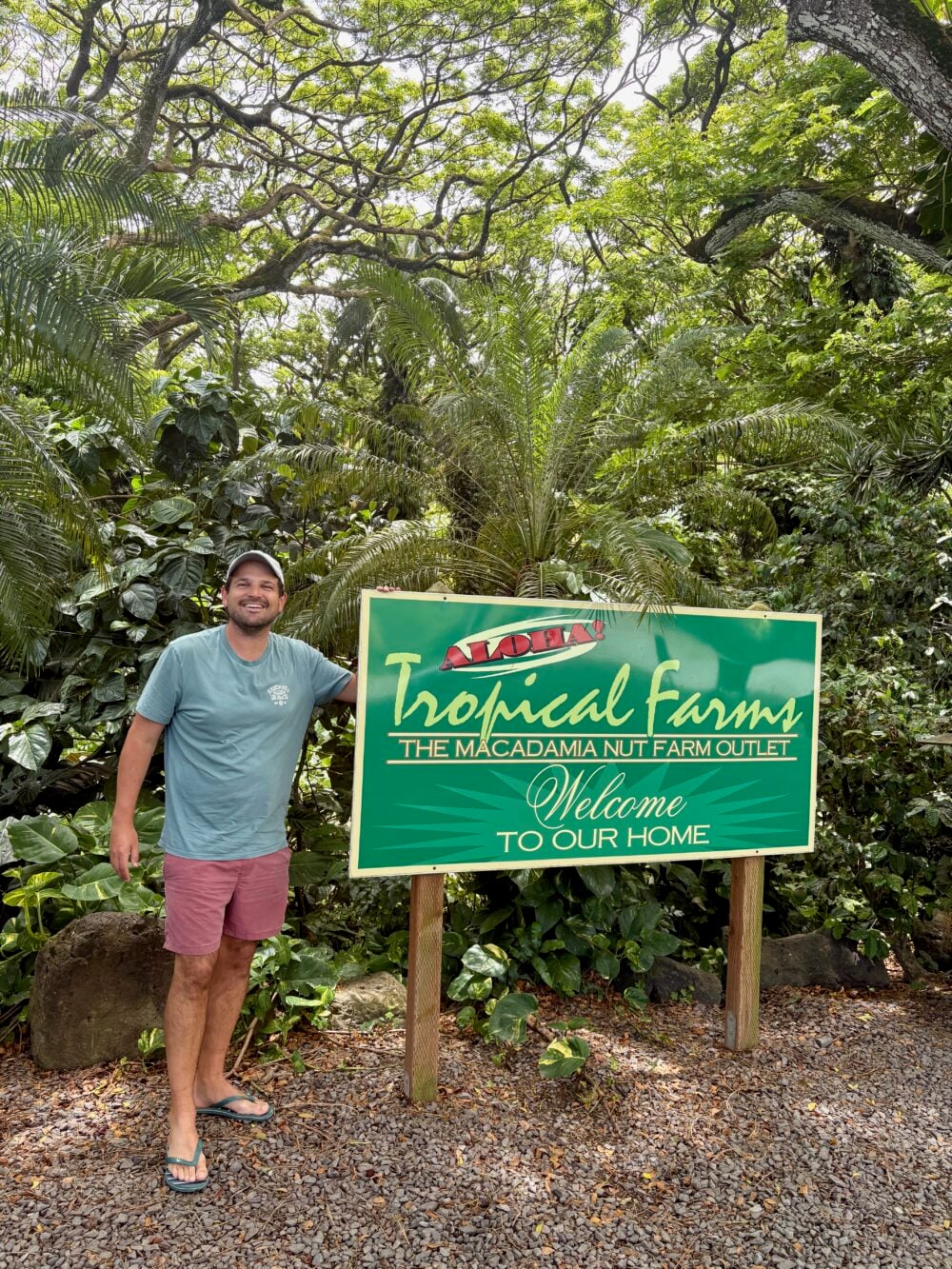
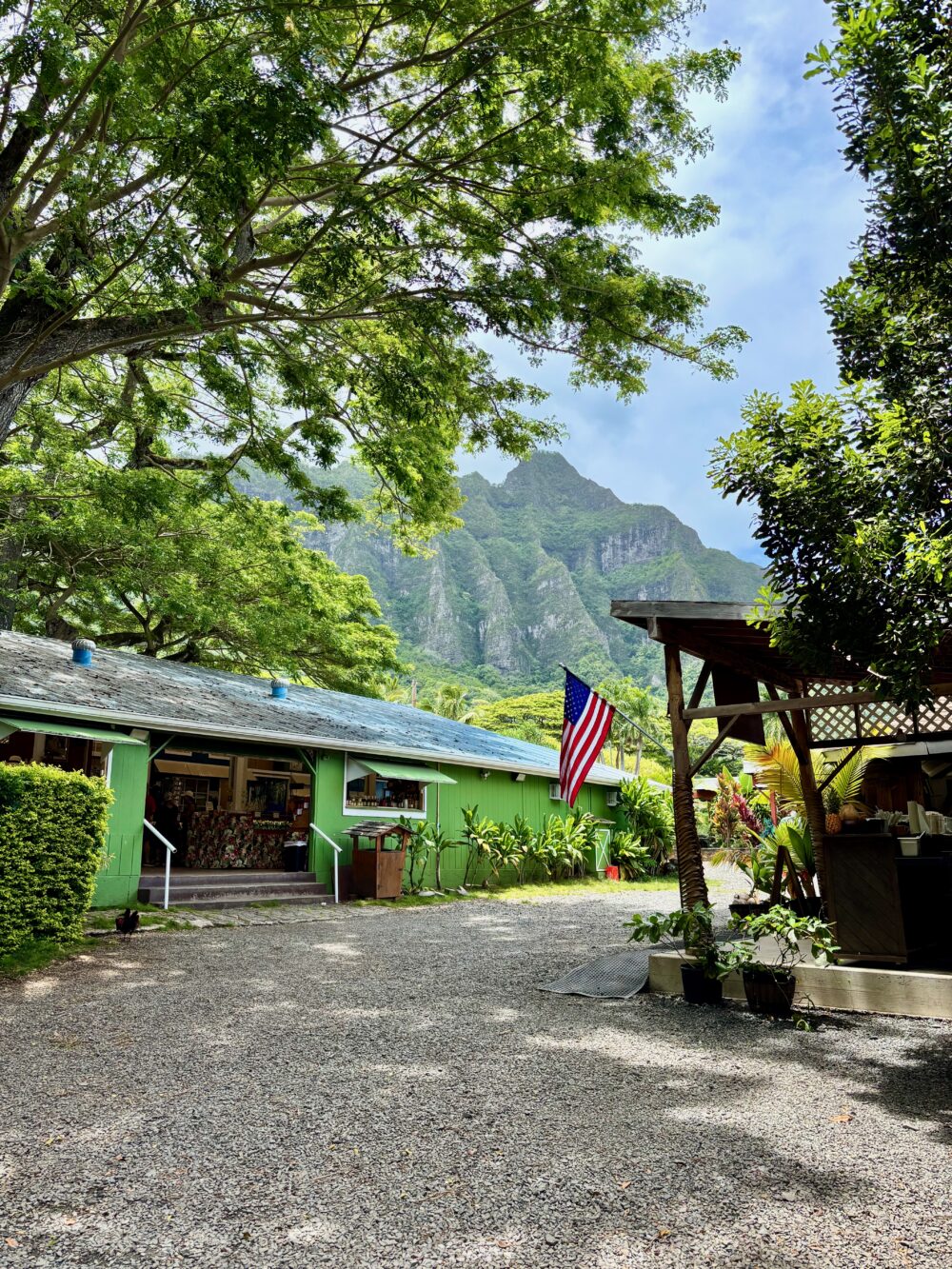
Macadamia Nut Farm
We stopped here on our way to Kualoa Ranch. Did you know Hawaii is one of the world’s leading producers of macadamia nuts?The Tropical Farms Macadamia Nut Farm was a really lovely way to spend an hour or so, and we enjoyed sampling all the free tastings of an impressive range of flavoured macadamia nuts, from classic to coconut to Kona coffee.
Ho’omaluhia Botanical Garden
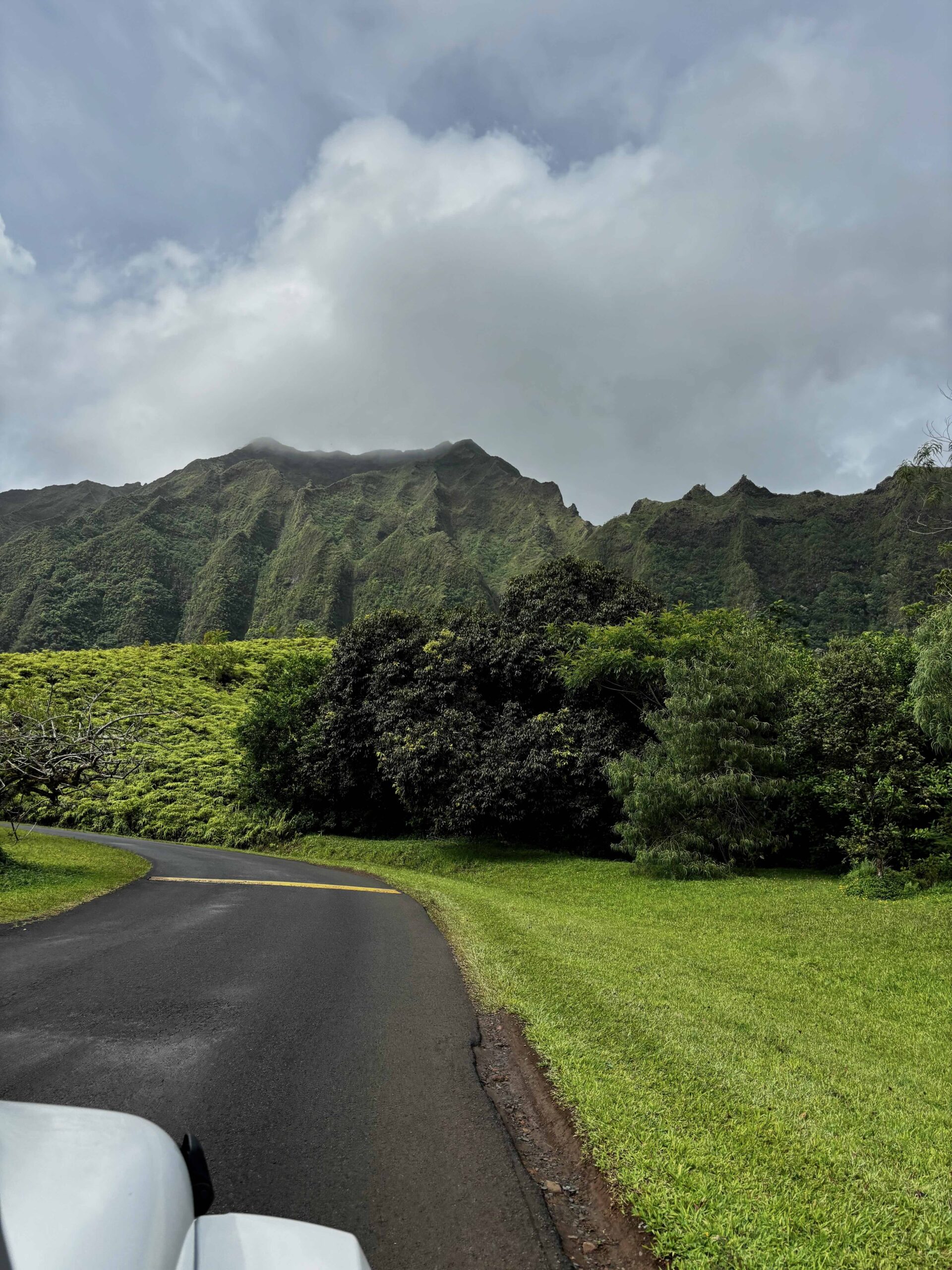
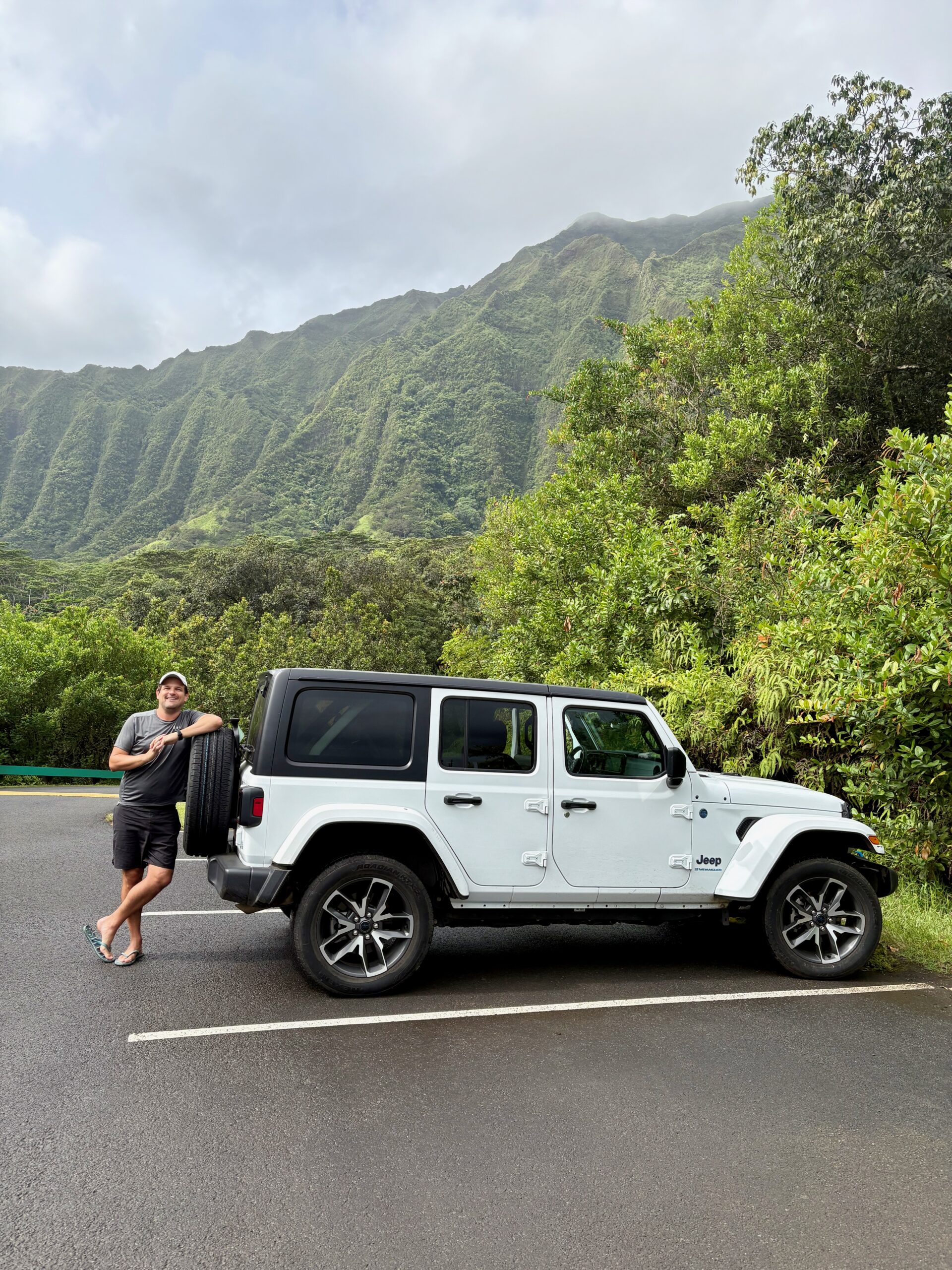
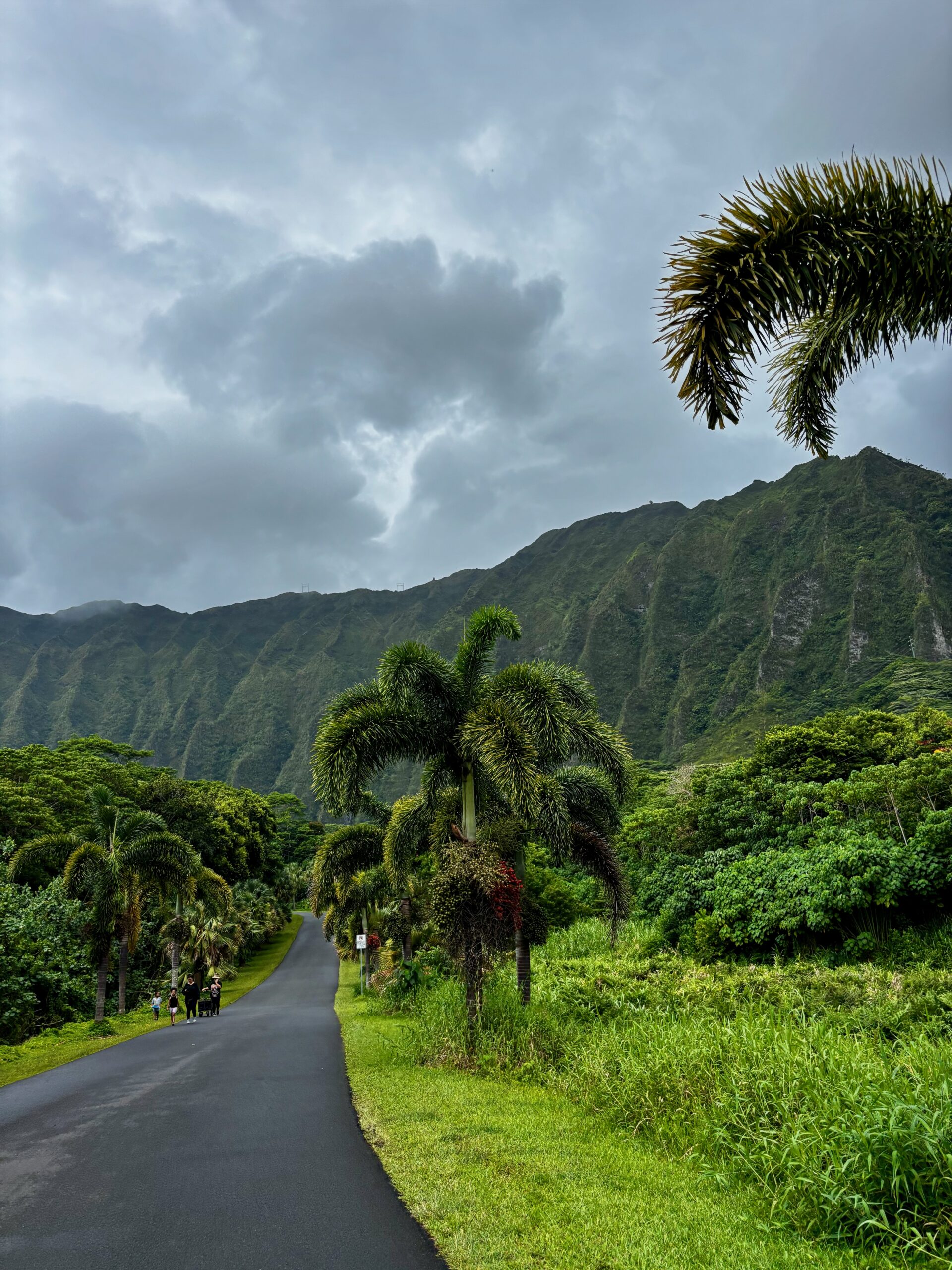
These breathtaking gardens sit at the foot of the dramatic Ko’olau Mountain Range in Kaneohe on the Windward Coast, and are a must visit attraction in Oahu. The views are just out of this world and it’s hard to believe it’s just a 30-minute drive from Waikiki.
Incredibly, entrance is free and parking is free. We arrived at opening time (9am) and had it almost to ourselves. As we drove through it, our jaws were just on the ground with the scenery that surrounded us. It was quite a wet day, so mostly did a drive through garden experience, but there are plenty of walking trails wind through the various plant collections. Visitors can also do weekend catch-and-release fishing on the lake using bamboo poles provided by the garden, and there’s also a small art gallery near the visitor centre showcases local Hawaiian art.
Note that the garden closes promptly at 4pm so plan head, and definitely bring insect repellent. It’s also worth being prepared for rain as it’s on the Windward side and showers can arrive suddenly.
Central Oahu
Wahiawa Botanical Garden
Most visitors tend to drive straight past on the way to the North Shore,but this beautiful botanical garden focuses on Hawaiian naive plants and dates back to the 1920s. It’s nicknamed the “tropical jewel” of Oahu’s botanical gardens, and is free to enter and very peaceful.
Hawaii’s Plantation Village
This is an outdoor museum in Waipahu that showcases the lifestyles and traditions of those who worked on the sugar, banana and pineapple plantations, featuring model homes displaying original plantation worker homes. It’s a lesser-visited but fascinating stop that brings to life the immigrant communities, including Japanese, Filipino, Portuguese, Korean, Chinese, who shaped modern Hawaiian culture. It makes for a good complement to Pearl Harbor if you want to understand more of Hawaii’s social history.
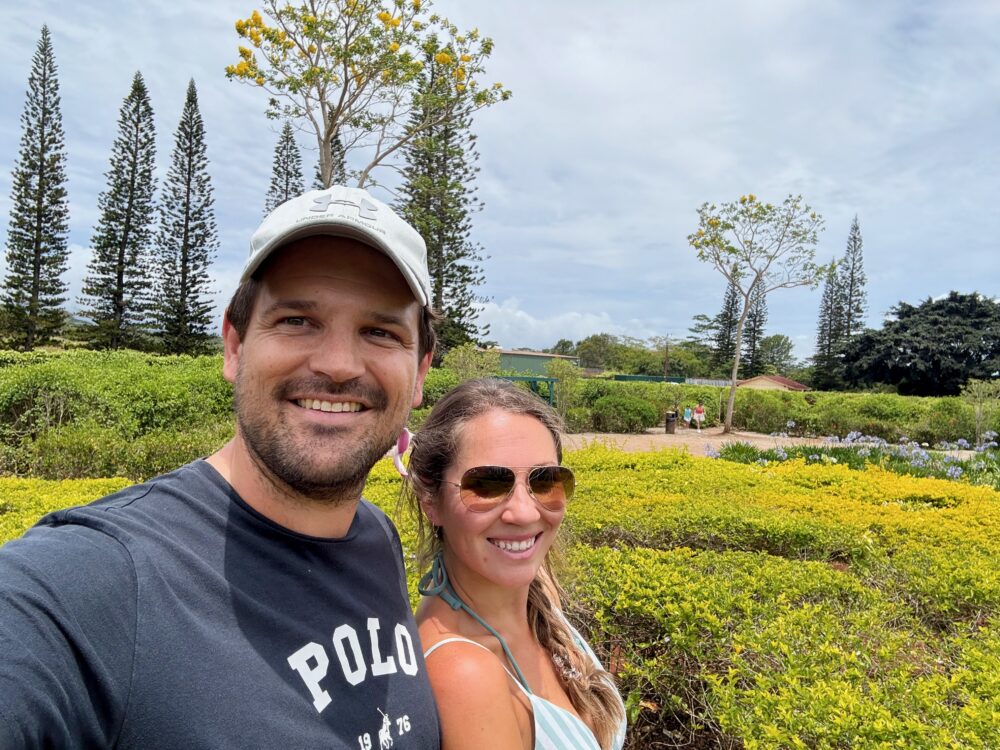
Dole Plantation
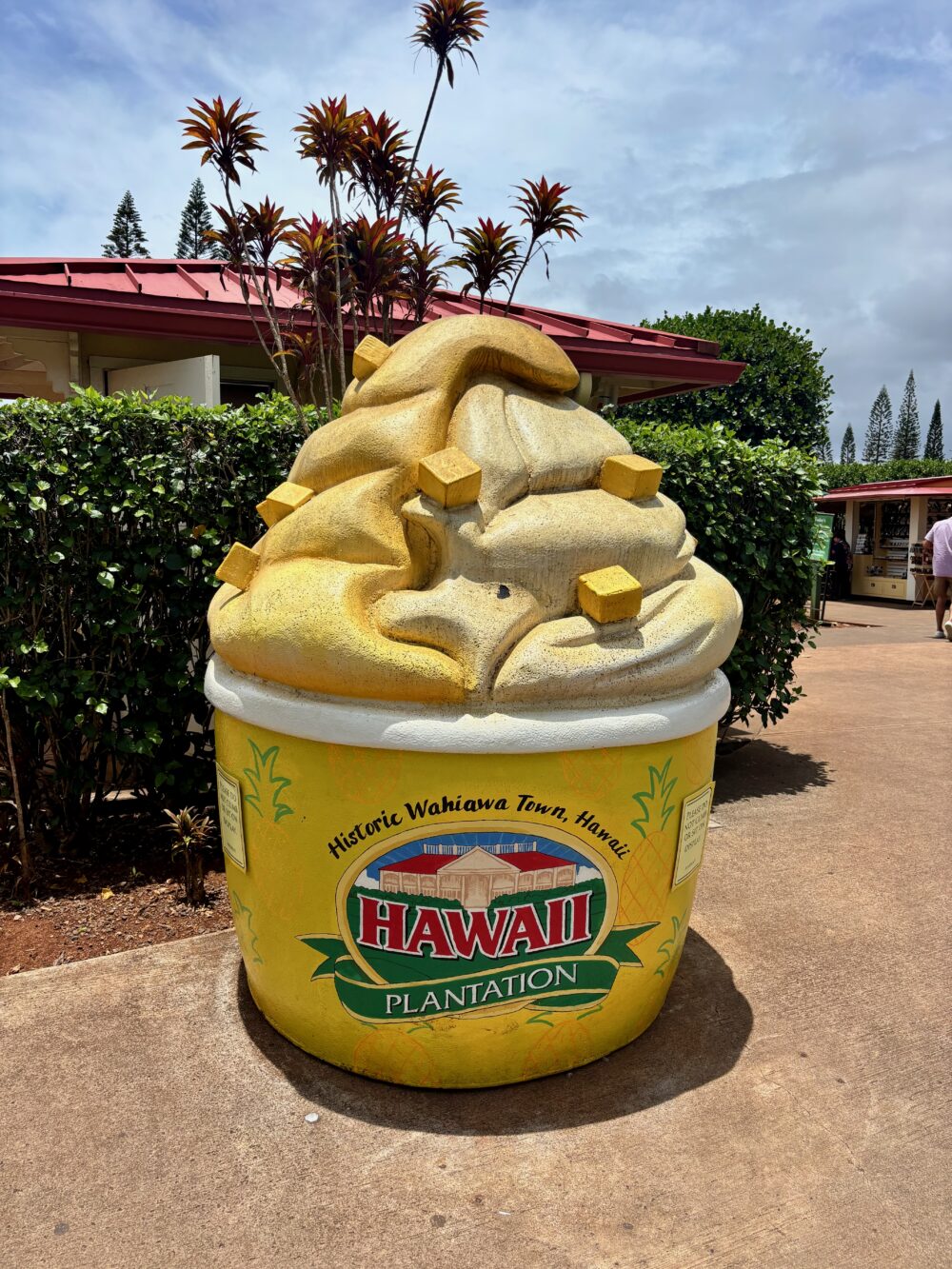
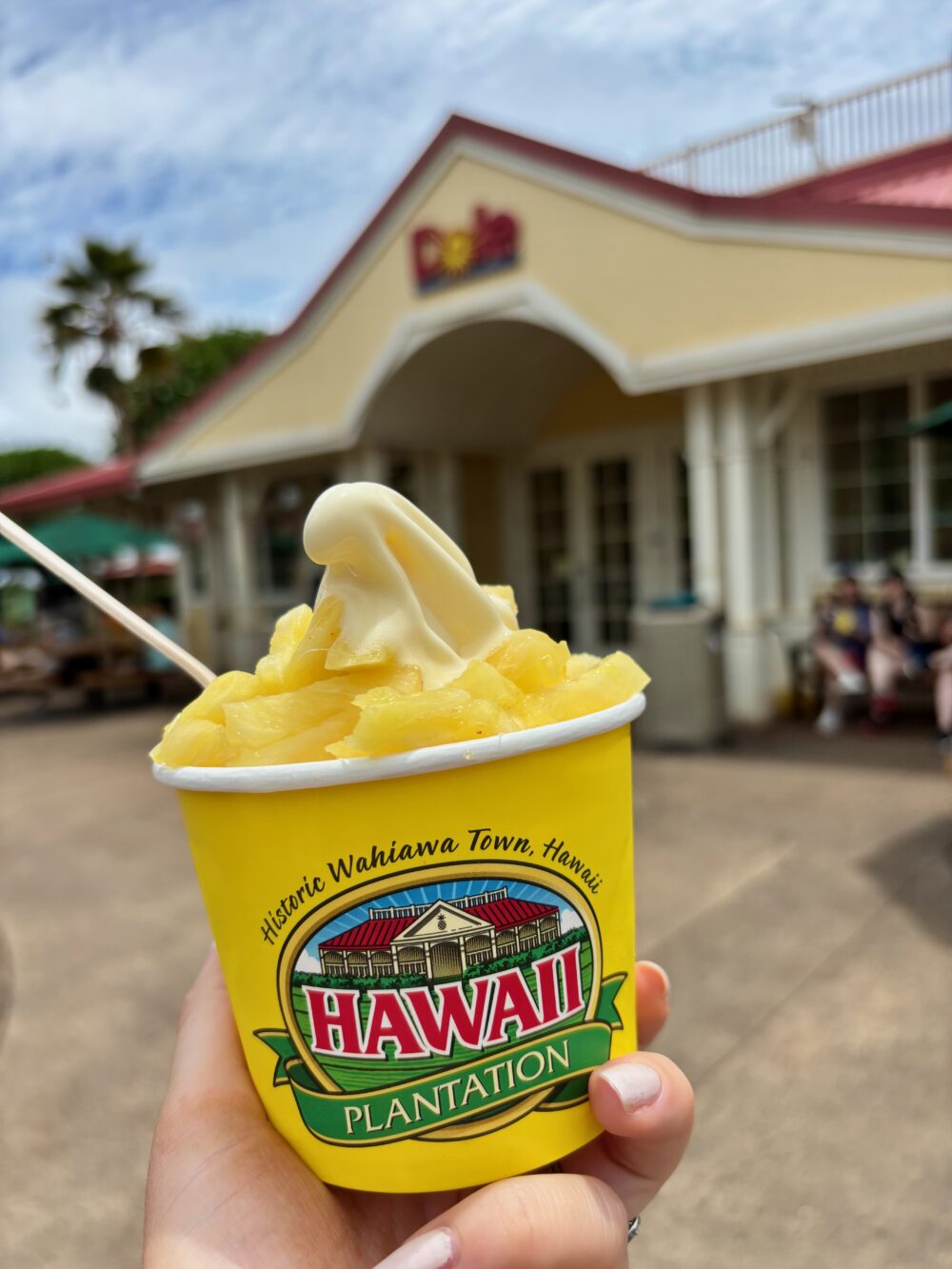
The Dole Plantation in central Oahu is the home of the famous Dole Whip, a pineapple soft-serve that has become one of Hawaii’s most iconic treats and absolutely lived up to the hype!!
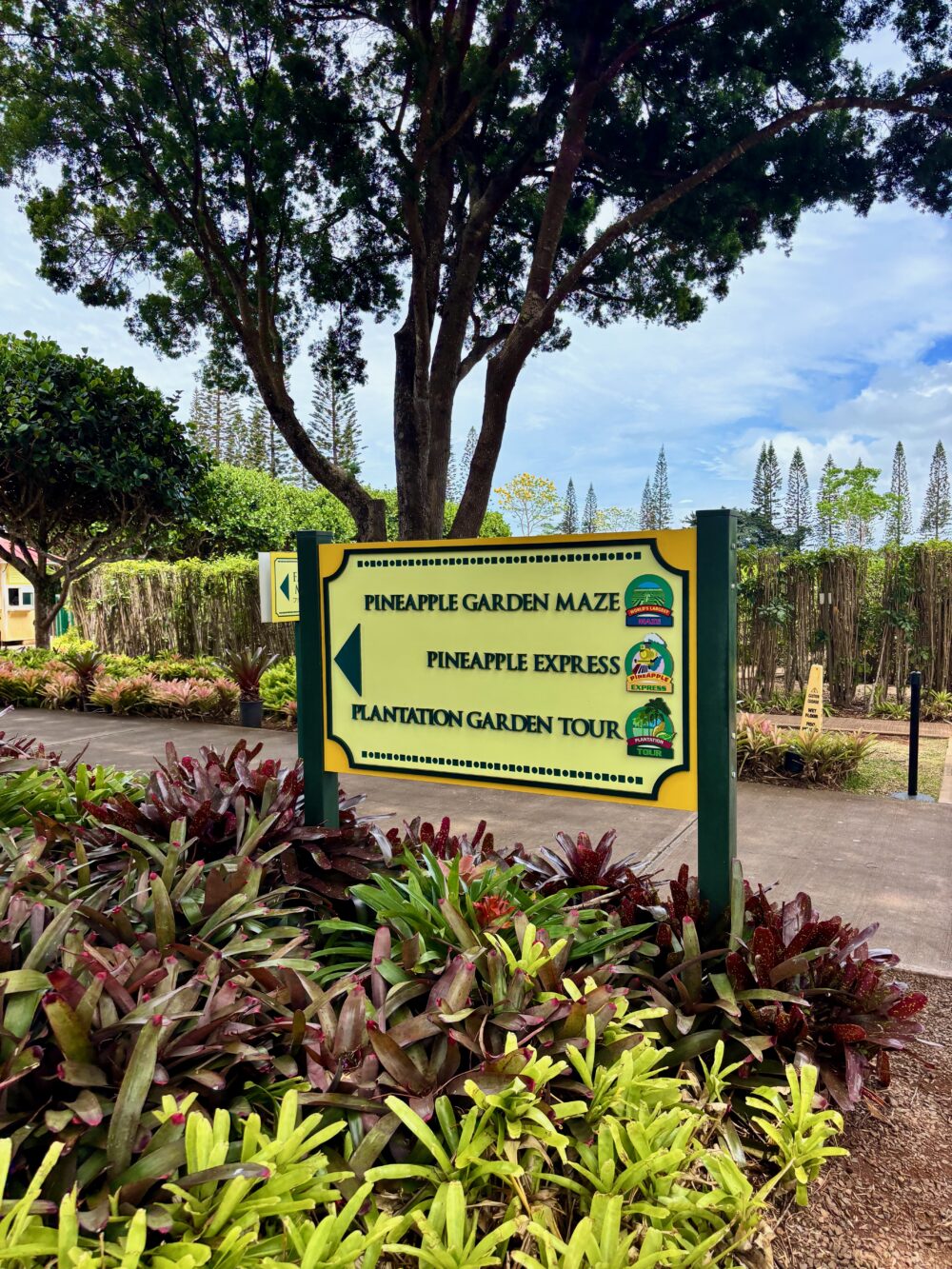
There’s actually so much to do here, and we loved our stop! There’s a pineapple garden maze (one of the largest in the world), a garden tour train ride through the grounds, and plenty of opportunities to learn about Hawaii’s pineapple history. It’s a fun stop that works well as a break on a North Shore day trip as the plantation sits conveniently on the route between Honolulu and Haleiwa.
Green World Coffee Farm
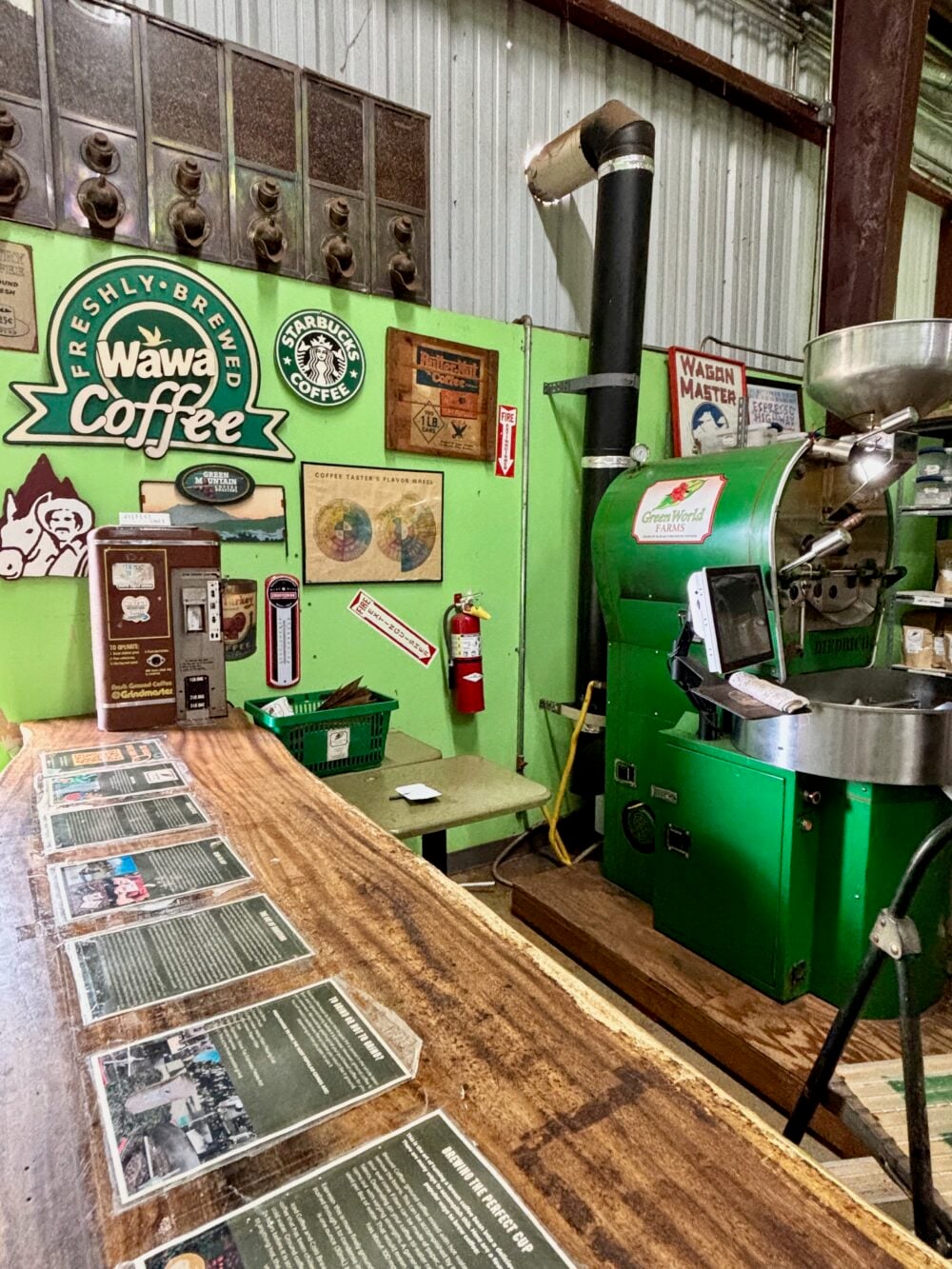
Tucked in the middle of Oahu on the way to the North Shore, the Green World Coffee Farm is a lovely little stop. Did you know that Hawaii is the only US state that commercially grows coffee? And this working farm gives you a real sense of that industry up close.
You can wander through the coffee fields, learn about the growing and roasting process, and, most importantly, sample a range of their freshly brewed Oahu-grown coffees. The farm shop is well stocked with bags of coffee and macadamia nut products to take home. We actually bought so many bags, including unusual roasts like a Reese’s Peanut Butter cup roast! If you’re a coffee lover, it’s a really interesting stop, and the setting against the rolling hills of Central Oahu is beautiful.
It worked perfectly as a quick pitstop on one of our drives to the North Shore. The farm sits conveniently on Route 99 (the Kamehameha Highway) heading north from Honolulu, so you can easily include it into a day that also takes in the Dole Plantation, and Haleiwa.
Manoa Falls
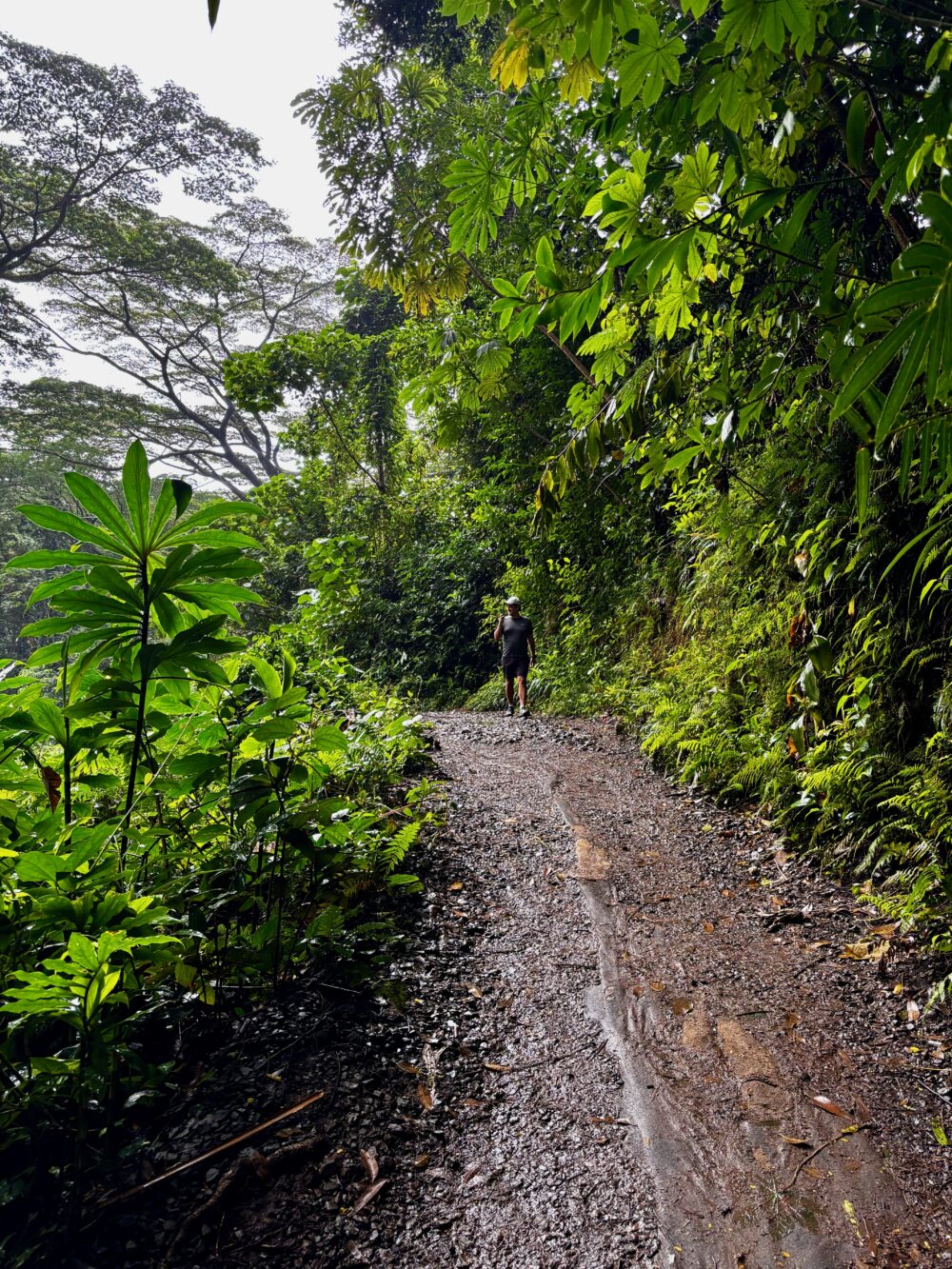
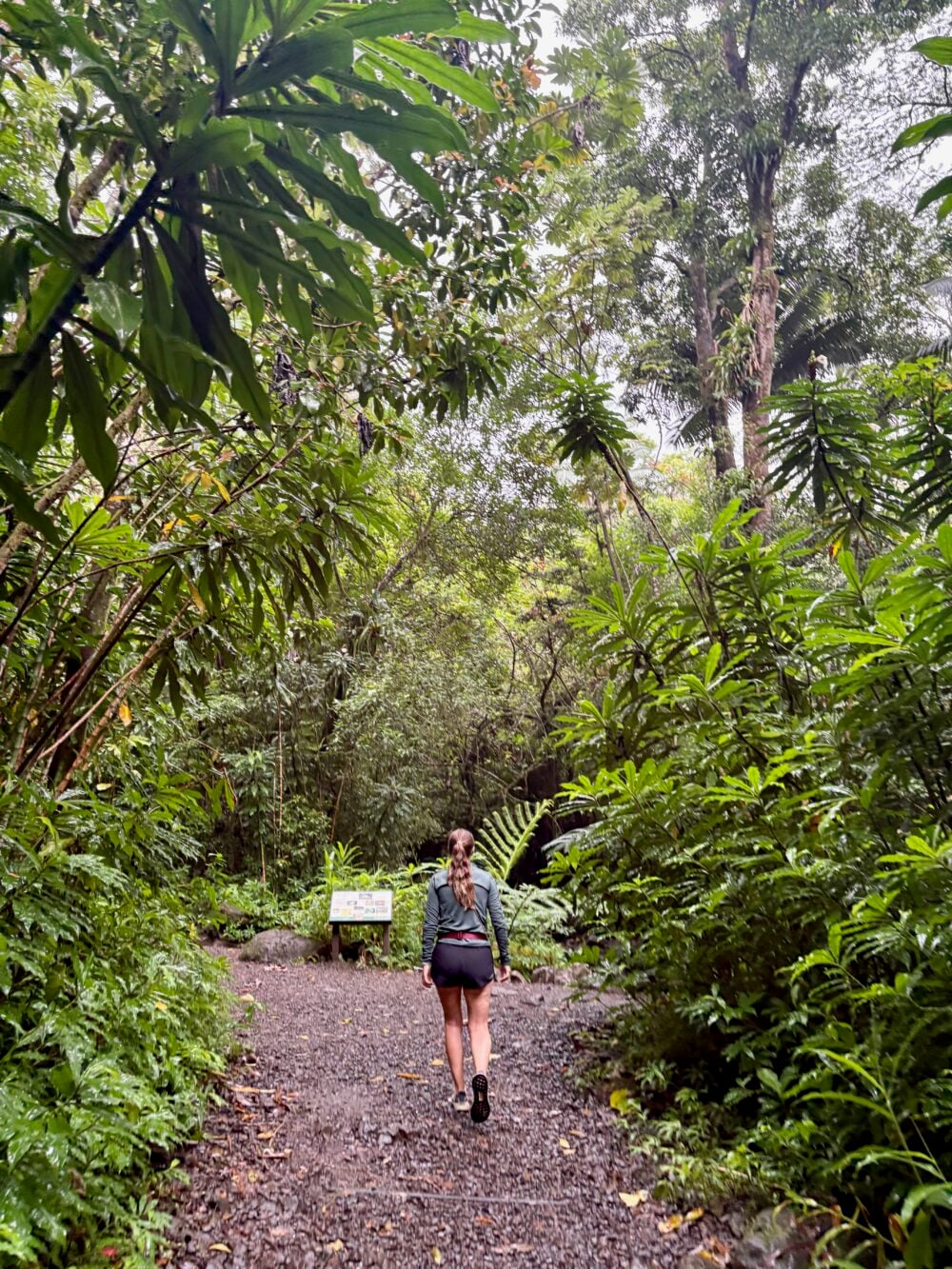
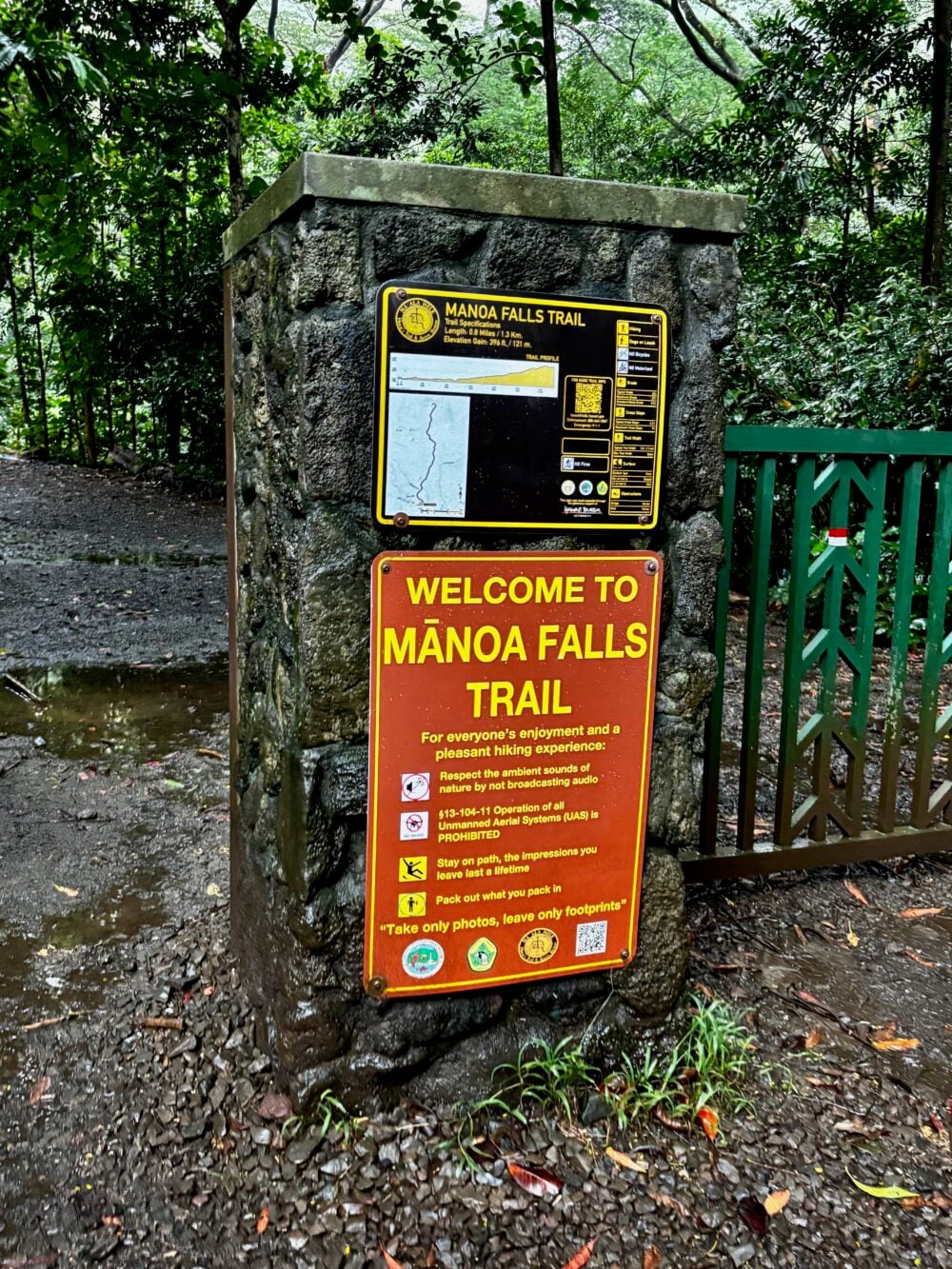
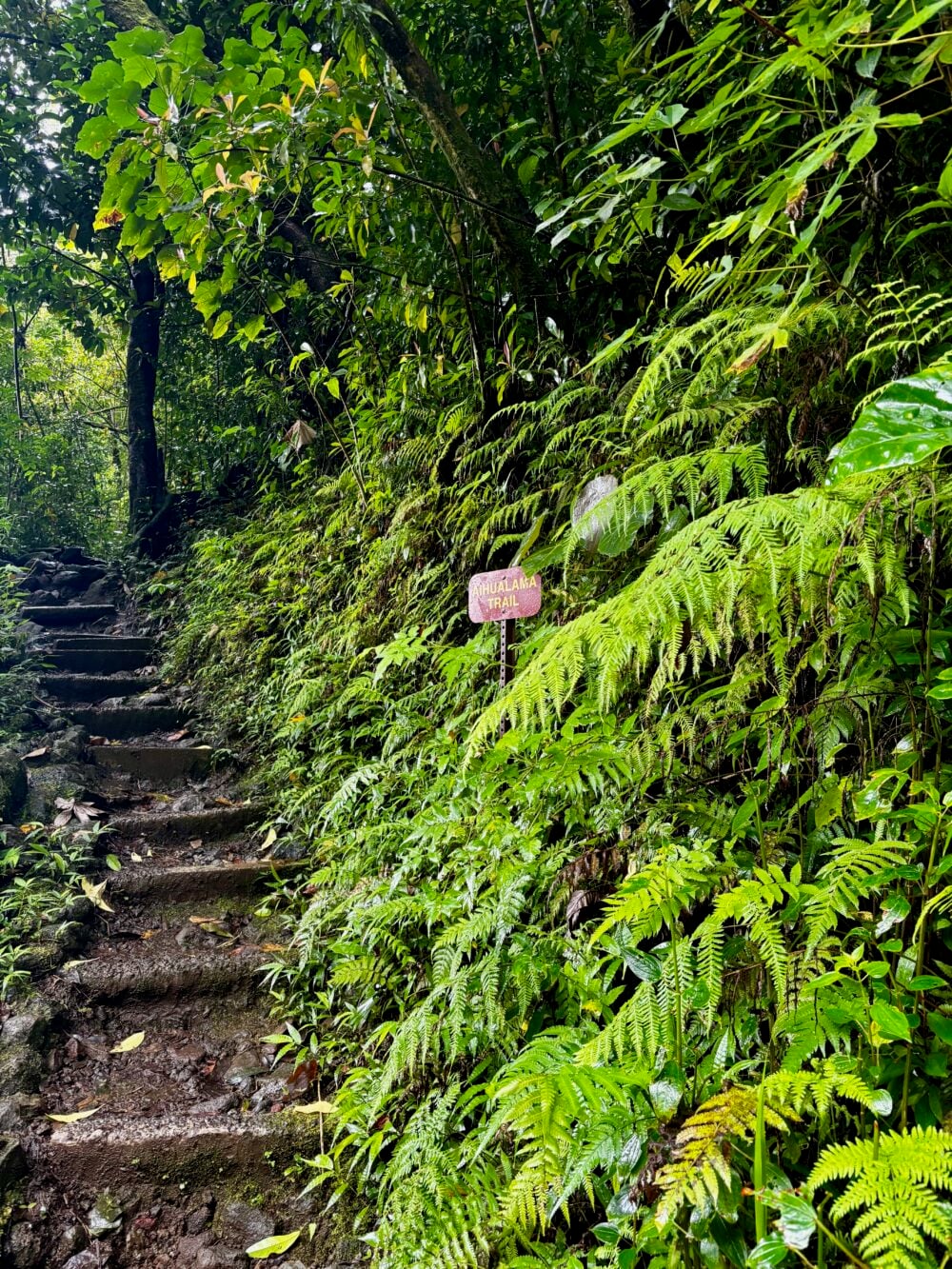
Tucked in the lush Manoa Valley just a short drive from Waikiki, the hike to Manoa Falls is one of the most accessible and rewarding nature experiences in Honolulu. I couldn’t believe this steamy hot rainforest hike was just 20 minutes from our hotel!
The trail is 1.6 miles round trip with around 800 feet of elevation gain. It wasn’t too challenging, but the wet trail underfoot could be quite slippy! At the end is a beautiful 150ft waterfall, where the water tumbles down a sheer lava cliff face into a pool at the bottom. Unfortunately, swimming in the pool is not permitted due to the risk of Leptospirosis from the water.
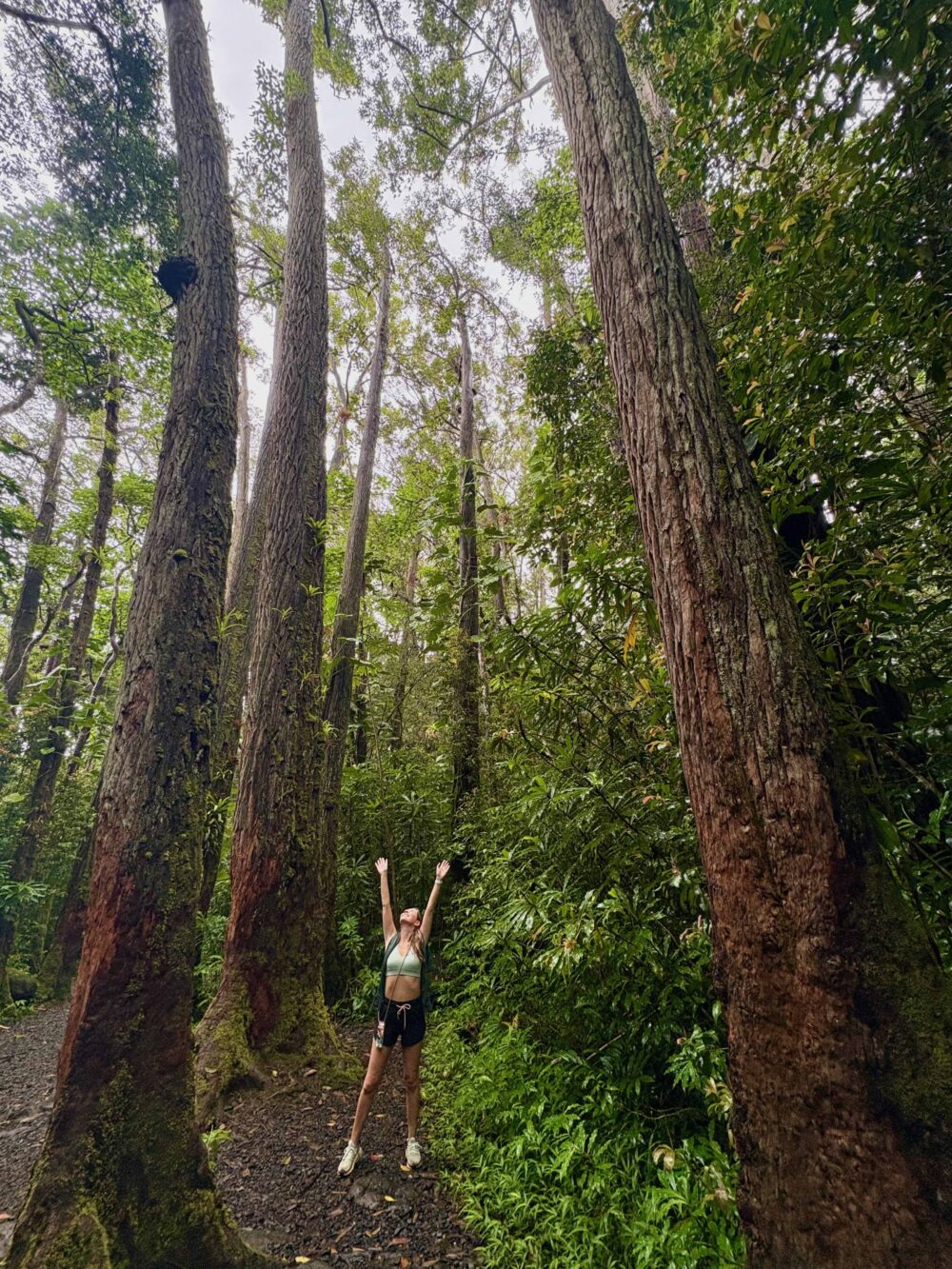
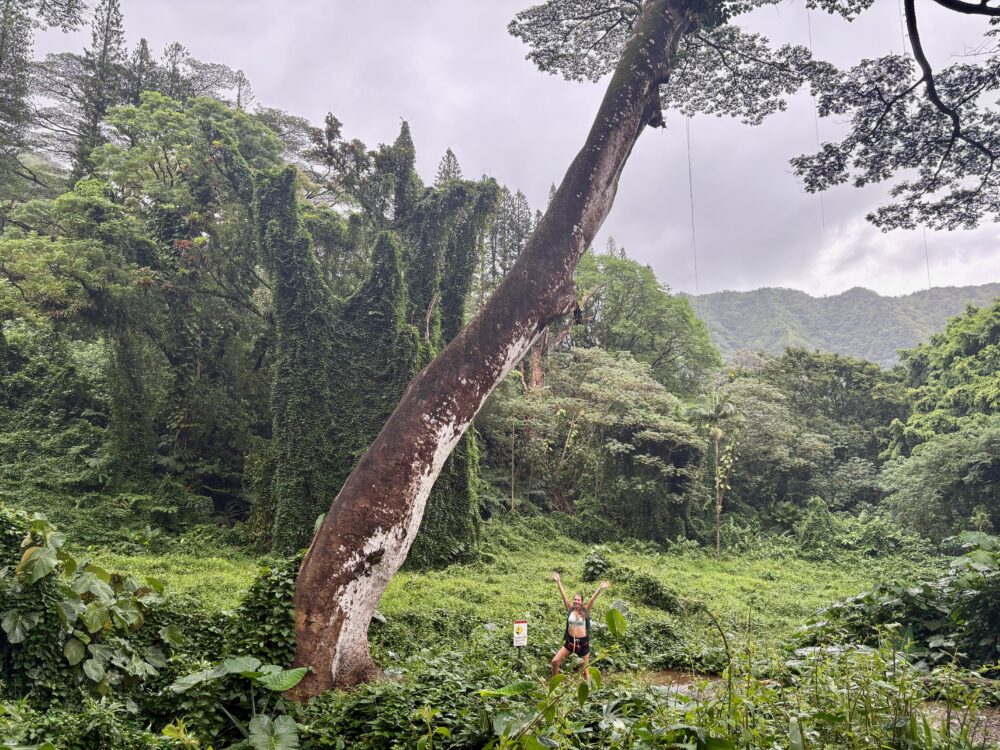
We found Manoa Falls to be one of the most atmospheric rainforests in Hawaii. We walked past towering eucalyptus trees, bamboo groves, wild ginger and enormous banyan roots, with birdsong all around you and the mountains rising dramatically overhead. We absolutely loved it!
As you can see, there are so many things to do in Oahu and quite surprisingly given you can drive the full loop of the island in a day. That being said, if you’re short on time, or not hiring a car, it can be well worth considering joining an island day tour.
- Oahu Ultimate Grand Circle Island Tour (from £62 per person)
- Oahu Island Highlights Tour with Multiple Stops (from £93 per person)
- Complete Island Tour with Tropical Waterfall Swimming (from £137 per person)
- Legends of Hawaii: Oahu’s Untold Stories (from £147 per person)
- Customisable private tour of Oahu (from £130 per person)
Sample Itinerary: 7 Days in Oahu
Day 1: Arrive, check in to Waikiki, sunset walk on the beach, dinner at House Without a Key
Day 2: Diamond Head hike at sunrise, walk back via Queens Beach, evening surfing on Waikiki Beach
Day 3: Pearl Harbor (morning), followed by afternoon exploring Honolulu — Iolani Palace, Chinatown, Kakaako for food and street art
Day 4: Day trip to the Windward Coast — morning Pillbox Hike, followed by Lanikai Beach and Kailua Beach for dinner
Day 5: Full North Shore day — Haleiwa town, shave ice, Giovanni’s shrimp truck, watch the surf at Pipeline or Sunset Beach, Waimea Valley
Day 6: Hanauma Bay snorkelling (book in advance!), afternoon exploring Ko Olina lagoons
Day 7:
Oahu Island Guide, Hawaii
So that concludes my detailed Oahu Island Guide. I hope it’s been helpful in planning your trip to Hawaii, or provided the inspiration to visit this wonderful destination. We LOVED our time here and can’t wait to go back!
Make sure to check out my Oahu hikes guide here too!
Have you been to Oahu in Hawaii? I’d love to hear about your experience in the comments below.
