
Mauritius is a volcanic island in the Indian Ocean, about 2,000 km off the southeast coast of Africa. It has powder-white beaches, a calm turquoise lagoon and mountains that rise straight out of the sea. It’s also much more than a beach holiday, with waterfalls, rainforest hikes, whale and dolphin trips and a food scene shaped by Indian, African, French and Chinese cooking.
The island is also home to some beautiful, world class hotels and makes for an incredible destination for honeymoons, family holidays and getaways with friends.
This Mauritius travel guide covers the practical stuff first, then the best things to do, where to stay and where to eat, so you can plan your own trip with realistic expectations.

Image credit: Mauritius Tourism Promotion Authority
Essential info for visiting Mauritius
Most visitors from the UK and US can enter visa-free for up to 60 days, but must complete an online travel form before flying. Here’s what to know before you book.
Getting to Mauritius from the UK
Air Mauritius and British Airways both fly non-stop from London Gatwick to Sir Seewoosagur Ramgoolam International Airport (MRU). The direct flight takes about 11 hours 50 minutes, or you could do a stopover somewhere like Paris, Dubai, Istanbul and Doha to lower costs.
We flew with Air Mauritius from London and then onto Johannesburg in South Africa afterwards. The planes were a little old but absolutely fine. The LGW to MRU flight is a daytime one on this airline though and it felt really long, and I can’t imagine how much longer it would have felt with a little one in tow!
The airport is in the southeast of the island. I’d probably allow 45 minutes to over an hour to reach resorts on the east and south coasts, and longer for the north and the far west. And I would recommend pre-booking a transfer or collect a hire car at the airport.

Getting to Mauritius from the US
There are no non-stop flights from the US, so you’ll connect in Europe or the Gulf. Paris (Air France, Air Mauritius), London Gatwick (British Airways, Air Mauritius), Dubai (Emirates) and Istanbul (Turkish Airlines) all serve Mauritius.
Entry requirements for Mauritius
| UK passport holders | US passport holders | |
|---|---|---|
| Visa for tourism | Not needed for up to 60 days | Not needed for up to 60 days |
| Passport | Valid for your whole stay, with one blank page | Valid for your whole stay, with at least one blank page |
| Onward travel | Proof of return or onward travel | Proof of return or onward travel and sufficient funds |
| Arrival form | Mauritius All in One travel form, completed online before arrival | Mauritius All-in-One Travel Digital Form, completed within 72 hours before arrival; print a copy |
A yellow fever certificate is required if you’ve been in, or spent more than 12 hours in transit through, a country with yellow fever risk. Rules change, so check the official sources before you travel.

Best time to visit Mauritius
The driest, most comfortable weather runs from June to October. October is the driest month, and July and August are the coolest. Summer, from November to April, is hot and humid with intermittent showers. January and February are warmest and February and March are wettest.
Cyclone season officially runs from 1 November to 15 May. Direct hits are uncommon, but during a cyclone you’re not allowed to leave your accommodation and car insurance can become invalid. So definitely take out travel insurance that covers weather disruption.
The east and south coasts are windier, especially in winter, while the north and west are usually more sheltered. Humpback whales pass the west and southwest coasts from roughly June to October.
We went in mid-April and it was pretty cloudy and rainy some days. We did get some nice weather but for the most part, we were dodging showers and watching the clouds build.

Image credit: Mauritius Tourism Promotion Authority
Getting around Mauritius
Hire car: The best way to explore, if you’re happy driving on the left, is by car. A UK photocard licence is valid; US licences work for up to four weeks, then you’ll need an International Driving Permit. I’d recommend photographing and videoing the car at pick-up, check it’s taxed and insured, agree a clear drop-off point and download offline maps.
Taxis and apps: Uber isn’t available. The Yugo app lets you book a taxi at a fixed fare, and otherwise you should agree the price before you set off. Otherwise, your hotel can arrange a hotel pickup for you.
Buses and Metro Express: Buses are cheap and cover the whole island, with faster air-conditioned express services. The Metro Express light rail currently links Port Louis and Curepipe and needs a rechargeable MECard.
Money and currency in Mauritius
The currency is the Mauritian rupee (MUR, often written Rs). At the time of writing, £1 buys roughly 60 rupees, but check a live converter before you go. Hotel rates may be quoted in rupees or euros, and larger places can take euro payments.
Cards: Visa and Mastercard are widely accepted in hotels, restaurants, car rental companies and tourist shops. Amex and Diners Club are accepted less often.
Cash: Carry some rupees for markets, street food, small local restaurants and taxis. Taxis aren’t metered, so agree the fare before you set off. Haggling at markets is expected. ATMs are widespread in towns and shopping centres, and banks and hotels will exchange money. Hotels charge a commission, so you’ll usually get a better rate at the bank or an ATM.
Tipping: Tipping isn’t compulsory, but it’s appreciated. Restaurants usually expect around 5 to 10 percent unless a service charge is already on the bill, and small local places don’t expect one. Hotel porters, maids, guides and drivers are tipped at the end of their service.
How many days do you need in Mauritius?
Seven to ten days is the sweet spot for most people, and ten is better if you want to see more than one coast without rushing. One villa guide puts the ideal stay at 10 days to two weeks, and says winter visits (May to October) should last at least 10 days, with summer visits (November to April) closer to two weeks.
| Length | What it gets you | Best for |
|---|---|---|
| 5 days | One base, beach time and a few day trips | A short break, or a stopover add-on |
| 7 days | Two bases, the main sights and proper downtime | First-timers with limited leave |
| 10 days | Three bases, the south and Black River Gorges included | Active travellers and honeymooners |
| 14 days | Slow travel, every coast, no rushing | Repeat visitors and families |
Should you stay in one place or move around?
Mauritius is small, but the roads are slow and the coasts feel different, so I’d split a stay of a week or more. Villanovo’s sample fortnight spends the first week in the north or east and the second in the west or south. Port Louis and Chamarel also work as day trips from a base elsewhere, and a hire car makes this far easier on longer stays.
A simple rule of thumb: stay in the north or east for beaches and restaurants, and the west or south for mountains, wildlife and quieter scenery.

Image credit: Mauritius Tourism Promotion Authority
Is Mauritius safe for tourists?
Mauritius is generally considered safe, but petty crime is common in tourist areas including Port Louis, Grand Baie and Flic en Flac.
It’s worth noting that stonefish stings are rare but can be fatal, so wear reef shoes and get urgent medical help if stung. Also, dengue and chikungunya are present, so use insect repellent to protect against pesky mosquitos!
How much does a trip to Mauritius cost?
Mauritius isn’t cheap at the top end, but there’s good value at the local level.
| Item | Approx. cost (US$) |
|---|---|
| Street food or local meal | $2 to $6 |
| Casual restaurant main | $8 to $18 |
| Hotel or seafood restaurant dinner | $25 to $70 before drinks |
| Hire car per day | $30 to $60 before fuel and insurance |
| Boat trip or nature attraction | $25 to $80 |
| Mid-range hotel per room per night | $90 to $150 |
| Upscale resort per room per night | $180 to $350 |
| Luxury beachfront resort per room per night | $350 to $800+ |
Half board can work out much cheaper than all-inclusive if you plan to explore, and hotels may charge £3 to £5 for bottled water that supermarkets sell for far less.
Planning tips
- Hire a car if you can. It is the quickest way around, though buses work for some trips.
- In Port Louis, park at the Caudan car park in the morning. Parking is free from 4 pm on weekdays and all day at weekends.
- Avoid Tamarin Falls in wet or humid weather, as the paths turn muddy and slippery.
- Visit north-coast beaches on weekdays, because weekends get crowded.
- Finish near Mahébourg if you have an early flight, as it is close to the airport.

Image credit: Mauritius Tourism Promotion Authority
Sample Mauritius itineraries for 5, 7 and 10 days
5 days: one base, easy day trips
Stay in one place, ideally the west, and treat each day as a single outing.
- Day 1: Arrive, settle in and have a beach sunset.
- Day 2: Port Louis in the morning (Central Market, Caudan Waterfront, Le Pouce if you start early).
- Day 3: Catamaran day to the northern islands, or a dolphin trip from Black River.
- Day 4: Chamarel, the Seven Coloured Earths and the waterfall, then Black River Gorges.
- Day 5: Beach morning, then depart.
7 days: two bases
- Days 1 to 3, north (Grand Baie): Beach, Pamplemousses Botanical Garden, Port Louis and a catamaran day.
- Day 4: Travel to the west or south-west.
- Day 5: Le Morne, with a kitesurf lesson or a walk, and Le Morne beach.
- Day 6: Chamarel and Black River Gorges.
- Day 7: South coast drive (Gris Gris and La Roche qui Pleure), then depart.
A week is the minimum I’d suggest for two bases, as the transfer eats most of a day.
10 days: three bases
| Days | Base | What to do |
|---|---|---|
| 1 to 3 | North (Grand Baie, Pereybere, Trou aux Biches) | Beaches, Cap Malheureux at sunset, Pamplemousses Garden |
| 4 | North, day trip | Port Louis: park at Caudan in the morning and walk |
| 5 to 6 | West (Tamarin or Flic-en-Flac) | Seven Waterfalls Trail near Curepipe, Flic-en-Flac beach, a whale or dolphin trip |
| 7 to 8 | Le Morne | Le Morne Brabant hike and beach, then Chamarel and Black River Gorges |
| 9 | East (Belle Mare, Île aux Cerfs) | Island day and beaches |
| 10 | South-east (Mahébourg, near the airport) | Île aux Aigrettes tour and Blue Bay, then fly home |
Best Things to Do in Mauritius
The best things to do in Mauritius include a mix of beautiful beaches, boat trips, hiking, wildlife and a surprising amount of history.
1. Spend time on the beaches
Most of the island is ringed by a coral reef, which keeps the lagoons calm and warm. Popular beaches include Trou aux Biches in the north, Belle Mare Plage and Île aux Cerfs on the east coast, Blue Bay in the south-east, Flic en Flac in the west and Le Morne in the southwest. As mentioned above, definitely bring reef shoes, as the coral can make the sand and shallow waters sharp underfoot.

Image credit: Teodor Kuduschiev

Image credit: Mauritius Tourism Promotion Authority
2. Explore Chamarel: Seven Coloured Earths and the waterfall
In Chamarel, the sand dunes shift from red to violet, and the nearby Chamarel Waterfall drops into the jungle. La Rhumerie de Chamarel is close by and has a distillery, tastings and a restaurant, L’Alchimiste. There is also the Ebony Forest, which is a conservation reserve protecting native forest in a country where less than 2 percent of the original forest remains. Visitors can do open-air safari jeep rides and the Ebony Experience, walk mid-canopy walkways to viewpoints, and take part in tree planting. The reserve says it has planted more than 140,000 native trees in the last ten years. There is a restaurant, Le Takamaka, and a boutique on site. It combines easily with the Seven Coloured Earths and waterfall in one day. Check hours and prices directly with the reserve.

Image credit: Mauritius Tourism Promotion Authority
3. Take a catamaran trip to the islands
A day on a catamaran off the north coast is the easiest way to see the islets scattered off Grand Baie, and it works well on a day when you want the sea without any effort. Trips typically head for the islets north of the mainland, such as Gabriel Island, Flat Island and Coin de Mire, with time to swim and snorkel and lunch on board.
Book ahead in the busy months, choose a half or full day depending on how much sun you can take, and bring reef-safe sun cream, a hat and a towel.

Image credit: Mauritius Tourism Promotion Authority
4. See whales and dolphins
The west coast is the place for marine wildlife. Spinner and bottlenose dolphins live there year-round, mainly between Le Morne and Tamarin Bay, and sperm whales are resident too. Humpback whales pass through from roughly June to October.
Outings often leave from Black River, run for about 2.5 hours and include snorkelling with gear provided.
Swimming with whales is prohibited, and operators should be certified by the Mauritius Tourism Authority, keep at least 50 m from whales, approach slowly from the side and never touch the animals. Small boats are better, so ask to see the certification before you book.

Image credit: Mauritius Tourism Promotion Authority
5. Dive or snorkel the reefs
Diving is good for beginners and experienced divers. Notable sites include The Cathedral and Snake Reef near Flic en Flac, Silvana in Black River Bay, and Coin de Mire, Merville Patches and the Silver Star wreck on the north coast. For snorkelling, Blue Bay Marine Park is one of the best spots.
6. Hike Le Morne Brabant
This UNESCO World Heritage mountain was once a refuge for escaped enslaved people, and the climb rewards you with views over the lagoon. Start early to avoid the heat and book a registered guide.


7. Walk in Black River Gorges National Park
The gorges are the island’s main nature reserve and the best answer to “is there more to Mauritius than beaches?”. A network of hiking trails runs through the park, but they are not always well marked, so check routes and conditions at an information centre before setting off.
The park protects some of the island’s rarest wildlife and plants. Look for pink pigeons, echo parakeets, Mauritius kestrels and Mauritius cuckoo-shrikes, plus black ebony trees and the rare tambalacoque, or dodo tree.
Allow a half day, wear proper shoes and bring water and insect repellent.

Image credit: Mauritius Tourism Promotion Authority
8. Drive the south coast
The south is wilder and quieter than the resort-lined north and west, with dramatic cliffs, empty beaches and a more local feel. A road trip from Bel Ombre works well as a day out. Some highlights to include:
- St Felix Beach: a quiet, untouched beach with a clear lagoon, about 8 minutes from Bel Ombre.
- Rochester Falls: a waterfall with basalt rock formations and a 10 m cascade, a few minutes from Souillac.
- Gris Gris: a lunch stop at Chez Rosy, known for fresh lobster and venison curry.
- La Roche qui Pleure (The Weeping Rock): waves crash against the cliffs here. Do not swim here, because the current is very strong.
- Camp Diable and the Amma Tookay Temple: a colourful Tamil temple. Remove your shoes at the entrance.
Allow a full day and set off early, as the roads wind through villages.

Image credit: Mauritius Tourism Promotion Authority
9. Visit Île aux Aigrettes
Île aux Aigrettes is a 26-hectare coral island just off the south-east coast, and it is a conservation success story. By the early 1980s it was badly degraded by invasive plants and predators, and decades of restoration by the Mauritian Wildlife Foundation have turned it into a refuge for rare wildlife.
You can only visit on a guided tour. Boats leave from Pointe Jérôme near Mahébourg, the crossing takes about 10 to 15 minutes, and the whole outing lasts around 2 to 3 hours. One guide puts the price at roughly MUR 800 to 1,000 per adult, and visitor numbers are limited, so book ahead.
On the walk you might see pink pigeons, the Mauritius fody, the critically endangered Mauritius olive white-eye, Telfair’s skink and endemic day geckos. Aldabra giant tortoises roam the island too, though they are not native: they were introduced to take over the seed-dispersal role of Mauritius’ extinct giant tortoises. Photography is fine, but no flash or drones, and stay on the marked trails. Go in the morning for cooler weather and better light.

Image credit: Mauritius Tourism Promotion Authority
10. Kitesurfing at Le Morne
Le Morne is one of the best kitesurfing spots in the Indian Ocean. The season runs from roughly May to October, with the most reliable wind in July and August, typically 15 to 35 knots. The lagoon is shallow and mostly flat, so it suits beginners and progression, but there is sharp coral underneath, so wear booties. More advanced riders head for wave spots such as Manawa, while One Eye and Chameau are for experts only because of strong currents. The wind can turn offshore in the evening, so be back on the beach in good time. Stay in Le Morne village or La Gaulette to be close to the spots, and book lessons at a kite school such as Ion Club or Le Morne Kite School.
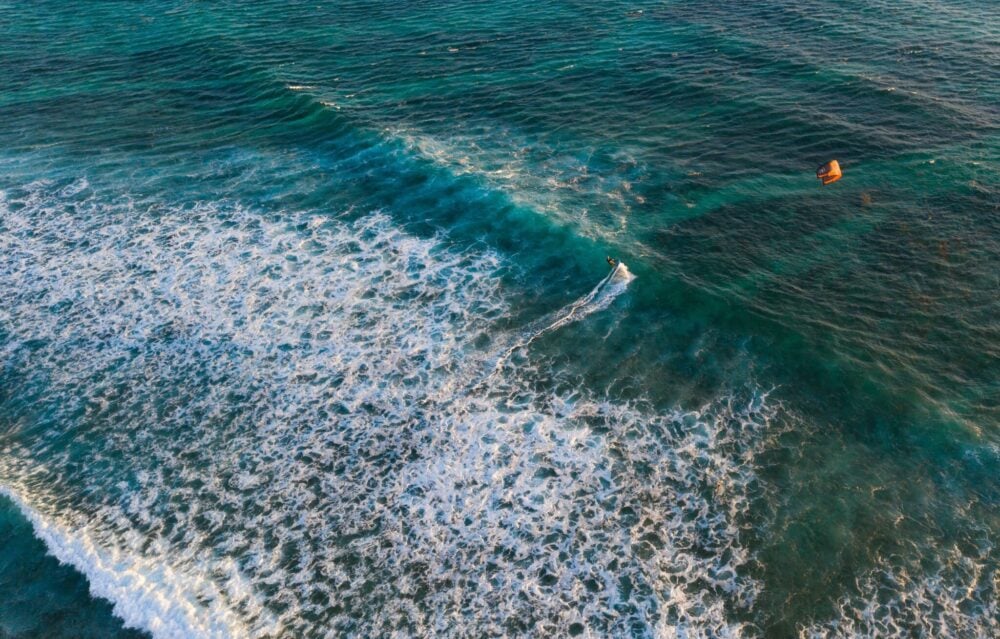
Image credit: Mauritius Tourism Promotion Authority
11. Surfing
The island’s best-known wave is One Eye, off Le Morne. It is an advanced reef break and not a place for beginners. Tamarin Bay on the west coast is the usual place to learn. Surf lessons there are reported at around MUR 600 an hour through the Tamarin hotel desk, and the best conditions are early, around 8am to 9am.

Image credit: Mauritius Tourism Promotion Authority
12. Casela Nature Parks
Casela, in Cascavelle on the west coast, is Mauritius’s biggest wildlife and adventure park and works well for families. You can take a safari bus or eco rider through the African savanna area to see giraffes, zebras, impalas and white rhinos. There are also animal encounters, including walking with lions, camel rides and breakfast with giraffes, plus a children’s area with a petting farm train and mini golf. It is open 9am to 5pm daily. Check which interactions you are comfortable with before booking, and book ahead in high season.
13. A Mauritian cooking class
A cooking class is one of the best ways to understand the island’s food. Typical dishes include farata, rougaille, fish vindaye, dholl puri and gateau coco. Classes usually run two to four hours, are hands-on, and start with a welcome drink and spice tasting. They finish by sharing the meal you cooked. Options include Lakaz Mama in Grand Baie, Otentic Eco Tent on the east coast, local home experiences in Curepipe and Mahébourg, and the Chamarel Cooking Workshop, set among sugarcane fields. Book ahead in high season and tell the hosts your spice preference.

Image credit: Mauritius Tourism Promotion Authority
Port Louis
Port Louis is often skipped, but it rewards a full morning or a long half day. It is the island’s only real city, a mix of French colonial buildings, Hindu temples, mosques, Chinese shopfronts and a modern waterfront, and it is the best place to see how Mauritius’s Indian, African, Chinese and European roots fit together. Go on a weekday. Several sights close on Sundays and the city goes quiet before midday.

Image credit: Mauritius Tourism Promotion Authority
Central Market
Start here, early. The covered market is at its best before the midday heat. Stalls sell island-grown vegetables, spices, herbal remedies and fruit, with souvenirs, textiles and local rum on the upper floor. Vendors can be insistent, so haggling or a polite no is normal. The small food court is the easiest place to try dholl puri, fritters, roti and curry for a few hundred rupees, plus alouda, a chilled milk drink with agar-agar. Opening hours are reported as daily from 5.30am to 5.30pm, closing around noon on Sunday.


Image credit: Mauritius Tourism Promotion Authority
Caudan Waterfront and the Blue Penny Museum
Caudan is the harbourside shopping and dining district, and the easiest base for the city: park here and walk. The Blue Penny Museum sits inside it and holds the 1847 “Post Office” Blue Penny and Red Penny stamps. Because the originals are only lit briefly for conservation, you will usually see copies. It also has the original 1881 statue of Paul and Virginia and a wider collection on Mauritian history and art. It is reported as open 10am to 5pm and closed Sundays, with a ticket of roughly €5.

Image credit: Mauritius Tourism Promotion Authority
Aapravasi Ghat
This is the most important sight in the city. Aapravasi Ghat is a UNESCO World Heritage Site on Trou Fanfaron bay. Built in 1849, it was the landing and immigration depot where indentured labourers from India were registered, medically examined and sent to sugar estates. It is now a small museum and cultural centre and explains why Mauritius looks the way it does. Entry is free. Hours are Monday to Friday 9am to 4pm and Saturday 9am to noon, closed on Sundays and public holidays. It has no parking of its own, so walk over from Caudan.
Old town: Place d’Armes, the cathedral and Jummah Mosque
Place d’Armes is a palm-lined square with statues of key figures, Government House and the Treasury Building. Nearby are the Jardin de la Compagnie, a small garden with century-old banyan trees, and St Louis Cathedral. Jummah Mosque, dating from 1853, blends Islamic, Indian and Creole styles and is open outside prayer times, so dress modestly. The Madurai Mariamen Temple, a colourful Hindu temple near Caudan, is free to visit.

Image credit: Mauritius Tourism Promotion Authority
Chinatown and street art
Chinatown has family-run shops, Chinese pastries, dumplings and more than 70 murals across the district. Walk it slowly and look up at the older buildings. The Tien Tan Pagoda sits at the foot of Signal Mountain.
The Citadel (Fort Adelaide)
This nineteenth-century British fort has panoramic views over the city and harbour. It is about a 30-minute climb from Chinatown, so wear comfortable shoes and go in the morning.
Le Pouce
Le Pouce is the thumb-shaped peak that rises behind Port Louis, and it is the easiest big view on the island to earn. At 812m it is the third-highest mountain in Mauritius, and the climb takes around two to three hours up and down on the shortest route. The name is simply French for “The Thumb”.

Image credit: Mauritius Tourism Promotion Authority
Champ de Mars Racecourse
Established in 1812, Champ de Mars is described as the oldest horse racing track in the southern hemisphere. The season runs from March to December, with races on Saturdays. It is an easy way to see local life. Check dress code, entry and start times with the Mauritius Turf Club beforehand.
Natural History Museum
A colonial-era museum with a dodo skeleton, shells and insects. Entry is free and hours are reported as roughly 9am to 4pm, shorter on Saturday and from 11am on Wednesdays.
Practical tips for Port Louis
- Parking: Park at Caudan and walk. Street parking is hard to find. Weekday parking is free from 4pm, Saturday from 12.30pm and all day Sunday, but Sunday is when most sights are shut.
- Time: One day covers a first visit. A morning is enough for the market, Caudan, Blue Penny and Aapravasi Ghat.
- Bring: Comfortable shoes, water and some cash for small purchases.
- Driving: Avoid driving in the city at rush hour.
- Eating: Eat at the market food court or in Chinatown.
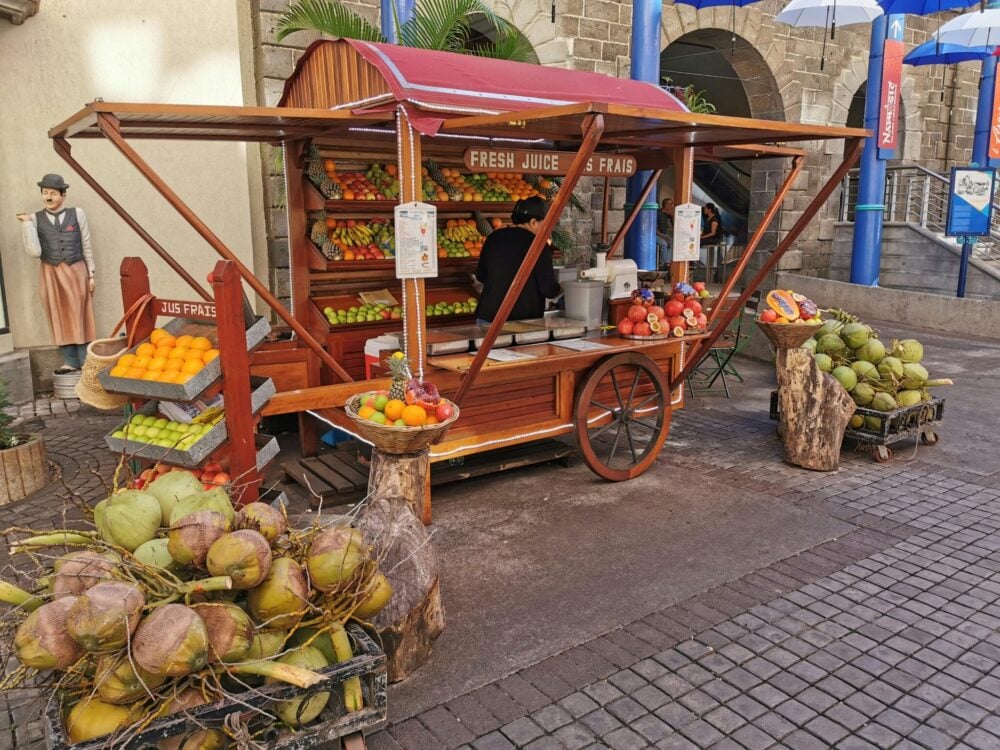
Image credit: Ricardo Marques
Where to Stay in Mauritius
The coast you choose matters as much as the hotel. For a first visit, the north is the easiest base, while the east and southwest suit quieter, beach-focused trips.
Best areas to stay in Mauritius
| Area | Best for | Watch out for |
|---|---|---|
| North (Grand Baie, Trou aux Biches, Pereybere) | First-timers, restaurants, nightlife, boat trips | The busiest, most developed area |
| West (Flic en Flac, Tamarin, Le Morne) | Sunsets, whales and dolphins, hiking, kitesurfing | Quieter evenings outside Flic en Flac |
| East (Belle Mare, Trou d’Eau Douce, Palmar) | Quiet resorts, beaches, Île aux Cerfs | Windier, especially in winter |
| South (Bel Ombre, Blue Bay, Mahébourg) | Wild scenery, golf, nature | Rougher seas in places |

Image credit: Mauritius Tourism Promotion Authority
In winter the north and west are usually the most sheltered. A popular option for a 10 to 14 day trip is to split your stay between two coasts. Mauritius microclimates also mean it can rain in one area while another is sunny.
We stayed in the east on our trip at SALT of Palmar. This is an adults-only, design-led hotel with a strong focus on spa, wellbeing and local culture. I wrote a review about SALT of Palmar here which will definitely help if you’re deciding whether or not to stay there.
Best for: couples who want an adults-only, design-led stay with a local feel, and the Tek Tek restaurant on site.
Rates start from around £203 per night for a double room.
Check latest prices at SALT of Palmar here.


Otherwise, there are plenty of other luxury hotels in Mauritius:
- One&Only Le Saint Géran (east)
- An ultra-luxe resort on the Poste de Flacq peninsula, with a private, palm-fringed beach, suites with butler service and Villa One, a standalone two-bedroom residence with its own infinity pool.
- Best for: travellers who want a secluded, high-end beach stay on the east coast.
- Rates start from around £789 per night for a double room.
- Check latest prices at One&Only Le Saint Géran here
- Four Seasons Resort Mauritius at Anahita (east)
- Reopened on 1 November 2025 after a seven-month renovation, with redesigned villas, the Oseyan overwater spa, seven dining venues and daily complimentary golf.
- Best for: honeymooners, spa lovers and golfers who want a polished, fully renovated resort.
- Rates start from around £892 for a Garden Pool Villa per night.
- Check latest prices at Four Seasons Anahita here
- Shangri-La Le Touessrok (east)
- A 5-star resort on the beaches of Trou d’Eau Douce Bay, with a free boat shuttle to its private island, Îlot Mangénie, and Île aux Cerfs about 10 minutes away by boat. It has five restaurants, a heated infinity pool and a kids’ club.
- Best for: families and couples who want a beachfront east coast resort with a private island on the doorstep.
- Rates start from around £458 per night for a double room (three-night minimum).
- Check latest prices at Shangri-La Le Touessrok here
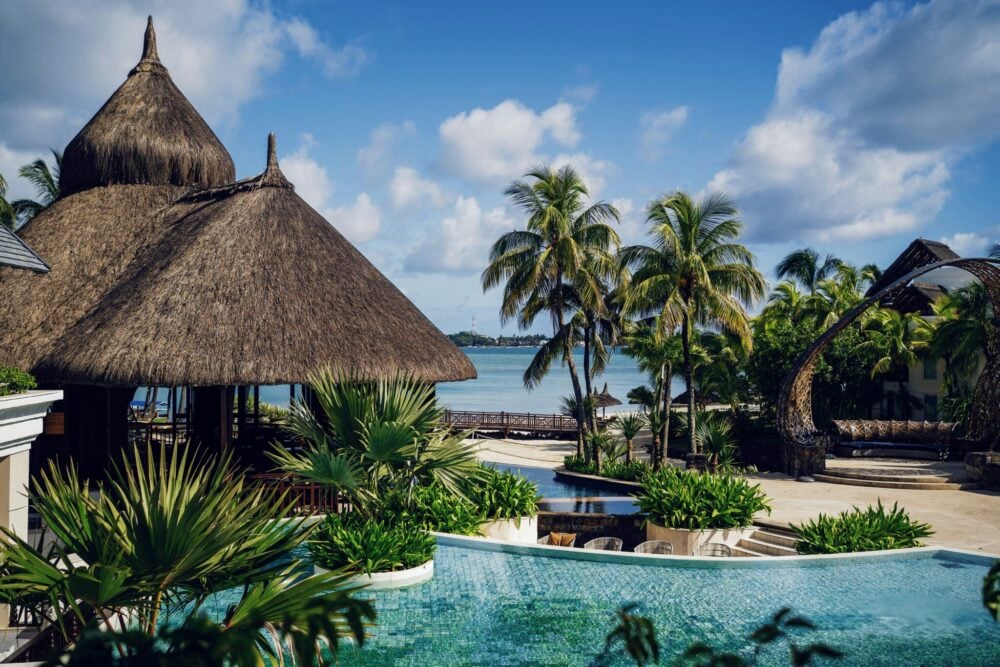
Image credit: Rumman Amin
- LUX* Le Morne (southwest)
- Beachfront at the foot of Le Morne Brabant.
- Best for: active travellers who want to hike Le Morne Brabant and kitesurf or surf nearby.
- Rates start from around £494 per night for a double room.
- Check latest prices at LUX* Le Morne here
- LUX* Grand Baie (north)
- A design-led resort in Grand Baie with a lively dining scene, including Ai Kisu and Walima by Bisou.
- Best for: first-timers who want a stylish base in the north with plenty of dining on site.
- Rates start from around £568 for a Junior Suite per night.
- Check latest prices at LUX* Grand Baie here
- The St. Regis Le Morne Resort (southwest)
- A beachfront resort at the foot of Le Morne Brabant, rebranded from JW Marriott in 2025.
- Best for: couples and families who want a beachfront luxury base at the foot of Le Morne Brabant, with hiking and watersports nearby.
- Rates start from around £610 per night for a Junior Suite (two-night minimum).
- Check latest prices at The St. Regis Le Morne here
- Trou aux Biches Beachcomber Golf Resort & Spa (north)
- A luxury resort at the northern tip of the island with white sand beaches and west-facing sunsets, close to Grand Baie.
- Best for: couples and families who want a well-known Mauritian resort group, a good beach and sunset views in the north.
- Rates start from around £357 per night for a double room.
- Check latest prices at Trou aux Biches Beachcomber here
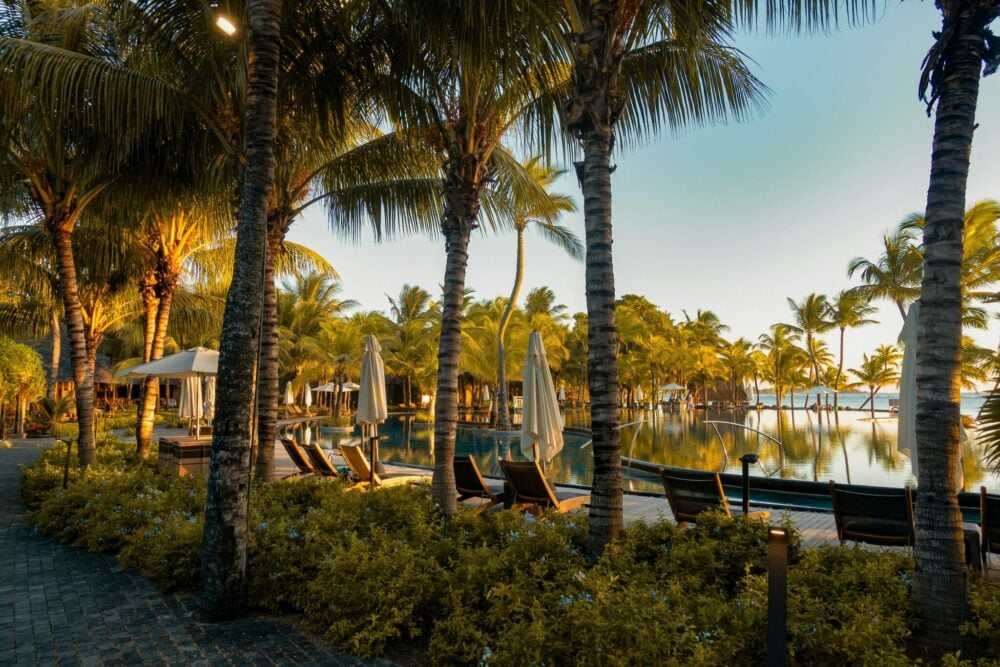
Image credit: Xavier Coiffic
Mid-range and upscale hotels in Mauritius:
- Voile Bleue Boutique Hotel (Trou aux Biches)
- A beachfront boutique hotel with an infinity pool.
- Best for: couples who want a beachfront stay on one of the north’s best beaches without resort prices.
- Rates start from around £104 per night for a double room.
- Check latest prices at Voile Bleue here
- Le Palmiste Resort & Spa (Trou aux Biches)
- Four pools, a spa and a kids’ club, across the road from the beach.
- Best for: families who want pools and a kids’ club on a mid-range budget.
- Rates start from around £108 per night for a double room.
- Check latest prices at Le Palmiste here
- Silver Beach Hotel (Trou d’Eau Douce)
- A mid-range all-inclusive with a wide lagoon beach on the east coast.
- Best for: travellers who want an all-inclusive stay on the east coast without a luxury price tag.
- Rates start from around £170 per night for a double room.
- Check latest prices at Silver Beach Hotel here
Budget hotels in Mauritius:
- Residence Peramal (Grand Baie)
- An aparthotel with sea-view balconies in Grand Baie, the north’s busiest base for restaurants and boat trips.
- Best for: first-timers who want to be in the north, close to restaurants and boat trips.
- Rates start from around £71 per night for a double room.
- Check latest prices at Residence Peramal here
- Easy Stay Residence (Trou aux Biches)
- Beachfront rooms with kitchenettes in Trou aux Biches, on one of the north’s best beaches.
- Best for: couples and families who want a beachfront base and a kitchenette to keep food costs down.
- Rates start from around £79 per night for a double room.
- Check latest prices at Easy Stay Residence here
- Talamba Blue (Blue Bay)
- A small guesthouse about a minute’s walk from Blue Bay beach in the south-east.
- Best for: beach and snorkelling days in the south-east, with the sand a minute’s walk away.
- Rates start from around £75 per night for a double room.
- Check latest prices at Talamba Blue here
All-inclusive, half board or B&B?
Half board can save a lot of money compared with all-inclusive if you plan to eat out and explore, and hotels may charge £3 to £5 for bottled water. Many hotels also offer free excursions, such as glass-bottom boat trips with snorkelling.


Where to eat and drink in Mauritius
Mauritian food is one of the island’s best-kept secrets, a blend of Indian, Creole, Chinese and French cooking. Don’t eat only at your hotel: the best meals are often at roadside stalls, markets and family-run restaurants.
What to eat in Mauritius
- Dholl puri: a thin flatbread made with ground yellow peas, wrapped around curry and chutneys. It’s the nation’s favourite street food.
- Gâteau piment: fried split-pea and chilli cakes, often eaten in a baguette.
- Rougaille: a Creole tomato-based sauce served with fish, sausage or prawns.
- Biryani: Mauritian-style, with a strong Indian influence.
- Alouda: a sweet, chilled milk drink with basil seeds and jelly.
- Rum: La Rhumerie de Chamarel runs distillery tours and tastings.

Image credit: Mauritius Tourism Promotion Authority
Le Château, Domaine de Bel Ombre
Mauritian farm-to-table cooking in a 19th-century plantation house in the south.
Bois Chéri Restaurant, Savanne
Local Mauritian cuisine with tea-infused dishes, in the tea-growing area of the south.

Image credit: Mauritius Tourism Promotion Authority
Le Chamarel Restaurant and L’Alchimiste, Chamarel
Le Chamarel serves Mauritian dishes with a panoramic view over the west coast. At La Rhumerie de Chamarel, L’Alchimiste has a chef’s menu built around seasonal, estate-sourced ingredients. Both fit neatly into a Chamarel day trip.
Le Fangourin, Pamplemousses
Garden-to-table Creole cooking in the north.
La Potinière, Curepipe
Traditional and modern Mauritian dishes in the central highlands.
Wapalapam Island Eatery, Le Morne and Port Louis
Pan-regional dishes with Indian Ocean, African and Asian influences.
Ai Kisu, LUX* Grand Baie
Japanese cooking with sushi and warayaki, which is straw-fire grilling.
Gin’ja, Heritage Le Telfair
Beachfront pan-Asian dining in Bel Ombre, with sushi, teppanyaki and laksa.
New restaurant openings in Mauritius
- Le 1812 by Glenn Viel (Legend Hill, from June 2025): a gastronomic restaurant of about 30 seats by a three-Michelin-star chef, blending Mauritian ingredients with French technique.
- Tek Tek (SALT of Palmar, launched mid-2025): a 10-seat restaurant named after the local tektek clam. Chef Shiva Moonien revives forgotten Mauritian recipes, and there’s a monthly eight-course progressive dinner.

Image credit: Mauritius Tourism Promotion Authority
Mauritius FAQs
UK and US passport holders don’t need a visa for tourist stays of up to 60 days. You must complete the Mauritius All in One travel form online before you fly.
About 11 hours 50 minutes non-stop from London Gatwick with Air Mauritius or British Airways.
June to October is the driest and most comfortable, and October is the driest month. Cyclone season runs from 1 November to 15 May, and February and March are the wettest months.
Resorts can be expensive, with luxury rooms from about US$350 a night, but street food costs only a few dollars and budget stays start at around US$90 a night.
The north is the easiest base for first-timers. The east has quiet resorts but is windier in winter, and the southwest suits hiking, whales and kitesurfing.
Humpback whales pass the west and southwest coasts from roughly June to October, and sperm whales are present year-round.

Image credit: Mauritius Tourism Promotion Authority
Final thoughts on visiting Mauritius
Mauritius is easy to love. It has stunning beaches and lagoons, and plenty to do beyond them if you want it.
There’s culture and history in Port Louis, a brilliant food scene, and adventures from hiking and whale watching to diving and surfing.
If you’re planning your own trip, the big decisions are when you go and which coast you base yourself on. June to October is the driest and most comfortable time, and the east and south are windier in winter, so the north and west are usually more sheltered then. UK visitors can fly non-stop from Gatwick, while US visitors will need to connect.
