
The first thing that struck me about Buenos Aires was its sheer size. As our British Airways flight came in to land, the city just kept going, a sprawl of buildings stretching as far as I could see.
We spent four nights here in November 2022, before flying on to Rio. It was the middle of the World Cup, and football fever was everywhere. Our highlight was watching Argentina play Mexico on giant screens in a Palermo park, surrounded by thousands of fans.

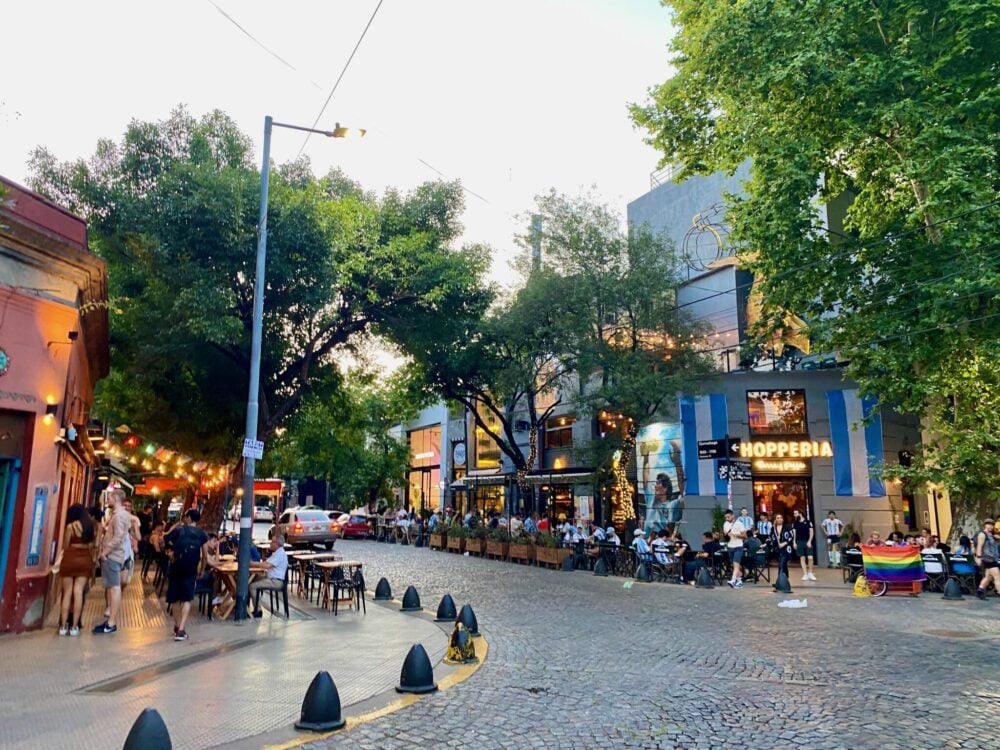
It was a whistle-stop trip, but we packed a lot in. We saw a tango show, walked to La Boca and the famous Bombonera stadium, ate an asado in a local’s home, and spent an unforgettable day riding horses at a ranch outside the city. This Buenos Aires travel guide covers the practical info first, then the best things to do, where to stay and where to eat.
Essential info for visiting Buenos Aires
| Need to know | Details |
|---|---|
| Visa (UK) | No visa needed for tourism stays of up to 90 days |
| Visa (US) | No visa needed for short tourist stays. Other nationalities should check before booking. |
| Currency | Argentine peso (ARS). Pay by Visa or Mastercard, or in cash (see Money below). |
| Language | Spanish, with a distinctive local accent. Learn a few basics: hola, gracias, la cuenta, por favor. |
| Time zone | Argentina Time (UTC-3), three hours behind the UK in the British winter |
| Airport | Ezeiza (EZE) for international flights; Aeroparque (AEP) for domestic flights and some regional ones |
| Plugs | Type I (angled pins) and Type C. Pack a universal adaptor. |


Getting to Buenos Aires from the UK
We flew with British Airways, which currently reaches Buenos Aires via Rio de Janeiro. That changes on 28 March 2027, when BA launches a daily non-stop flight from Heathrow to Ezeiza, continuing on to Santiago in Chile.
Because the Rio stop is being dropped, you’ll need a separate flight if you want to combine Buenos Aires and Rio like we did. It’s a short hop of around three hours. Flying via Madrid, Lisbon, Paris or Amsterdam is often cheaper.
Getting to Buenos Aires from the US
There are non-stop flights to Buenos Aires Ezeiza (EZE) from several US cities:
| From | Airlines (non-stop) | Flight time |
|---|---|---|
| Miami (MIA) | American Airlines, Aerolíneas Argentinas, LATAM | About 8 to 9 hours |
| New York (JFK) | American Airlines, Delta; Aerolíneas Argentinas seasonally | About 11 hours |
| Atlanta (ATL) | Delta | About 10 hours 30 minutes |
| Dallas/Fort Worth (DFW) | American Airlines (seasonal) | About 11 hours |
| Houston (IAH) | United | About 10 hours 30 minutes |
Miami has the most choice by far, with several non-stop flights a day. From the West Coast or Midwest, you’ll usually connect through Miami, Dallas, Houston or Atlanta.
Most flights from the US are overnight, and Buenos Aires is only one or two hours ahead of New York, depending on the time of year. Jet lag is minimal, so you can hit the ground running.
US travellers don’t need a visa for Argentina. But if you’re adding Rio de Janeiro, you’ll need a Brazil e-Visa (US$80.90). Apply online well before you travel.


Money in Argentina: cash or card?
Argentina used to be famous for its “blue dollar” street exchange rate, when tourists brought wads of US dollars to change. Things are much simpler now. Foreign Visa and Mastercard cards are converted at the MEP rate, a market-based rate close to the street rate, so paying by card is one of the easiest ways to get a good rate.
My tips:
- When a card machine asks, always choose to pay in pesos (ARS), not pounds or dollars.
- Bring a credit card with no foreign transaction fees, such as Monzo or Barclaycard Rewards. Debit cards don’t always get the same rate but I did use my Revolut with no issues.
- Carry some pesos for taxis, tips and markets. Many restaurants offer 10 to 20% off for paying in cash.
- Amex is not widely accepted.
Best time to visit Buenos Aires
Spring (September to November) and autumn (March to May) are ideal, with warm days and fewer crowds. We went in November, and it was warm and sunny, with jacaranda trees blooming purple across the city.
Summer (December to February) is hot and humid, and many locals leave the city in January. Winter (June to August) is cool and grey, but it’s a good time for tango, steak and cosy cafés.
Getting around Buenos Aires
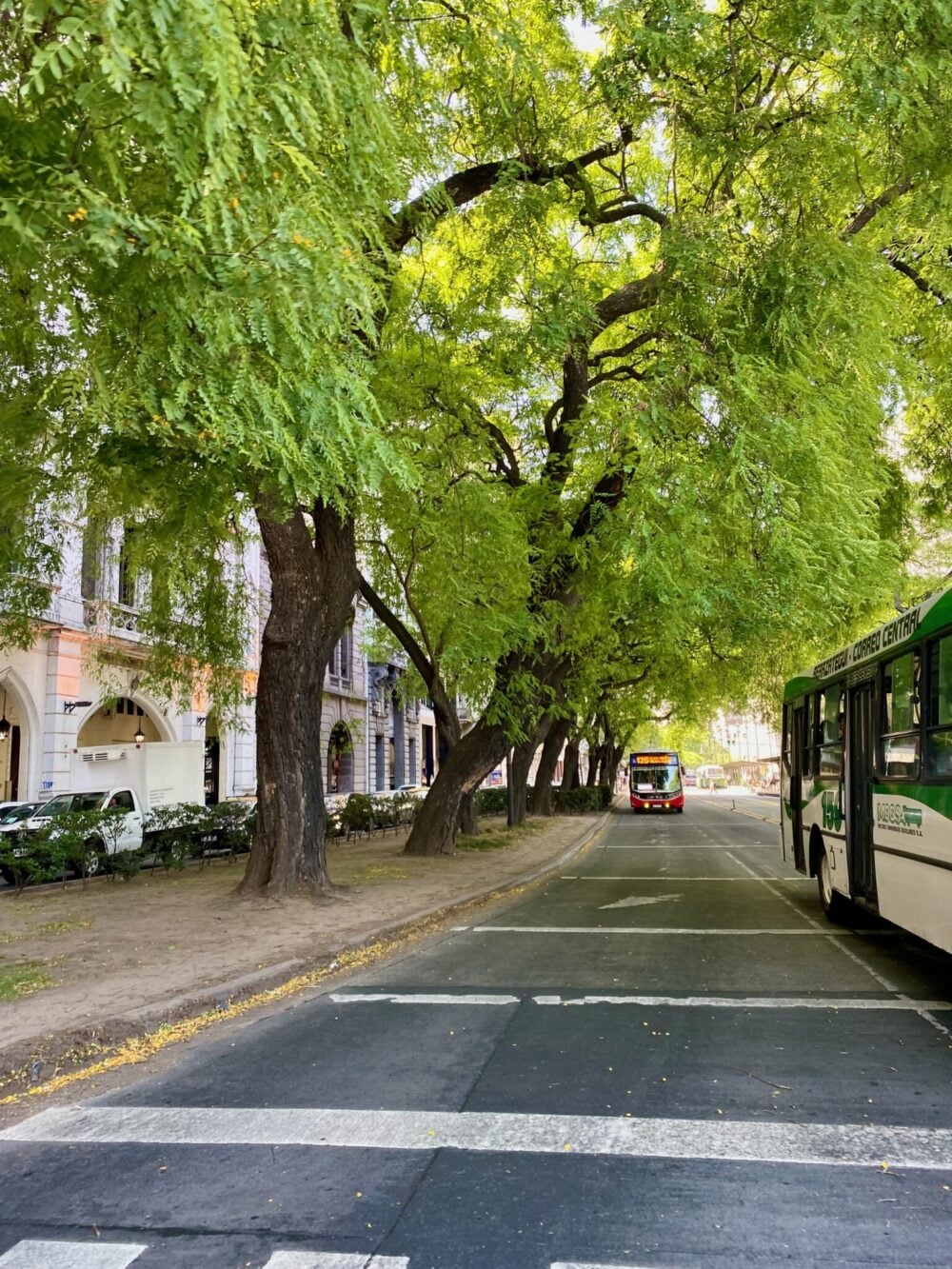
We took an Uber from the airport and used it a lot during our stay. It was cheap and easy. Ezeiza is about 35km from the centre, so allow 45 minutes to an hour.
We also walked a lot. The city is huge, but individual neighbourhoods are very walkable. The Subte (metro) is cheap and covers the centre, and you pay with a rechargeable SUBE card or a contactless bank card.
Is Buenos Aires safe?
We felt comfortable walking around central Buenos Aires, Palermo and La Boca during the day. Like any big city, petty crime is the main risk, so keep your phone and bag close, especially in crowded areas and on public transport.
My practical tips:
- Don’t leave your phone on café tables.
- Stick to the main tourist streets in La Boca, and leave before dark.
- Use Uber or a radio taxi at night.
- Watch out for the “mustard trick”, where someone squirts something on you and offers to clean it up while an accomplice steals your bag.
Best things to do in Buenos Aires
1. Spend a day at an estancia in the Pampas
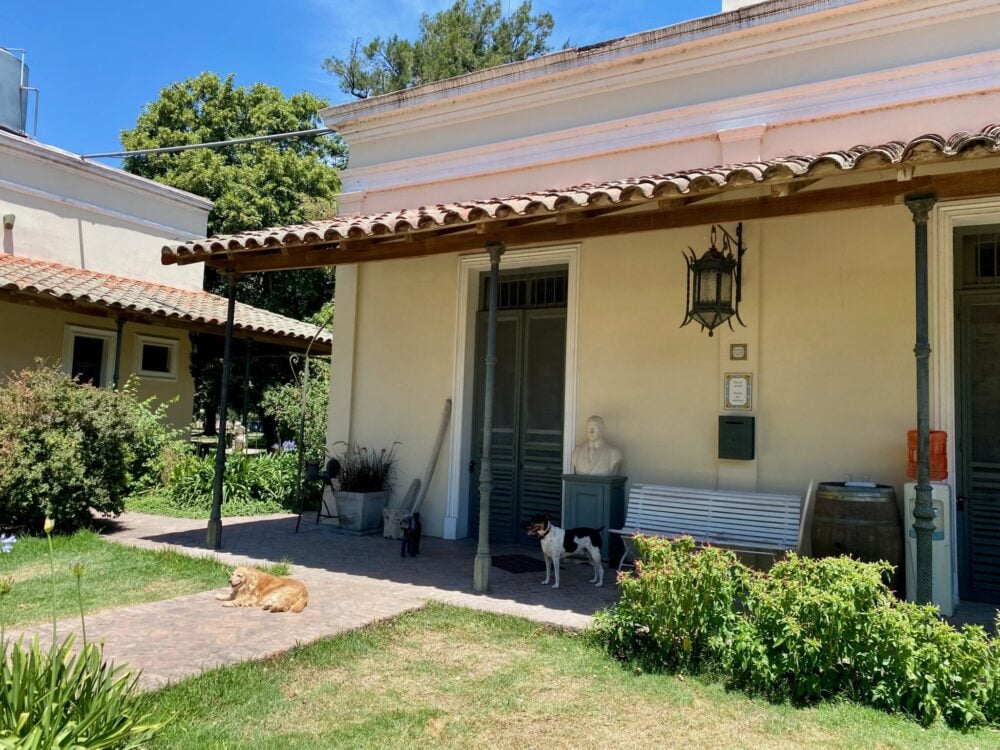
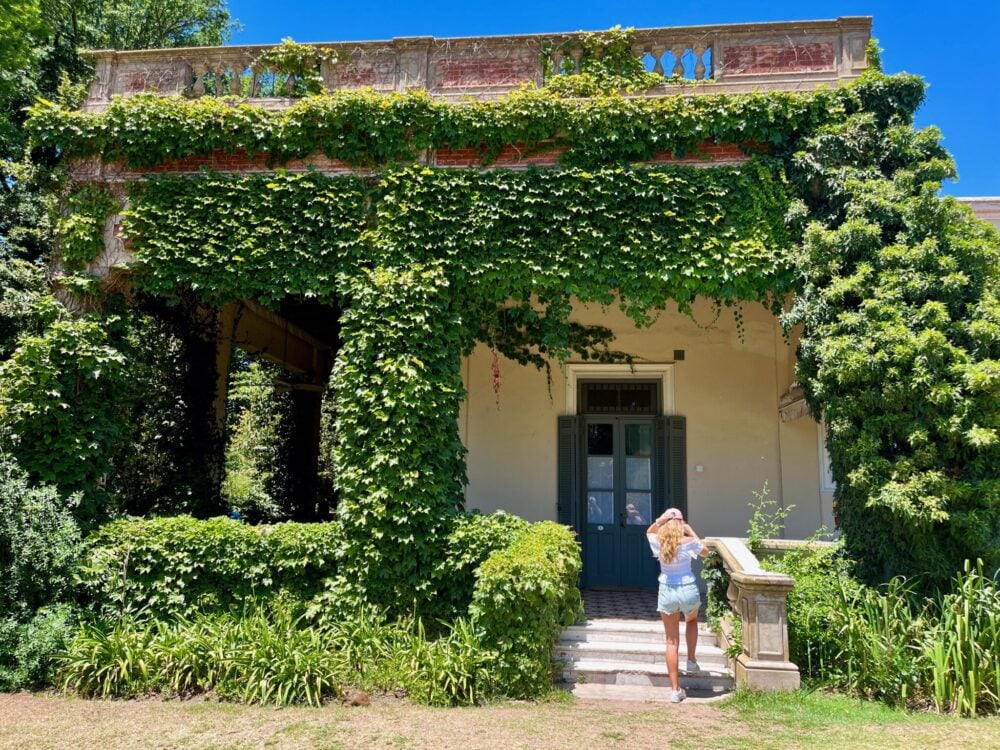
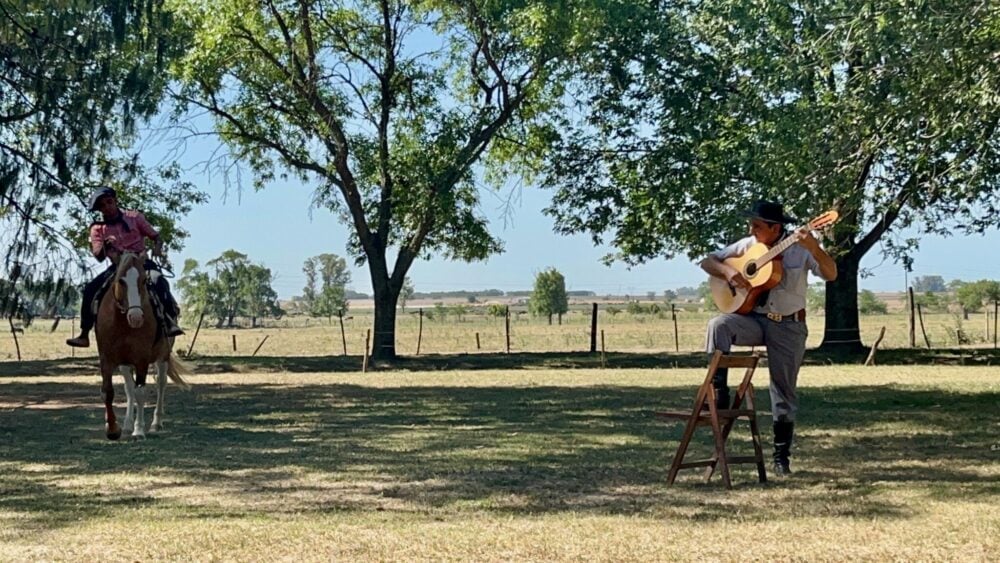
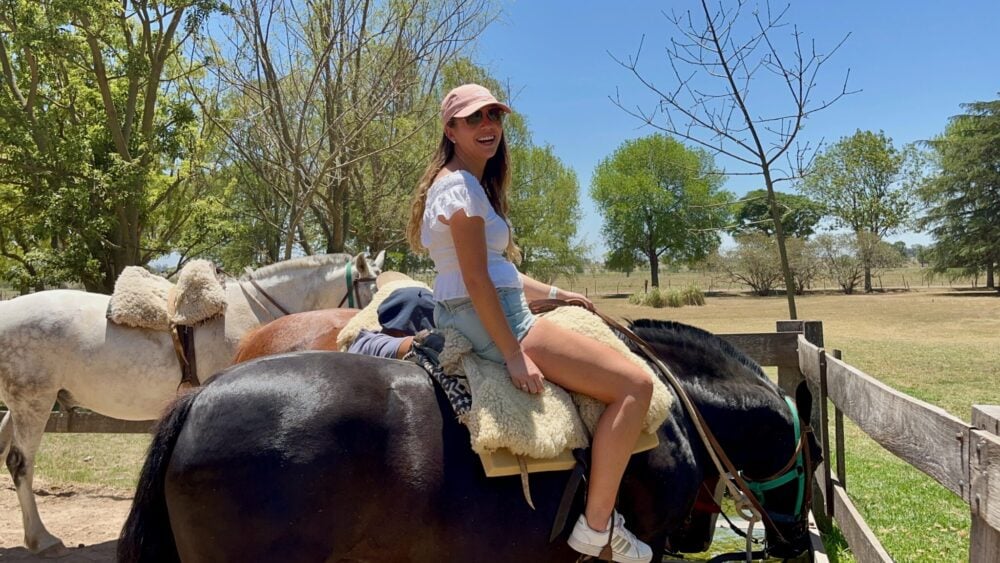
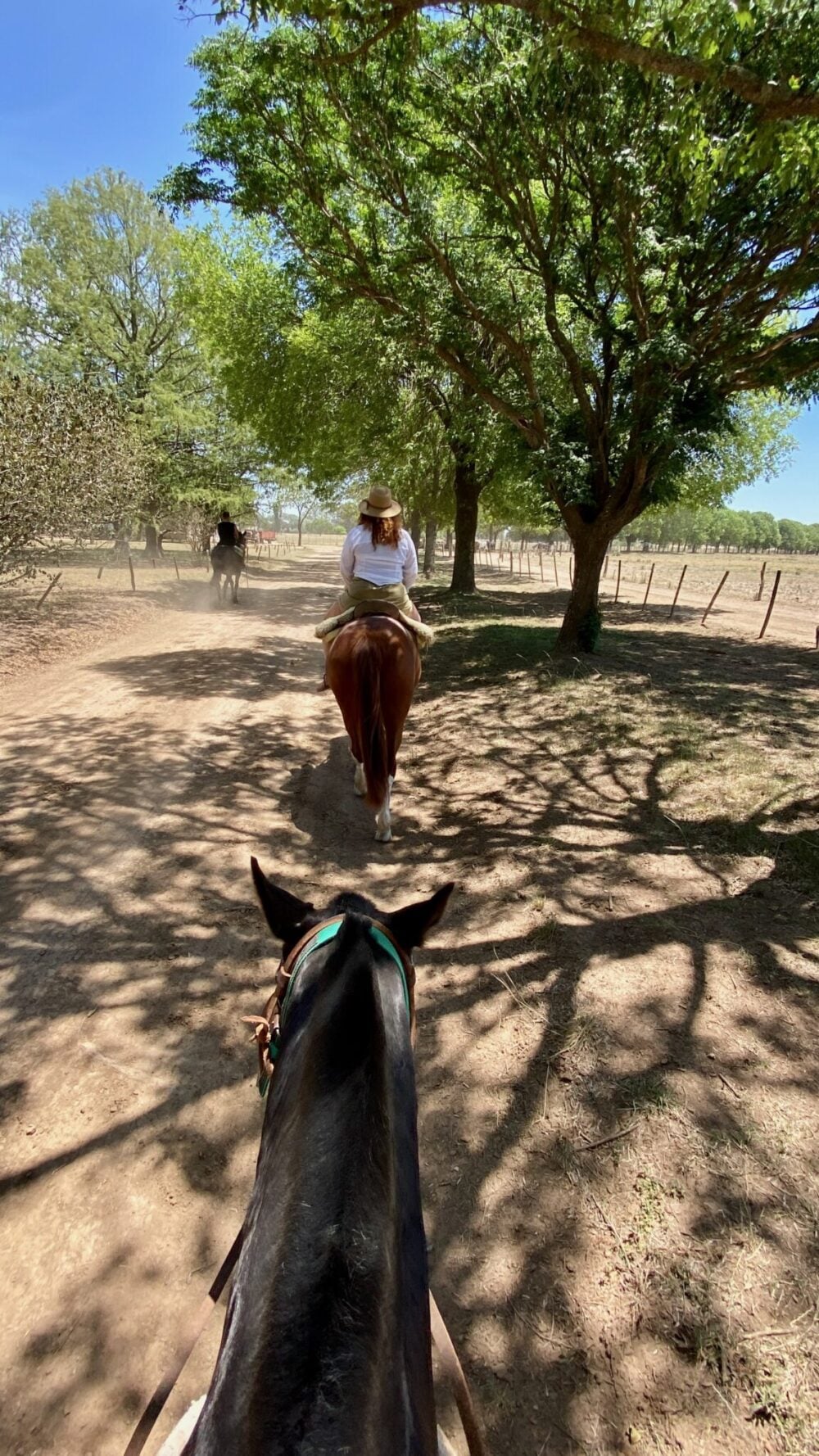
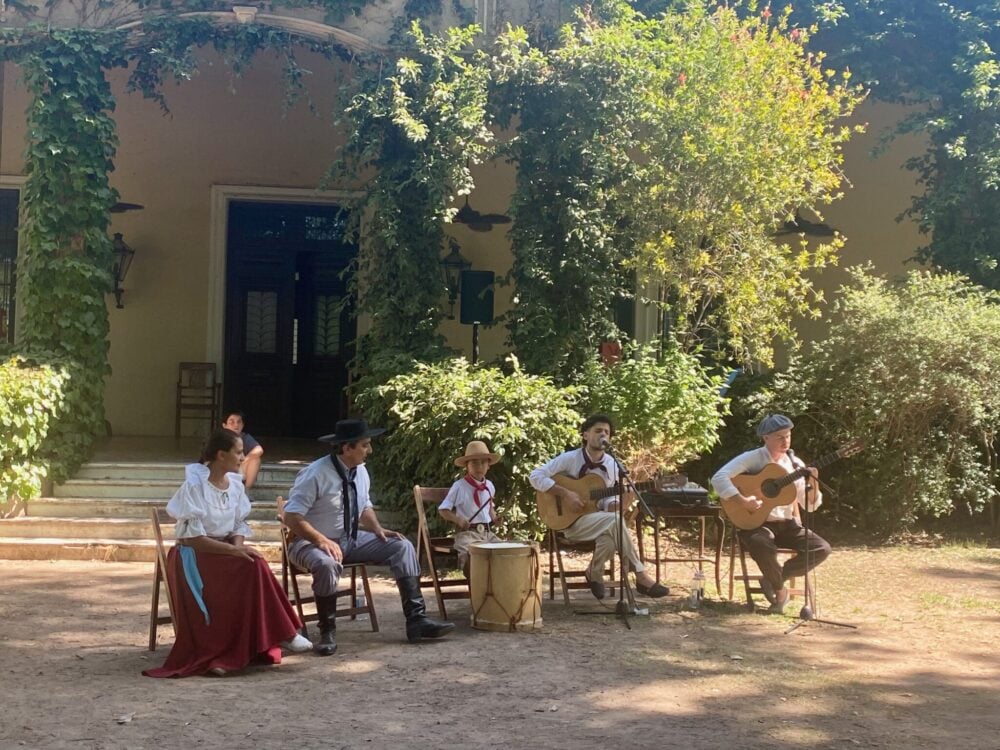
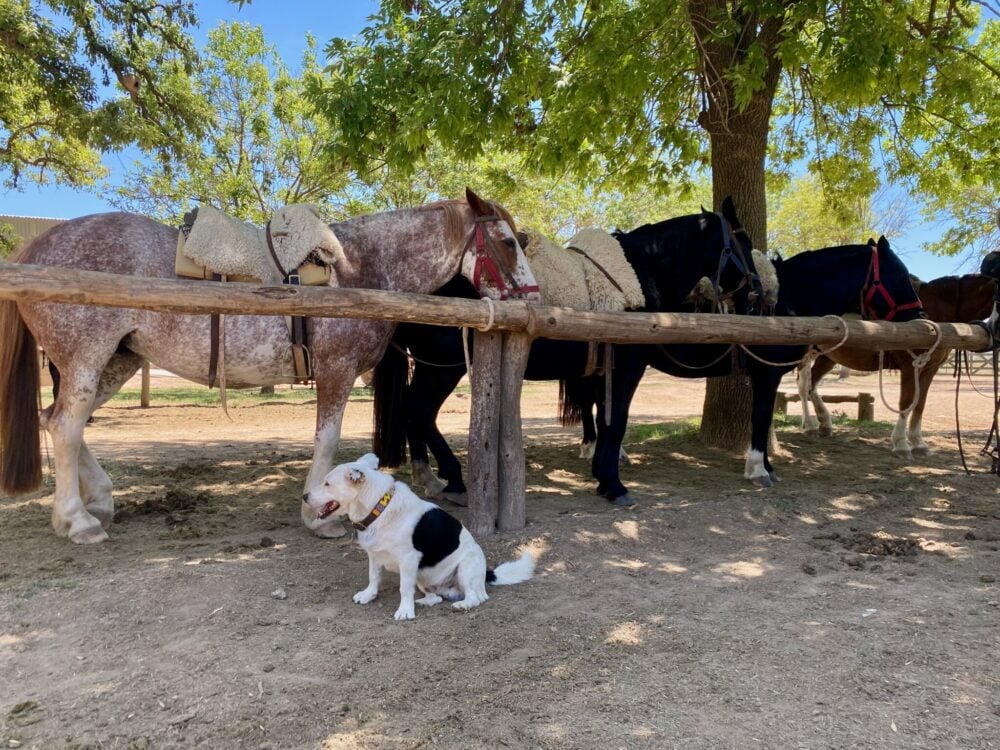
Our day at a ranch outside the city was the highlight of our trip to Buenos Aires. We booked it through GetYourGuide, and it was one of the best days of our whole South America trip.
We rode horses across the Pampas, then sat down to a huge asado lunch, with meat cooked slowly over the fire and plenty of Malbec. It felt like a real insight into gaucho (Argentine cowboy) culture, a world away from the city. There was singing and dancing, and everything was as good as I hoped it would be!
On the way, we stopped in a charming little town called San Antonio de Areco. Many estancia tours stop here, as it is a historic gaucho town with colonial streets, silversmiths’ workshops and old pulperías (country taverns). GetYourGuide’s Gaucho and Ranch Day Tour (which we did), for example, includes a guided walk through the town before the estancia, and takes around nine hours (from £127/USD168 per person).



2. See a tango show
You can’t go to Buenos Aires without seeing tango, the city’s signature dance. We booked an evening show at Tango Porteño and it was so much fun, with incredible dancers, live music and plenty of drama.
There are lots of different tango venues available, it’s quite hard to know which to pick. We landed on Tango Porteño due to its centrally located venue and reviews online. Tickets are £31 per person without dinner or drinks, £51 for the empanadas and 2 drinks included, or £75 inclusive of a 3-course dinner and an open bar. Check the options and buy tickets in advance for Tango Porteño here!
If you’d rather see locals dance, head to a milonga, an informal tango dance night, where anyone can join in.

3. Walk to La Boca and visit La Bombonera
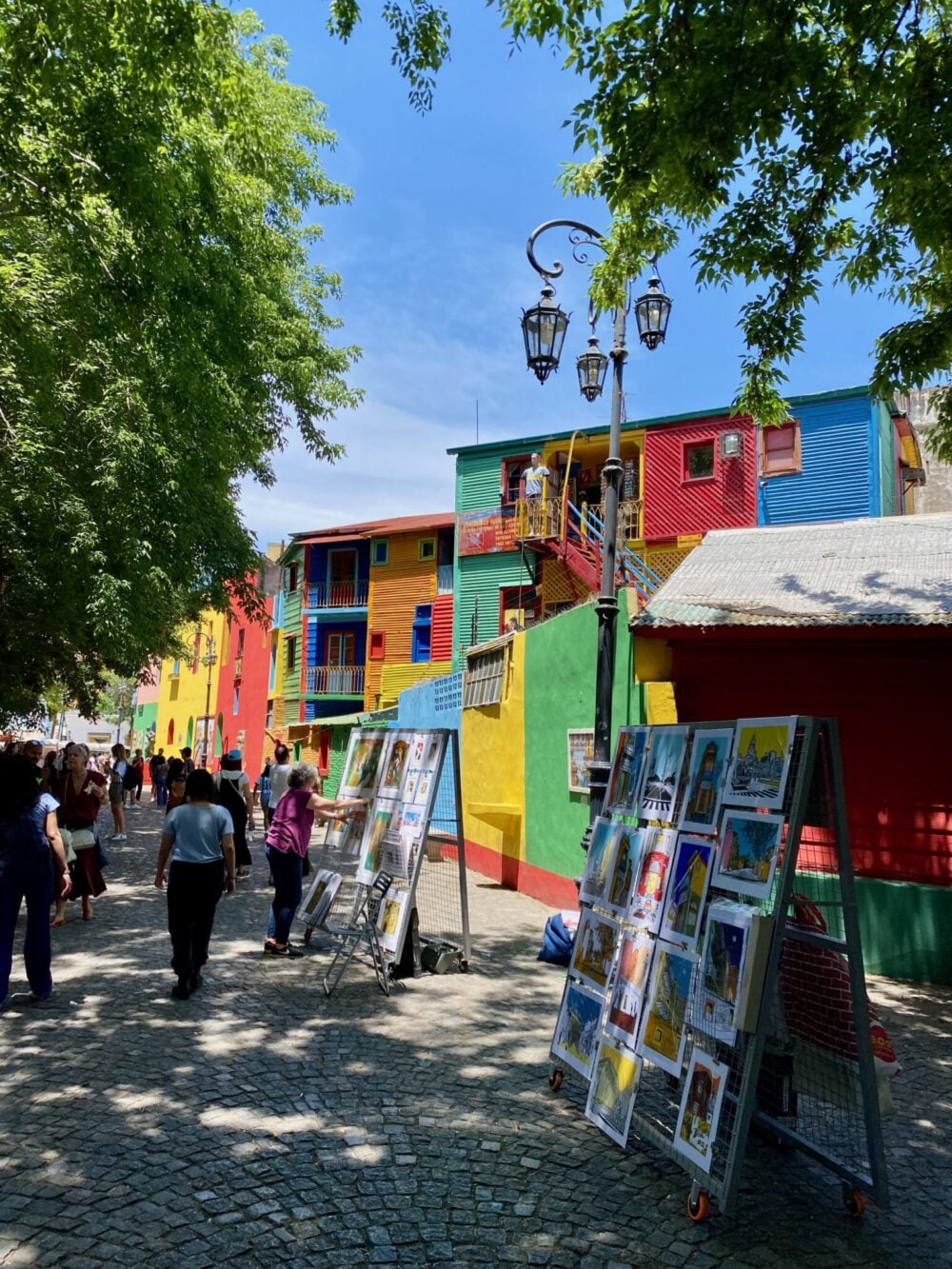
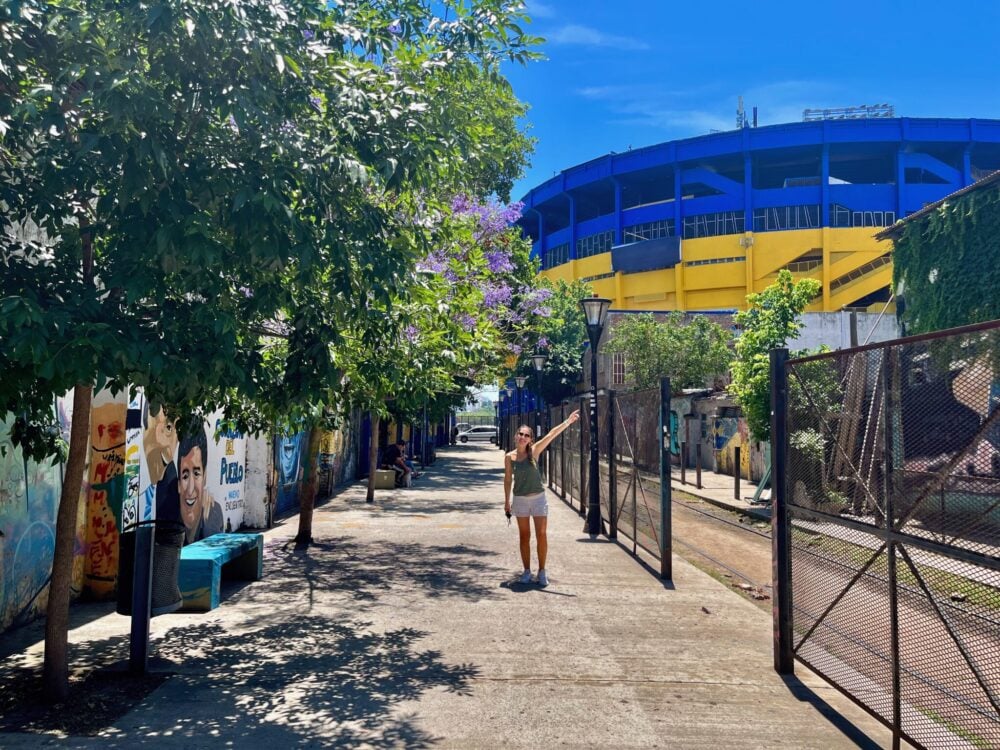
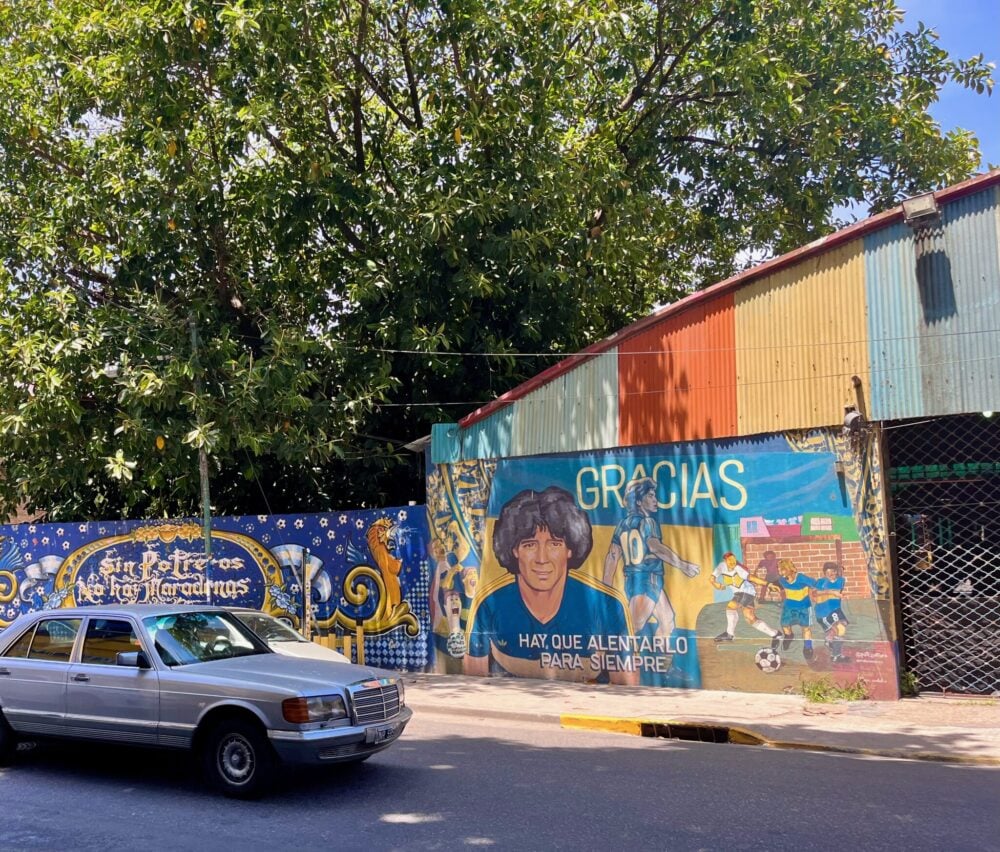
We walked all the way from Avenida 9 de Julio down to La Boca, which was a great way to see the city change from grand boulevards to the old port neighbourhood. La Boca’s famous street, Caminito, is lined with brightly painted corrugated-iron houses, tango dancers and street artists.


It is very geared towards tourists, but we still loved the colour and energy. The highlight for us was La Bombonera, home of Boca Juniors, one of the world’s most famous football clubs. As there was an Argentina World Cup match that day, the atmosphere was electric and full of fans gearing up for the game. It’s well worth considering a tour for this area though to understand more about the neighbourhood:
- La Boca Guided Walking Tour in English (from £10/USD13 per person)
- La Boca Art and History Walking Tour (from £40/USD48 per person)
- Boca Juniors Stadium and Museum Tickets (from £33/USD43 per person)
If you’re lucky enough to be in the city when a football match is taking place, that’s an awesome experience. This tour here includes a match ticket, with a guide and drink included (from £135/USD178 per person).
Stick to the main tourist streets in La Boca, and I highly recommend leaving before dark.


4. Watch football with the locals
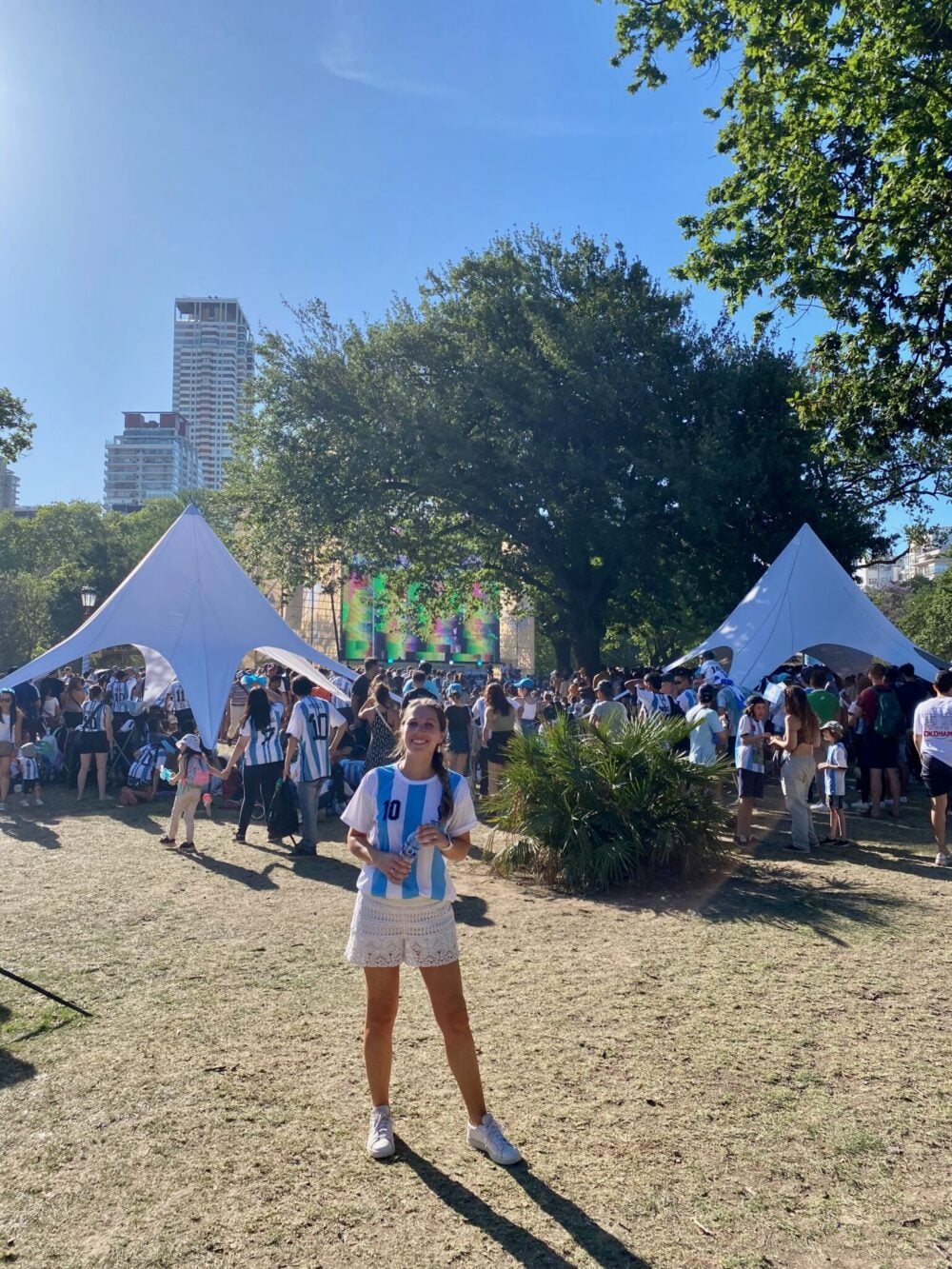
Argentines are football-mad, and catching a big game is an unforgettable experience. We were in town for the 2022 World Cup and watched Argentina beat Mexico on giant screens in Palermo, alongside thousands of fans in blue and white. We watched at the city’s official fan zone in Plaza Seeber, where thousands of fans packed in front of a giant 18m screen. The atmosphere was awesome.
If there’s a big match during your trip, I would definitely recommend finding a bar or public screening.


5. Explore Palermo and its parks
Palermo is Buenos Aires’ biggest neighbourhood and its trendiest. Palermo Soho is full of boutiques, street art, cafés and bars, while the Bosques de Palermo is a huge green space with lakes and a beautiful rose garden. It’s the perfect place to slow down after the busy centre.
There’s plenty to see here and a guided walking tour can be a great way to take it all in:
- Palermo Soho Guided Walking Tour (from £15/USD20 per person)
- North or South Buenos Aires Bike Tour (from £32/USD42 per person)
- Palermo Street Art Tour with an Art Specialist (from £27/USD36 per person)
6. Stroll Avenida 9 de Julio, the Obelisk and Plaza de Mayo
Our hotel was on Avenida 9 de Julio, one of the widest avenues in the world, right by the Obelisco, the city’s most famous landmark. We loved exploring the streets around it on foot.
Walk down to Plaza de Mayo, the historic main square, home to the pink Casa Rosada (presidential palace) and the Metropolitan Cathedral. Pass along Avenida de Mayo on the way, with its grand early 20th-century buildings.
I do wish I’d explored this area on a tour though for more historical and cultural background, so I’ve suggested a few here:
- Hop-on/Hop-off city bus tour (from £28/USD37 per person)
- Guided city highlights tour (from £29/USD38 per person)


7. Have chocolate and churros at Café Tortoni
Opened in 1858, Café Tortoni on Avenida de Mayo is the city’s most famous café. Its interior is all stained glass, dark wood and marble. We stopped for churros and hot chocolate, which is a Buenos Aires ritual. There’s often a queue, but it moves fairly quickly.
8. Eat an asado in a local’s home
One of our favourite experiences was an asado (traditional barbecue) at a local’s house. His name was Sasha and his experience, called Secrets of Asado, was just incredible. Sharing a home-cooked feast, wine and stories with a local was so much more special than a restaurant meal, and I’d recommend it to anyone. We had the best evening ever!
Book our exact tour here: Secrets of Asado in Buenos Aires, BBQ and Dinner (from £76/USD100 per person)


9. Visit Recoleta Cemetery
We ran out of time for this one, but it’s an essential stop in Buenos Aires. Recoleta Cemetery is an extraordinary city of ornate marble mausoleums, including the tomb of Eva Perón (Evita).
Foreign visitors pay an entrance fee, payable by card only, which was AR$24,030 in mid-2026. The cemetery is open daily from 9am to 5pm. Book a guided cemetery tour here (from £9/USD12 per person)
10. Wander San Telmo
San Telmo is the city’s oldest neighbourhood, with cobbled streets, antique shops and colonial buildings. It’s best on a Sunday, when the San Telmo Market (Feria de San Pedro Telmo) fills the streets with stalls, street performers and impromptu tango.
Book a San Telmo foodie walking tour here! (from £34/USD45 per person)
More things to do in Buenos Aires
- Take a day trip to Colonia del Sacramento in Uruguay by ferry (from £67/USD88 per person)
- Visit the El Ateneo Grand Splendid bookshop, in a former theatre (from £24/USD31 for a guided walking tour of BA’s bookstores)
- Explore the Tigre Delta by boat (from £49/USD65 per person)
Where to stay in Buenos Aires
For a first visit, I’d recommend Palermo or Recoleta. With hindsight, they’re better bases than the centre, where we stayed. They’re leafy, feel safe and have the best restaurants and bars on your doorstep.
Best areas to stay in Buenos Aires
| Area | Best for | Vibe |
|---|---|---|
| Palermo | First-timers, foodies, nightlife | Trendy and leafy, with boutiques, parks and the best restaurants |
| Recoleta | Couples, luxury, culture | Elegant and Parisian, near the cemetery and museums |
| San Telmo | Character, budget | Cobbled and historic, with antiques and tango; quieter at night |
| Puerto Madero | Luxury, business | Modern waterfront with sleek hotels, but less atmosphere |
| Centro (near Avenida 9 de Julio) | Short stays, sightseeing | Central and busy by day; very quiet and less appealing at night |
Where we stayed: NH hotel by the Obelisk
We stayed at NH Buenos Aires 9 de Julio, right by the Obelisco. The location was handy for exploring the centre on foot and walking down to Plaza de Mayo and La Boca. But the hotel itself was fairly unremarkable, and I wouldn’t go out of my way to recommend it. The centre also feels much quieter and less atmospheric in the evenings than Palermo or Recoleta.
A double room is around £79 per night.
Check latest rates and availability at the NH Buenos Aires 9 de Julio here.
Luxury hotels in Buenos Aires
- Alvear Palace Hotel, Recoleta: The grande dame of Buenos Aires hotels, all gilded French-style glamour. Double rooms start from £485 per night.
- Palacio Duhau – Park Hyatt, Recoleta: A beautiful restored palace with gardens and a wine cellar. Double rooms from £585 per night.
- Faena Hotel, Puerto Madero: A dramatic, theatrical hotel designed by Philippe Starck in a converted waterfront grain store. Double rooms from £454 per night.
Mid-range hotels in Buenos Aires
- Home Hotel, Palermo Hollywood: A stylish boutique hotel with a garden and pool, close to great bars and restaurants. Double rooms from £163 per night.
- Mine Hotel, Palermo Soho: A small design hotel with a pool, in the heart of Palermo Soho.
Budget hotels in Buenos Aires
- Look for apartments and small guesthouses in Palermo or San Telmo. They often offer the best value.
Where to eat and drink in Buenos Aires
Steak on the Puerto Madero waterfront
On our first day, we had steak at a restaurant on the waterfront in Puerto Madero at the renowned Cabaña Las Lilas. It wasn’t particularly lively, but the setting by the old docks was lovely, and it was a relaxed way to ease into the city after a long-haul flight.
Cabaña Las Lilas has been Puerto Madero’s flagship riverside parrilla since 1995, with terrace tables on the dock. Expect slightly inflated tourist prices.
Don Julio, Palermo
Don Julio has been named the world’s best steak restaurant three years running in the World’s 101 Best Steak Restaurants ranking. It also holds a Michelin star so I’d recommend booking ahead if it’s on your foodie bucket list.
El Preferido de Palermo
Run by the Don Julio team, this renovated neighbourhood bodegón is more affordable. It’s a great choice if you want something lighter after several nights of steak.
Café Tortoni, Avenida de Mayo
The city’s most famous café, and the place for chocolate con churros. Go for the setting as much as the food.
What to eat in Buenos Aires
- Steak (bife de chorizo or ojo de bife) at a parrilla, with chimichurri and a glass of Malbec
- Empanadas, baked pastries filled with beef, chicken or ham and cheese
- Choripán, a chorizo sandwich, the classic street food
- Medialunas, small, sweet croissants, with coffee for breakfast
- Dulce de leche in everything, from alfajores (biscuits) to ice cream
- Helado, Italian-style ice cream; Buenos Aires has some of the best outside Italy
Argentines eat late. Most restaurants don’t fill up until 9 or 10pm.

Buenos Aires FAQs
Four days is enough to see the highlights, as we did. With five or six, you could add a day trip to Colonia in Uruguay or the Tigre Delta.
Most visits are trouble-free if you stay in areas like Palermo and Recoleta, keep your phone out of sight, and use Uber at night. Petty theft is the main risk.
Foreign Visa and Mastercard cards now get a favourable exchange rate, so card is easiest. Carry some pesos for tips and taxis, and to get cash discounts at restaurants.
UK and US travellers don’t need a visa for tourist stays of up to 90 days.
From 28 March 2027, British Airways flies non-stop daily from Heathrow to Buenos Aires Ezeiza. From the US, there are non-stop flights from Miami, New York, Atlanta, Dallas and Houston.
Yes. It’s a three-hour flight, and the two cities make a brilliant combination. Read my Rio de Janeiro travel guide for the second half of the trip.


Final thoughts: is Buenos Aires worth visiting?
Absolutely. Buenos Aires is big, bold and full of passion, whether that’s for football, tango or a perfectly grilled steak. Watching Argentina play Mexico with thousands of fans in Palermo, and riding horses across the Pampas, are memories I’ll never forget.
We only scratched the surface in four days. With hindsight, I’d stay in Palermo or Recoleta rather than the centre, and I’d make time for Recoleta Cemetery and a proper night out. I’d love to go back.
If you’re planning a trip, base yourself in Palermo, pay by card, book an estancia day trip and eat your body weight in steak. Combine it with Rio de Janeiro for the ultimate South America adventure.
Planning more of South America? Read my Rio de Janeiro guide, and save this post to Pinterest for later.
