
Portugal’s coastal capital has frequently been named one of the best cities in the world. Lisbon packs great restaurants, iconic landmarks and breathtaking views onto its seven hills, so it’s no wonder first-time visitors get a little overwhelmed.
Visiting a new city is kind of like going on a first date. You want to get to know as much as you can, without walking away depleted. It’s a balancing act, and this article is going to help you at every step. Keep reading to learn how best to taste and see all that Lisbon has to offer.
I’ve rounded up the best things to do in Lisbon in six parts: what to eat, the landmarks worth your time, the best viewpoints, the neighbourhoods to explore, the day trips that show you a different side of Portugal, and why you should leave room to wander. If you only have a weekend in Lisbon, start with the food and the viewpoints. If you have longer, work your way through everything!

Lisbon at a glance: Practical Information
| Best time to visit Lisbon | Spring (March to May) and early autumn (September to October), when it’s warm but quieter than July and August |
| How long to stay in Lisbon | Three to four days for the city, plus a day or two for trips out |
| Getting from the airport to Lisbon city centre | The red metro line runs from the airport into the city centre or hop in an Uber |
| Getting around | Metro, trams, buses, and plenty of walking (it’s a city of seven hills) |
| Currency | Euro |
| Language | Portuguese, with English widely spoken in the centre |
Best Things to Do in Lisbon
1. Sample the foodie scene
One of the best ways to experience Lisbon is through its traditional Portuguese cuisine.
The city’s food culture is deeply rooted in its history as a seafaring nation, and that shows up in every bite, from the briny simplicity of grilled sardines to the rich, wine-soaked stews of the interior. Lisbon’s restaurant scene spans centuries-old tascas (traditional taverns) serving recipes passed down through generations, and sleek modern bistros where chefs reimagine those same classics with a contemporary twist.
The city also has a thriving market culture. Time Out Market, born in Lisbon before it went global, is a great first stop to sample a range of local flavours under one roof. Whether you’re grabbing a quick snack from a street vendor or settling into a long, leisurely lunch with a glass of Vinho Verde, eating in Lisbon always feels like an event.
If you’d rather have someone local show you where to go, a guided food tour is one of the best things to do in Lisbon on your first day. It’s an easy way to get your bearings, and you’ll leave with a list of places to come back to for the rest of your trip.

3 Local Dishes You Don’t Want to Miss in Lisbon
Here’s what to look out for on menus throughout the city so that you get a taste of the history, as well as the cuisine:
- Pastéis de Nata: Don’t skip this classic just because it seems like an obvious choice. These custard tarts are thought to be the invention of a monastery in Belém, and they’ve come to be a national symbol. The best pastel de nata you’ll ever eat is in Lisbon and should be accompanied by a strong Portuguese espresso blend. For the classic version, go to Aloma, and for a slightly less sweet option, try Fábrica da Nata.
- Pastéis de Bacalhau: Essentially a cod and potato croquette with sliced onion and spices like nutmeg, this hot, fried, classic isn’t just delicious, it tells an important story. Portugal’s love of salt cod goes back to the 1500s, when Portuguese fishermen began sailing to the rich cod grounds off Newfoundland. Salted and dried, the fish kept for months, and 500 years later Portugal is still obsessed with it. This is why you’ll see it on menus throughout Lisbon, though O Beco is probably one of the best places to try Pastéis de Bacalhau for the first time.
- Bifana: There isn’t always time on a busy trip to have lots of sit-down meals. That’s where this simple pork sandwich comes in handy. The bun is soft and light, and the pork is thinly sliced and marinated in mouth-watering spices, garlic, and white wine. You’ll find all the classic flavours of Portuguese cuisine in this humble sandwich. Anthony Bourdain swore by the Bifana at O Trevo, and that recommendation still holds strong years later.


Credit @Magnific
Tips for eating like a local in Lisbon
- Watch out for the ‘couvert’. Bread, olives and butter often arrive at the table before you order. They’re not free, so send them back if you don’t want them.
- Look for the prato do dia. Many tascas offer a dish of the day at lunchtime, usually the best-value meal on the menu.
- Eat later than you would at home. Lisboetas tend to sit down for dinner from around 8pm.
- Save room for ginjinha. This sour cherry liqueur is sold by the shot from tiny bars around Rossio and Mouraria (more on that below).

2. Take in Lisbon’s Most Iconic Landmarks and Monuments
Right, you’ve got a coffee and a pastel de nata in hand. Or a hearty bifana. Now you just need an interesting spot to enjoy it from!
Lisbon is Western Europe’s oldest capital city, with 3000 years of rich history to recommend it. That means that the city is filled with iconic landmarks and monuments to visit, two of which reopened in 2026 after major restorations: Belém Tower and the Calouste Gulbenkian Museum.
Belém Tower
The tower is a fortification from the 16th century, located on the banks of the Tagus River, that marks the spot where famed Portuguese explorers would embark. It’s also a UNESCO World Heritage Site and a symbol of the dramatic Manueline architecture.
Useful info: since reopening in May 2026, the tower lets visitors in on timed slots of around 60 people every half hour, so book your slot online before you go. Lisboa Card holders get in free but still need to reserve a time.
While you’re in Belém: the Jerónimos Monastery is a short walk away and shares the tower’s UNESCO listing. Round off the morning at Pastéis de Belém, the bakery that has been selling custard tarts from the monastery’s original recipe since 1837.


The Calouste Gulbenkian Museum
The Calouste Gulbenkian Museum reopened in July 2026 after a major renovation and houses one of Europe’s most eclectic private art collections. Even if you don’t have time to peruse the art inside the low-slung, modern building, the gardens and the statues they house are worth a contemplative walk.
The museum sits in the Avenidas Novas district, a little north of the old centre, so it pairs well with a morning in the gardens before heading back downtown for lunch.
Arco da Rua Augusta and beyond
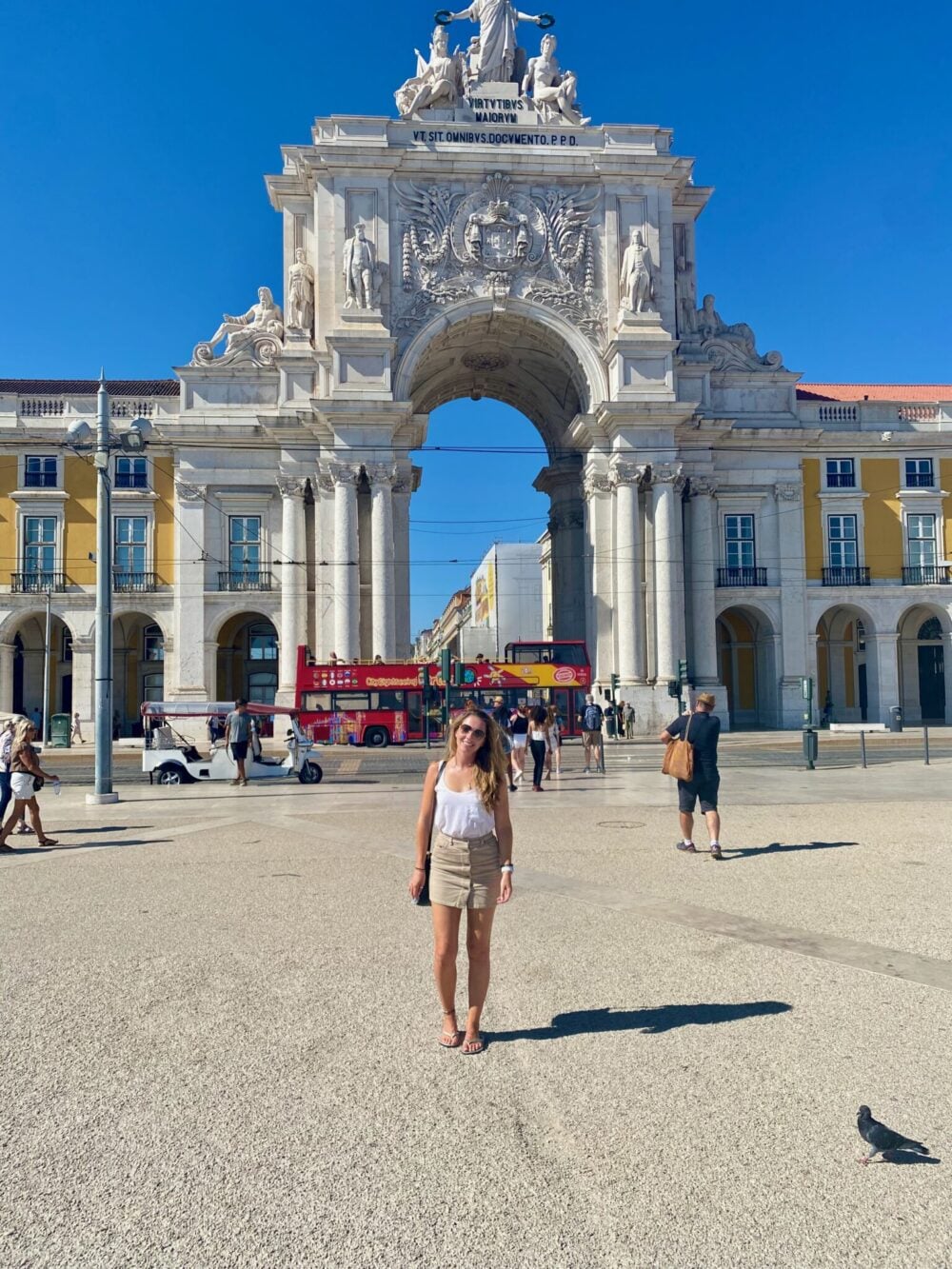
The arch of the Arco da Rua Augusta is another iconic Lisbon landmark. Reconstructed after the 1755 earthquake, it’s as much an ode to the city’s resilience as it is to its beauty. Stand under that arch and you’ll feel like all of Lisbon is at your feet. Two other places to visit are São Jorge Castle for all the fairytale feelings and 25 de Abril Bridge, otherwise known as Lisbon’s Golden Gate Bridge.
The arch opens onto Praça do Comércio, the vast riverside square that was once the gateway to the city by sea. Walk straight through it to the water’s edge and you’ll see the bridge stretching across the Tagus to the south.
Top tip: if you plan to tick off several of the best things to do in Lisbon in a couple of days, look at the Lisboa Card. It bundles public transport with entry or discounts at many of the city’s major sights, including the monuments in Belém.


3. Look Out at Lisbon from The Best Miradouros
Speaking of the 25 de Abril Bridge, a great spot to view it from is Miradouro da Senhora do Monte. “Miradouro” is Portuguese for “viewpoint” and the hilly city of Lisbon is filled with them. They’re usually located at the top of hills or gardens and offer completely free places to gather and look out at the scenery.
Ones like Miradouro da Senhora do Monte can be a bit of a walk, so make sure you have some water packed but the panoramic views make it all worth it, especially at sunset. Some, like Miradouro de São Pedro de Alcântara, can get quite busy. The more dramatic the view, the more people.
If you want a quieter lookout, visit Miradouro do Torel. It might not give you a full view of São Jorge Castle, but it’s shady, located in a beautiful garden and surrounded by 18th and 19th-century homes straight out of a film.
Two more miradouros worth the climb
- Miradouro de Santa Luzia and Portas do Sol: two neighbouring terraces on the edge of Alfama, looking out over terracotta rooftops and church domes to the river. Tram 28 stops right by them.
- Miradouro da Graça: a pine-shaded terrace with a little kiosk café, just below Senhora do Monte. It’s a good place to stop for a drink on the way up.
Top tip: many miradouros have a kiosk selling coffee, beer and wine, so you can turn a viewpoint into a sundowner. Arrive 30 minutes before sunset to get a spot on the wall.

Credit @Magnific
4. Explore Lisbon’s Neighbourhoods
Beyond the big landmarks, Lisbon’s neighbourhoods are destinations in their own right, each with a completely different personality.
Alfama
Alfama is the city’s oldest district, a maze of narrow cobblestone alleyways that tumble down toward the Tagus River. This is where Fado was born, Portugal’s soulful, melancholic musical tradition, and on weekend evenings you can hear it drifting out of small, candlelit restaurants. Wandering Alfama without a map is one of the great pleasures of visiting Lisbon. Get lost here. You’ll always find your way back to the river.

Baixa and Chiado
These two areas make up the city’s elegant downtown core. Baixa is grand and grid-like, rebuilt after the 1755 earthquake and lined with beautiful mosaic pavements. Chiado, just uphill, has a more relaxed feel, with independent bookshops, theatres, and great coffee houses. If you love books, pop into Livraria Bertrand, the world’s oldest operating bookshop, founded in 1732.
Bairro Alto and Príncipe Real
Climb a little further from Chiado and you reach Bairro Alto, quiet by day and packed with tiny bars by night, when the drinking spills out onto the streets. Keep going and you’ll find Príncipe Real, a leafy, upmarket neighbourhood of concept stores, garden cafés and some of the city’s best restaurants.
Down by the river, Pink Street (Rua Nova do Carvalho) in Cais do Sodré is another lively spot after dark, with bars lining the bright pink road and its famous colourful umbrellas overhead.

LX Factory
LX Factory is worth an afternoon of anyone’s time. It’s a former industrial complex tucked beneath the 25 de Abril Bridge, now filled with independent shops, restaurants, street art, and weekend markets. Try to go on a Sunday when it’s at its best.
Mouraria
Mouraria, sitting just below São Jorge Castle, is one of the city’s most colourful and multicultural neighbourhoods. Find a seat at a café, order a ginjinha, Portugal’s famous sour cherry liqueur, and take it all in at your own pace.
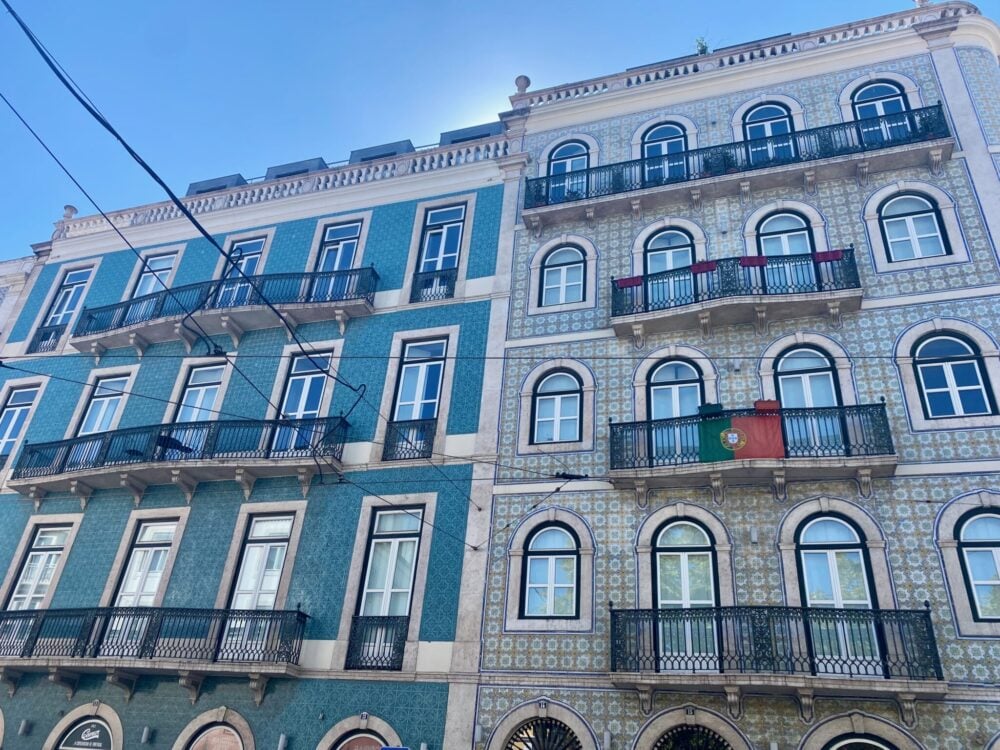
And don’t leave Lisbon without riding Tram 28 at least once. This classic yellow tram winds through the narrowest streets of the old city, past tiled facades and through Alfama’s tight bends. It’s a ride through living history.
Top tip: queues build quickly in the middle of the day. Board early in the morning, or start from the Martim Moniz end of the line to have a better chance of a seat. The tram gets crowded, so keep your phone and wallet zipped away.
5. Take a Day Trip From Lisbon to See a Different Side of Portugal
The beauty of visiting Lisbon isn’t just the city itself. It’s the fact that you can hop on a one-hour-long train or bus ride and visit the castles of Sintra, the medieval town of Óbidos, or Cascais, a fishing village that was revamped by royals into a summer retreat.
Sintra
Trains run from Rossio station, right in the centre, and take around 40 minutes. Pena Palace and Quinta da Regaleira are the headline sights, and the Moorish Castle has some of the best views of the coast. Go early, ideally on a weekday, as the palaces get very busy by late morning.
Cascais
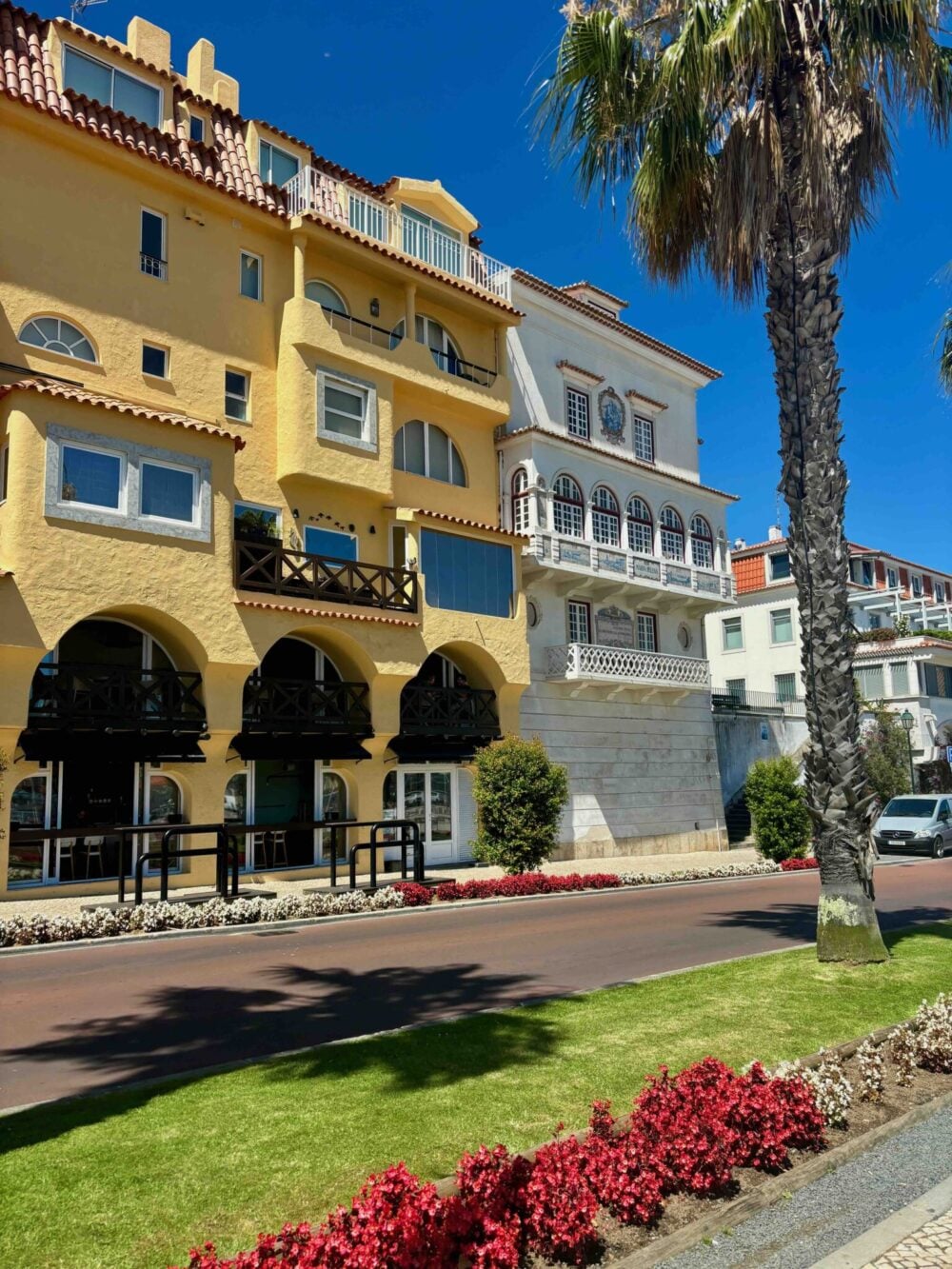
Catch the train from Cais do Sodré and you’ll follow the coastline out of the city in around 40 minutes. Cascais is ideal for a slower day of beaches, seafood lunches and a walk along the seafront to Boca do Inferno, where the Atlantic crashes into the cliffs.

Óbidos
Buses leave from Campo Grande and take about an hour. You can walk most of the way around the medieval town walls, then try ginja de Óbidos, the local cherry liqueur served in a little chocolate cup.
Setúbal
If you have a little extra time, consider heading south to Setúbal, a laid-back port city that serves as the gateway to the Arrábida coastline and offers a glimpse of authentic Portuguese life largely untouched by tourism. For wine lovers, the Setúbal Peninsula is also home to the Moscatel de Setúbal wine region, where you can visit local quintas (wine estates) for tastings with views over the Atlantic.
Arrábida Natural Park
For swimming and snorkelling, it’s worth making the trip out to Arrábida Natural Park, where the beaches tend to be quieter than Lisbon’s, especially in summer.
Mafra
Or head north to Mafra, home to one of the most jaw-dropping baroque palaces in all of Europe, built by King João V in the early 18th century and only a 45-minute drive from the city.
The palace is UNESCO-listed and its rococo library, lined with tens of thousands of leather-bound books, is the highlight.
Each of these day trips offers breathtaking scenery on the travel route and at the destination. They’re a chance to get that much more out of your Lisbon visit and balance out the city’s energy with a slower pace.
However you choose to spend your day outside the city, you’ll return to Lisbon in the evening with a richer, fuller sense of what Portugal is all about.
6. Go Where The City Takes You
Leave at least some room on your Lisbon trip for some good, old-fashioned exploring. The city’s tram and bus systems make getting around quite easy, and there are delightful cafés and boutiques on just about every corner. Go for a little wander if you can. Sometimes the best parts of a city only reveal themselves when you let go of your plans for an afternoon.
Practical tips for getting around Lisbon
- Get a Viva Viagem card. This rechargeable card works on the metro, trams, buses and the ferries across the Tagus.
- Let the trams and metro do the climbing. However, it’s worth noting that Lisbon’s historic funiculars (including the Glória and Bica) have been suspended since a fatal accident in September 2025, so check whether they’re running before you plan around them.
- Pack shoes with grip. Lisbon’s polished limestone pavements look beautiful but get slippery, especially after rain.
- Plan by area. Group your days by neighbourhood (Belém one morning, Alfama and the castle another) to save time on the hills.

Lisbon FAQs
Three to four days is enough to see the main sights, eat well and explore a few neighbourhoods. Add a day for each trip out of the city.
Spring and early autumn bring warm weather without the peak summer crowds. July and August are hot and busy, while winter is mild but wetter.
Yes, but it’s very hilly. Mix walking with trams and the metro to save your legs.
Eat your way through the city’s classic dishes, visit Belém, catch sunset from a miradouro, wander Alfama and ride Tram 28. If you have time, add a day trip to Sintra or Cascais.


Lisbon Travel Guide for First-Time Visitors
That’s my round-up of the best things to do in Lisbon for first-time visitors. I hope it’s been helpful in planning your trip to the pretty city of Lisbon, or provided the inspiration to visit this wonderful destination. We love our trips here and can’t wait to go back!
Planning to see more of the country? Read my guide to the best places to visit in Portugal.
Have you been to Lisbon in Portugal? I’d love to hear about your experience in the comments below.
Disclaimer: This post contains a partner link, but as always, my guide is entirely honest and based on my own experience.
