
I recently enjoyed a second visit to the popular Greek island of Corfu, staying between Corfu Town, Angsana Corfu and Grecotel Luxme Daphnila Bay. Both times, I visited in late September, and despite a few rainy patches, they’ve been really lovely times to visit. On my most recent visit, we also used Corfu as a base from which to visit Albania for the day, which we really enjoyed.
Corfu was one of those destinations I almost took for granted. It’s the kind of place that gets filed under “reliable summer holiday” rather than “must-see destination”. And I think that reputation does it a serious disservice. Because Corfu, when you actually spend time on it, is quite unique.
The landscape is beautiful. Unlike some of the white-washed islands we often picture when thinking of Greece, Corfu is instead lush and green, with forested hillsides, crumbling Venetian architecture, and the beautiful turquoise Ionian sea.
This guide is the result of everything I’ve learned across those visits. From the beaches worth the hike, the areas that suit different types of traveller, where to eat like a local, and the hotels that are worth staying at. Whether you’re planning your first trip or your fifth, I hope it helps you make the most of this brilliant island.
Corfu Guide: Essential Information
When I think of Greece, I don’t typically think of Corfu. I normally picture world-famous Santorini or the dramatic cliffs of Milos, both of which I cover in detail in my Greek island hopping guide.
But when planning a recent late summer escape, Corfu ended up offering us the best value for money when checking out flights to Greece. And we were pleasantly surprised, both with the amount of things to do on the island, as well as the ease of getting around. Plus, there’s a plethora of beautiful hotels in Corfu, so you really can embrace a relaxing week on the island.
One really distinct difference about Corfu compared to other Greek islands is its mountainous terrain and lush green vegetation. In fact, it also receives the highest rainfall in all of Greece!
History and Background of Corfu
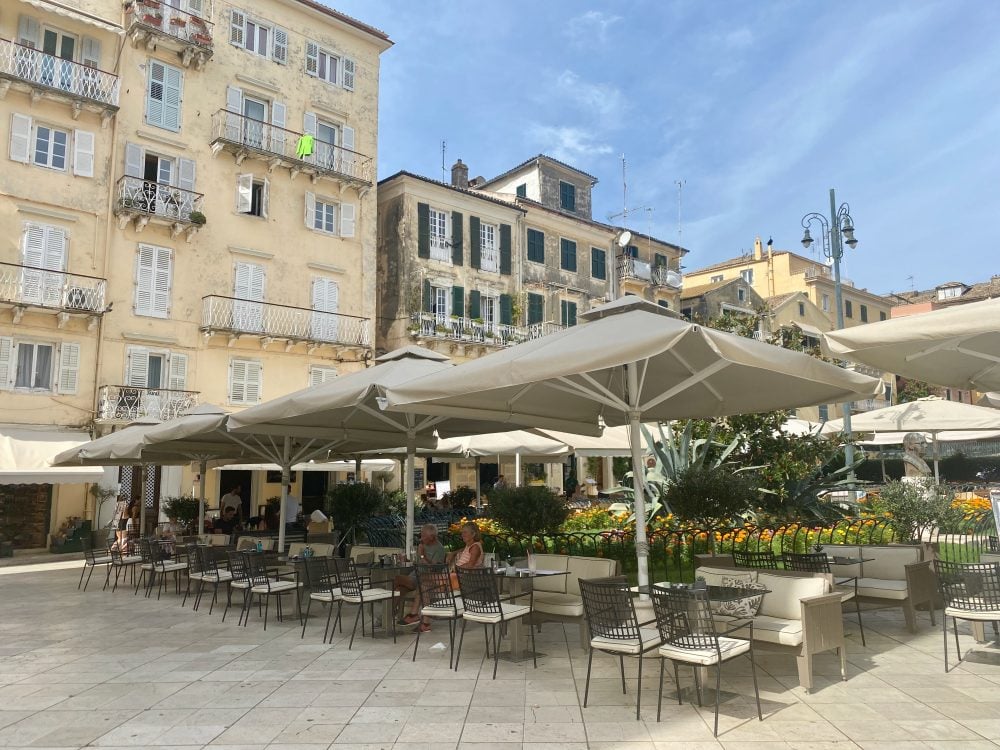
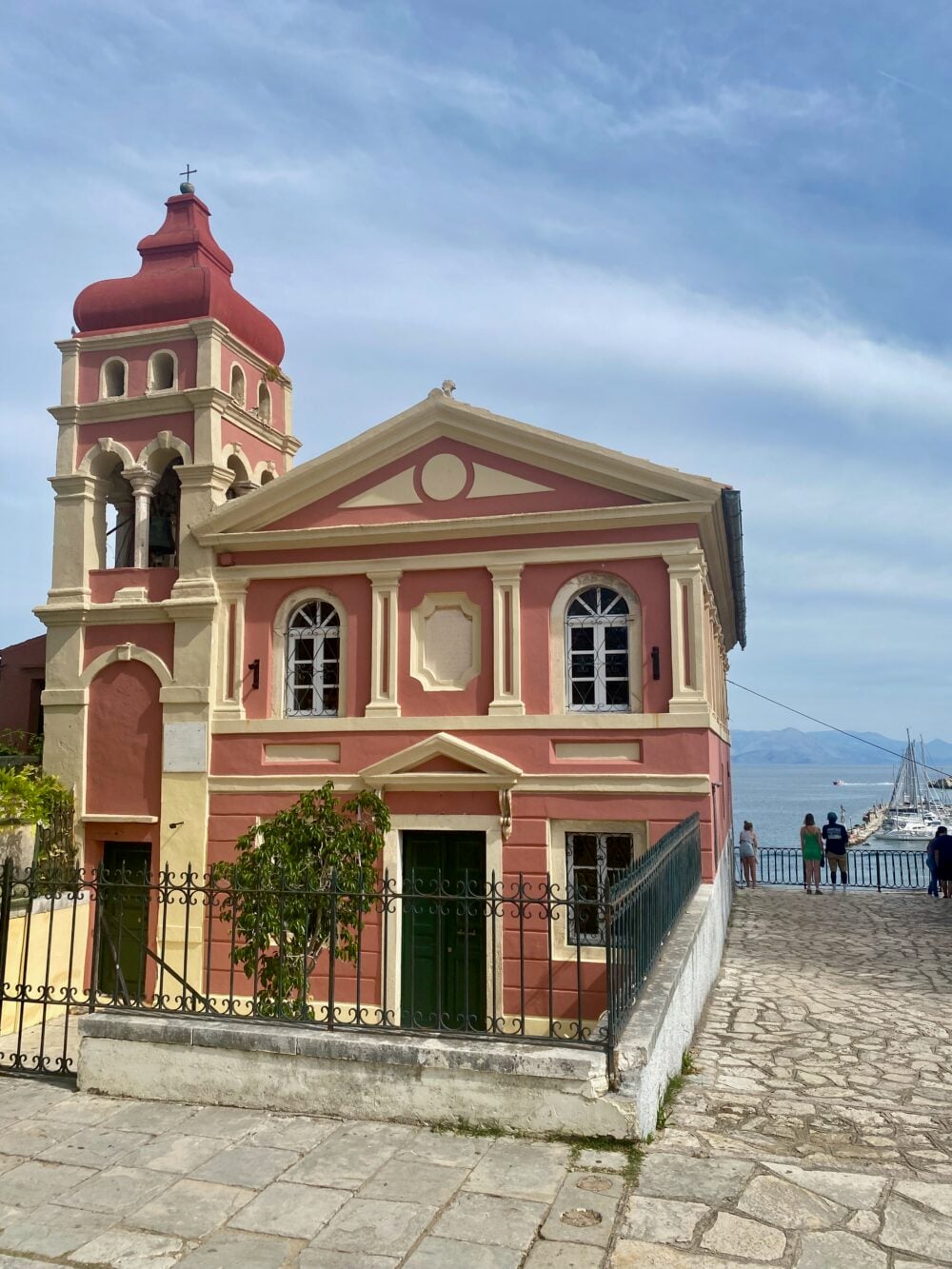
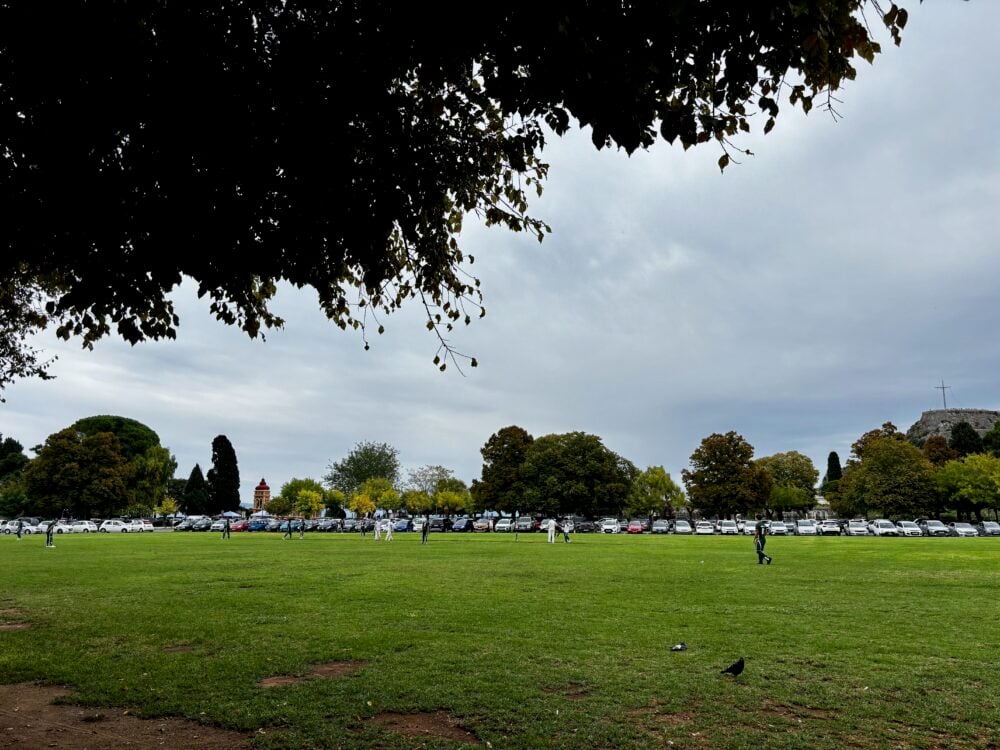
Corfu has a history as multi-layered as its landscape. The island spent over 400 years under Venetian rule, followed by a period of French and then British administration.These influences are everywhere, From the architecture of the Old Town, to the pasta-heavy local cuisine, and even in the cricket pitch that still sits in the centre of Corfu Town. It’s one of very few Greek islands where you’ll find pasta, sofrito, and kumquat liqueur on the same menu, and where the capital (Corfu Town) is a UNESCO World Heritage Site. And for all these reasons, it’s a much-loved island.
How to get to Corfu
One of the reasons we picked Corfu was because of the number of direct flights from London straight to Corfu. We didn’t want to have to fly to Athens and then take a ferry to an island on this trip. We needed things to be very simple – and ideally affordable. In fact, there are dozens of airports across the UK with direct flights into Corfu, so it’s incredibly accessible for a Greek island.
The flights are around 3.5-4 hours.
Ferries run to Corfu from the Greek mainland port of Igoumenitsa, with a crossing time around 1.5 hours. It is also possible to reach Corfu by overnight ferry from Venice, Ancona, or Brindisi in Italy, as well as Albania.
Getting around Corfu
The main way to get around Corfu on public transport is to make use of its bus system. There are two main bus systems – the Blue City buses and the Green KTEL buses.
Blue Buses – City Routes
These originate in their hub of San Rocco (Saroko) in Corfu Town and nearby areas such as Kanoni, Benitses, Dassia, Ipsos.
- Cost: €1.10–€1.80 per trip; €5 for a day pass.
- Tickets: Buy from kiosks, machines, or onboard (at a slightly higher price). You can use your contactless card on board.
- Popular Routes:
- Route 15: Airport ↔ Bus Station ↔ Port (a super easy way to get from the airport in Corfu to the centre!)
- Route 2a: Kanoni (Mouse Island views)
- Route 6: Benitses
- Route 7: Dassia & Ipsos
- Route 10: Achilleion Palace
- These buses offer a really frequent service and are ideal for short distances around Corfu Town.
Green Buses (aka KTEL Coaches)
These are longer distance buses connecting Corfu Town with resorts and beaches across the island. These buses have their own KTEL Green Bus Terminal. This is located just a short drive from the airport and offers an easy inter-change with the blue city buses above.
- Cost: €2–€7 depending on distance.
- Popular Routes:
- North: Sidari, Kassiopi, Acharavi
- West: Paleokastritsa, Agios Gordios, Glyfada
- South: Kavos, Agios Georgios
- Timetables vary seasonally and they can be a bit infrequent—check the KTEL website here.
Other transport options include taxis, ferries and hiring a car.
Taxis
These are surprisingly expensive on Corfu, and short distances can often be hugely inflated. And whilst Uber exists on Corfu, it operates only with licensed taxis and has a minimum journey cost of EUR40. So this means you will definitely be over charged for short journeys in Corfu if you use Uber.
Some taxi ranks have boards where they list all the prices, but you’ll find the costs quickly add up if you use taxis as your main means of transport in Corfu. We were really surprised and got stung by some expensive fares.
Car hire in Corfu
Renting a car is the best way to explore Corfu, if you’re up for driving its windy and sometimes steep roads. Driving your own car means finding hidden beaches, exploring mountain villages, and enjoying scenic routes at your own pace. We didn’t hire a car, and regretted it. The taxis were expensive, although we did use the bus system a lot. On a future trip to Corfu, we will definitely hire a car.
However, if you’re planning on staying just in Corfu Town or at a resort hotel, you can likely get by just using public transport without needing to hire a car.
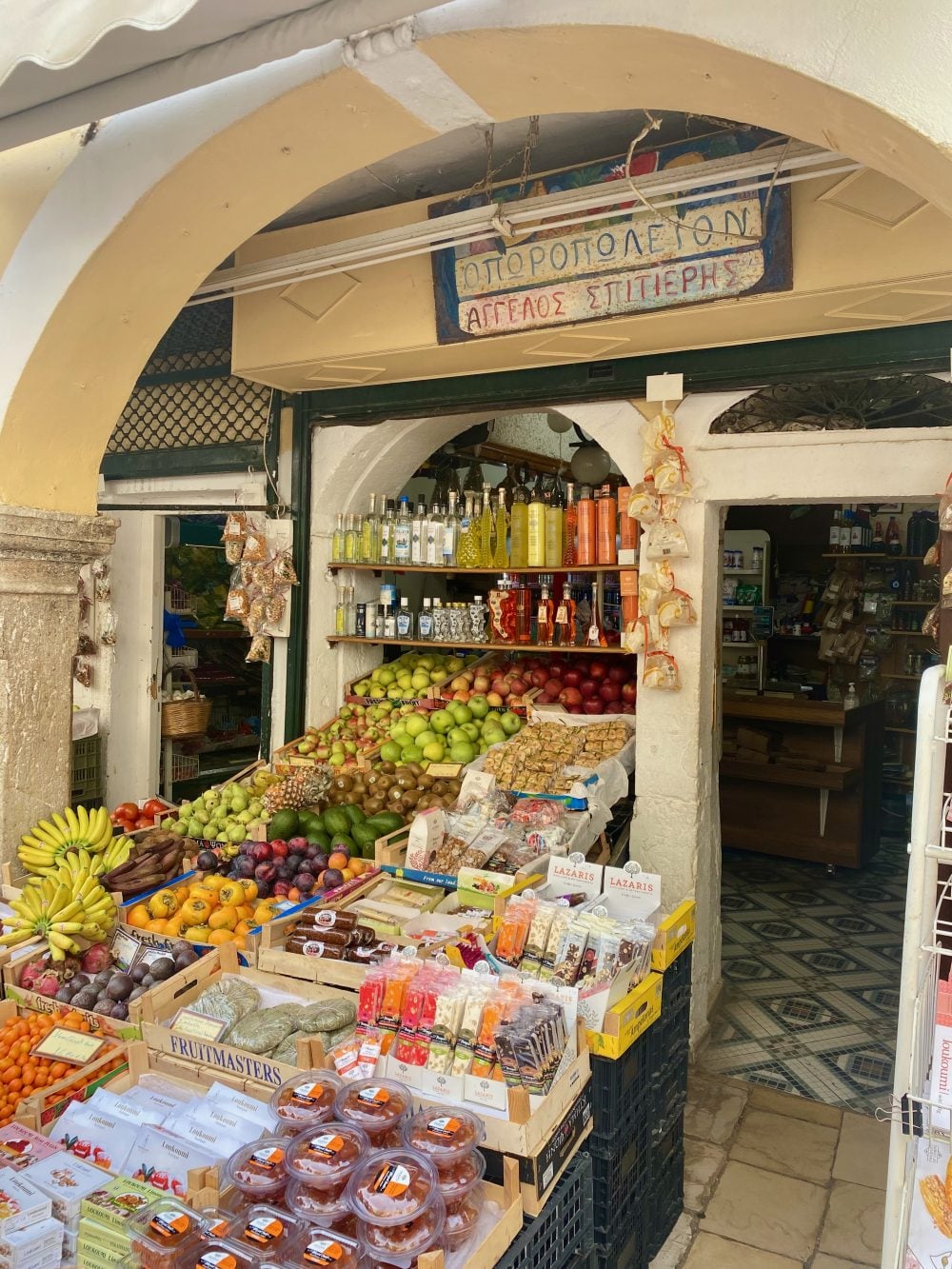
Useful points to keep in mind when hiring a car in Corfu:
- Requirements: The minimum age to hire a car in Corfu is 21, and you must have held your driving license held for at least one year. If you’re from a country from outside the EU, you may need an International Driving Permit (IDP). If you’re from the UK, you can hire a car in Corfu with ease though.
- Cost: The initial costs are quite low and start at around $40 a day in low season, but these costs can triple in summer. Then it’s important to factor in the additional costs such as fuel, insurance, and parking.
- Car Choice: Small cars are recommended over large cars in Corfu. The roads can be extremely narrow and winding. In some parts of the island, some roads may also be unpaved. It also makes parking easier if you have a small car.
- Parking: This can be really limited and quite difficult in Corfu Town although there is a big car park near the port. The heart of Corfu Town is just for pedestrians so you have to park on the perimeter of the Town either way. There is a new Corfu Parking app to help manage the town’s pay and display zones.
Boat hire
Day boats (small motorised dinghies) can be hired without a licence from several points around the island. It is one of the most popular things to do for exploring harder-to-reach beaches and coves. Prices typically start around €60–80 for a half day.
Other practical tips for visiting Corfu:
ATMs in Corfu Town can run dry on busy summer weekends. Particularly the ones closest to the Liston and the Old Town entrance. Draw cash before the weekend if you need it, or head to a bank branch rather than a standalone machine.
Carry cash for villages and smaller beaches. Card payment is standard in hotels and most restaurants. But many smaller tavernas, beach cafés, and village shops are still cash-only. Keep smaller denominations on you when exploring.
Tipping. Tipping isn’t obligatory in Greece but is appreciated. Around 10% is standard in restaurants if you’re happy with the service, and rounding up the bill in a taverna is the norm.
Pharmacies (farmakeia) are widely available in Corfu Town and the main resort towns. These are recognisable by the green cross sign. For more serious medical needs, the Corfu General Hospital is on the outskirts of Corfu Town. If you’re travelling with young children, pack a basic medical kit as the nearest pharmacy to smaller beach resorts can require a drive.
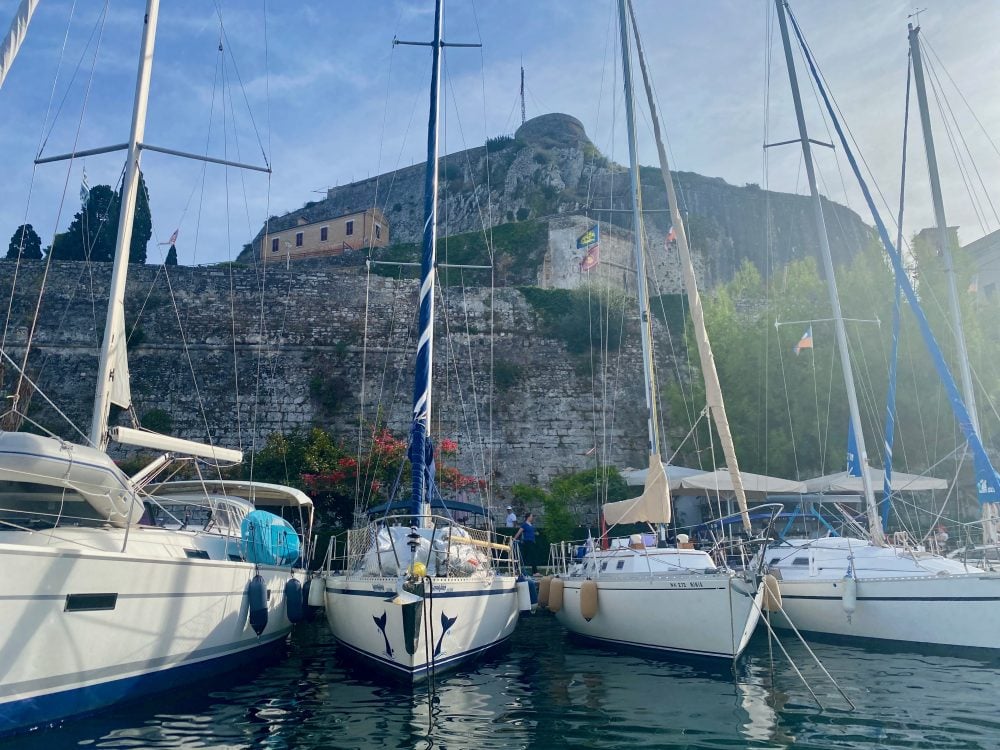
When to visit Corfu
The tourist season runs roughly from April to October, with the island and its hotels largely shutting down outside of those months.
May and June – in some ways, this is the best time to visit Corfu. The weather is warm and reliably sunny (typically 22–27°C), the sea is swimmable, the landscape is at its most lush and green, and the island hasn’t yet reached its busy summer peak. Restaurants are open, prices are reasonable, and you’ll probably be able to park!
July and August – this is peak summer. Day time temperatures are hot (often 30°C+), and everywhere can be busy. If you don’t mind the crowds, this is when Corfu is at its most vibrant. Book accommodation well in advance, and expect significantly higher prices!
September – this is also considered one of the best times to visit Corfu. The sea is at its warmest (from absorbing heat all summer) and the crowds begin to thin.
October – this month is quieter and great for exploring without the heat. But rainy days are definitely more frequent. Plus, it’s advisable to check that specific restaurants and hotels are still open, as closures begin from mid-October.
Where to Stay in Corfu: A Guide to the Best Areas
I’ve pulled together an overview to the main places worth visiting in Corfu, with the best things to see and do in each. A few fellow writers have also contributed a few suggestions.
Corfu Town (also called Kerkyra)
This is the island’s capital and a UNESCO World Heritage site. It’s packed full of Venetian charm.
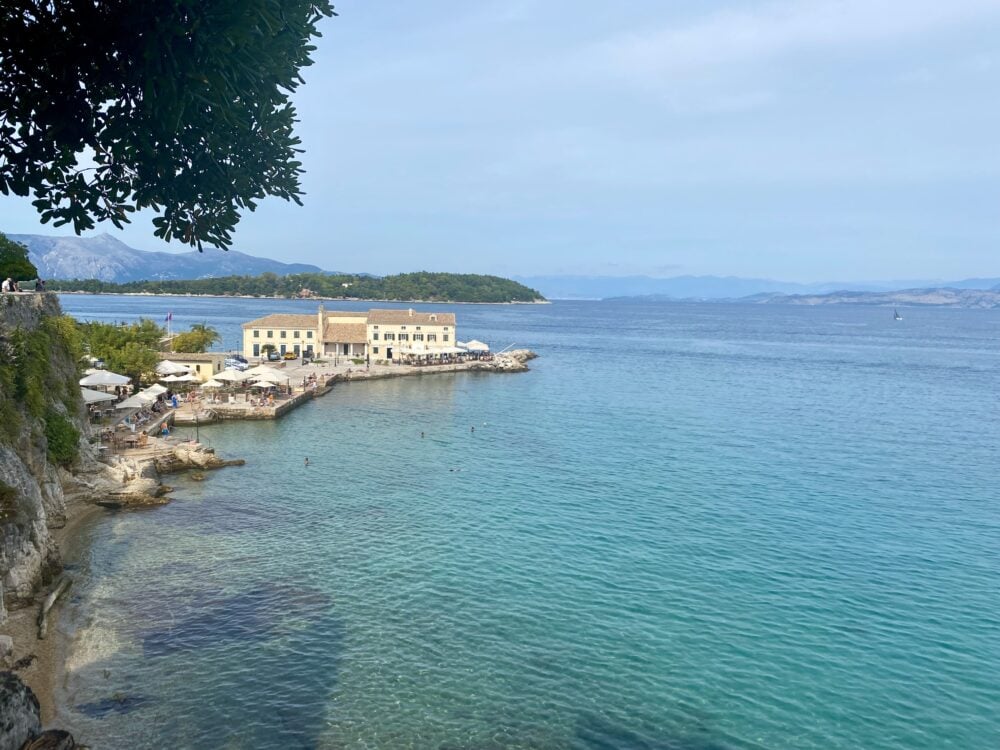
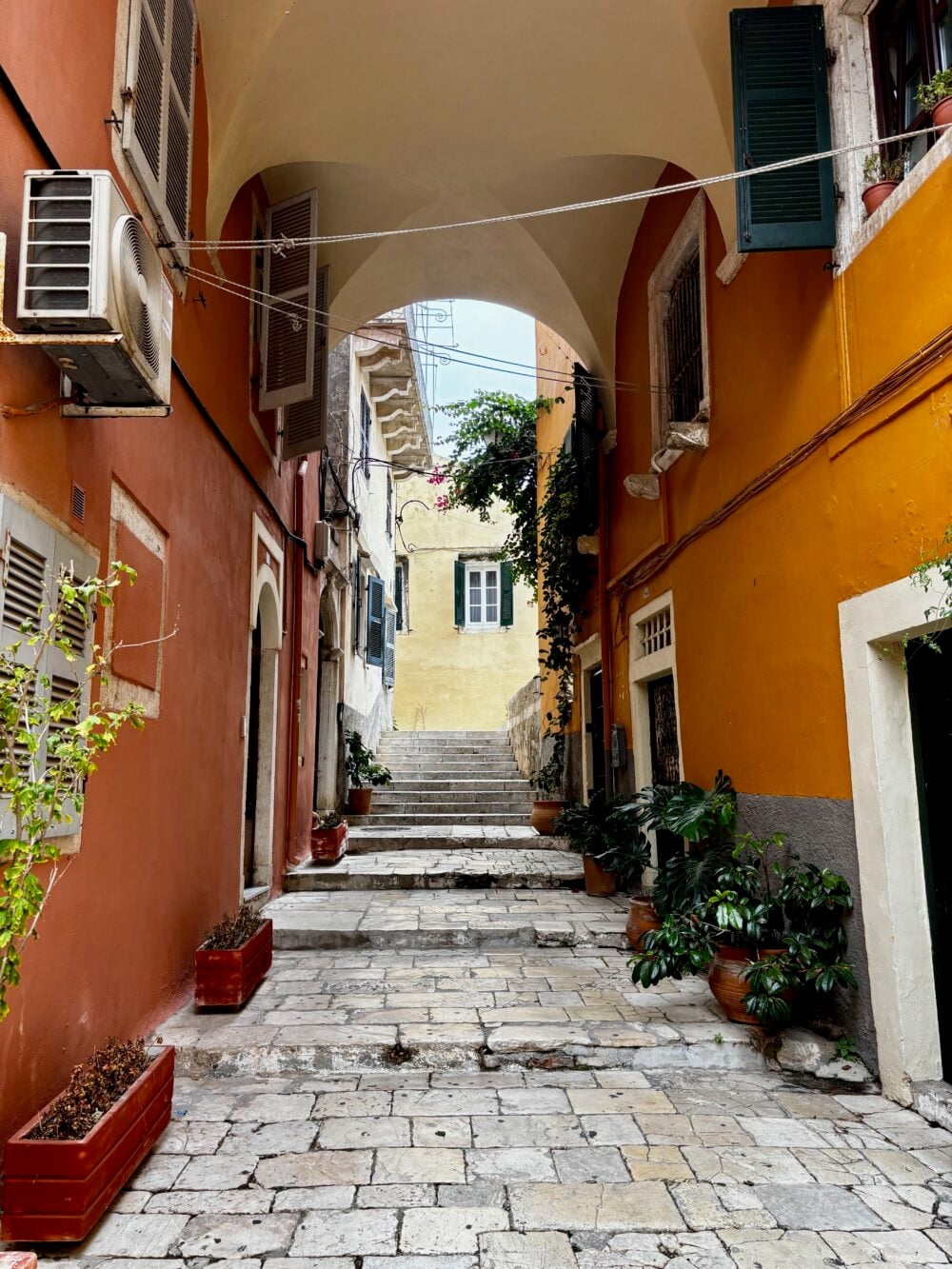
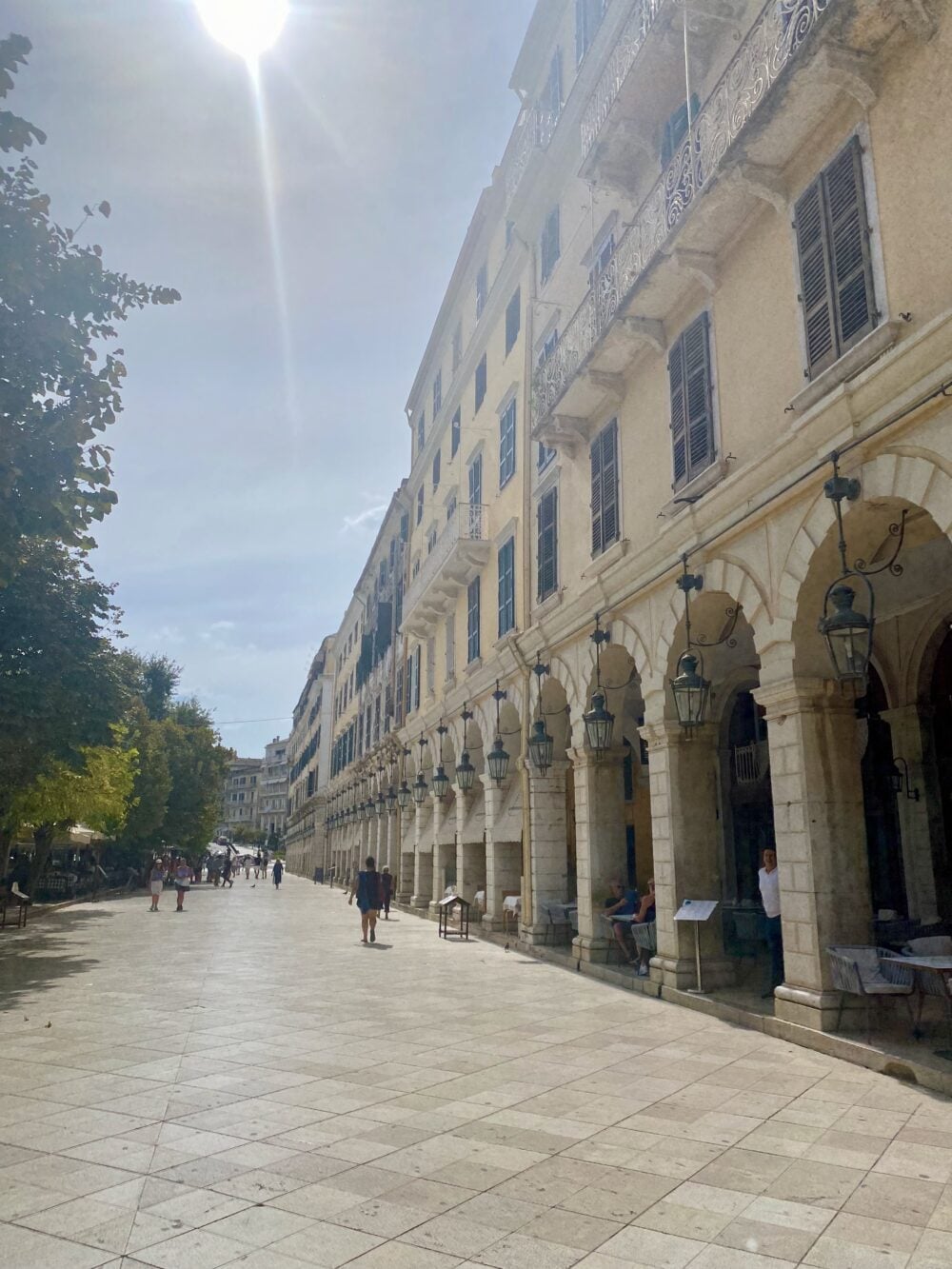
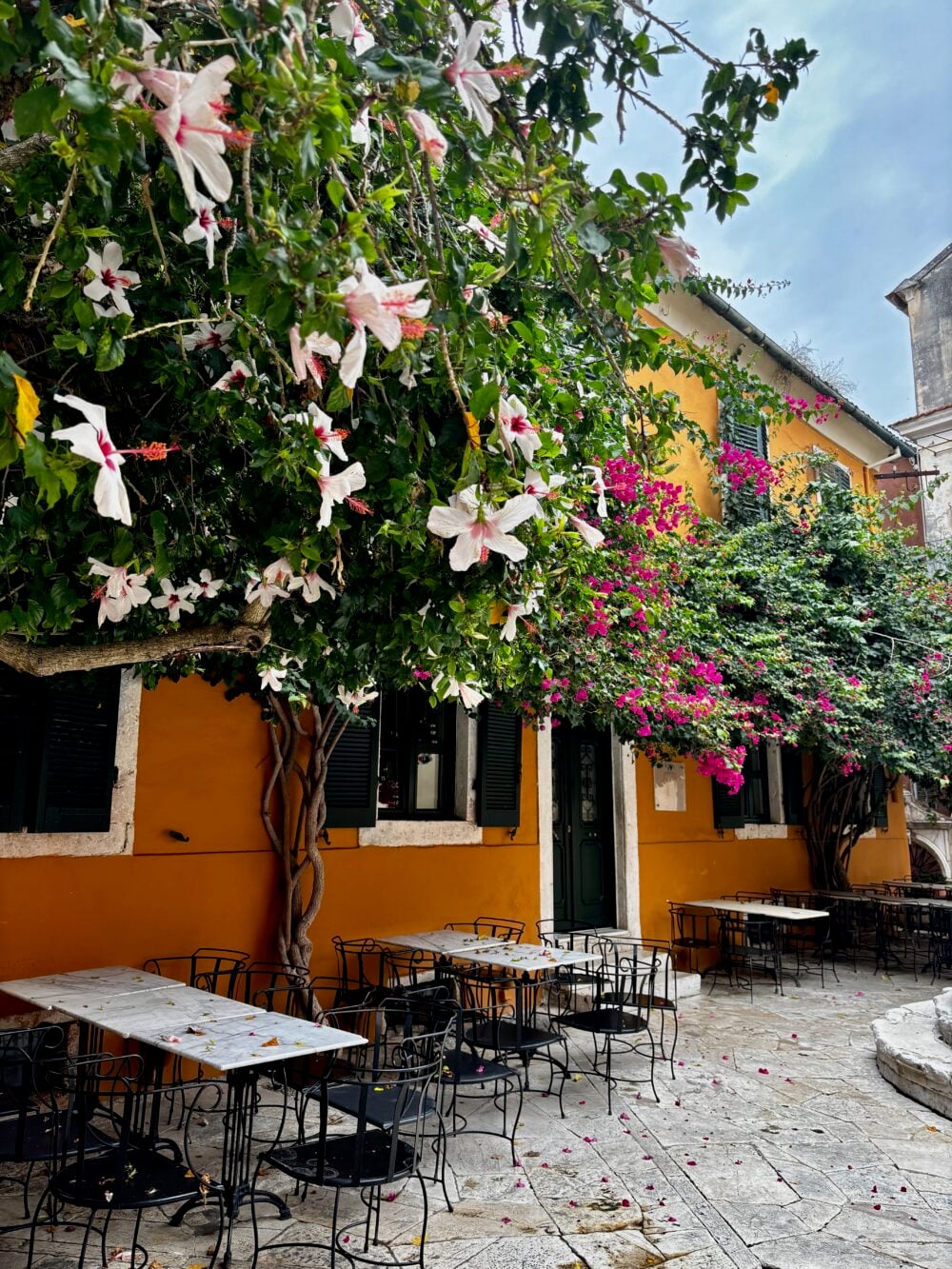
Corfu Town is the cultural and historical centre of Corfu. It is widely known for its Venetian elegance and is best explored on foot, with its narrow cobbled streets offering surprises around every corner. Staying here puts you within walking distance of excellent restaurants, historical sites and cultural centres. It’s definitely the best base if you don’t have a car. However, there’s no proper beach in the town itself (just a very small rocky one called Faliraki), so you’ll need to hop in a taxi or bus to enjoy proper beach days.
Visiting Corfu Town in the evening means enjoying the city once most the day-trippers have left, so it’s much more local and relaxed. An evening stroll along the Liston (its promenade) is lovely and a must-do activity.
A great way to explore Corfu Town is on a guided walking tour with local food tastings, such as this one (from £77 per person).
Where to stay
Siora Vittoria, Corfu Town — A beautiful boutique townhouse hotel in the heart of the Old Town, set in a restored neoclassical building. Characterful, elegant, and in a perfect location for exploring Corfu Town on foot. Double rooms from £215. Check latest rates here.
Bella Venezia, Corfu Town — Another elegant boutique option in Corfu Town, in a lovely neoclassical building. More affordable than Siora Vittoria but similar in charm and location. Note that there is a 2 night minimum stay. Double rooms from £484 for two nights. Check latest rates here.
The Calliston, Corfu Town – A beautiful, luxurious property with excellent reviews. Double rooms start from £284. Check latest rates here.
Benitses and the Southeast
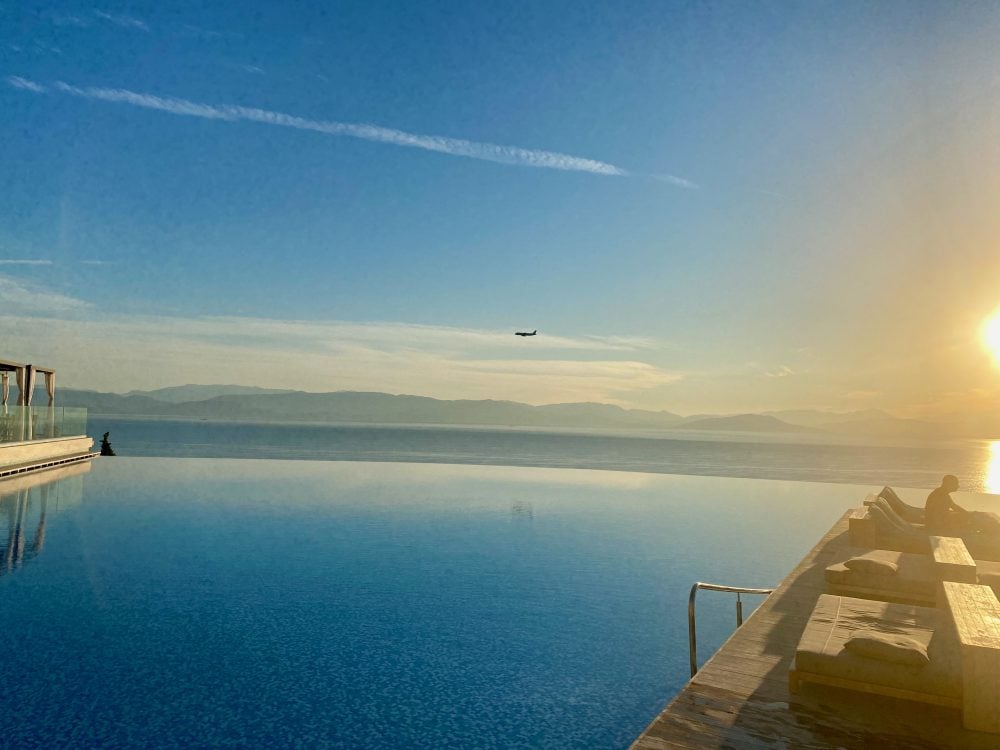
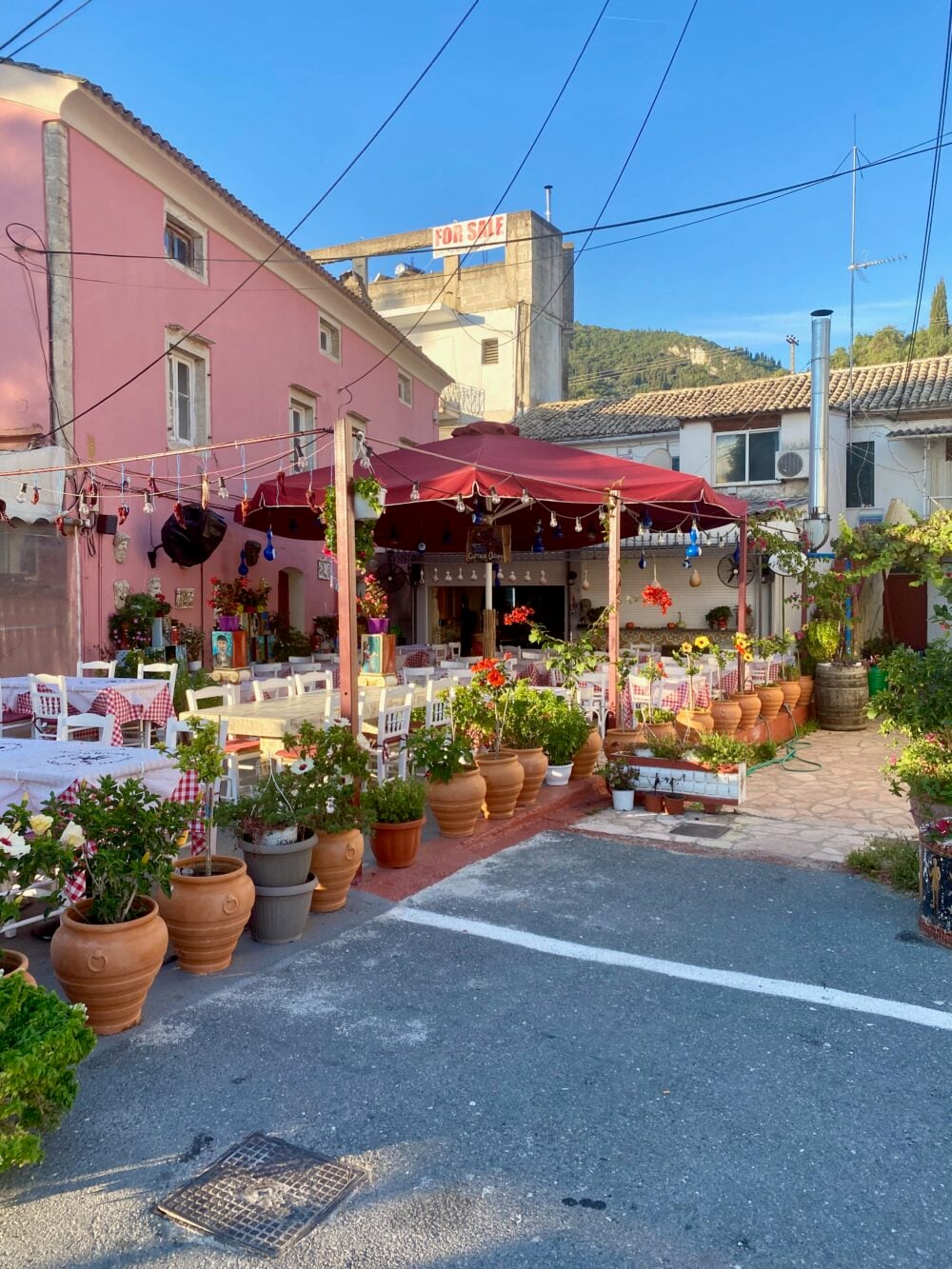
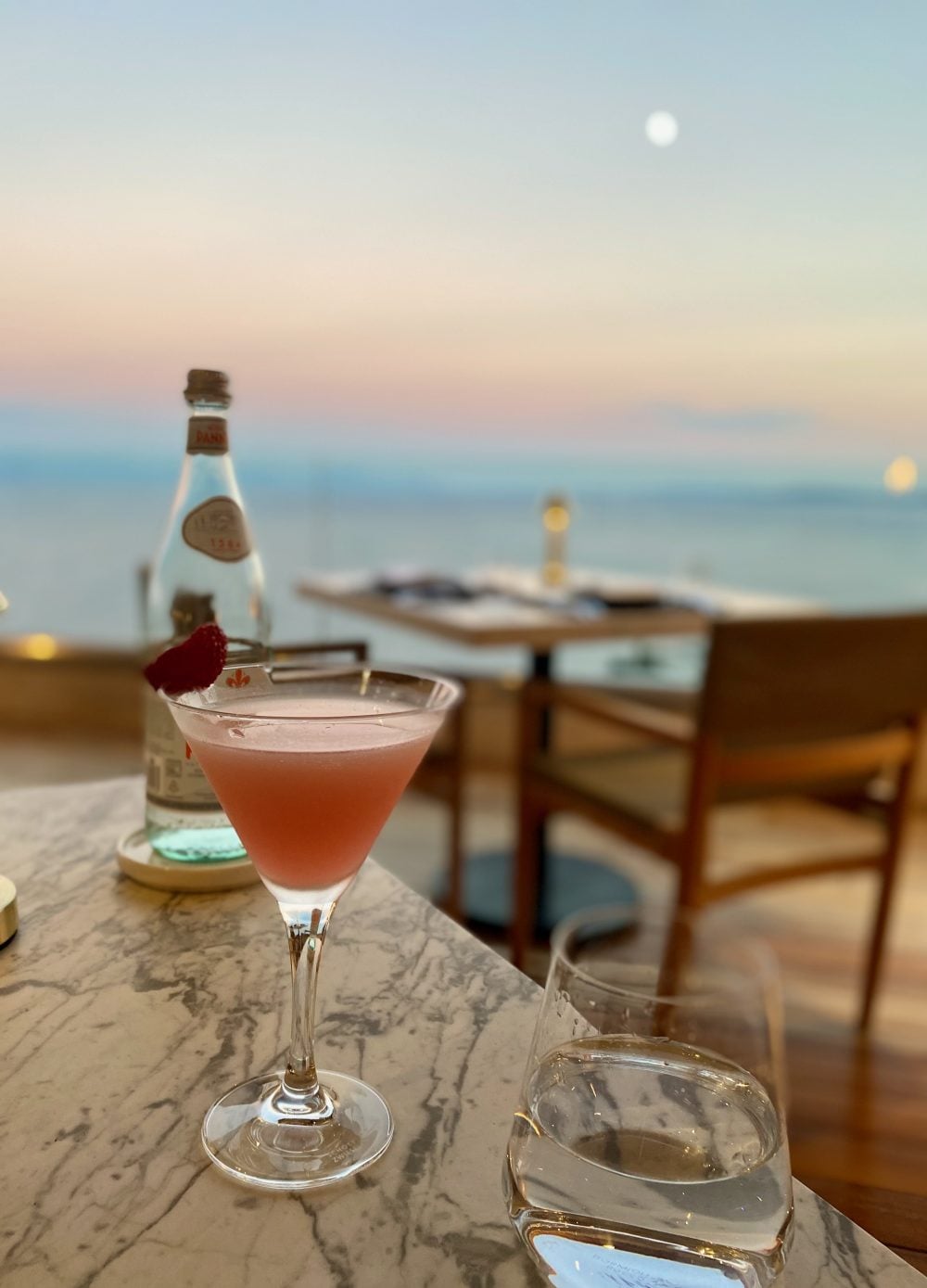
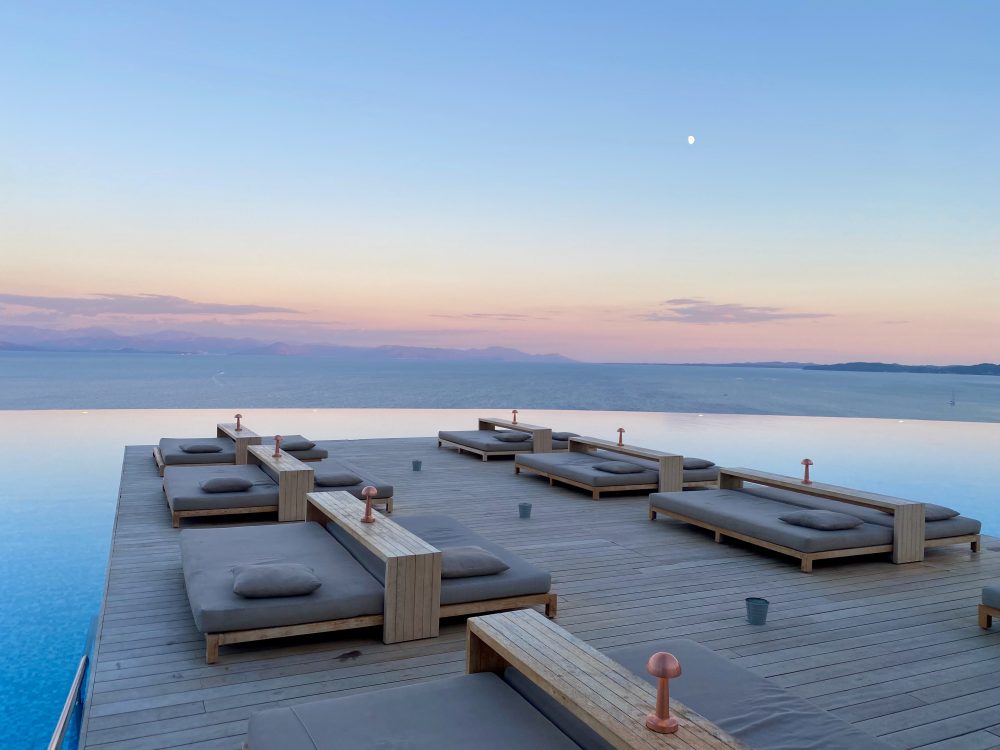
The area around Benitses, on the coastline south of Corfu Town, is home to some of the island’s finest hotels, including Angsana Corfu and the newly opened Conrad Corfu. This part of the island is relatively quiet, with a residential local feel. Benitses itself is a charming old fishing village that has retained far more character than the larger resort towns. The bay views here, across to the Albanian mountains, are spectacular and you can watch the planes coming into land!
Make sure to read my full review on staying at the Angsana Corfu here.
Benitses is also just a short bus ride away from Corfu Town, so easy to head in for an evening meal or a daytime stroll.
Where to stay
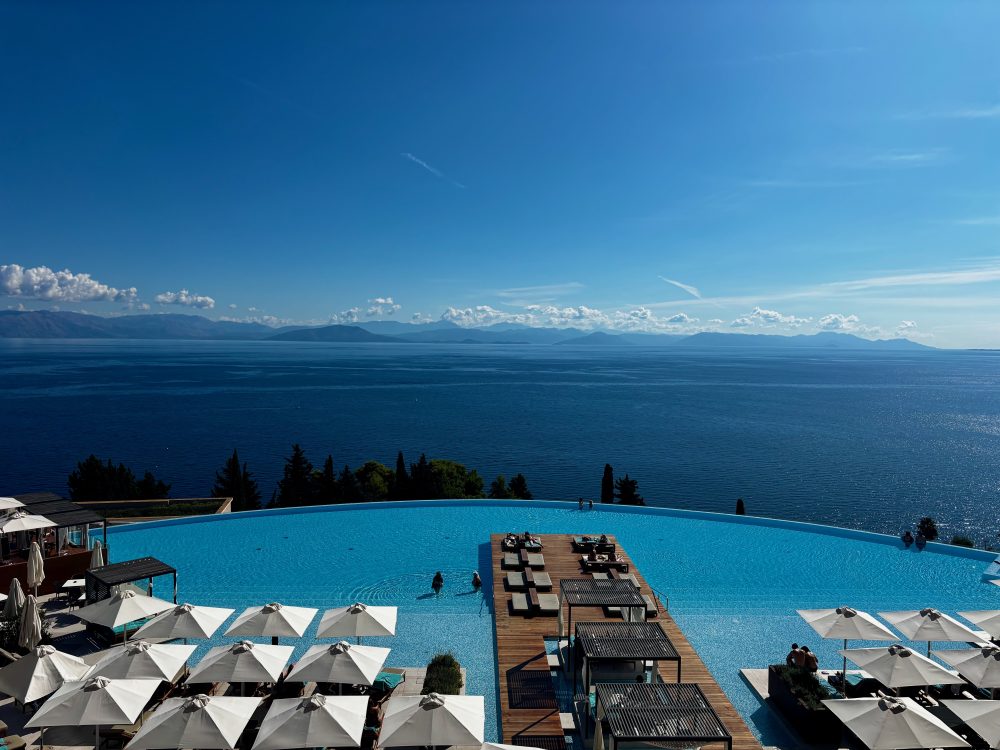
Angsana Corfu Resort and Spa, Benitses — My personal favourite hotel on the island, and in my opinion, the best hotel in Corfu. Nestled into the hillside above the Bay of Benitses, the resort was the first European opening for Banyan Group, and it brings all of that brand’s signature touches. Expect excellent wellness facilities, scent-led welcome experiences, a seriously stunning pool and sea views. And of course, a spectacularly beautiful location. (Read my full Angsana Corfu review here) It can be a bit of an expensive stay with rates as steep as £600-700 a night in high season (August). This is based on two people sharing a double room, and includes breakfast etc. At the start of the season, in late March and early April, stays start from £236 per night. Check the latest rates here.
The Avali Hotel, MarBella Collection, Agios Ioannis — This is a newer property, part of the renowned Mar-Bella Collection, that opened in 2025, combining traditional Corfiot character with contemporary luxury. There is a minimum 3 night stay. Double rooms start from £960 for 3 nights. Check the latest rates here.
MarBella, MarBella Collection — Also part of the same collection, this much-loved Corfu hotel is a solid all-inclusive stay. There is a minimum 3 night stay. Double rooms start from £960 for 3 nights. Check the latest rates here.
Nido, MarBella Collection — This beautiful hillside hotel is also part of the same collection, and offers one of the best luxury stays in Corfu. There is a minimum 2 night stay. Double rooms start from £1,000 for 2 nights in high season on a bed and breakfast basis. Check the latest rates here.
Domes Miramare, a Luxury Collection Resort — This adults-only property offers a stunning stay and a gorgeous private beach. An Emerald Retreat room starts from around £404 per night. Check the latest rates here.
The Yard Corfu Boutique Hotel and Spa — This stylish boutique hotel offers exceptional dining and spa offering too. A double room starts from £361 per night. Check the latest rates here.
Dassia and Kommeno Peninsula
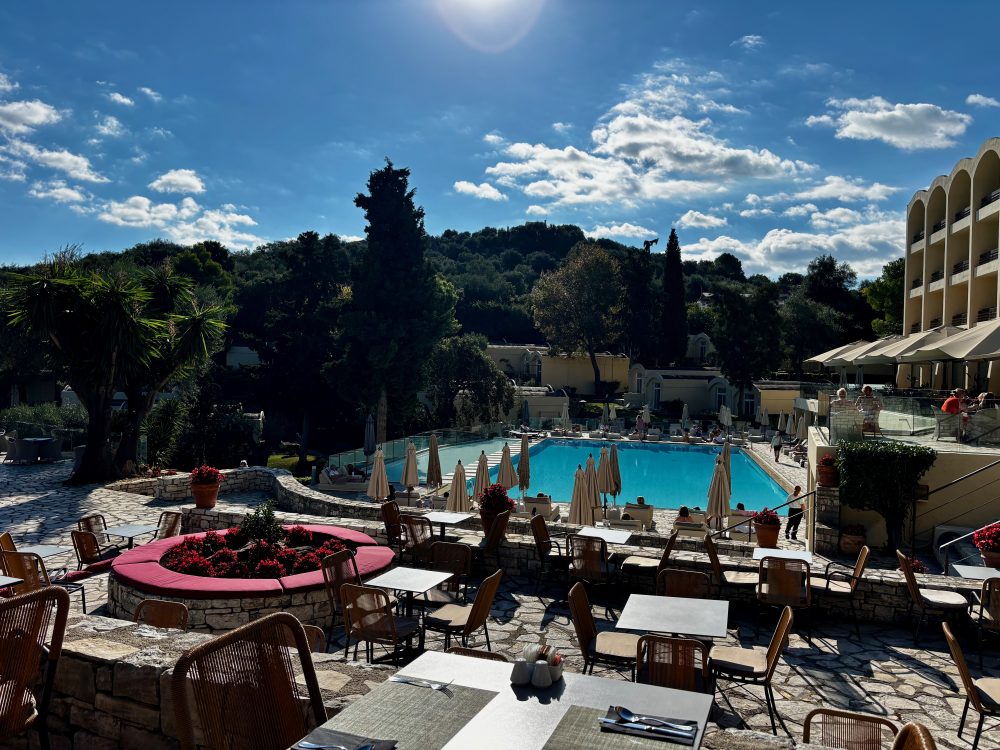
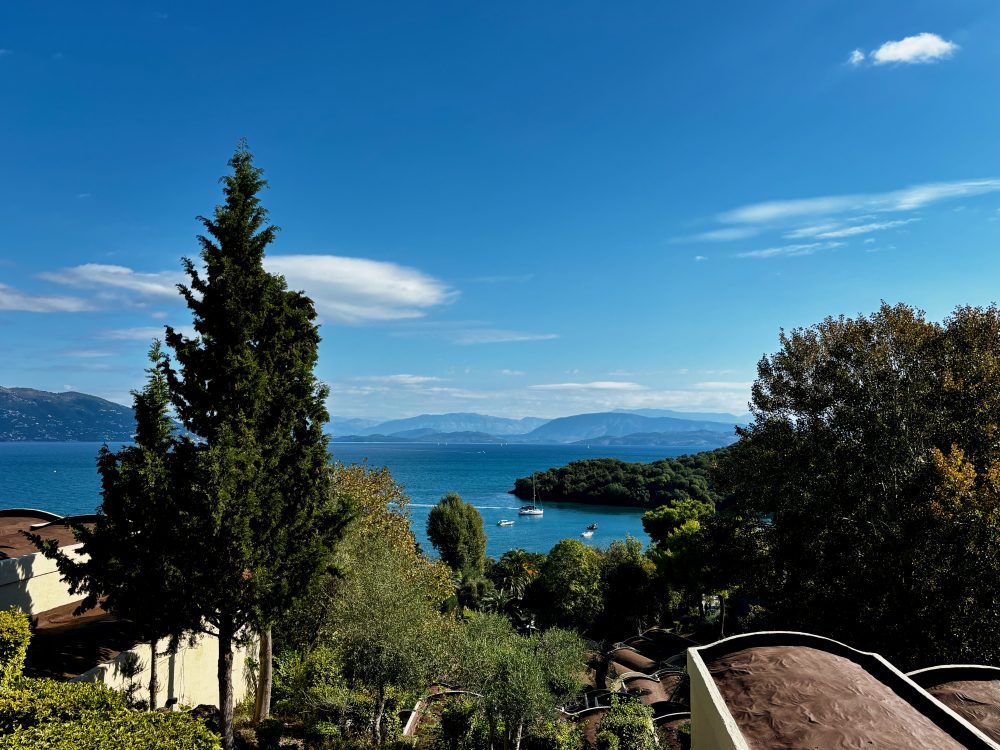
About 12km north of Corfu Town, and in the opposite direction of Benitses, is this stretch of the coast is home to a cluster of large resort hotels. This includes the Grecotel properties (the Corfu Imperial, Eva Palace, and Daphnila Bay). The beaches here are pebble, the bays are sheltered and calm, and the bus is really easy into Corfu Town. Read my full review of Daphnila Bay here.
Where to stay
Ikos Dassia — Part of the highly-regarded Ikos Collection, this is one of the best all-inclusive options in Greece, positioned on the east coast near Dassia. Not only is it a truly elegant stay but it’s amazing for kids! Plus excellent food and dining flexibility, with a beautiful beachfront setting. One night is around £1,000 for a double room with everything included. Check the latest rates here.
Ikos Odisia — Also part of the same group, this sister property is another fantastic stay which gets booked out months in advance. It has a 5 night minimum stay requirement, and a low season stay is around £530 on a bed and breakfast basis. Check the latest rates here.
Grecotel Corfu Imperial, Dassia — A long-established grand dame property on the Kommeno peninsula, set in beautiful gardens with views across the bay. Considered one of the most iconic hotels on the island too. Double room rates are around £800 in high season. Check room rates here.
Grecotel LUXME Daphnila Bay, Dassia — An all-inclusive resort on the same Kommeno peninsula as the Corfu Imperial, with a more affordable price point. This is a family-friendly stay set on the most beautiful bay. In terms of the price, a room in the low season starts from around £231 (based on two sharing).This increases to around £574 per night in August. Make sure to check out the latest rates here. And make sure to check out my full Grecotel Daphnila Bay hotel review here.
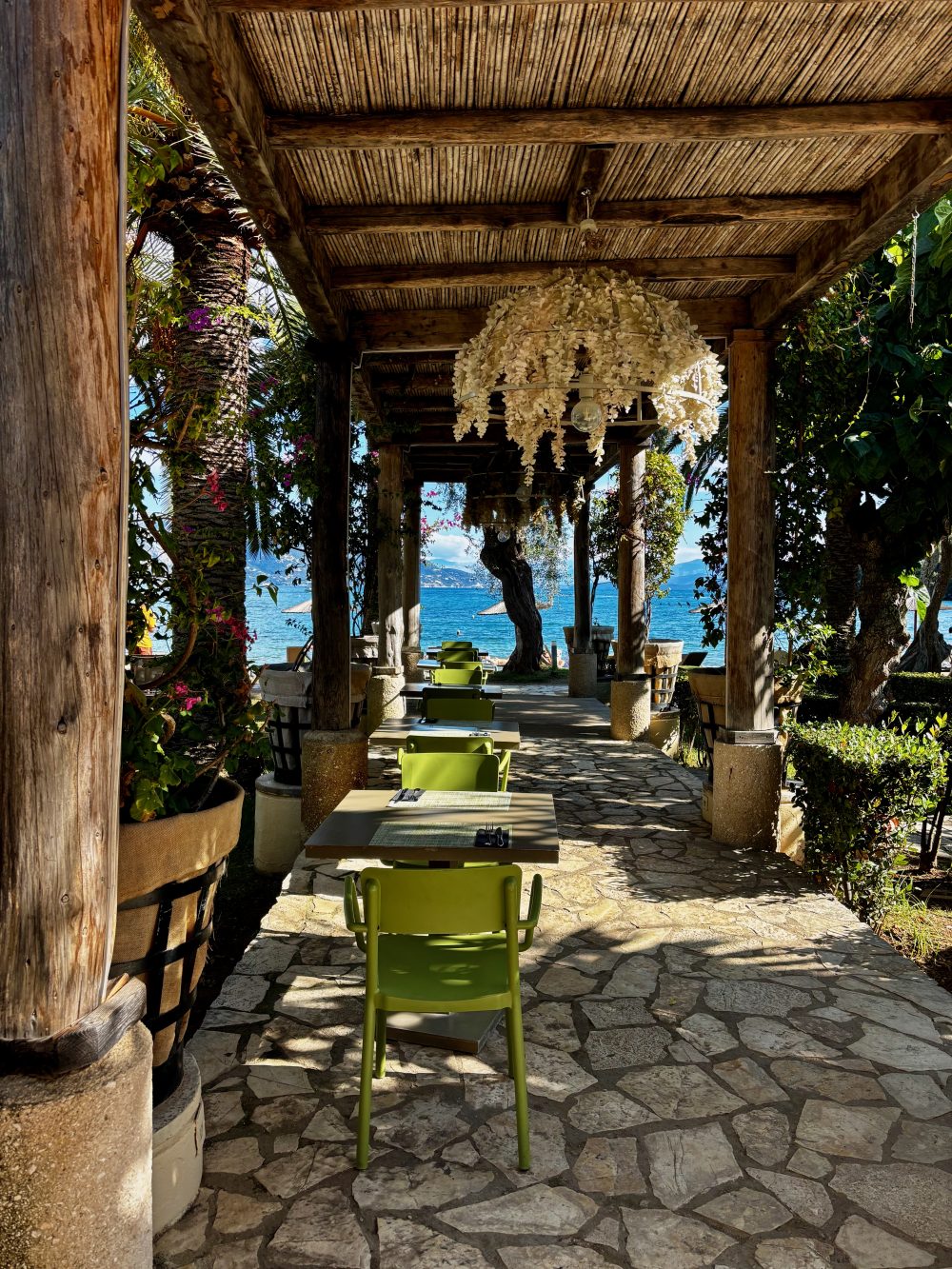
Paleokastritsa (West Coast)
Many people describe this beautiful area as their favourite spot on the island. Paleokastritsa is a series of stunning coves backed by forested hills on the west coast, about 26km from Corfu Town. The water is a glistening clear blue-green and the setting is dramatic. There’s also a beautiful 13th-century monastery perched on the headland above. Paleokastritsa is definitely quieter and more scenic than the east coast resorts, though the roads to get there are winding.
There are some great day tours in and around Paleokastritsa, such as:
- Underwater cruise in Paleokastritsa (from £15 per person)
- Boat trip to caves, Paradisos Beach and Stellari Beach (from £34 per person)
- Paradise, Yali Beach & Blue Caves Boat Tour (from £56 per person)
- Sunset cruise from Paleokastristsa (from £31 per person)
- Olive Oil & Wine Tastings & Traditional Villages Tour (from £69 per person)
Where to stay
There aren’t dozens of places to stay in the area, and most are family run, local hotels.
For a spot of luxury, the best hotel here would the Akrotiri Beach Resort & Spa which is around £400 per night in high season.
Kassiopi (North)
A charming fishing village in the northeast of the island, Kassiopi has managed to keep a lot of its original character despite being popular with tourists. It’s known for its ruined Byzantine castle, a lovely harbour full of fishing boats, good restaurants, and some excellent pebble coves nearby. This part of the island is particularly popular with villa rentals.
Where to stay
Sidari and the Northwest
Sidari is the liveliest resort town in the northwest, known for its sandy beaches (which is unusual for Corfu) and a busy bar and restaurant scene. It’s more focused on package holidays, but also offers amazing scenery in the surrounding area.
Lefkimi
Lefkimi sits at the southern tip of the island and is one of Corfu’s most authentically Greek towns. Home to a working community largely untouched by the tourist trade, built around a wide river channel lined with traditional houses, kafeneions, and fishing boats. It’s the kind of place where locals actually live year-round, and it has a charming, unhurried character that’s a world away from the resort towns further north.
There are some lovely tours here, such as a blue lagoon cruise with BBQ lunch (from £34 per person) or this e-bike tour with wine tastings (from £93 per person).
Where to stay
Conrad Corfu — The most exciting new opening on the island for years. This is Hilton’s first luxury property in Greece, set on a 200-metre beachfront near Lefkimi in the south of the island. 136 rooms, suites, and villas (ranging from 35m² rooms to a four-bedroom flagship villa), three restaurants including a signature fine-dining experience by Michelin-starred chef Alexandros Tsiotinis, a stunning Aqua Piazza lagoon, Conrad Spa, open-air cinema, and a kids’ club set in a treehouse-style micro village among olive trees.
The Best Beaches in Corfu
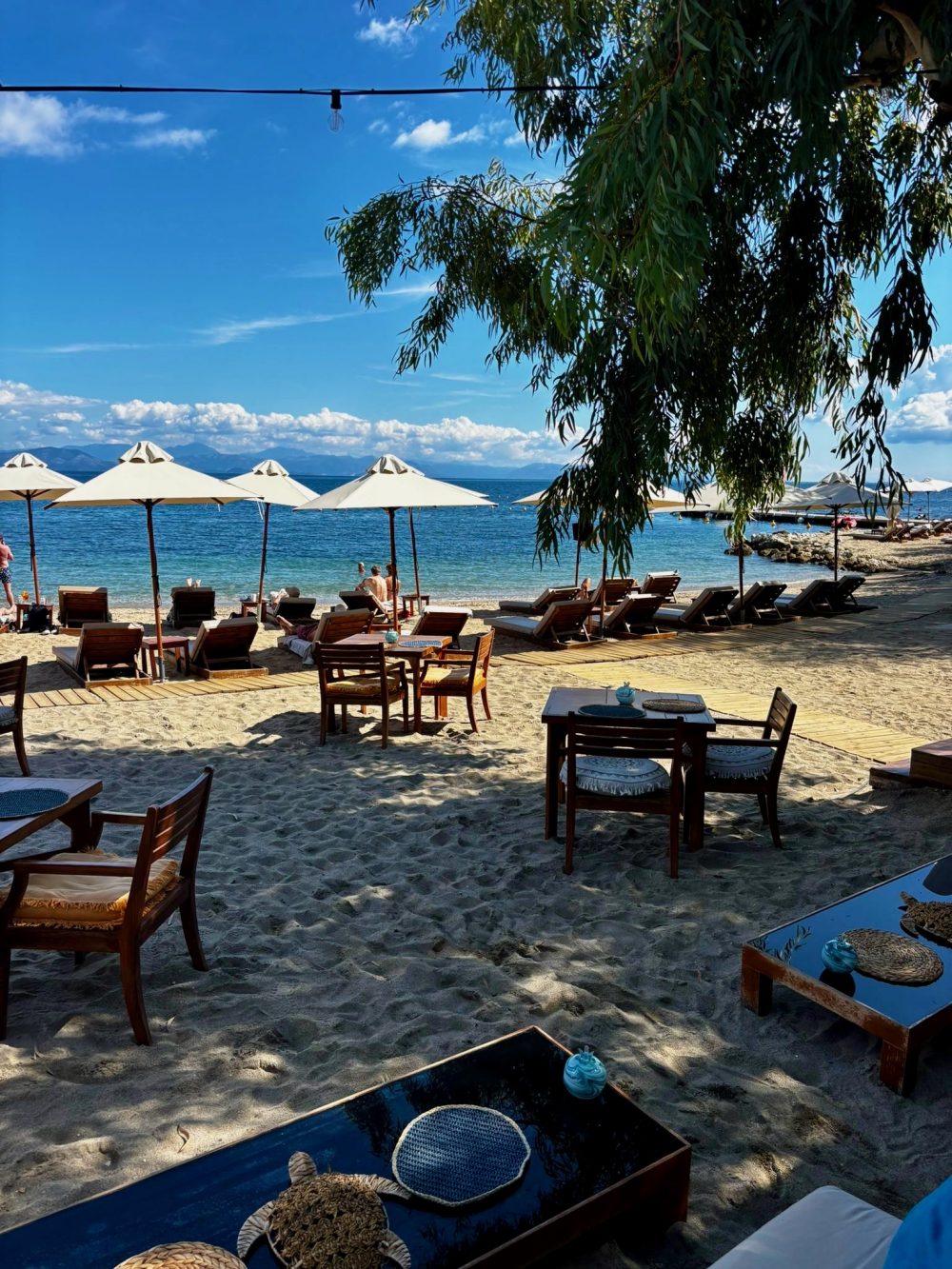
Corfu’s beaches cover a full range. Some are busy, tourist-focused beaches with well-equipped sandy stretches with sunbeds and beach bars. Others are completely secluded coves accessible only by boat or a scramble down a cliff path. Here is a selection of the best beaches in Corfu:
Paleokastritsa — Six coves of stunning turquoise water backed by forested cliffs, with snorkelling straight from the shore. Best for: couples, snorkellers and those seeking beautiful scenery.
Porto Timoni — This is a double beach separated by a narrow rocky spit, reached by a 30-minute hike from the West Coast village of Afionas or by boat. Best for: adventurous couples looking for a quiet beach for the day.
Glyfada — This is the most popular sandy beach on the west coast and is well-organised with sunbeds, beach bars, and watersports. Best for: families and those seeking facilities.
Agios Gordios — This beach is beautiful, long and sandy, but can get very busy! Best for: families and those seeking a wow factor backdrop!
Issos Beach — Issos is set within the Korission Lagoon nature reserve and offers a wild, dune-backed beach, popular with kitesurfers. Best for: nature lovers and those wanting to escape the crowds.
Canal d’Amour, Sidari — This unusual swimming spot is famed for its rock formations and shallow, warm waters. Supposedly, couples who swim through the natural channel will marry. Best for: couples and families with small children, as the water is very shallow.
Logas Beach (Peroulades) — A cliff-top beach in the far northwest, known for one of the best sunsets in Corfu. Best for: photographers and those looking for scenery, rather than a swimming spot.
Key Sites to Visit in Corfu
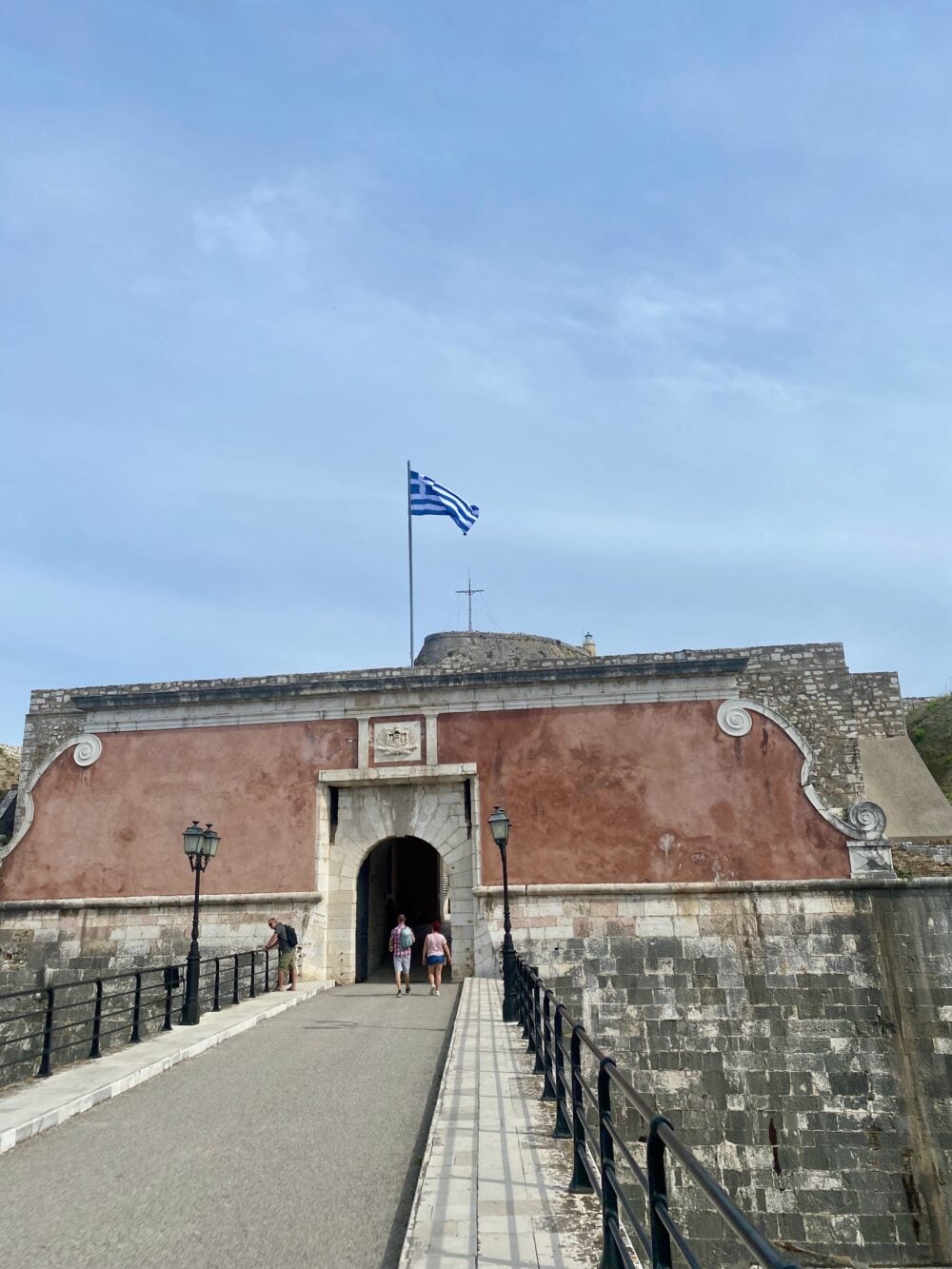
The Old Fortress and The New Fortress in Corfu Town
- This imposing Venetian fortress is one of Corfu’s most iconic landmarks and unmissable on any visit to Corfu. You can enjoy a few hours wandering through its ramparts, exploring hidden tunnels, and climbing to the top for panoramic views of the town and the Ionian Sea. On the opposite side of the Old Town is the New Fortress which offers another perspective on Corfu’s military past.
Spianada Square and the Liston Promenade, Corfu Town
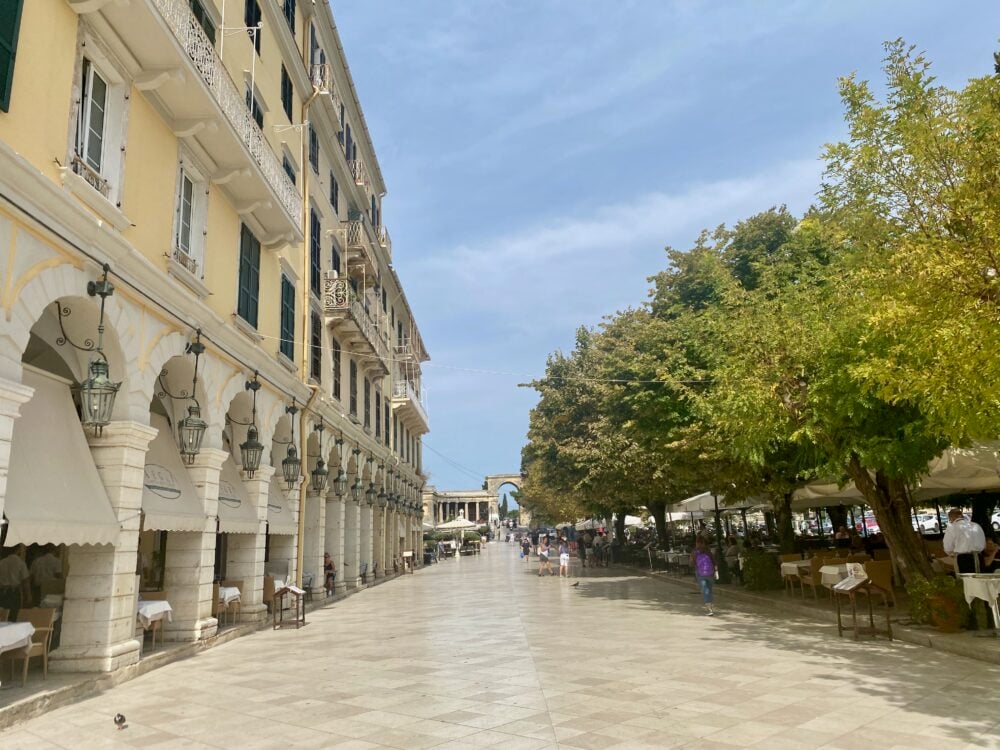
- Spianada is the largest square in Greece and considered the beating heart of Corfu Town. It is lined with elegant French-style arcades known as the Liston, where you can sip coffee and watch the world go by. This area is also famous for its cricket matches—a quirky legacy of British rule and a very surprising find one Sunday morning! This is also a great place to try kumquat – a local fruit and the only place in Europe where they are grown. Corfiots make them into ice cream, jam, chocolates, liqueur and candy!
Museum of Asian Art, Corfu Town
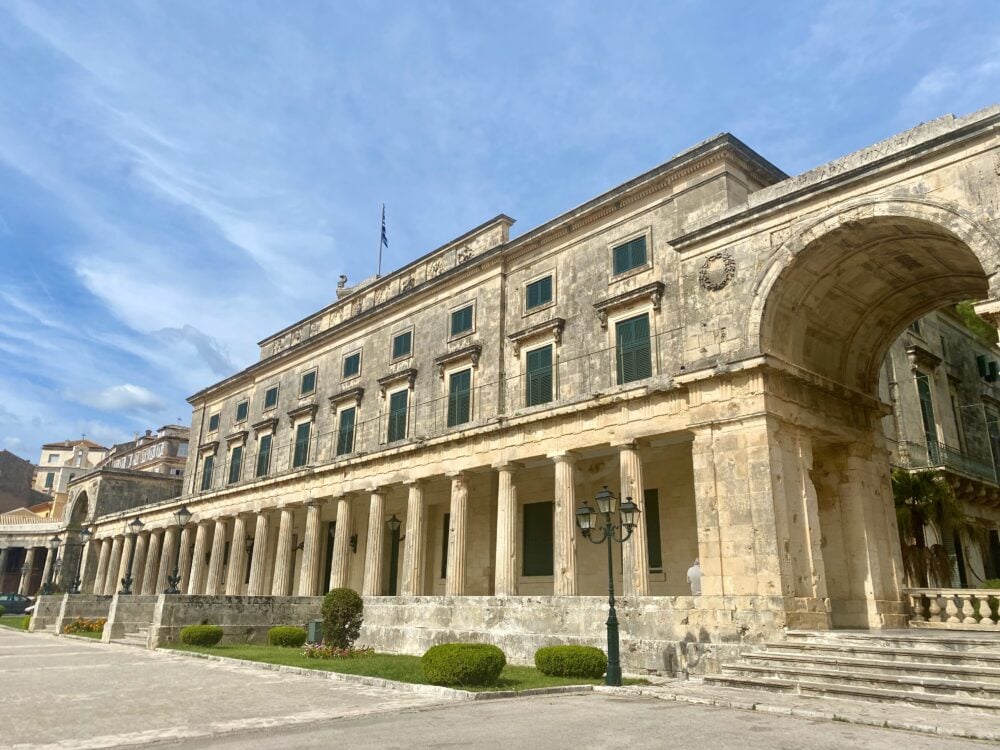
- Housed in the neoclassical Palace of St. Michael and St. George, this museum is unique in Greece and offers an impressive collection of Asian artifacts. The building itself is worth admiring for its grandeur and historical significance, and is right in the heart of Corfu Town.
Kantounia, Corfu Town
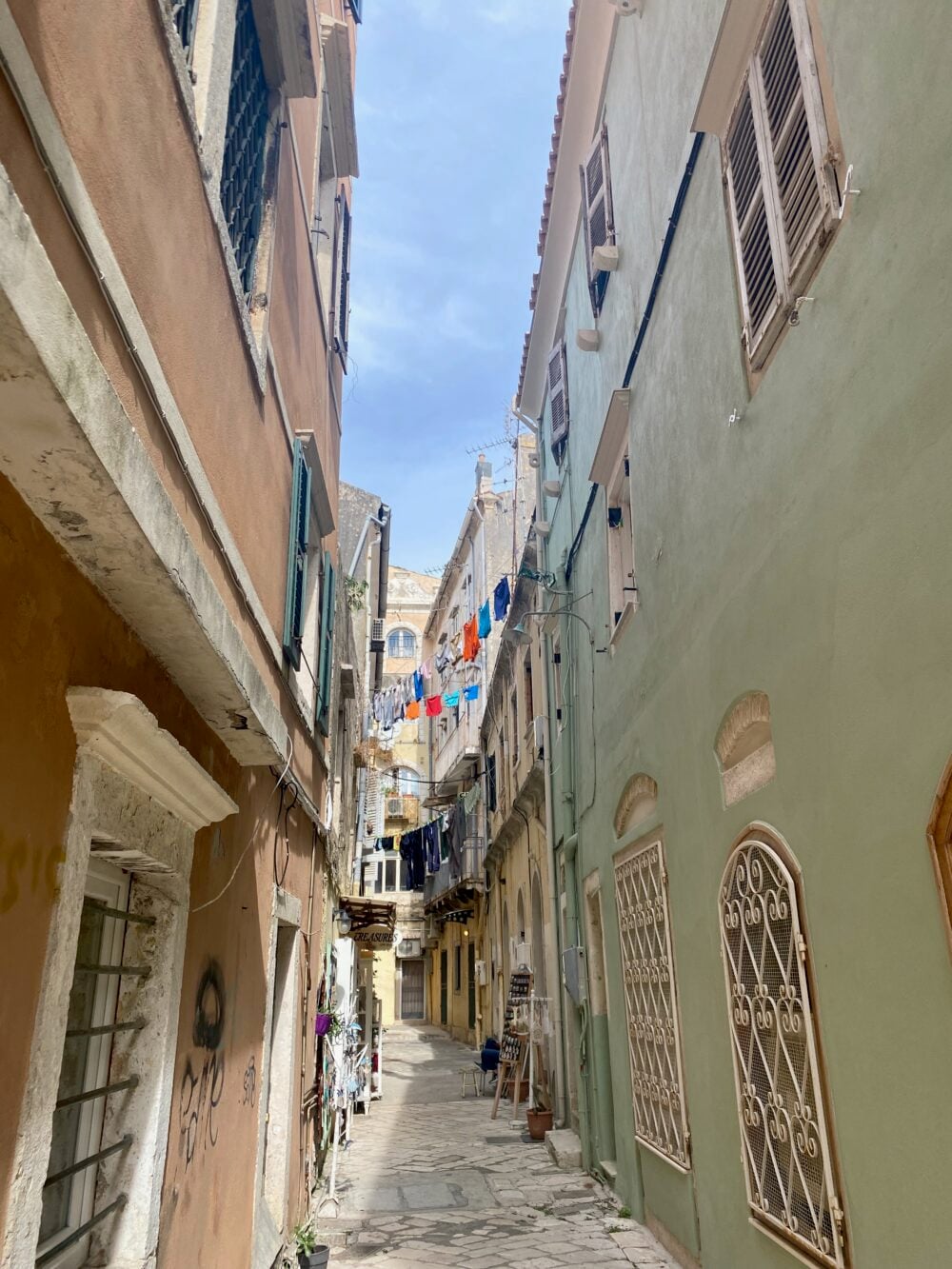
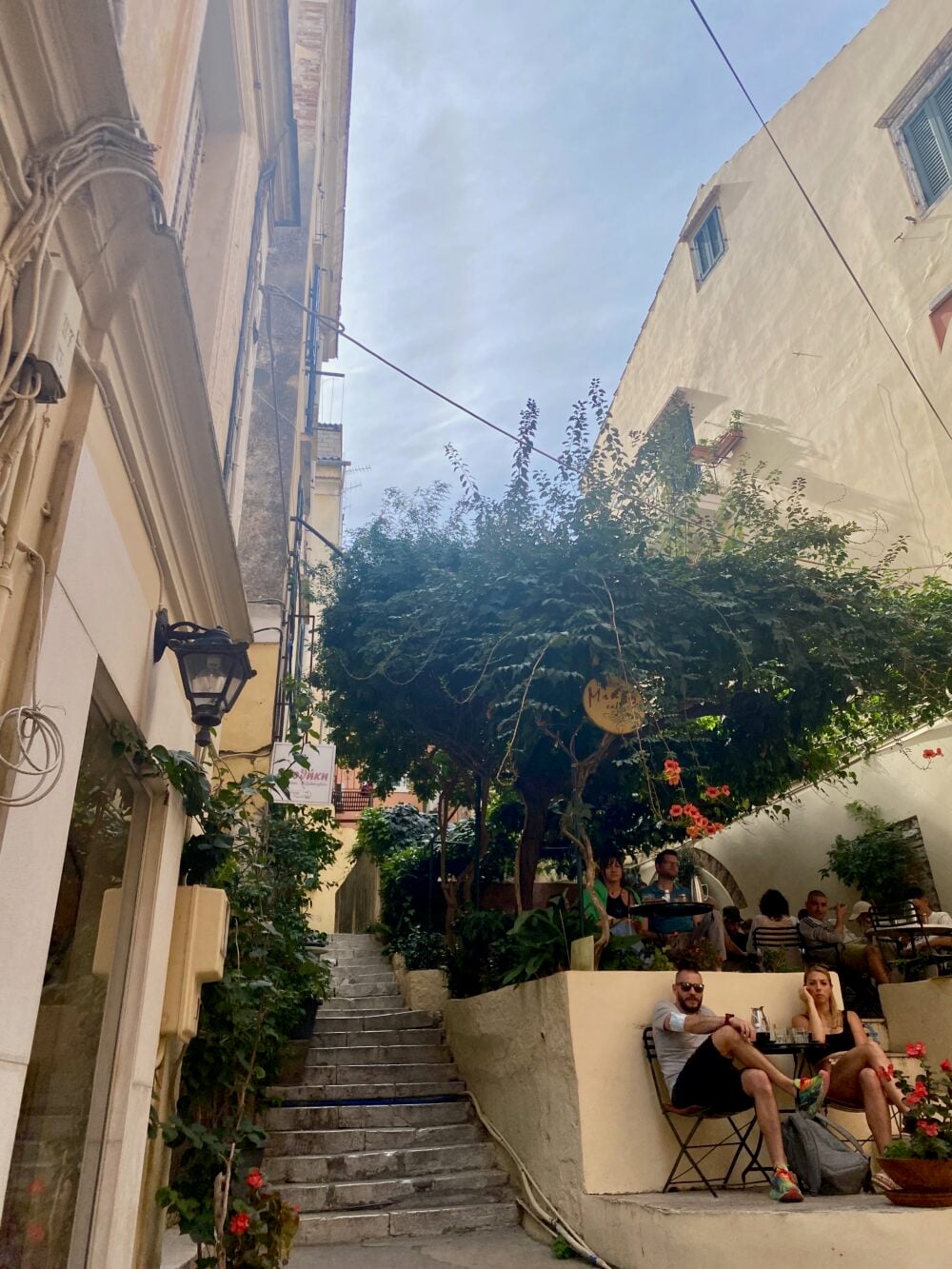
- The narrow, winding streets of the Old Town are the soul of Corfu and you can enjoy hours getting lost here. It’s perfect for discovering authentic Corfiot life. These narrow, shaded lanes (called kantounia), are also filled with Venetian-era buildings in faded ochres and pinks, elegant French arcades, Byzantine churches, and little squares with pavement cafés.
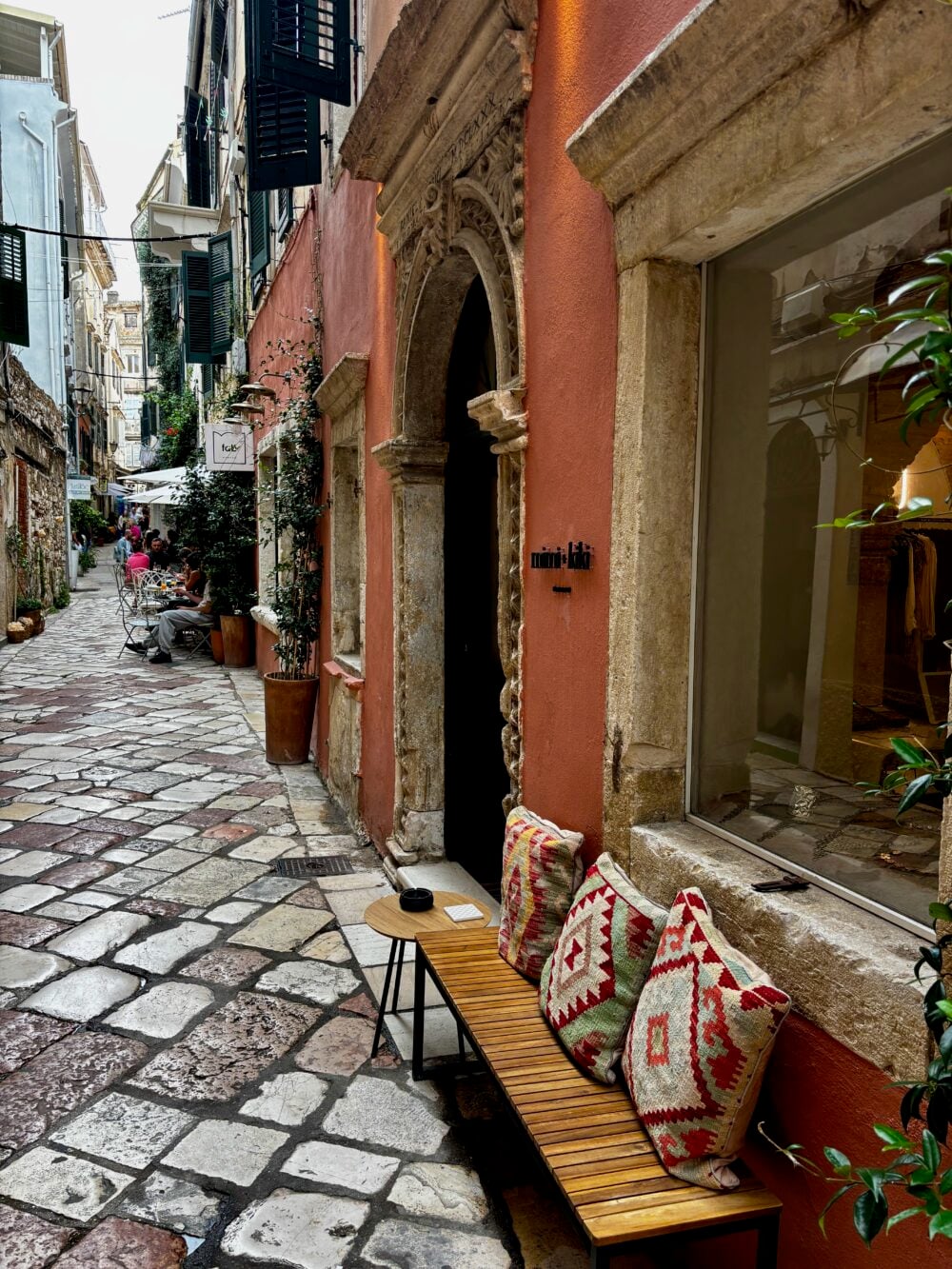
Achilleion Palace, near Benitses
- Built in the 1890s for Empress Elisabeth of Austria, and later bought by Kaiser Wilhelm II, the Achilleion is one of the most romantic buildings on the island. It’s a beautiful, grand neoclassical palace set in terraced gardens above the sea, filled with statues of Achilles and decorated with extraordinary painted ceilings. The gardens alone are worth the visit, and the views from the terrace are among the best on Corfu.
Paleokastritsa Monastery
- This working Byzantine monastery dates to the 13th century and is perched on a rocky headland above the coves of Paleokastritsa. Make sure to dress modestly (shoulders and knees covered).
Best Things to Do in Corfu
Drive the Corfu Trail or Explore by Hire Car
The island rewards those who get off the main roads. Rent a car (or moped for the more adventurous) and head into the interior: you’ll find sleepy villages where time seems to have stopped, ancient olive groves, mountain passes with sea views, and roads that suddenly open onto hidden bays. The villages of Pelekas, Doukades, Lakones, and Agios Mattheos are all worth stopping in. The long-distance Corfu Trail covers the entire island on foot over about 10 days — but even walking a single section is a great way to see a different side of the island.
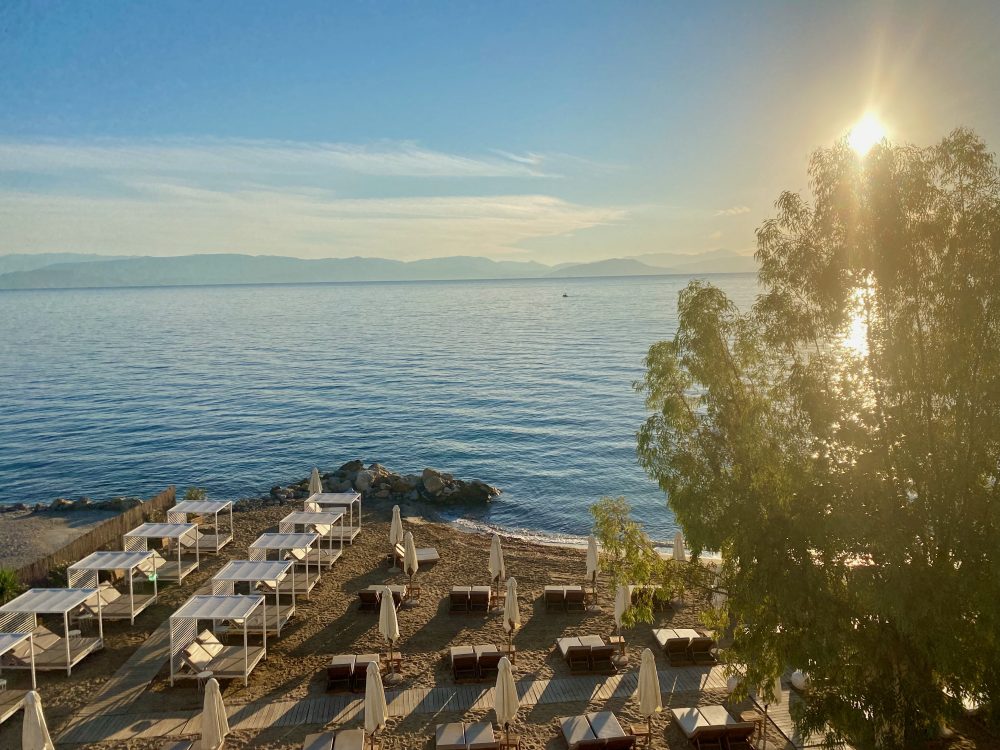
Take a Boat Trip
A boat trip is one of the best things you can do in Corfu, and there are options for every budget. From private day charters with a skipper to organised group trips. Popular excursions include day trips to the neighbouring island of Paxos and Antipaxos, whose beaches, particularly Voutoumi on Antipaxos, are widely considered among the most beautiful in the Mediterranean.
Visit the Durrells in Corfu Museum
For UK visitors of a certain age, Corfu and the Durrell family are inseparable. Gerald Durrell’s My Family and Other Animals is a well known memoir of the family’s years living on the island in the 1930s. It is one of the great travel books written about Greece, and the ITV series The Durrells brought a new generation to the story. The small but charming Durrells in Corfu Museum, located in Kontokali just north of Corfu Town, is housed in the actual “Snow White Villa” where the family lived. It contains photographs, personal effects, archive material about the family’s time on the island, and a lovely garden. Modest entry fee; allow an hour. A genuinely lovely stop, and one that feels more personal than the big-ticket sights.
Best Places to Eat in Corfu
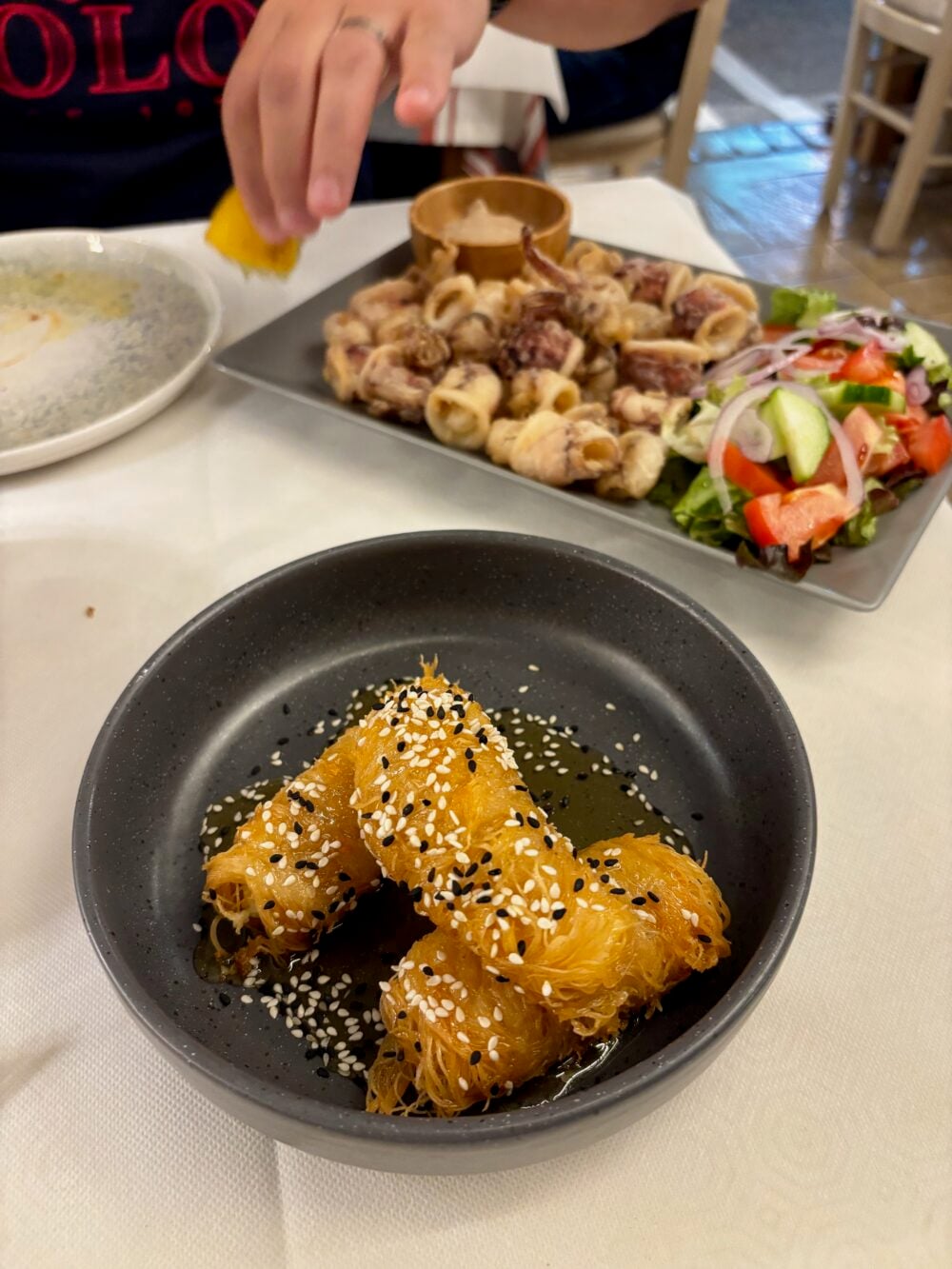
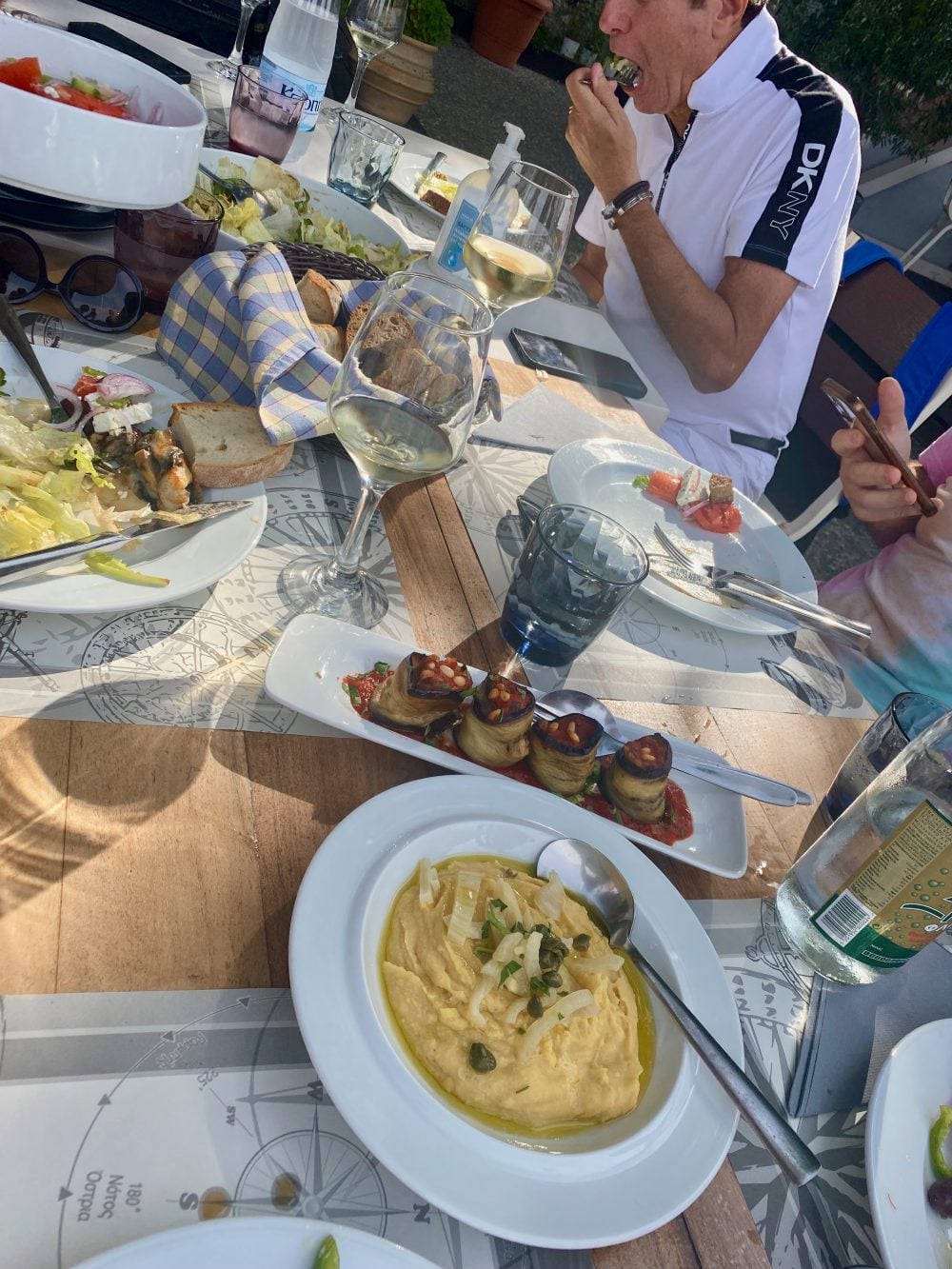
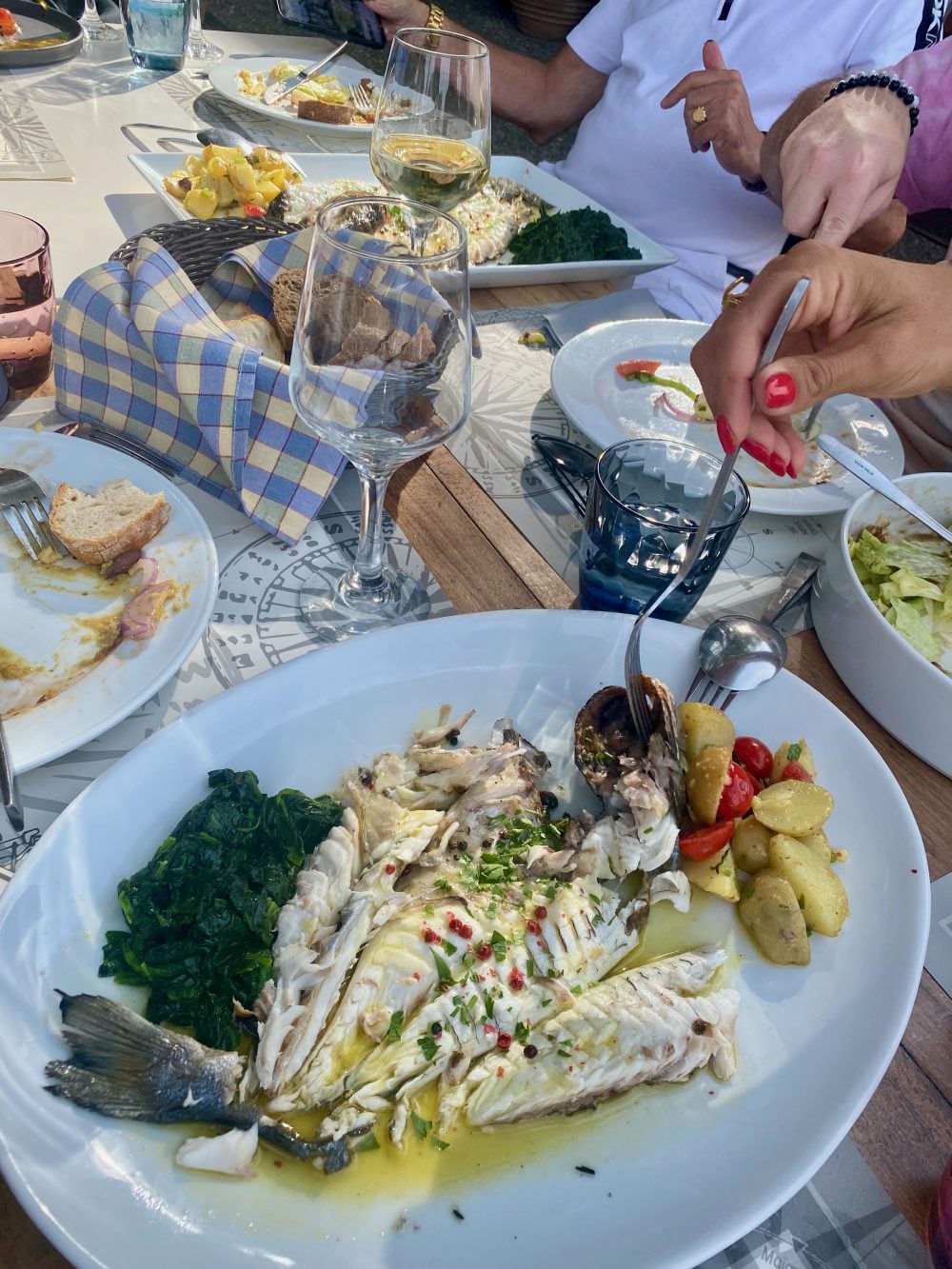
Corfu Town is a wonderful destination for foodies and is packed with traditional tavernas and chic cafés. Around the island, you’ll find charming seafood tavernas and cute beach cafes. Here are some top recommendations:
- Rex Restaurant: Located near Spianada Square in Corfu Town, Rex is one of Corfu’s most renowned restaurants, serving classic Corfiot dishes.
- Liston Café: Ideal for coffee or a light snack while enjoying the lively atmosphere of the Liston promenade in Corfu Town, or the Sunday cricket!
- Corfu Sailing Club: I absolutely love this spot for a delicious meal away from the crowds and in the most scenic setting amongst the boats in the marina.
- Sofrito: Located within Angsana Corfu, this amazing restaurant serves up some of the best Greek food on the island, and with magical views to boot!
- More relaxed, on-the-go recommendations include the covered market on Desila Street in Corfu Town. It’s worth a wander for a coffee and a cheese pie (tiropita) in the morning. And for a quick, cheap, and completely delicious lunch, the souvlaki stands around the New Port area are great!
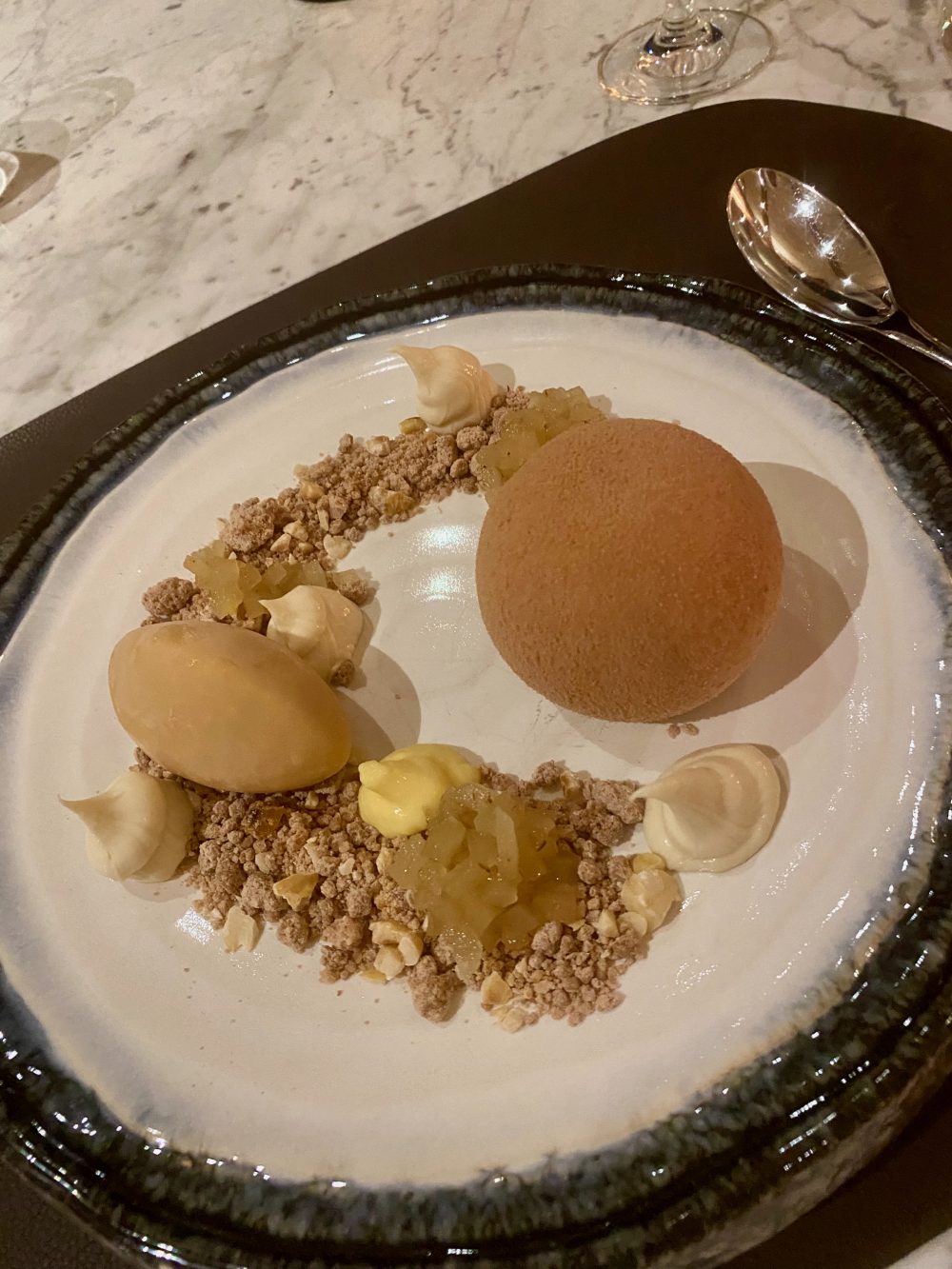
Dishes to try:
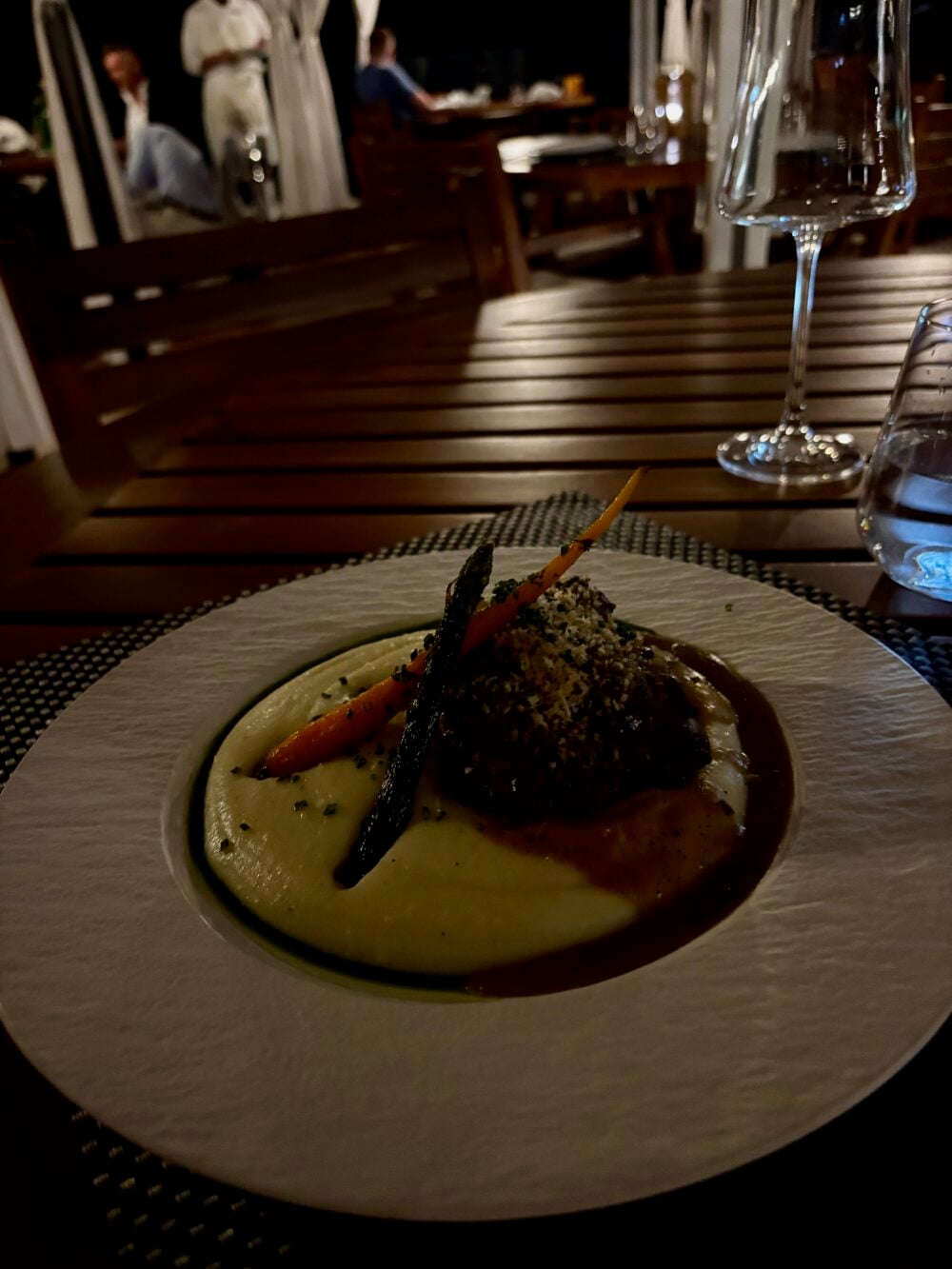
- Sofrito — the island’s signature dish: beef slow-cooked in a white wine, garlic, and parsley sauce, typically served with rice or potatoes
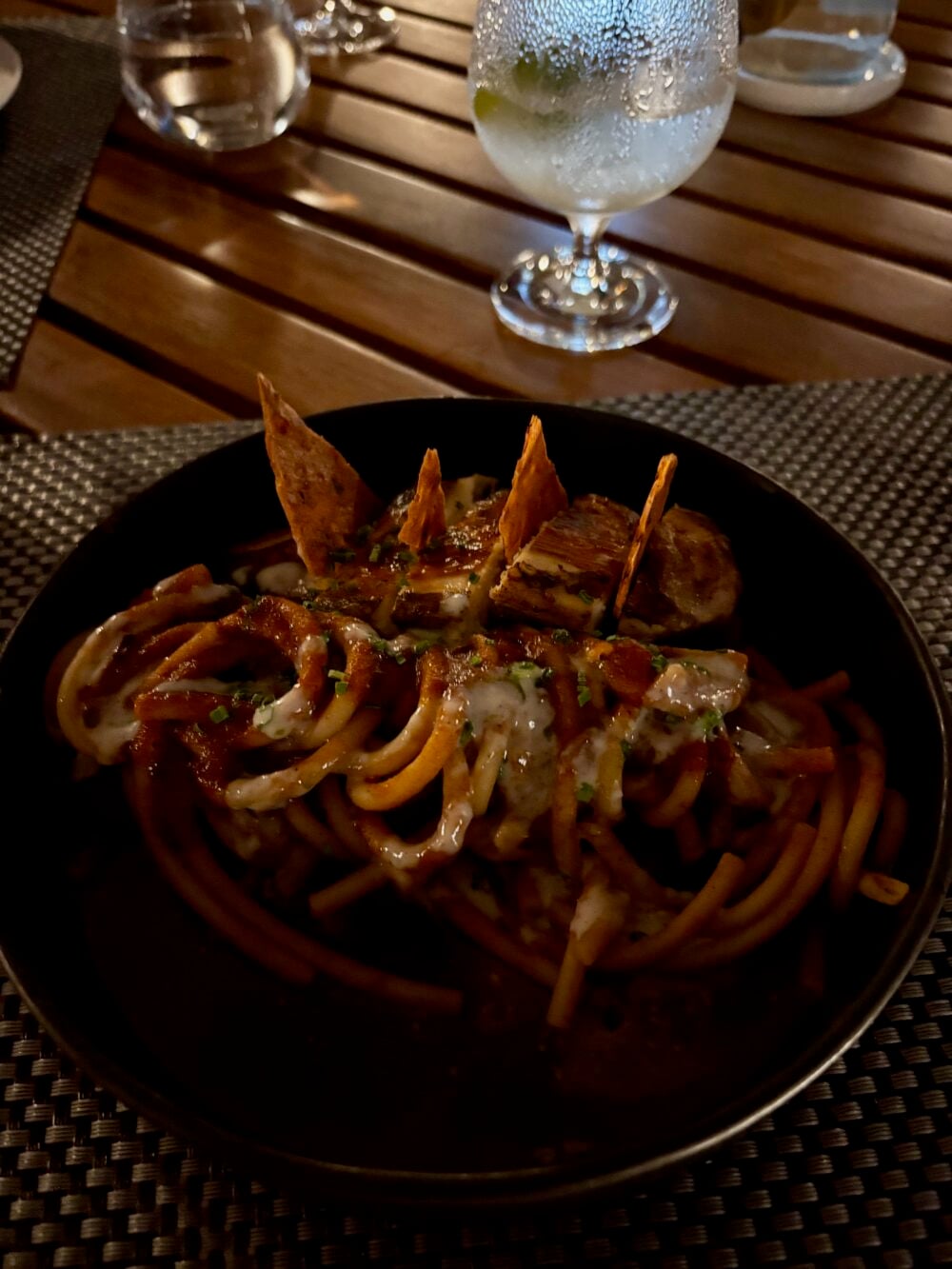
- Pastitsada — thick pasta with a rich, spiced meat ragù (most commonly made with cockerel), a direct legacy of Venetian influence
- Bianco — a delicate white fish stew with garlic, potato, and lemon
- Bourdeto — spicy fish stew, traditionally made with scorpionfish
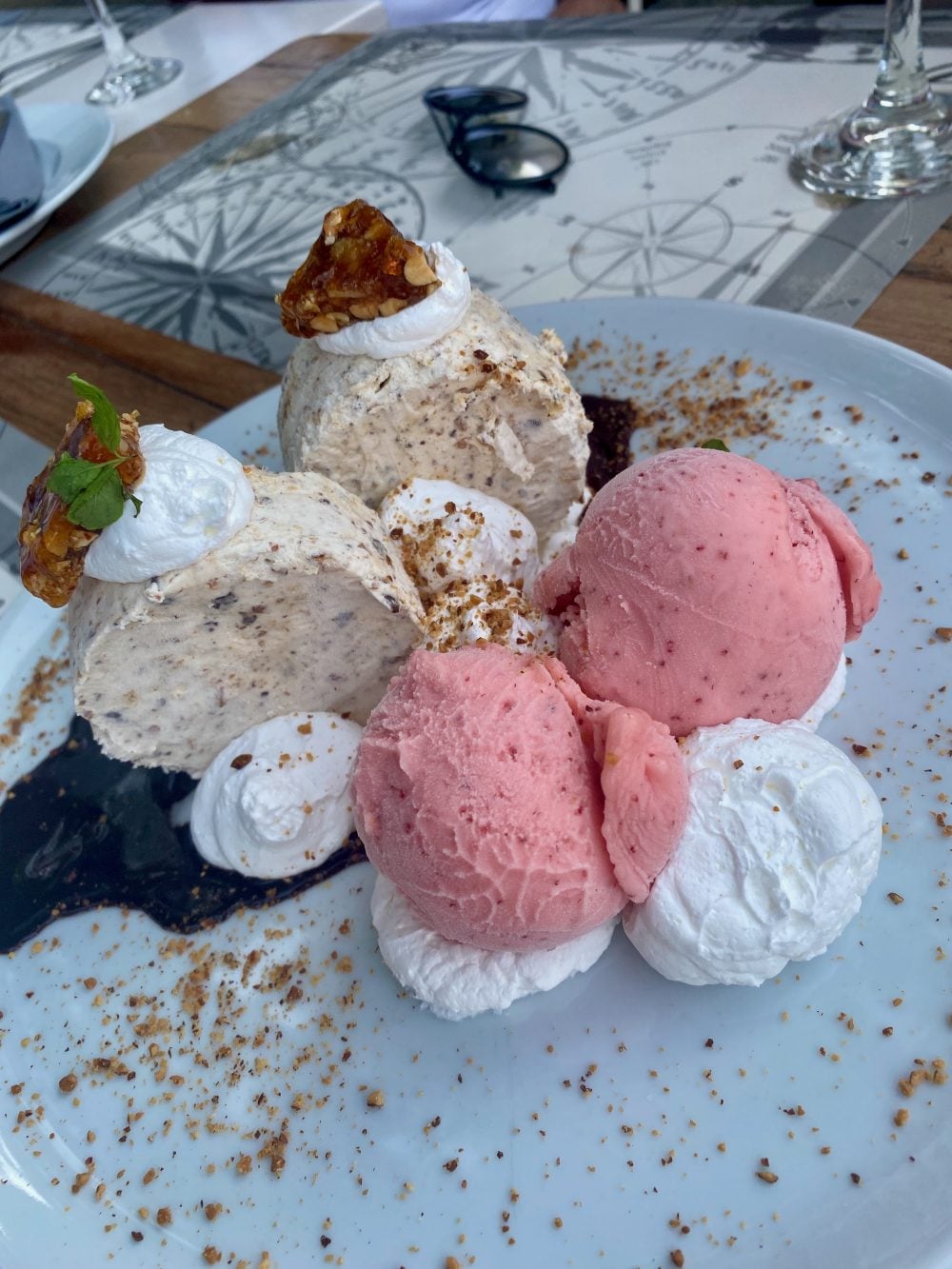
- Kumquat liqueur — the island’s unofficial drink. It’s made from the small citrus fruit grown only in Corfu. In fact, it’s the only place in Europe where kumquats are grown commercially. Kumquats were introduced by the British during their administration of the island in the 19th century. The small citrus fruit, sharp, fragrant, and slightly bitter, has become one of Corfu’s most distinctive products, and you’ll find it turned into liqueur, preserves, chocolate, and candied fruit all over the island.
- Mavromatis, based near Corfu Town, is the island’s main kumquat producer and welcomes visitors for tours and tastings. It’s a quick and interesting stop, particularly if you’re trying to decide which of the liqueur varieties (clear, gold, or brandy-style) to bring home as a souvenir. Free to visit and it opens daily throughout the season.
- You can also try a kumquat granita or kumquat tart from one of the Old Town’s small pastry shops.
A Suggested 7-Day Corfu Itinerary
One week is the ideal amount of time to get under Corfu’s skin without rushing. This itinerary isn’t for those looking for a fly and flop holiday, but are keen to hire a car and explore the island.
Day 1 — Arrive and settle into Corfu Town
Check in and spend your first evening doing very little. I’d recommend a walk through the Old Town’s kantounia lanes and a drink at the Liston arcade as the sun goes down. Wrap the day up with a relaxed dinner at a restaurant in one of the squares.
Day 2 — Corfu Town in depth
Spend the morning properly exploring. Make sure to visit the Old Fortress, Faliraki Beach etc. Enjoy lunch at the Corfu Sailing Club, before driving 10 minutes along see the Achilleion Palace. Check into Angsana Corfu afterwards, and enjoy dinner in the village of Benitses.
Day 3 — Slow day at the Angsana Corfu
Take it as easy as you like, perhaps enjoy the afternoon at their Emerald Beach Club, and make sure to indulge in a spa treatment at the Angsana Spa.
Day 4 — West Coast: Paleokastritsa and the monastery
Check out and drive to Paleokastritsa in the morning (around 45 minutes from Benitses). Spend a few hours at the coves, snorkel if you can, visit the monastery on the headland. Afterwards, head to Lakones village for lunch with a view. In the afternoon, head to Agios Gordios beach for a swim. Check into a hotel in the north of the island such as Wyndham Corfu Acharavi or the Athina Hotel.
Day 5 — North and Northeast: Kassiopi and the Durrells
Drive north along the east coast, stopping at the Durrells in Corfu Museum near Kontokali (a must for any UK visitor who grew up on Gerald Durrell). Continue to Kassiopi for lunch by the harbour. Spend the afternoon exploring the castle ruins and the pebble coves around the village.
Day 6 — The Far Northwest
This is the day for Corfu’s most dramatic scenery. Drive to the far northwest and stop at Sidari and the Canal d’Amour. Make your way to Logas Beach at Peroulades in time for one of the best sunsets on the island, with dinner at a clifftop taverna afterwards.
Day 7 — Boat day
Hire a boat for your final day and head south along the coast, stopping at coves you can only reach from the water. Alternatively, book a day trip to Paxos and Antipaxos.
Day trips from Corfu
Paxos and Antipaxos
The most popular day trip from Corfu, and entirely justified. Paxos is a small, charming island of olive groves and Venetian harbours about 45 minutes by fast boat from Corfu. Antipaxos is a tiny, almost entirely undeveloped island. It has just two beaches, Voutoumi and Vrika. Both are widely regarded as among the most beautiful in the Mediterranean, with white sand, shallow water in shades of aquamarine. Day trips operate daily throughout summer from most resorts; book ahead in July and August.
You can go via high speed catamaran for a full day trip (from £47 per person) or on a larger cruise like this one (from £39 per person)
Albania (Sarandë)
We loved our day trip to Albania. It was the perfect taster to a destination we’d like to return to one day. It’s a speedy 30-minute ferry from Corfu Town to Sarandë in southern Albania. This is a modern, buzzing waterfront town that’s reinventing itself rapidly.
From here, you can visit other attractions such as the UNESCO site of Butrint, a well-preserved ancient city with Greek, Roman, Byzantine, and Venetian layers. We chose to just walk along the promenade and along the coastline for an hour or two to soak up the different viewpoints. There were plenty of nice spots along the coast for lunch, and we enjoyed refreshing sea dips along the way.
We did a DIY trip but missed out on some of the core sites, so I’d recommend an Albania day trip such as this one (from £56 per person).
The Diapontia Islands
The three tiny islands of Othoni, Erikousa, and Mathraki northwest of Corfu are among the best-kept secrets in Greece. Barely visited outside of a handful of Greek families who spend their summers there, they offer pristine beaches, simple tavernas, and an atmosphere of complete tranquillity. Ferry connections from Corfu’s Sidari or Agios Stefanos. For the most secluded experience on the island — or rather, off it — this is the day trip to prioritise.
Corfu Travel Guide, Greece
So that concludes my detailed Corfu Island Guide. I hope it’s been helpful in planning your trip to the pretty island of Corfu, or provided the inspiration to visit this wonderful destination. We love our trips here and can’t wait to go back!
Make sure to check out my other Greece guides here:
- Greek Island Hopping Ten Day Itinerary: Athens, Santorini and Milos
- Lesser Known Islands to Visit on a Greek Island Hopping Itinerary
- One Day in Athens: The Perfect 1 Day Itinerary for Athens
- Santorini on a Budget – Free Things to Do in Santorini
- Milos Travel Guide: The Most Beautiful Island in Greece
- Angsana Corfu Resort and Spa: The Best Luxury Hotel in Corfu
- Review of Grecotel LUXME Daphnila Bay
Have you been to Corfu in Greece? I’d love to hear about your experience in the comments below.
